A vacuum sausage filler should be selected around the product you need to make, not around a headline output figure. The useful buying question is whether the proposed filler can handle your actual meat mixture, casing, portion size, changeover schedule and downstream equipment under a repeatable trial. This guide turns those requirements into a practical specification and acceptance plan for an industrial processor.
Start with the filling job, not a model number
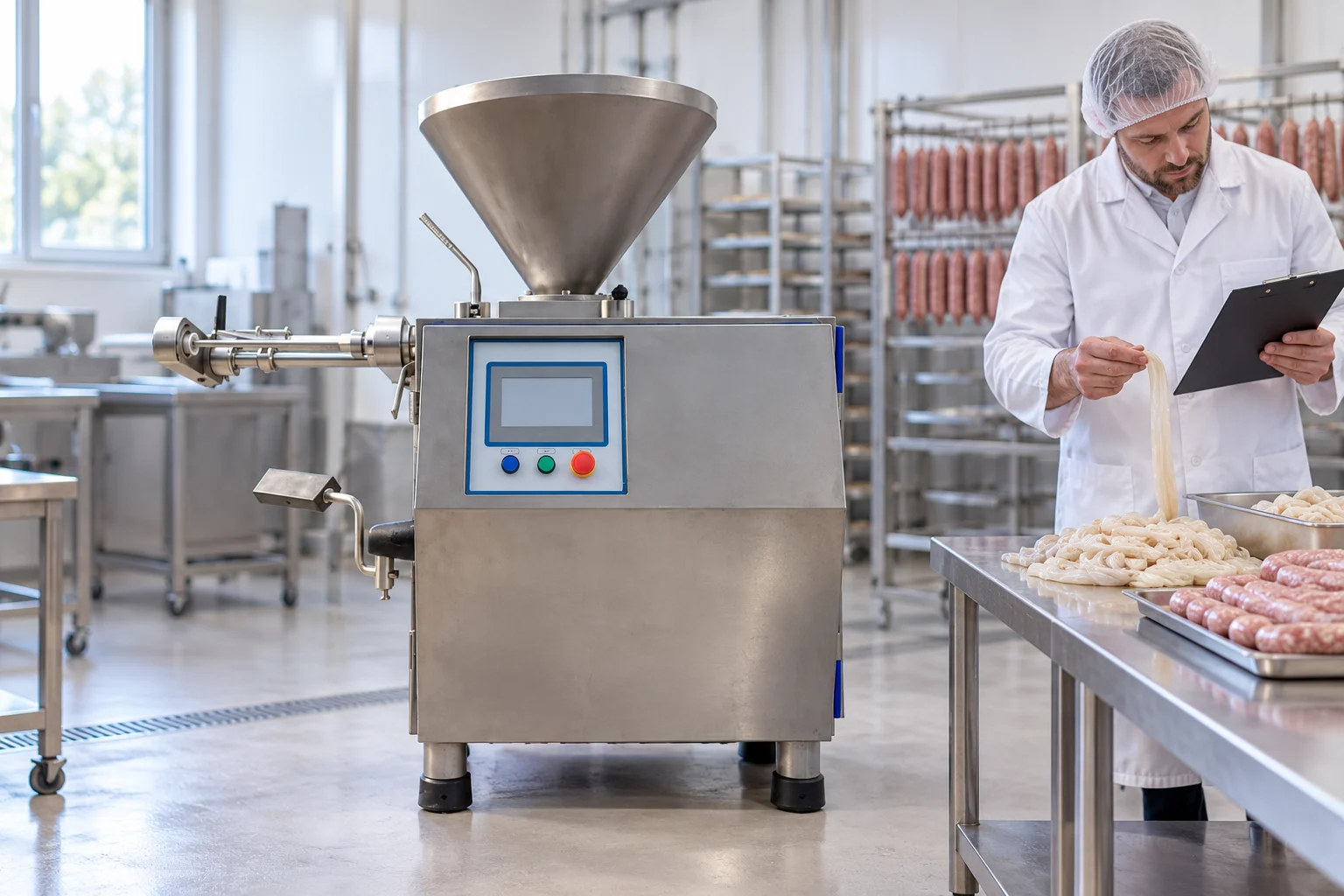
Write one production brief for each important sausage family before asking suppliers for a machine recommendation. A fine emulsion, coarse-ground sausage and soft plant-based filling can behave differently in the hopper and at the outlet. A useful brief states what goes into the filler, what must come out, and what happens immediately afterward. It also records the operating pattern: long single-product runs, frequent recipe changes, or short batches.
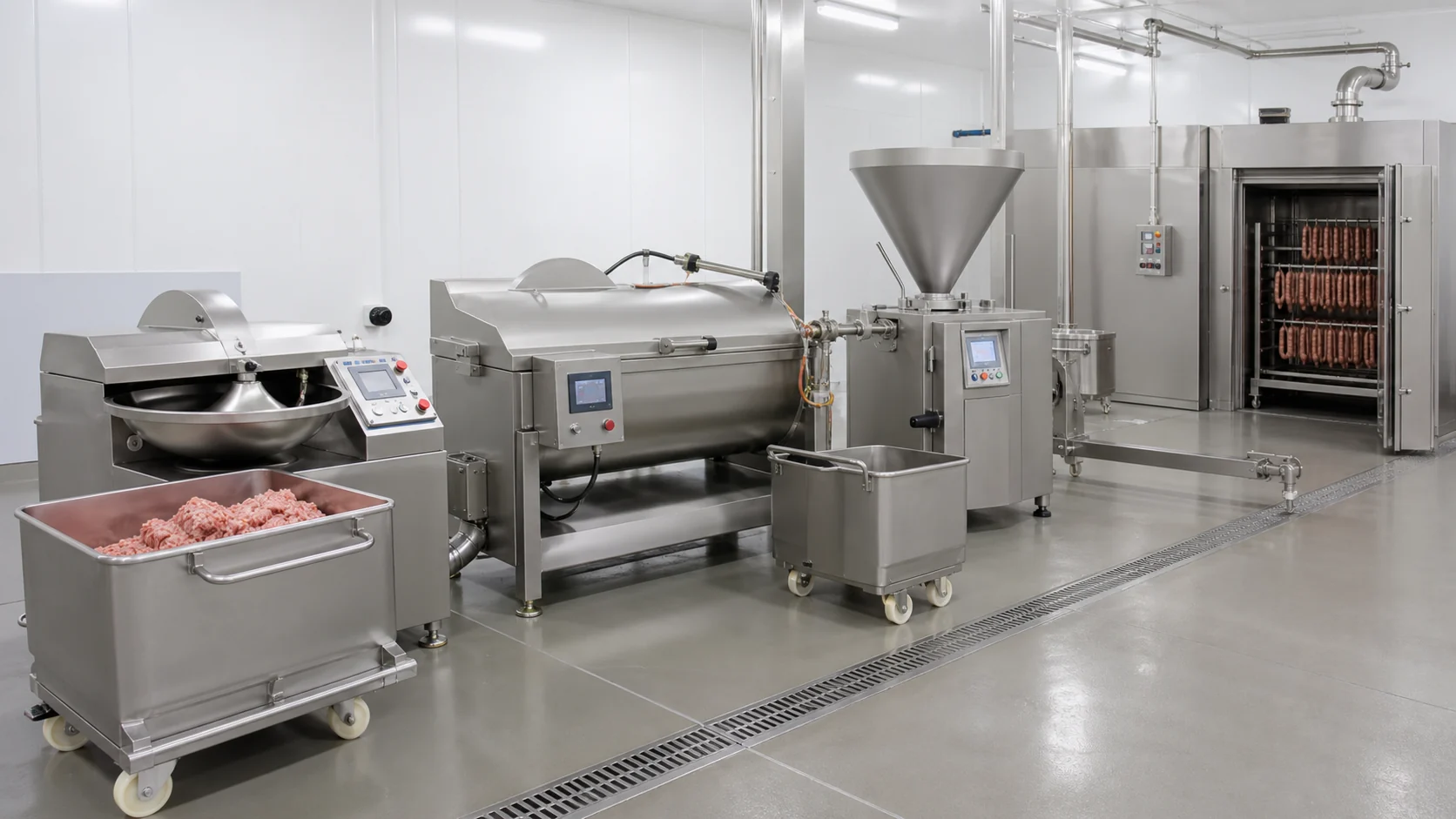
If the factory is still defining the overall process, map the sausage production line first. The filler sits between upstream preparation and downstream casing, linking or clipping. A strong stand-alone filler cannot compensate for unsuitable feed preparation or an unplanned handoff to the next machine.
Describe the incoming mixture
Tell the supplier whether the mix is emulsified or coarse, its approximate temperature range at filling, the largest visible particles, and whether it contains inclusions such as diced fat or vegetables. State whether the mixture arrives directly from a mixer, via tubs, or from a transfer system. The purpose is not to obtain an impressive catalogue claim. It is to establish whether the feed path, hopper geometry and metering system are appropriate for the material you will actually run.
Define the finished unit
Record the target filled diameter, portion mass or length, casing type, closure method and allowable variation. A single plant may need different settings for natural casings and uniform manufactured casings. If you sell by weight, decide how portions will be checked, including the number of samples and the point in the process where they are weighed. If you sell by link length, document how the linking system is expected to interact with the filler.
Match the machine to the product and casing
“Sausage” is too broad a test material. A buyer should request a trial with the most demanding representative products, not only the easiest recipe. The intended casing and nozzle combination matters as much as the basic filling mechanism. Ask which horn sizes and change parts are included, which are optional, and which supplier is responsible for checking compatibility.
Build a small product matrix
A concise matrix makes the discussion more precise. Include product or SKU, mixture type, particle size, casing material, filled diameter, portion target, planned run length and downstream operation. Mark which products share a setup and which require a changeover. You do not need to disclose a proprietary formula to define these engineering boundaries; a representative trial sample and operating range can be enough.
Check the outlet as a system
Examine the complete route from outlet to casing, not just the machine body. Determine whether the proposed configuration uses manual casing loading, a twisting head, a linker, a clipper or another downstream device. The filler may provide the portion, but it does not automatically provide every closure or transfer function. Ask for a drawing or short video of the proposed configuration with the same type of casing you intend to use. Confirm the connection height, required floor space and access for operators.
Understand what vacuum is meant to do
A vacuum sausage filler applies controlled vacuum during filling to help manage air in the product path. That is a process function, not a universal promise about shelf life, yield or finished texture. The result depends on the formulation, mixing, temperature, feed presentation, casing and the rest of the process. State the defect you are trying to reduce, such as visible air pockets, and make it an observation in the material trial.
If the mixture is prepared upstream, review how the vacuum meat mixer or other mixer discharges and how the batch reaches the filler. Filling cannot be evaluated independently of this handoff. Ask whether the proposed hopper is loaded at a practical height for your containers and whether product remains in hard-to-recover areas at batch end.
Do not confuse vacuum with portion accuracy
Air management and portion control are related but different checks. A supplier may describe a vacuum system and a metering mechanism in the same brochure, yet your acceptance test should assess them separately. Observe the sausage surface and cut face for air-related defects, then weigh or measure portions using a defined sample plan. Record the settings, casing and product condition alongside the results so the test can be repeated.
Plan a representative filling trial
A meaningful equipment trial uses a sample that resembles production: the intended mixture, temperature, casing, portion target and approximate run pattern. Agree in advance who prepares the material, how much is needed, and what constitutes a pass. A short demonstration on an unrelated recipe is useful for seeing the controls, but it does not verify suitability for your product.
Test start-up, steady running and batch end
Take samples after start-up, during a stable interval and near the end of the batch. These stages can expose different issues: setting stabilization, changes in feed behavior, and product remaining in the hopper or outlet. Keep the same weighing method throughout the trial. If you have several products, include at least one challenging casing and one challenging mixture rather than only repeating the easiest combination.
Record observations, not only averages
Document portion distribution, rejected units, casing breaks, visible air, smearing, interrupted feeding and operator interventions. An average portion weight alone can hide a wide spread. Ask the supplier to show the raw observations and the machine settings used. The agreed pass criteria should come from your product and sales requirements; this article does not prescribe a universal tolerance.
Include changeover in the trial
For a plant with multiple SKUs, changeover time and repeatability affect the useful daily output. Have the operator switch horn or casing format and return to a saved or documented setting. Note the tools required, parts that must be changed, adjustments that need skill, and how much test product is used to regain an acceptable portion. A theoretical hourly rating does not include these practical interruptions.
Check the whole line interface
Choose the filler only after defining the upstream supply and downstream take-away. The buyer should know who provides the conveyor, linker, clipper or hanging system, and who owns the control handshake between machines. Ask for the proposed line layout and the usable access around each unit. If the equipment will sit in an existing room, verify doorways, drainage, power, utilities and cleaning routes before ordering.
Separate included equipment from compatible equipment
“Compatible with a clipper” does not mean a clipper is included in the price. The quotation should identify each attachment, control interface, cable, horn, spare part and installation task. Confirm whether another manufacturer’s downstream machine has already been tested with the proposed configuration or whether integration remains an engineering task. Assign responsibility for that test in writing.
Consider a different filling class when appropriate
Not every operation requires the same machine class. If the brief is small batches, simple manual casing handling or a different portioning pattern, compare the proposed vacuum machine with a pneumatic quantitative sausage stuffer. The right comparison is based on your required product quality, labor pattern, changeovers and line connections, not the assumption that the most automated option is always best.
Evaluate hygiene and access before purchase
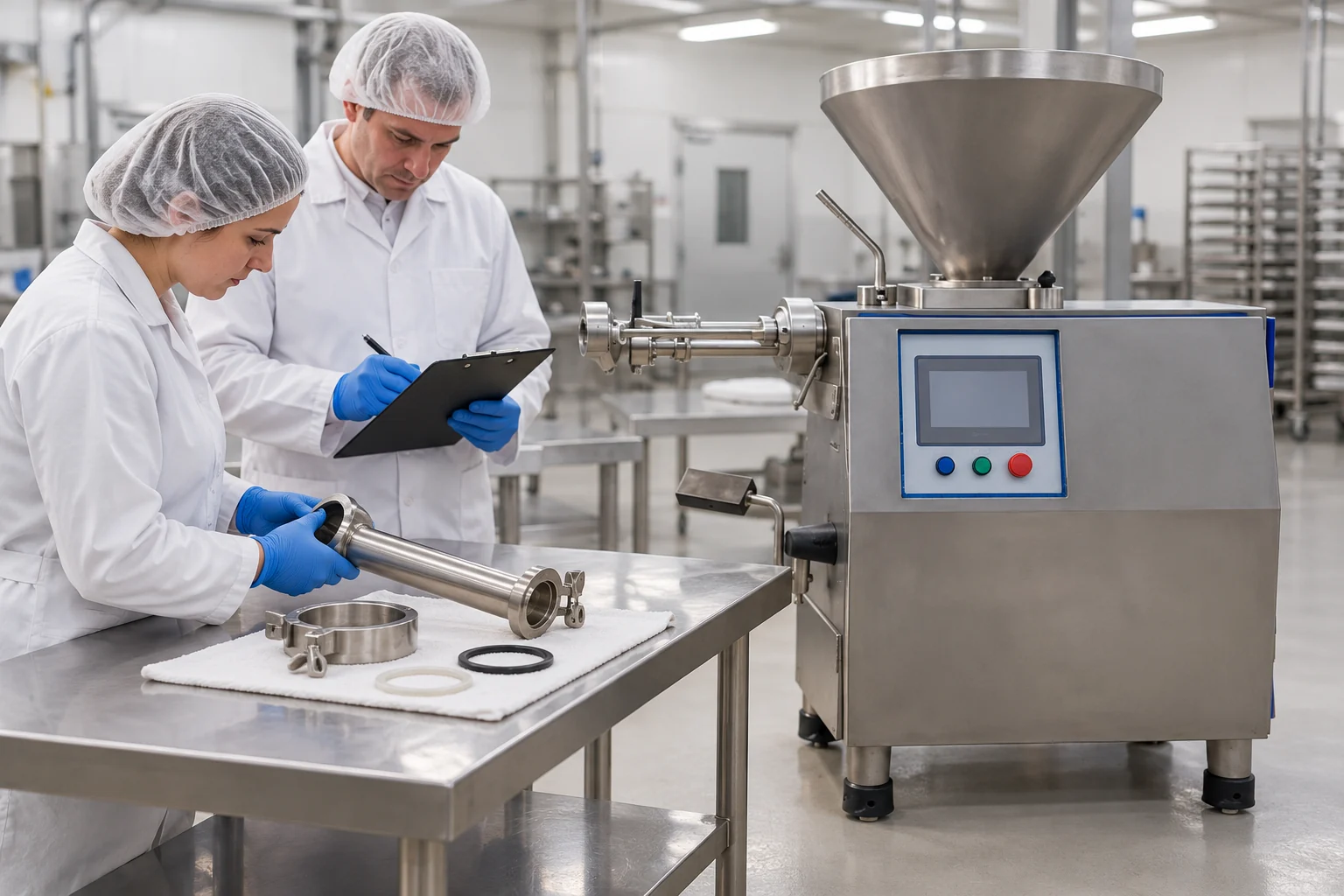
Ask the supplier to demonstrate cleaning with the machine safely stopped and isolated according to its instructions. The inspection should cover the hopper, contact path, filling horn, seals and areas where product may collect. Identify which components are removable, what tools are needed, how they are handled after removal and how the machine is reassembled. The exact procedure must come from the machine’s approved manual and your plant’s sanitation program.
Request a parts and wear plan
Some seals and other contact parts are consumables. Ask for a parts diagram, recommended spare list, lead times and the method for identifying correct replacements. Clarify whether the first shipment includes spares and whether tools for routine changeover are supplied. A low equipment price can become less attractive if essential parts or training are omitted from the scope.
Inspect documentation and operator training
Request the operator manual, cleaning instructions, electrical documentation and a clear commissioning plan in the language your team can use. Confirm who will train operators, what is covered, and how faults are reported after installation. Do not treat a sales video as a substitute for the documentation required by your own food-safety and maintenance systems.
Compare quotations on the same basis
When two suppliers quote different machine configurations, their prices may not be comparable. Send the same product matrix and acceptance plan to each supplier. Ask each to state model and included options, hopper and feed arrangement, outlet accessories, utility requirements, dimensions, cleaning and changeover scope, documentation, installation, spare parts, warranty terms and exclusions. Separate confirmed values from estimates and assumptions.
Translate capacity into your operating day
A nominal throughput number is usually conditional on a specific product and continuous running. Estimate your actual useful output from batch size, loading, stops, casing replenishment, changeovers, cleaning and planned maintenance. Ask the supplier to explain the test conditions behind any quoted output. Do not compare an uninterrupted machine rating with a factory target that includes all downtime.
Agree on acceptance evidence
Before a deposit, agree which product will be trialed, who supplies casing and meat, the target portions, sample method, documented observations and what happens if the result is outside the agreed criteria. If a remote demonstration is necessary, specify the camera views and data to be recorded. Define any site acceptance separately from a factory trial: installation and integration conditions can change the result.
Send a useful RFQ
The fastest way to receive a relevant proposal is a short but complete request. Include product families and representative recipes, target portions and casings, expected batch and shift pattern, upstream feed, downstream closure equipment, utilities, available floor space, sanitation requirements, documentation needs and the trial you expect. Photos or a simple line sketch can resolve many interface questions early.
Use the vacuum sausage stuffer product page to identify the base equipment, then send your product and line brief for a configuration review. Ask for a written list of assumptions and exclusions as well as the price. A filler selected against your actual production conditions is easier to evaluate, install and operate than one chosen from a model number alone.
Frequently Asked Questions
What information should I send before selecting a vacuum sausage filler?
Send representative mixture and casing details, target portion, batch and shift pattern, upstream feed method, downstream closure equipment, utilities and available floor space. These details let a supplier propose a configuration and a relevant trial.
Can one vacuum sausage filler handle every casing and recipe?
Do not assume so. Confirm each important mixture, particle size, casing and diameter in a product matrix, then test the most demanding combinations with the proposed outlet parts.
Does vacuum filling guarantee longer shelf life?
No universal shelf-life result can be inferred from the presence of vacuum alone. Shelf life depends on formulation, handling, packaging, temperature control and validation across the complete process.
How should I check sausage portion accuracy?
Agree on a representative material trial and sample plan. Weigh or measure portions at start-up, steady running and batch end, and record the casing, settings, rejected units and variation against your own acceptance criteria.
Is a clipper or linker included with a vacuum sausage filler?
Not necessarily. Treat the filler, outlet accessories and downstream linking or clipping devices as separate quotation items. Confirm the physical and control interfaces and assign responsibility for integration testing.
What should I inspect during a cleaning and changeover demonstration?
With the machine safely stopped, review access to the hopper, contact path, horn and seals; identify removable parts, tools, cleaning instructions and reassembly checks. Follow the specific machine manual and your plant sanitation procedure.