A meat bone deboner should be selected by the material entering the machine and the product that must leave it, not by the word “deboner” in a supplier’s title. In industrial meat processing, that title may describe a pressure separator for flesh-bearing bones, a soft separator or desinewer for boneless trim, or equipment designed to remove an intact muscle from a specific anatomical cut. These machines solve different problems and create very different outputs.
That distinction matters before a buyer compares capacity, motor power, screen size, or price. A technically impressive quotation can still be wrong if the supplier and processor are using the same English word for different operations. This guide gives purchasing and production teams a practical way to identify the right machine class, prepare a meaningful material trial, and write an RFQ that suppliers can answer accurately.
Why the Name “Meat Bone Deboner” Creates Purchasing Risk
The problem is not simply translation. Equipment catalogs across the market use overlapping terms such as meat bone separator, mechanical deboning machine, meat deboner, desinewer, soft separator, bone separator, and meat recovery machine. Some manufacturers use several of these names for separate product families, while others place them on one product page.
A buyer who searches only by name may therefore compare machines that accept different raw materials. One may be intended for poultry frames with residual soft tissue. Another may require boneless trim and remove sinew or cartilage. A third may position and cut a whole leg or breast so the muscle remains recognizable. The first question is not “Which deboner has the best price?” It is “What exactly must be separated from what?”
Three Machine Classes Commonly Hidden Behind the Same Search Term
1. Meat-Bone Separator for Flesh-Bearing Bones
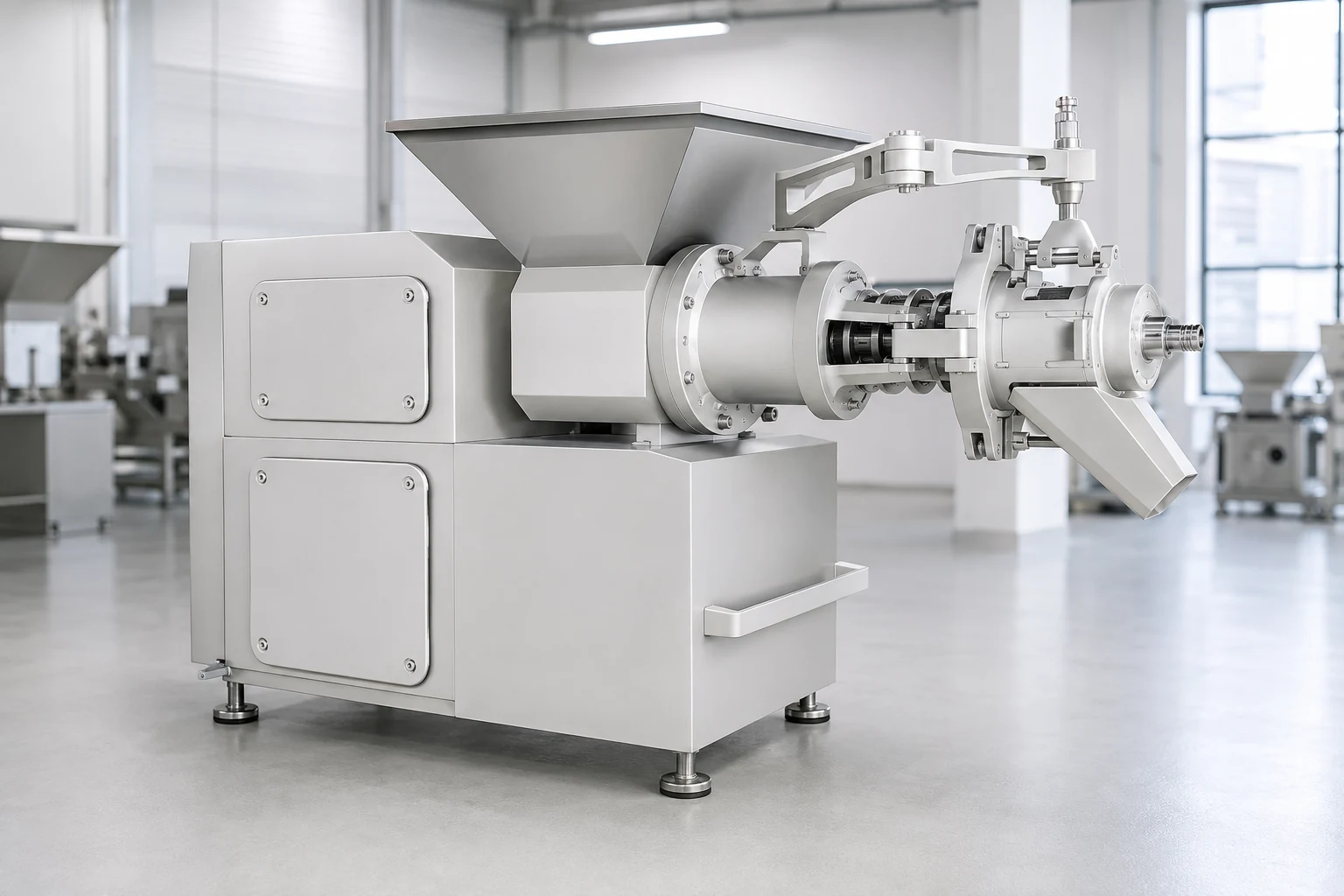
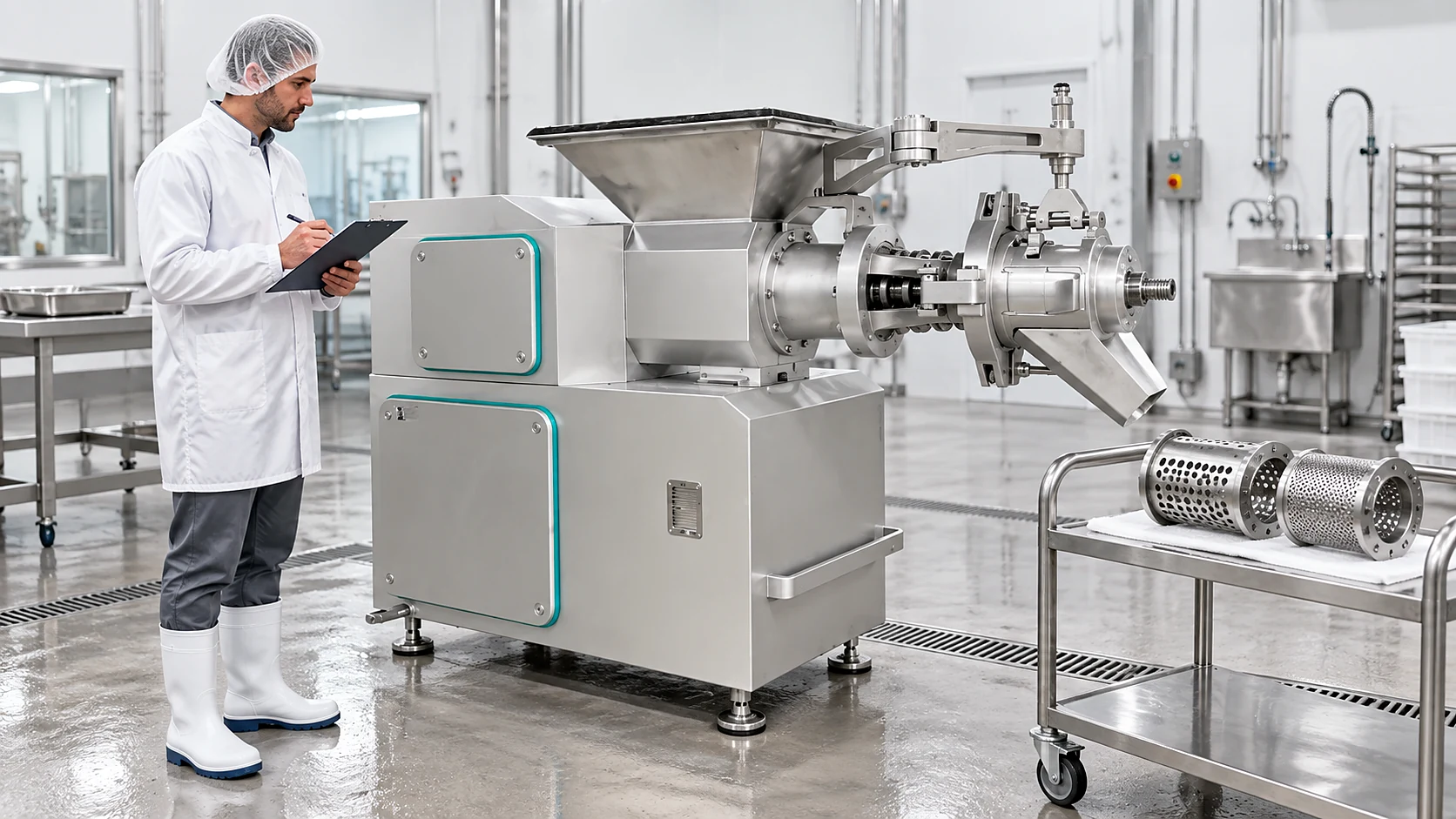
This machine class applies controlled mechanical pressure to prepared bone-in material. A screw or comparable pressure mechanism moves the feed against a perforated separation element. Soft tissue passes through selected openings while a separate bone-rich residue leaves another outlet. The recovered material is usually fine and is not an intact anatomical cut.
This is the class most buyers mean when they are searching for a meat bone deboner for poultry frames, necks, backs, or other suitable residual material. It may support further processing in products such as emulsified meat products, fillings, pet food, or other formulations, subject to the processor’s recipe, quality standards, and destination-market rules. Buyers who are new to the process can also review what MDM meat means in poultry processing.
2. Soft Separator or Desinewer for Boneless Trim
A soft separator or desinewer starts from a different problem. The feed is generally boneless or substantially free of hard bone. The purpose is to separate useful soft tissue from sinew, connective tissue, membranes, cartilage, or other firm components. Depending on the machine and screen, the output may retain more visible structure than pressure-separated material from bone-in frames.
Calling both machines a deboner can hide a serious mismatch. Hard bone-in poultry frames should not be sent to a machine designed only for soft separation unless the manufacturer has expressly approved that material and demonstrated it in a controlled trial. Conversely, a processor trying to clean high-value boneless trim may not want the same output texture produced by a meat-bone separator.
3. Anatomical Deboning Equipment for Recognizable Cuts
Anatomical deboning equipment removes or assists in removing bone from a specific cut, such as a leg, thigh, breast, or shoulder, while preserving a recognizable piece of meat. It may use guides, blades, pressure, pulling, scraping, or a combination designed around a defined anatomy. Its goal is portion recovery, not extrusion through a perforated screen.
If the finished product must remain a fillet, muscle, strip, or retail cut, a pressure-based meat bone separator is normally the wrong machine class. The buyer should search by species and cut, then provide dimensions, weight range, bone condition, temperature, and the required appearance of the recovered muscle.
Use Feed Material and Required Output as the Classification Test
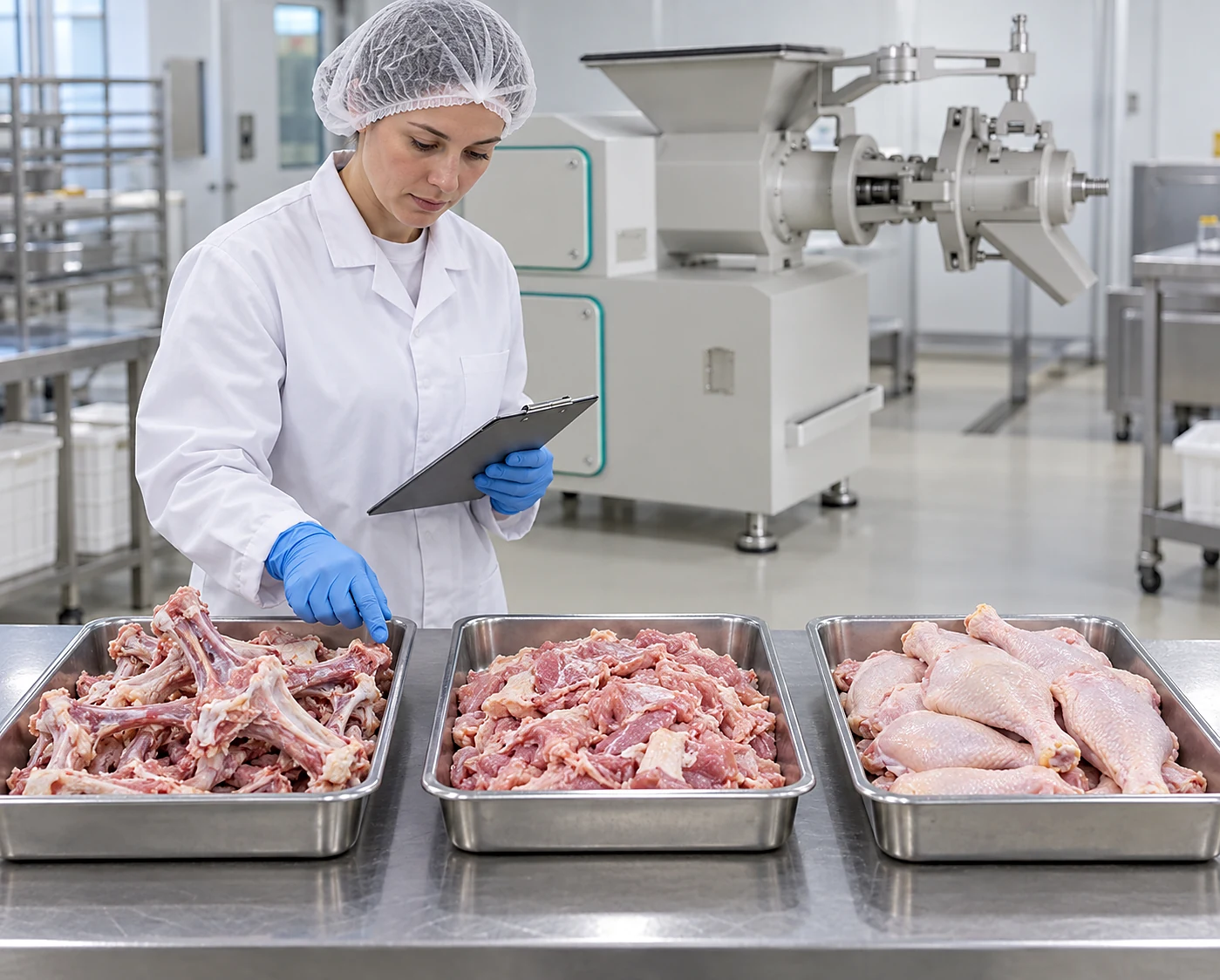
The simplest way to classify a project is to place representative feed and output samples on the table before discussing equipment. The three questions below usually reveal whether suppliers are quoting comparable solutions.
What Goes Into the Machine?
Describe the actual material, not only the species. “Chicken” is not enough. State whether the feed is a frame, back, neck, bone with residual meat, boneless trim, mixed trimmings, intact leg, or another defined part. Explain whether it is fresh, chilled, partly frozen, cooked, or raw. Include the typical and maximum dimensions, the presence of skin, tendons, cartilage, and any hard foreign material risk.
Preparation also matters. A separator may need material to be pre-broken or cut to a stable size before feeding. A soft separator may require prior inspection to prevent hard bones or metal from entering. Anatomical equipment often depends on a narrow dimensional range and consistent presentation. The quotation should state every upstream preparation step, not quietly assume the buyer already has it.
What Must Come Out?
Define the desired output in physical and commercial terms. Does the plant need a fine recovered meat stream for formulation, a coarse soft-tissue fraction, a cleaned trim stream, or an intact muscle? What particle structure, temperature, visible bone tolerance, connective-tissue level, and handling characteristic are acceptable? What happens to the second stream?
A clear output definition prevents the sales discussion from collapsing into an unsupported “yield” promise. Two machines can report a similar mass recovery while producing material with different texture, bone content, temperature rise, or downstream value. Acceptance should therefore combine recovery with product quality.
What Will the Next Process Do?
The downstream step helps determine how much structure must be preserved. A fine recovered stream may move to blending, emulsification, forming, filling, cooking, freezing, or pet-food processing. A cleaned boneless stream may be ground later. An intact deboned cut may go to trimming, marination, portioning, or direct packing.
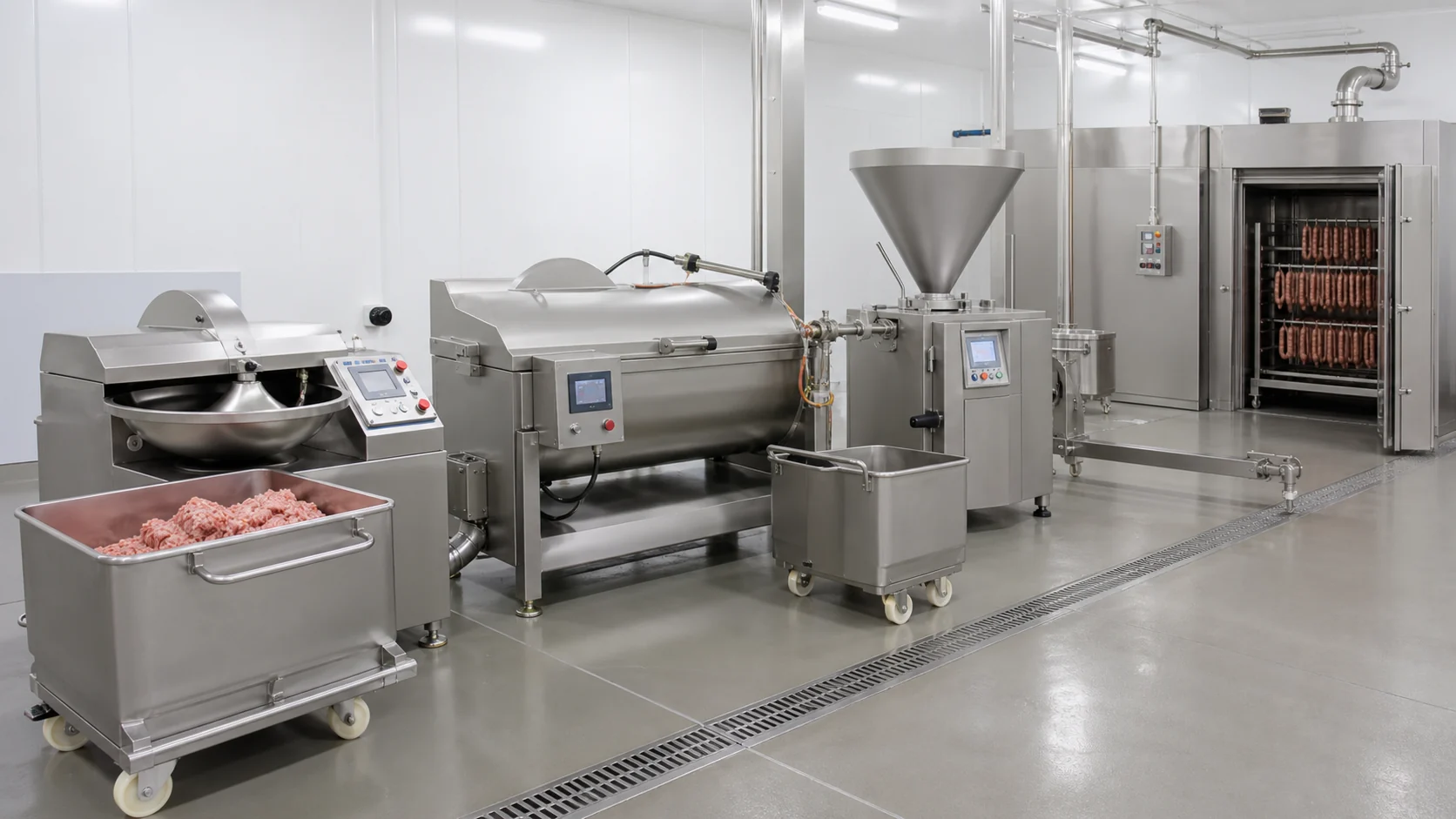
A separator does not automatically replace every grinder in the plant. When a separate boneless meat stream still needs controlled particle reduction, an industrial frozen meat grinder may remain part of the line. For formulated products, the separator output also needs to match the mixing, chopping, filling, and thermal process described in the plant’s sausage production line.
A Practical Comparison for Procurement Teams
| Decision point | Meat-bone separator | Soft separator / desinewer | Anatomical deboning equipment |
|---|---|---|---|
| Typical feed question | Is the material a prepared flesh-bearing bone or frame? | Is the material boneless trim with sinew or firm tissue? | Is it a consistent whole cut with a defined bone? |
| Core action | Pressure separation through a selected screen | Gentler separation of soft tissue from firmer inclusions | Cutting, pulling, scraping, or guided bone removal |
| Primary output | Fine recovered meat plus bone-rich residue | Cleaned soft-tissue fraction plus reject fraction | Recognizable deboned cut plus bone |
| Main trial concern | Texture, bone residue, temperature and balanced recovery | Structure retention and removal of sinew or cartilage | Cut appearance, meat left on bone and product damage |
| Common buying error | Comparing only capacity or claimed yield | Feeding hard bone into a machine not designed for it | Expecting screened recovered meat from a cut-specific system |
This table is a classification aid, not a substitute for a supplier test. Machine designs differ, and the same commercial term may be used differently. Ask the supplier to state the approved feed, the separation mechanism, the output form, and the test conditions in writing.
Run a Representative Material Trial Before Accepting a Yield Claim
A meaningful trial uses the buyer’s normal raw material, realistic temperature, normal preparation method, and a long enough run to show stable operation. A small hand-selected sample can hide feed variability and cleaning or blockage problems. The test plan should be agreed before the material is processed.
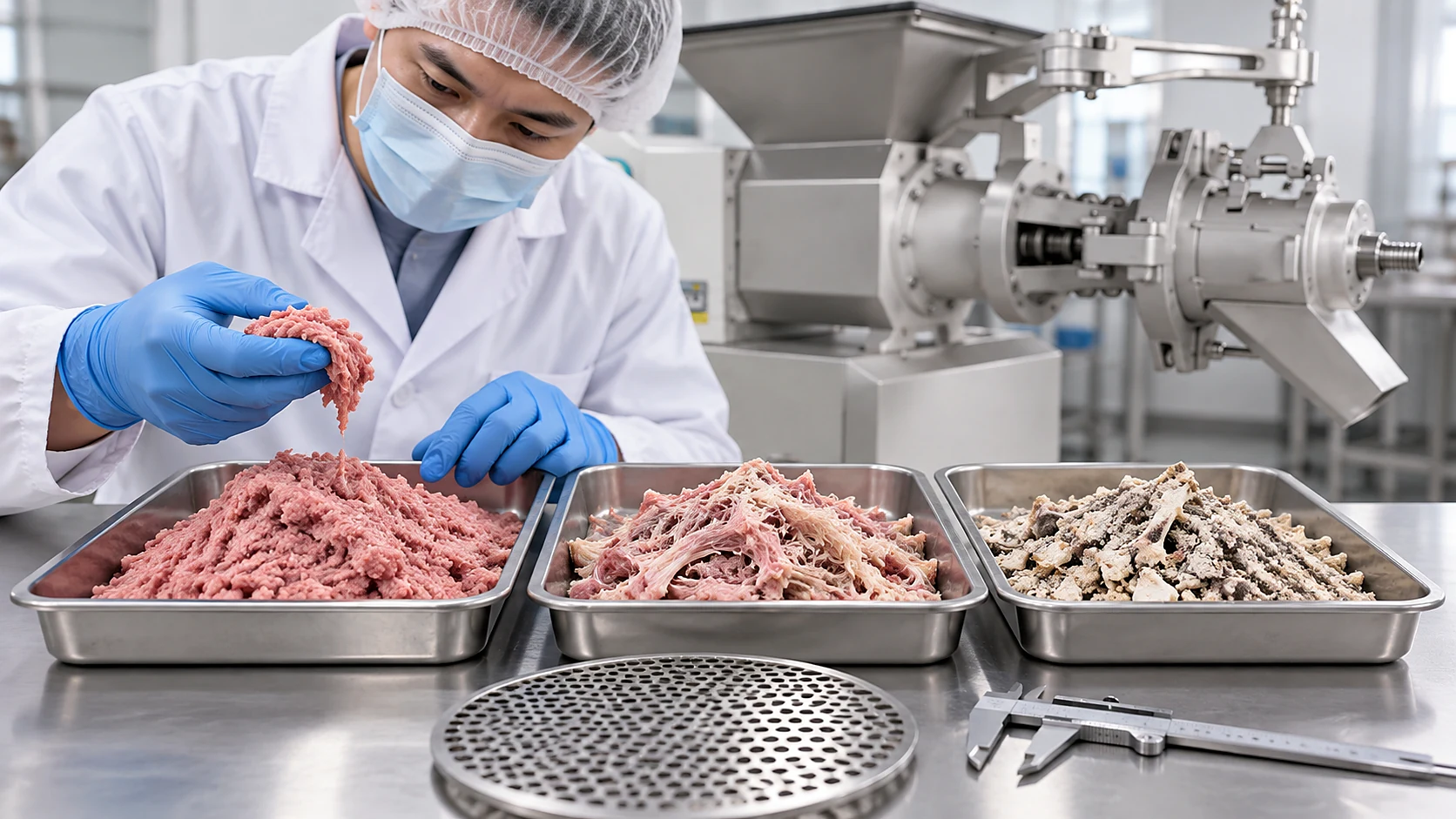
Measure More Than Recovered Weight
Record input weight, recovered product weight, residue weight, unaccounted loss, processing time, product temperature before and after the trial, and any stoppages. Then inspect the recovered stream and residue. A high recovered weight is not automatically useful if the product contains unacceptable hard particles, has unsuitable texture, or leaves the machine too warm for the plant’s control plan.
Sampling should be consistent. Take material after the machine has reached stable operating conditions, not only from the first few seconds. Keep samples from the beginning, middle, and end of the trial when feed variability is expected. Agree who performs any laboratory measurement and which method applies.
Inspect Both Outlet Streams
The recovered stream shows whether the texture and separation level fit the intended recipe. The reject stream shows what was left behind. Excess visible soft tissue in the bone-rich residue may indicate that the setting, preparation, or machine size needs review. An overly dry residue is not always proof of success if product quality deteriorates at the same time.
Photograph and label the trial samples for internal review. Keep the supplier’s settings and installed screen with the sample record. This creates a repeatable basis for comparing quotations rather than relying on brochure language.
Screen, Pressure and Temperature Must Be Evaluated Together
In a pressure-based separator, the perforated element and the applied pressure influence what passes into the recovered stream. A smaller opening or a more aggressive setting may change texture and separation behavior, but it can also change throughput, temperature, residue and wear. The best setting is therefore the one that meets the buyer’s complete acceptance criteria, not simply the setting with the largest recovered mass.
Ask which screens are available, which one is proposed for the supplied raw material, how the pressure or separation gap is adjusted, and which parts normally wear. The supplier should explain how an operator confirms correct assembly and how a setting is reproduced after cleaning.
Plan the Complete Line Around the Selected Machine
The separator is only one control point. Feed preparation, metal control, temperature management, transfer, collection, downstream processing, cleaning access, and waste handling determine whether the installed system works as intended. A standalone capacity number does not describe this complete flow.
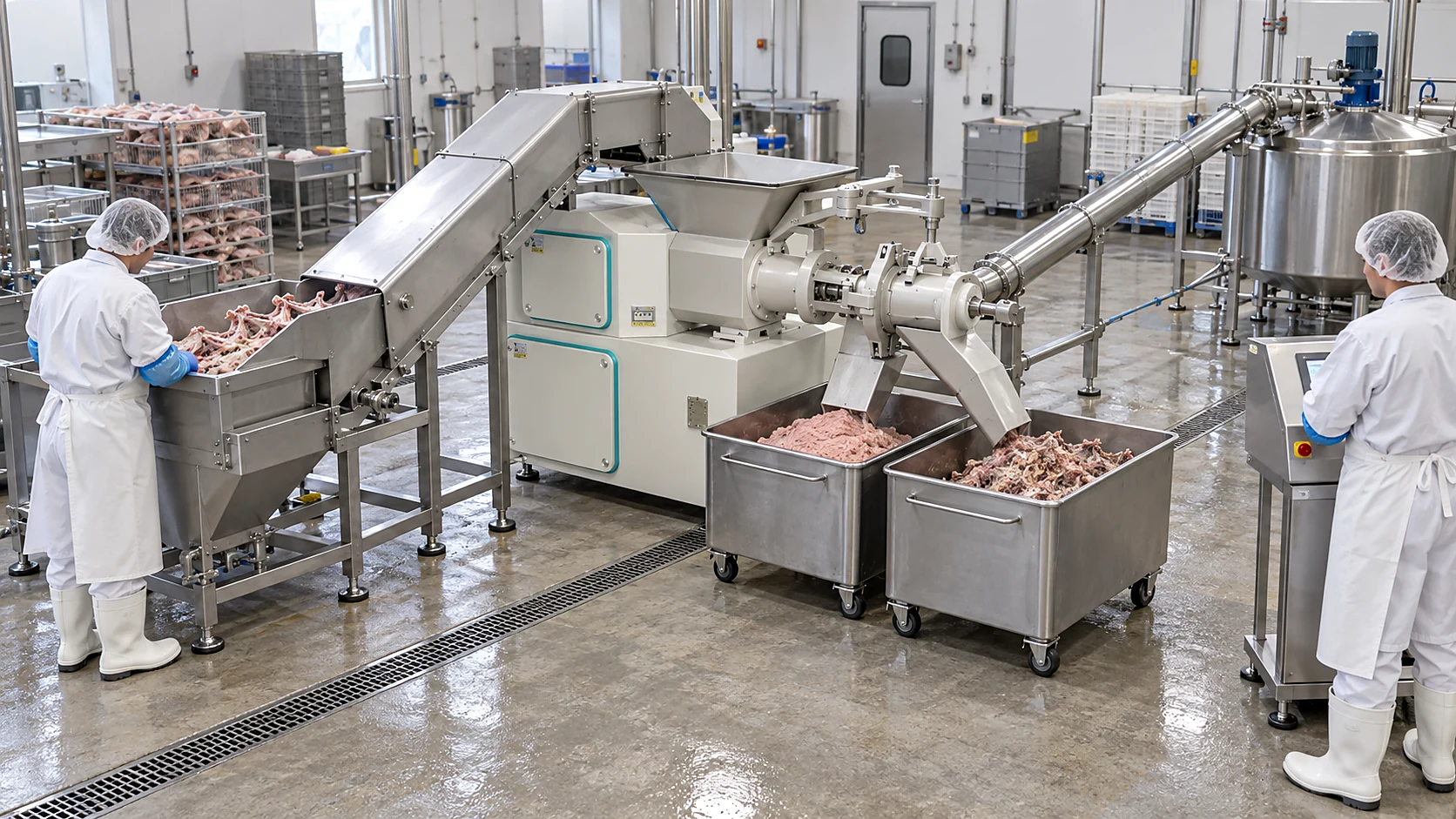
Upstream Preparation and Feed Control
Confirm whether the line needs a pre-breaker, crusher, cutting table, inspection conveyor, or controlled feed hopper. The upstream equipment must produce a safe, consistent piece size without creating foreign-body risk. Feeding should be stable enough to avoid long empty periods followed by sudden overloads.
Downstream Transfer and Product Protection
Recovered product should move into a suitable hygienic container or a covered transfer system. Residence time, temperature, exposed surfaces, and cleaning design should match the plant’s food-safety plan. The bone-rich residue needs its own controlled route so the two streams cannot be mixed accidentally.
For a dedicated recovery project, buyers can compare the required line functions with a pet food meat recovery separator system. The useful question is not whether every shown component is required, but which functions the buyer’s existing plant already provides.
Cleaning Access and Wear Parts Belong in the Buying Decision
A machine that produces the correct sample but is difficult to clean may still be a poor operational choice. Request a demonstrated disassembly sequence for the feed zone, screw, separation screen, outlet parts, covers, seals, and product-contact surfaces. Observe the lifting weight of removable components and the clearance needed around the machine.
Ask for the recommended inspection points, wear limits, replacement intervals as guidance rather than guarantees, and a priced spare-parts list. Screen and screw availability can matter more to production continuity than a small difference in purchase price. A broader meat bone separator parts and maintenance inspection guide can support that technical review after the correct machine class has been confirmed.
Check Product Classification and Destination-Market Rules
Mechanically separated material is not described or regulated identically in every market. Species, pressure, bone condition, particle characteristics, labeling, intended product, and local definitions may affect what the recovered material is called and where it may be used. A supplier’s general application statement is not legal approval for a buyer’s destination country.
Before purchase, the processor’s regulatory and food-safety teams should confirm the rules for the target market and the planned finished product. The machine trial should then generate the evidence they need, including sample identification, process settings, temperature records, and any required analytical results.
RFQ Questions That Force a Clear Technical Answer
- Which exact raw materials and species is the quoted machine designed to process?
- Is hard bone allowed, and what preparation or maximum piece size is required?
- Does the machine create screened recovered meat, cleaned soft tissue, or an intact deboned cut?
- Which screen, pressure setting, or separation configuration is proposed for our material?
- Which capacity range applies to our actual feed condition rather than an ideal reference material?
- How will recovered product quality, residue, temperature and recovery be measured during the trial?
- Which upstream and downstream machines are required, and which are optional?
- How long does product-contact disassembly, cleaning, inspection and reassembly take?
- Which wear parts should be stocked for the first operating year, and what are their lead times?
- What utilities, floor space, drainage, access and operator training are required?
Choose by Process Definition, Then Compare Suppliers
The safest path is to define the process before asking for a model. Start with representative feed, required output, downstream use, acceptance tests, cleaning constraints, and market requirements. Then ask every supplier to respond to the same technical brief. This turns the ambiguous search term “meat bone deboner” into a comparable engineering decision.
If the project is specifically for poultry frames and screened recovered meat, the next step is to document material dimensions, temperature, required capacity, quality targets, existing upstream preparation, and available downstream equipment. A structured poultry meat bone separator selection guide can then help narrow the configuration without confusing it with a soft separator or an anatomical deboning system.
To prepare a comparable machine recommendation, contact our equipment team with your raw-material photos, feed temperature, expected capacity, required output form, destination market, and existing upstream and downstream equipment. We can use that information to define a representative test instead of guessing from a product name.
Frequently Asked Questions
Is a meat bone deboner the same as a meat bone separator?
The terms are often used for the same pressure-separation equipment, but not consistently. Confirm that the quoted machine accepts prepared flesh-bearing bones and produces a screened recovered meat stream plus a separate bone-rich residue.
Can a soft separator process poultry frames with hard bone?
Not unless the manufacturer explicitly approves that material for the specific model and proves it in a representative trial. Many soft separators are intended for boneless trim, sinew, membranes or cartilage rather than hard bone-in frames.
Will a meat bone deboner produce intact chicken meat cuts?
A pressure-based meat bone deboner normally produces a fine recovered meat stream, not an intact fillet or muscle. Intact cuts require anatomical deboning equipment designed around a specific part such as a leg, thigh or breast.
Which raw material details should I send with an RFQ?
Send the species, exact part, bone condition, dimensions, temperature, skin and connective-tissue content, current preparation method, required capacity and clear photos or representative samples. Also define the required output and downstream use.
How should meat bone deboner performance be tested?
Use normal production material at a realistic temperature and record input, recovered product, residue, loss, processing time, stoppages and temperature change. Inspect both outlet streams and agree the quality test method before the trial.
Does the highest meat recovery mean the best machine setting?
No. Recovery must be balanced with texture, hard-particle control, temperature, residue condition, throughput, wear and the intended finished product. The best setting is the one that meets the complete acceptance specification.