- Shandong Zhucheng Kaicheng Liangcai Machinery Factory
Running a food processing line in Southeast Asia isn’t just about having machinery; it’s about having gear that survives the climate. I’ve spent 15 years on factory floors from Ho Chi Minh City to Hanoi, and I know exactly what kills equipment here: humidity, salt corrosion, and continuous shifts.
You don’t need just another machine. You need a workhorse.
At Zenli Food Machinery, we understand the specific demands of producing Xúc Xích (Sausages), Chả Lụa (Vietnamese Ham), and Bò Viên (Beef Balls). We’ve engineered our Liangcai Series Injectors and Zenli Mixers to handle the heavy workload of Vietnamese food production while resisting the tropical moisture that rusts inferior steel.
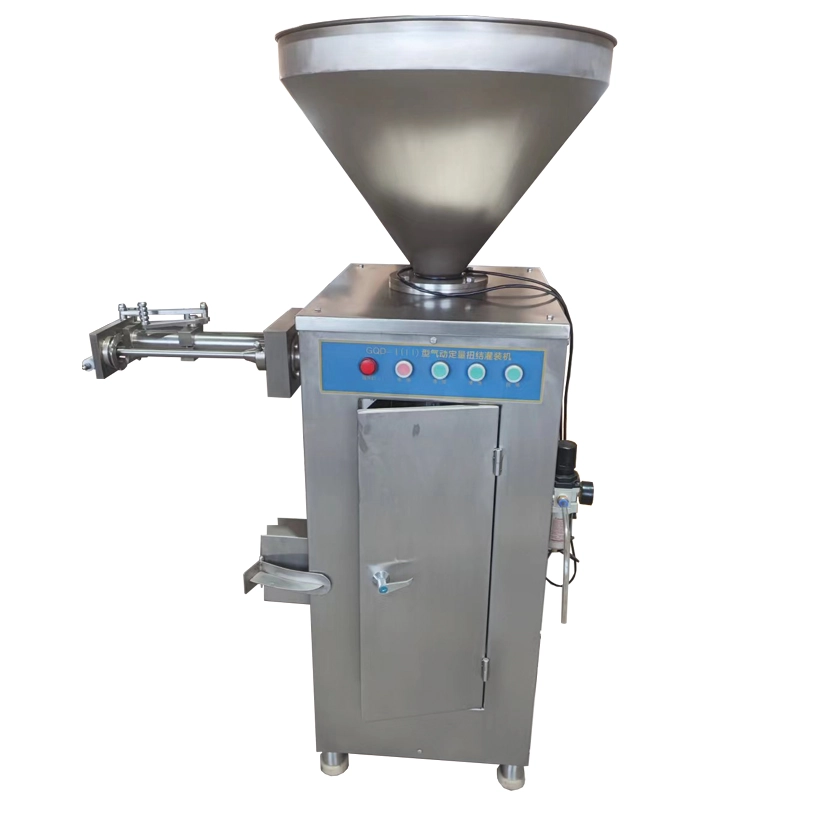
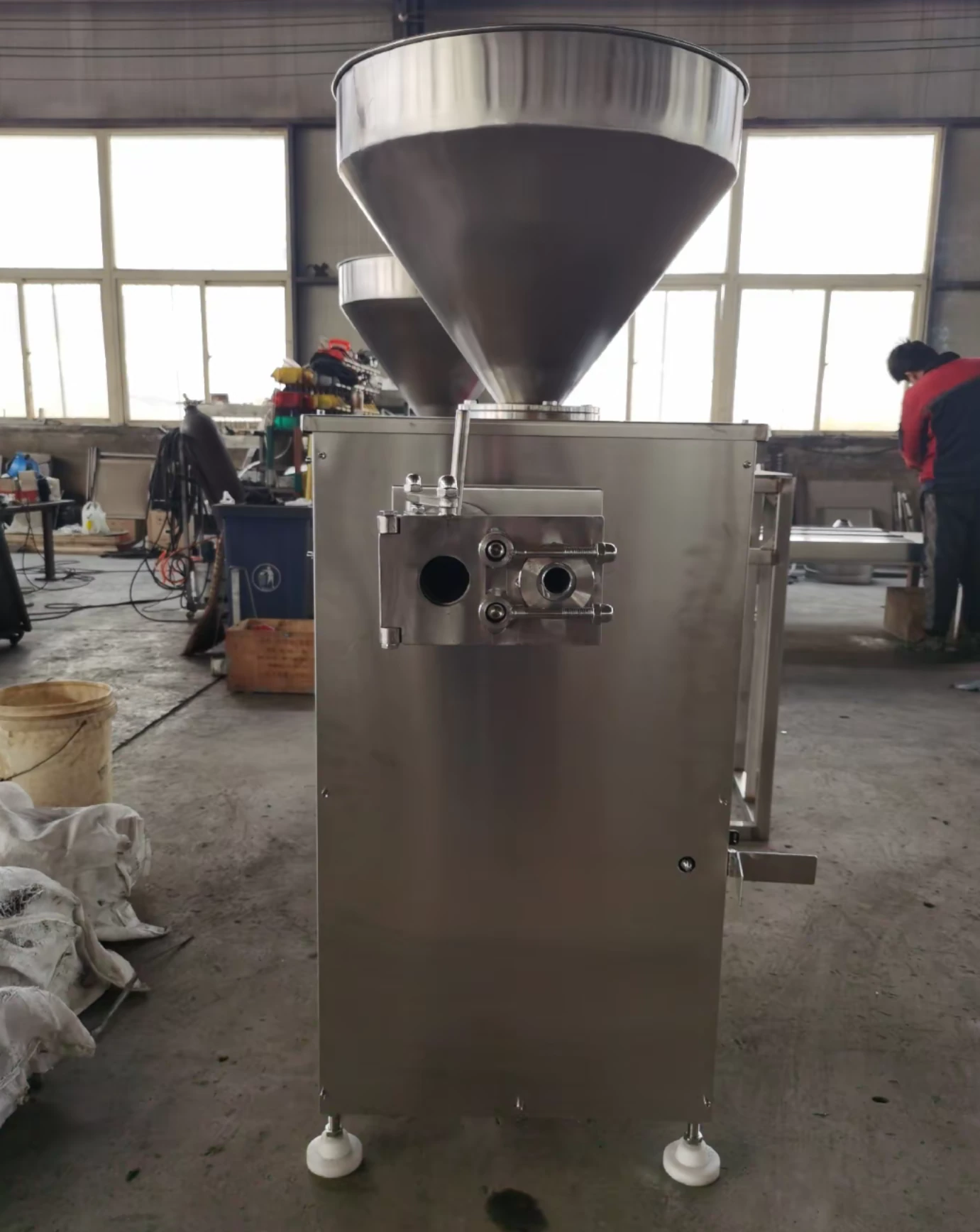
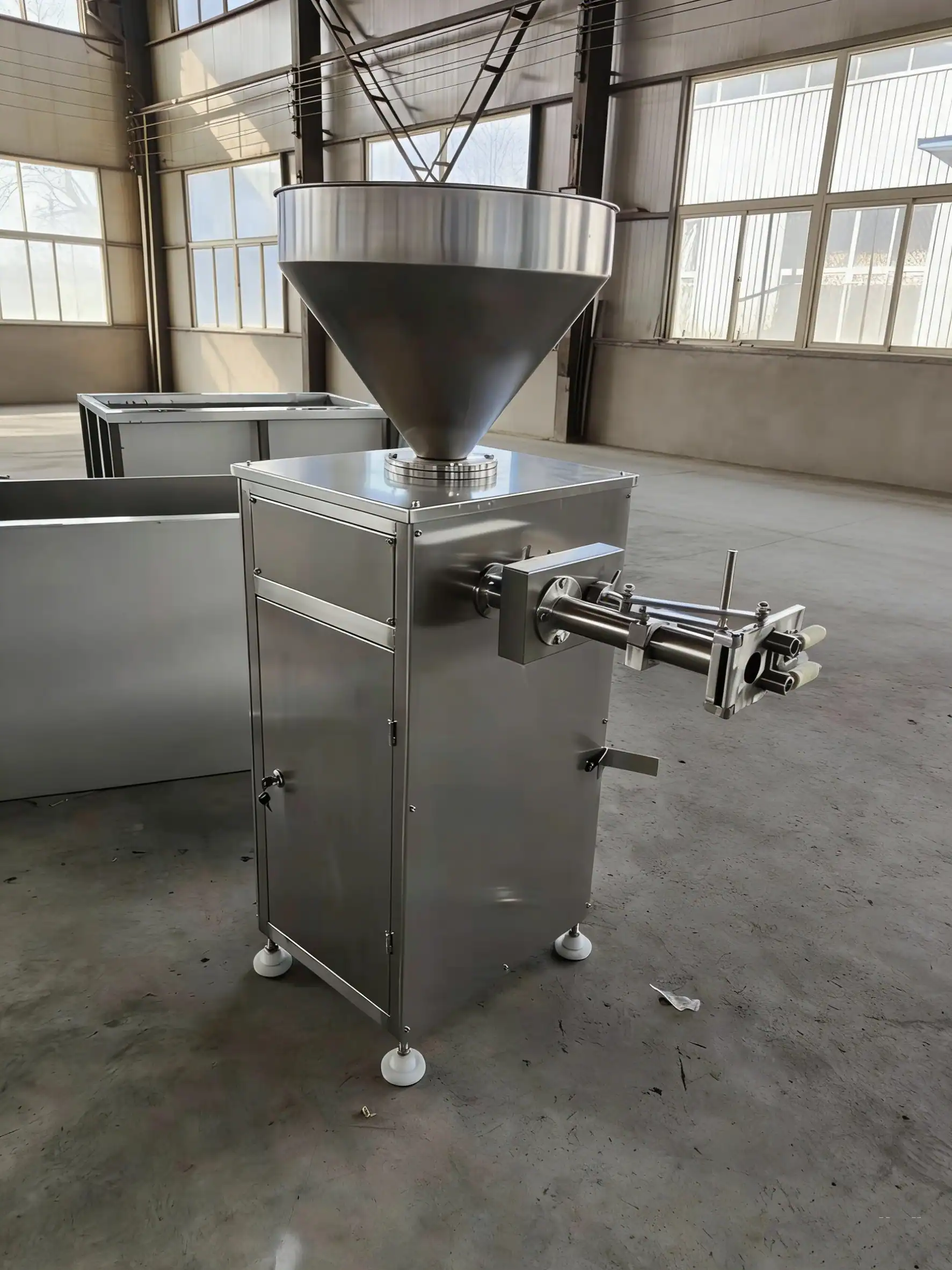
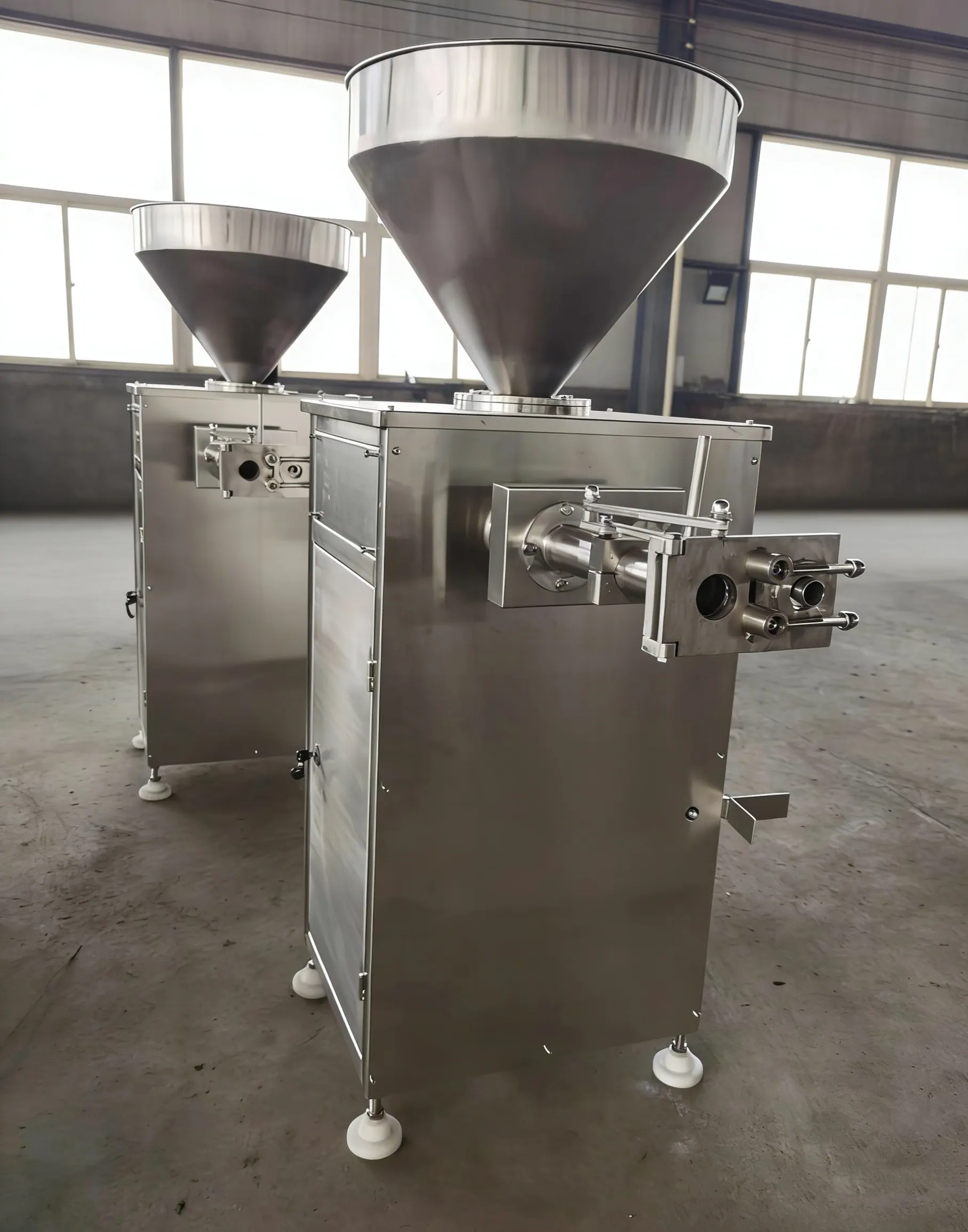
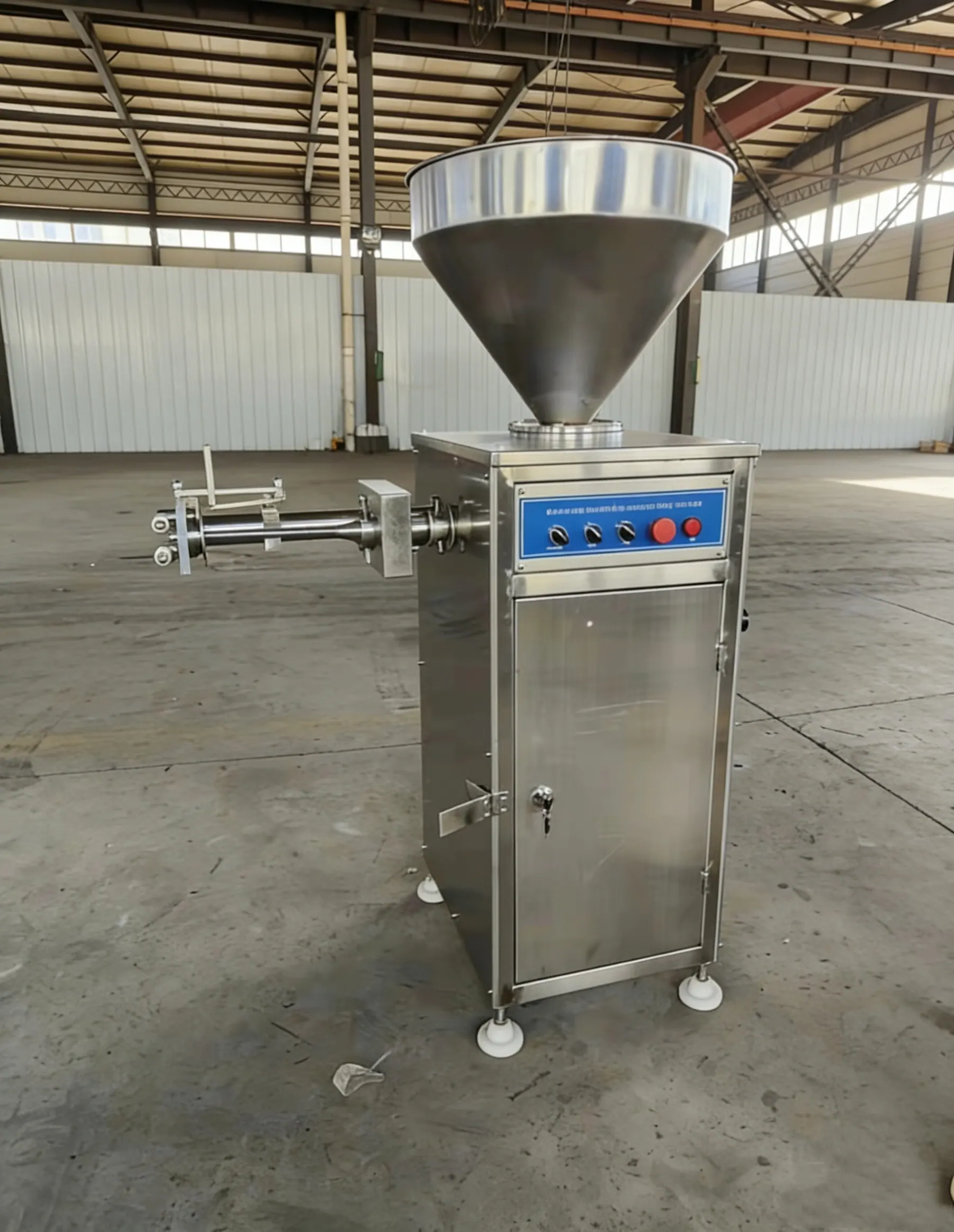
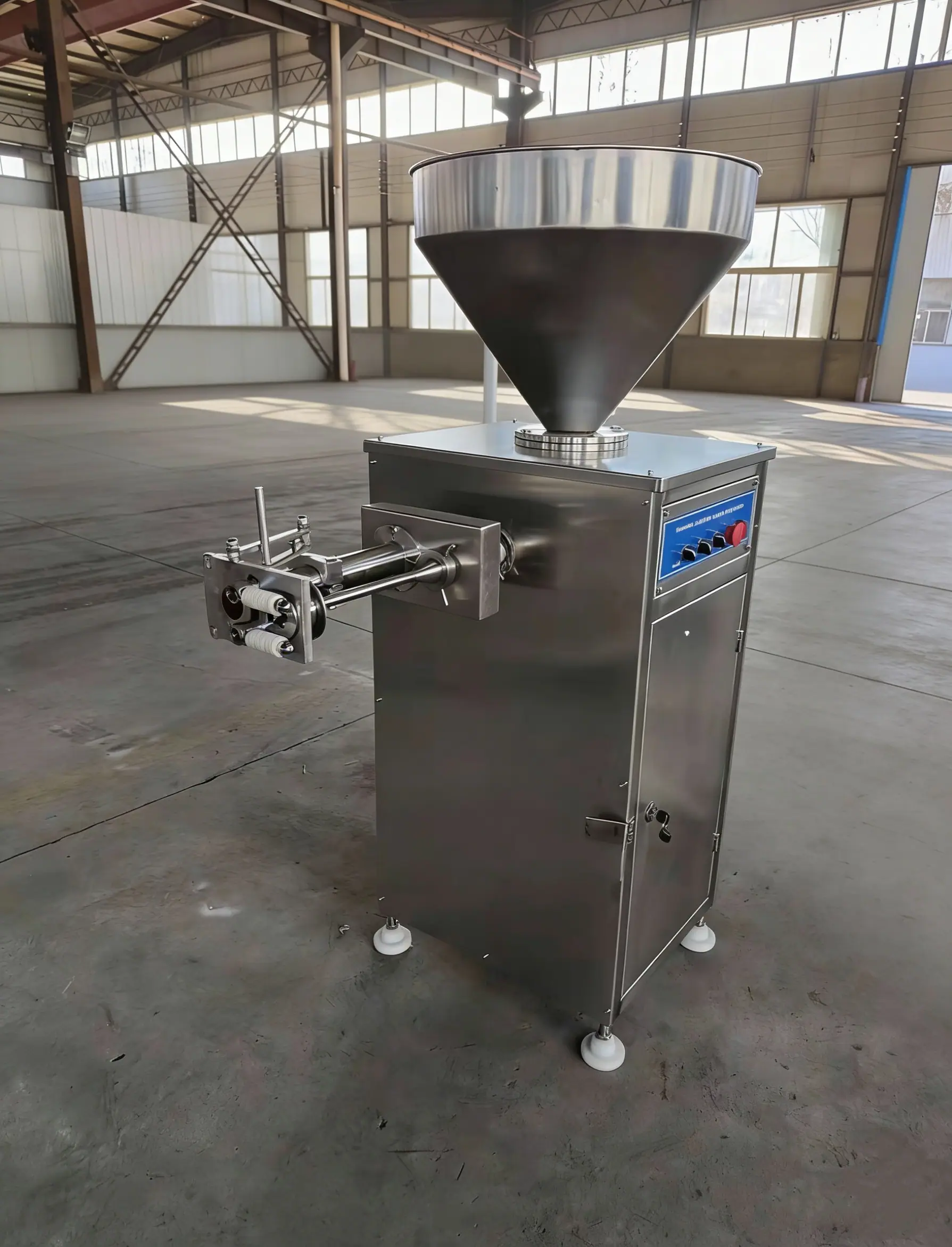
Stop watching your workers pump air and warm meat paste into casings with a manual funnel. A Pneumatic quantitative sausage stuffer machine is an industrial-grade extrusion system that relies purely on compressed air, using a precision directional valve and a volumetric cylinder to push high-viscosity meat into casings with near-zero temperature rise. If you run a Lạp xưởng (Vietnamese sausage) or Nem chua plant in Dong Nai, you know exactly the nightmare I am talking about. The 90% humidity and 35°C heat on a Vietnamese factory floor are the ultimate enemies of meat processing. Manual or cheap stuffers apply uneven thrust, leaving air pockets that cause the sausage to explode in the deep fryer. But the real killer is weight variance. A worker’s hand slips, a sausage gets an extra 5 grams, and by the end of the shift, you just gave away 50 kilograms of pure pork for free.
This machine fixes weight drift with absolute mechanical logic. Don’t believe the flashy brochures selling “smart microcomputer” controls. At the end of the day, if you don’t solve the pneumatic cylinder condensation rust in a humid environment, the best touchscreen in the world is useless.
Don’t just look at the “theoretical stuffing speed.” You need to look at the cylinder bore and the volumetric range. A weak air cylinder will instantly jam when trying to push semi-frozen meat paste. Here is the real data for our standard model, configured specifically for Southeast Asian processing plants.
| Parameter | Specification | Engineering Note for SEA Market |
|---|---|---|
| Model | QD-500 | Standard industrial size for medium/large sausage lines. |
| Portion Range | 20g – 1000g | Mechanically adjustable via screw stop. Variance ≤ ±2g. |
| Hopper Volume | 50 L | 304 Stainless Steel, polished interior to prevent meat sticking. |
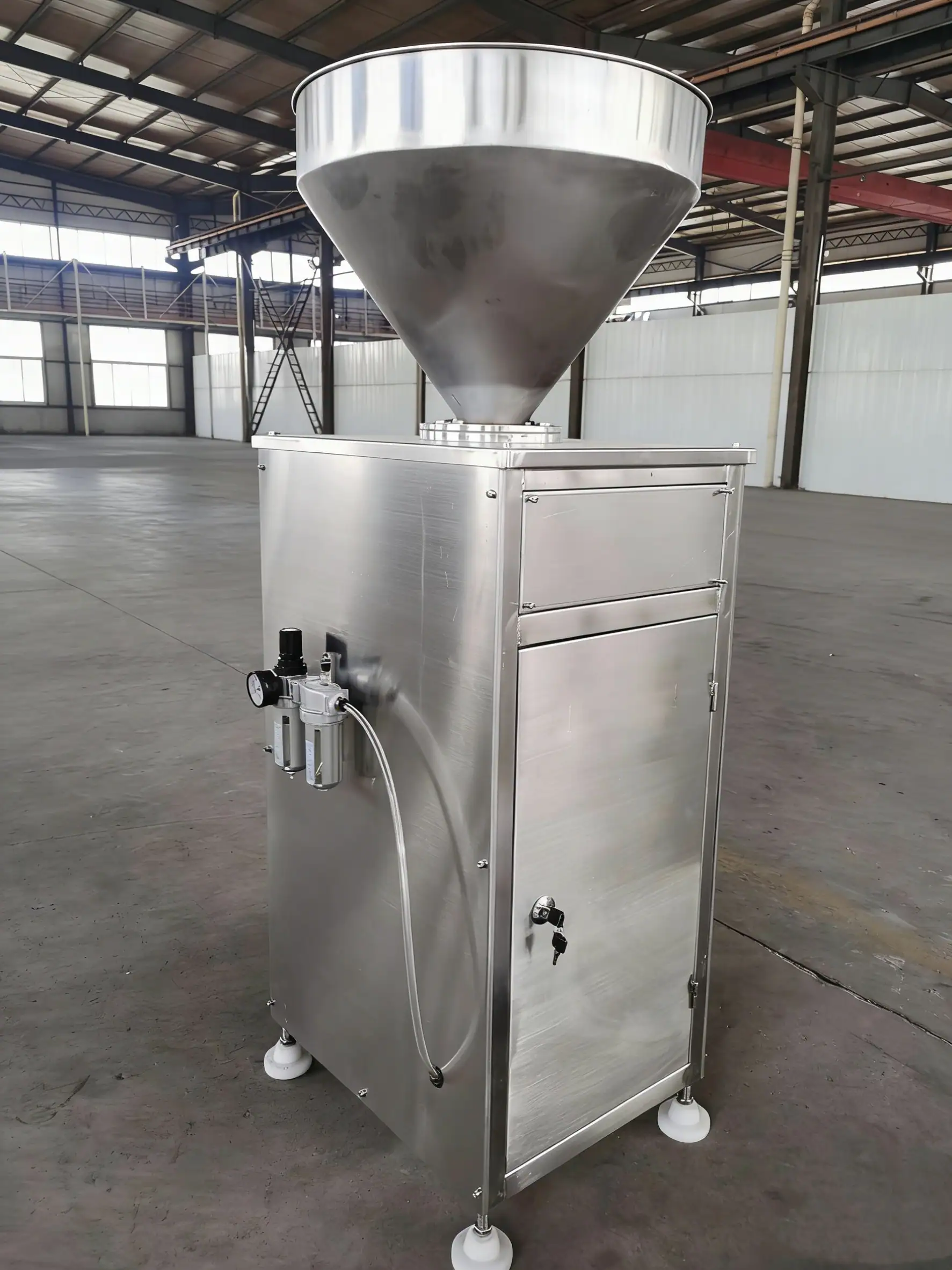
| Air Pressure | 0.5 – 0.8 MPa | Requires external compressor. Heavy-duty FRL water separator included. |
| Voltage | 220V / 50Hz | Only powers the solenoid valves. Immune to industrial grid drops. |
| Dimensions | 650 × 640 × 1480 mm | Heavy base plate. Will not rock when pushing dense, frozen fat chunks. |
Note: These parameters represent the true continuous running capacity. We don’t quote theoretical dry-run speeds that will jam your directional valves.
I’ve spent 15 years fixing meat processing lines across Binh Duong and Long An. Most imported machines look beautiful in a showroom but destroy your yield in a real factory. Here is how we build them to survive.
Let’s talk about weight control. When you force a dense, sticky Lạp xưởng mix loaded with thick fat cubes into a casing, the fluid resistance is massive. Cheap stuffers use flimsy spring-loaded dosing valves. When the air pressure fluctuates even slightly, your sausages come out uneven.
We use a pure mechanical-limit volumetric cylinder. The air cylinder pushes to a hard physical stop. The volume is fixed, so the weight is locked dead. The advantage? Extreme weight consistency. When processing high-viscosity Lạp xưởng paste, actual target-weight yield went from 82% to 97.5%. It doesn’t look like a massive leap on paper, but in a double-shift operation, you are saving exactly 1.2 tons of meat giveaway a month. This is pure operational leverage.
At the end of the day, if you don’t protect the pneumatic exhaust ports, the strongest air cylinder is just scrap metal. When your night-shift sanitation team cleans the equipment at 2 AM, if they spray the high-pressure water gun at a 45-degree angle directly at the solenoid valve exhaust on the back panel, water mist blasts straight into the air lines. The next morning, that moisture reacts with the aluminum cylinder wall, and the internal piston seals grind themselves to dust in a month. We engineered a downward-facing, louvered 304 SS shroud and installed waterproof exhaust mufflers. Water physically cannot reach the pneumatic components. ——these are the basic bottom lines in the 2026 industry standards.
Salesmen will hand you a list of generic features. I’m going to give you the engineering facts, along with the dirty little secrets of the meat processing floor.
Yes. This is a purely pneumatic machine; it does not generate its own driving force. You need a standard industrial air compressor delivering at least 0.3 m³/min at 0.8 MPa. Don’t worry. You can buy this exact spec at any hardware market in Ho Chi Minh City.
Perfectly. Because the volumetric cylinder uses a direct-push mechanism, there are no spinning blades or augers to crush the meat. If you are making traditional sausages with 10mm or even 15mm diced fat chunks, it preserves the exact texture of the meat without turning it into a mushy emulsion.
Under a brutal 10-hour daily shift, the main silicone piston seal will last about 6 months. We use standard international metric sizes, and we ship spares with the machine. It takes one operator exactly 2 minutes to swap it out by hand. You don’t even need a wrench.
Do you have project requirements or technical questions? Please let us know in the form below.