Stop looking at your labor payroll and thinking you are saving money. Last month, a factory owner in Ho Chi Minh City invited me to audit his poultry processing line. He proudly showed me sixty workers manually scraping meat off chicken frames to make Chả lụa (Vietnamese sausage). He thought paying local minimum wage was his competitive advantage. He was dead wrong.
When you rely on human hands to extract meat from complex bone structures, you aren’t just paying for time. You are paying for fatigue, inconsistency, and massive yield loss. If you are serious about scaling your food processing business in Southeast Asia, the debate between manual labor and an industrial meat bone separator ended a decade ago.
Let’s strip away the marketing fluff and look at the brutal engineering and financial realities of mechanical deboning.
The Hidden Hemorrhage of Manual Deboning

Human hands get tired. A worker starting their shift at 7:00 AM might extract 65% of the usable meat from a chicken carcass. By 2:00 PM, in a processing room struggling against the 35°C ambient heat of an Indonesian summer, that extraction rate drops to 50%. The rest goes straight into the rendering bin. You are literally throwing premium protein into the trash.
Furthermore, manual deboning exposes the meat to prolonged ambient temperatures and human contact. In high-humidity environments like Bangkok or Surabaya, every extra minute the meat sits on a cutting board exponentially increases the bacterial load.
The Engineering Reality: How Mechanical Deboning Actually Works

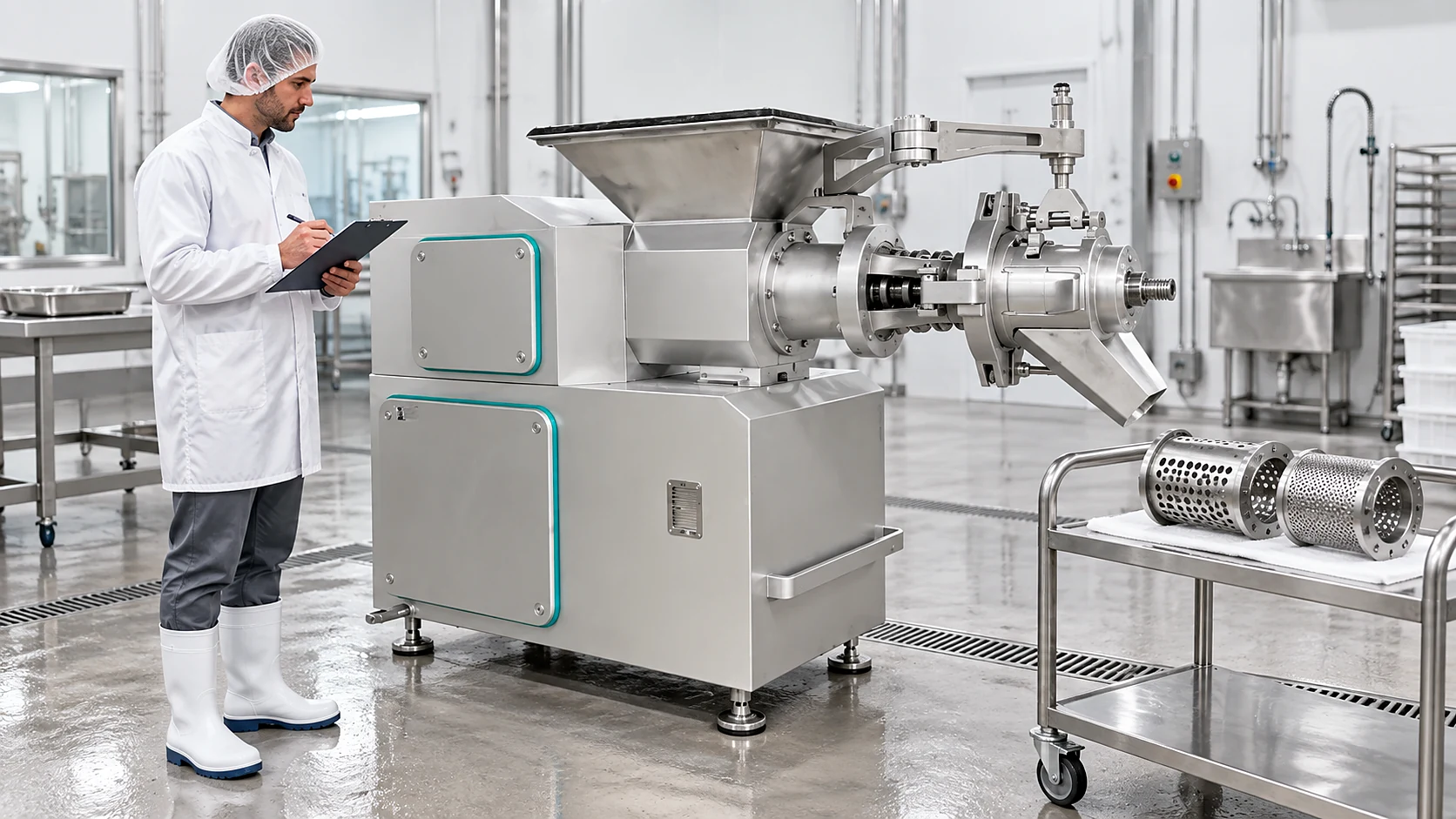
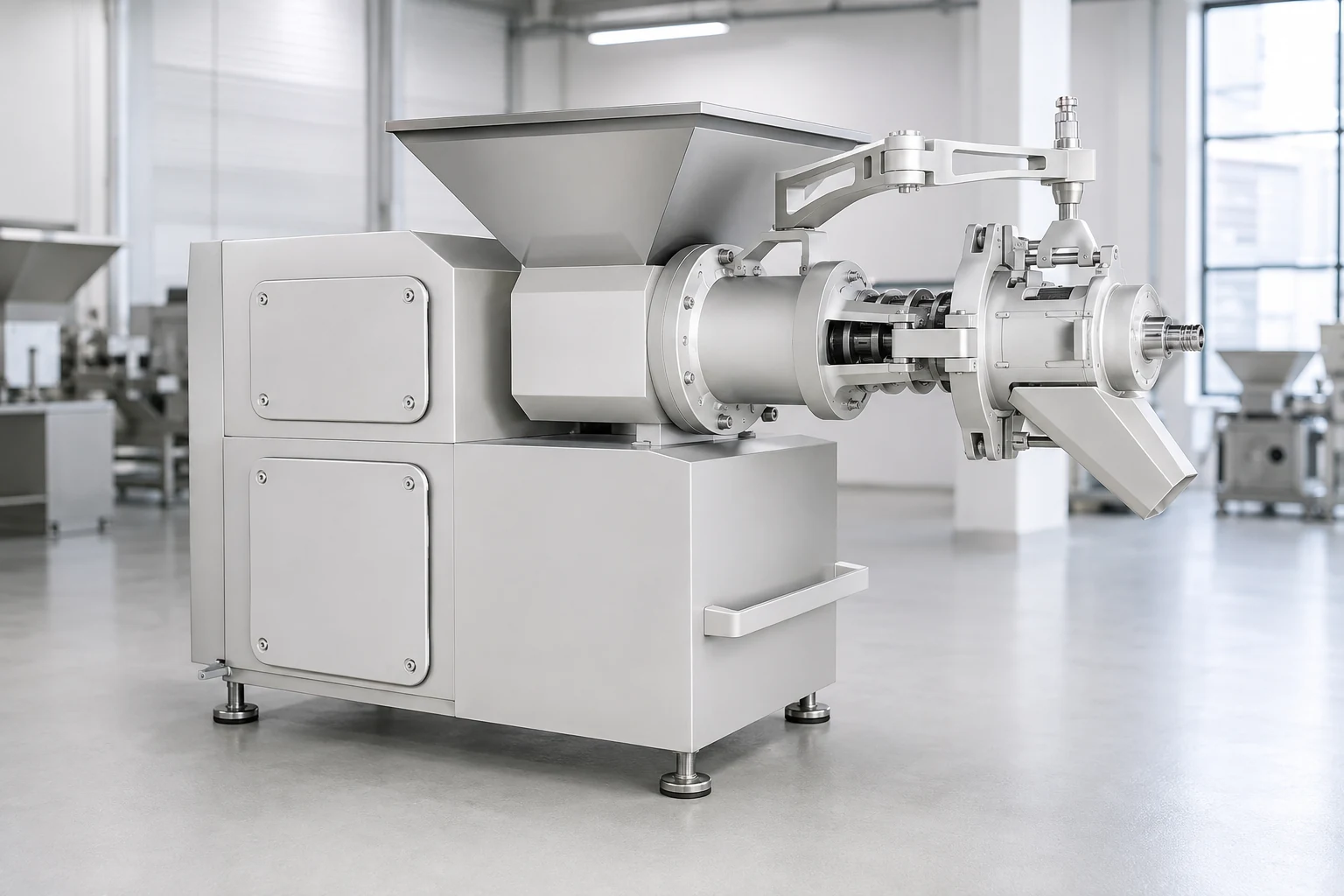
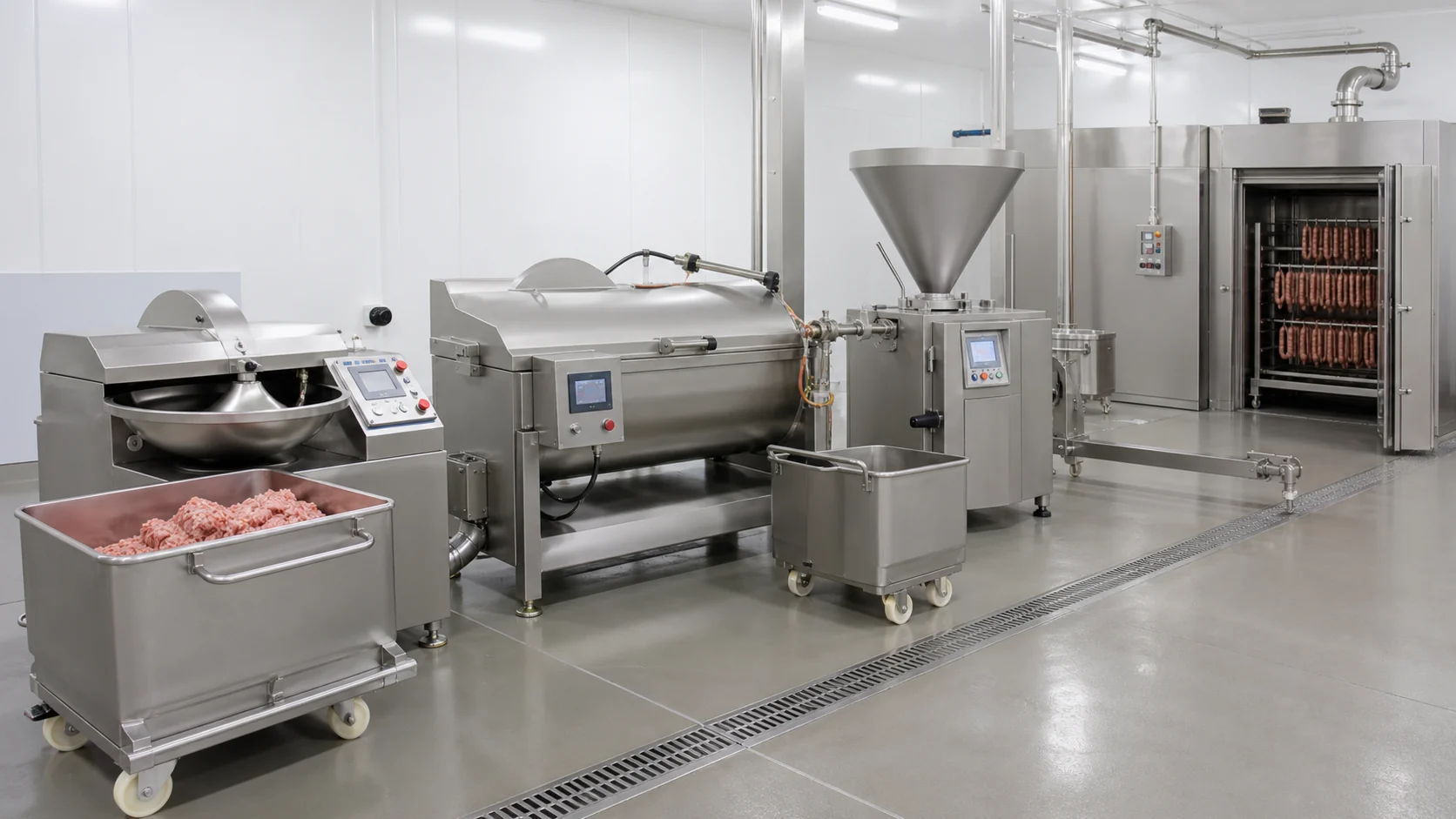
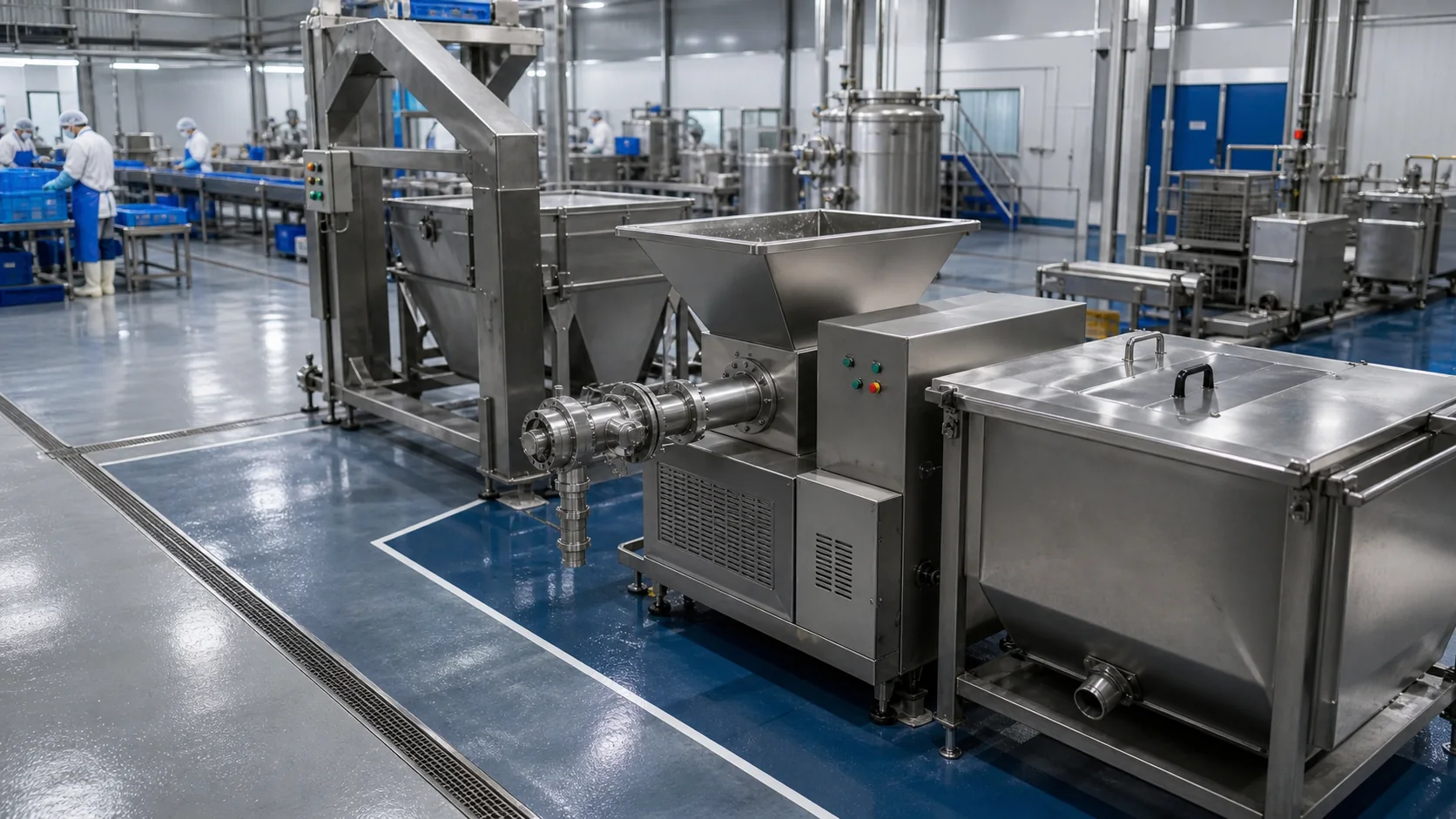
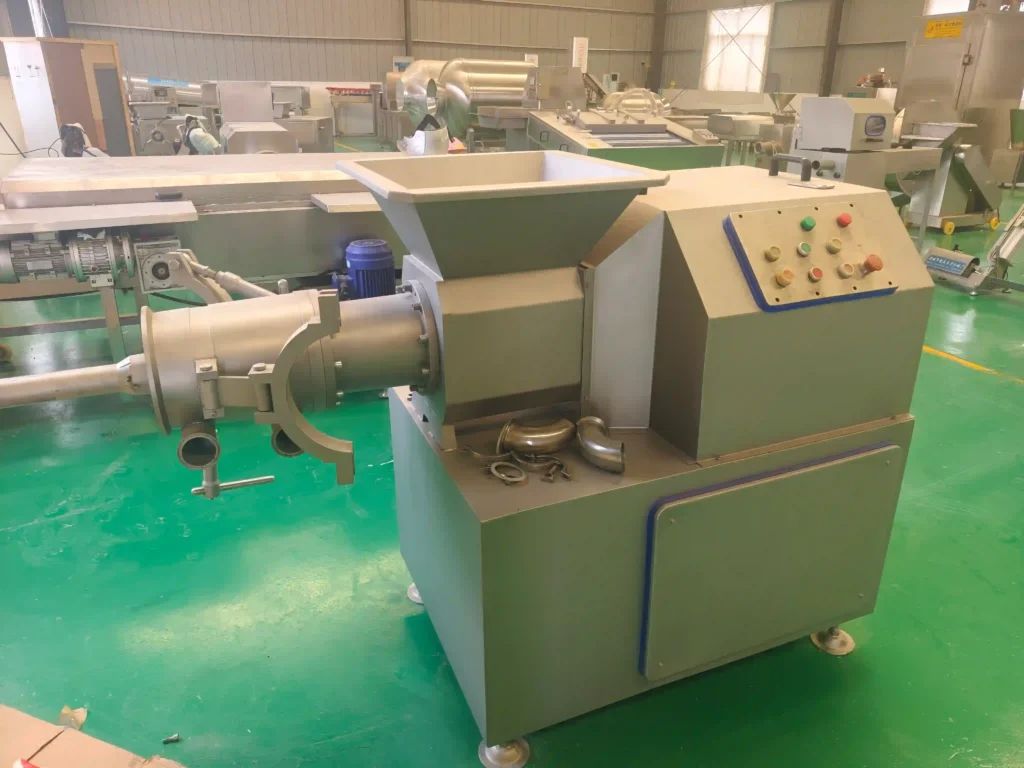
Forget the brochures that say these machines “magically press meat.” An industrial meat bone separator is a high-torque extrusion engine.
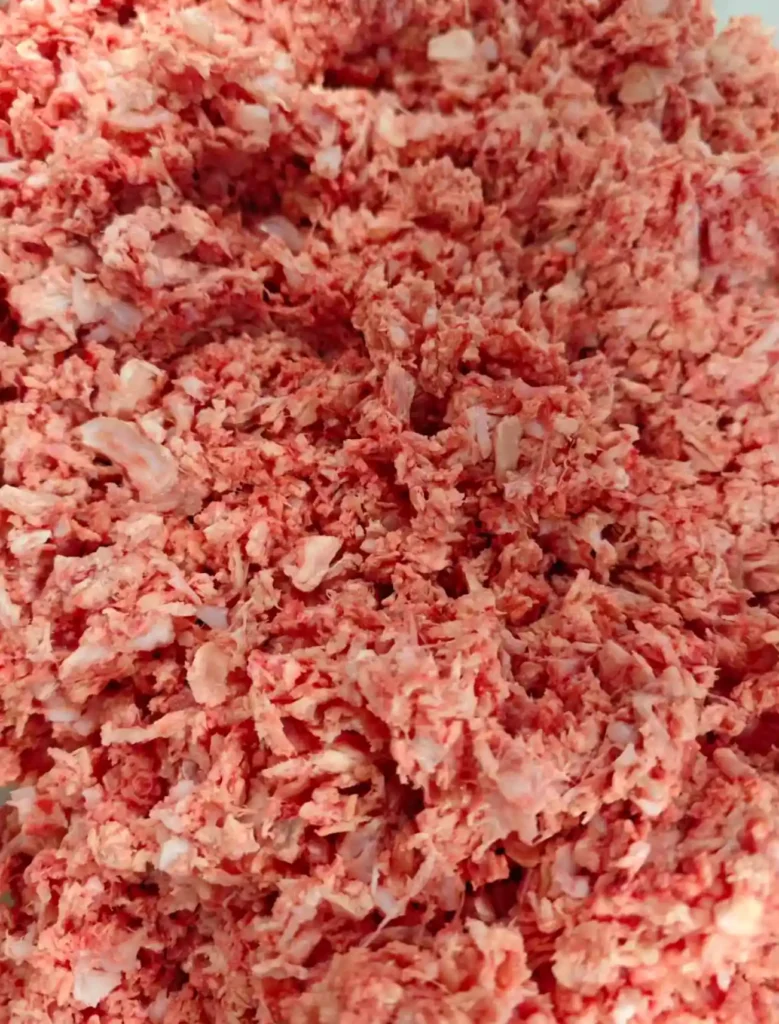
The core technology relies on a variable-pitch auger rotating inside a precisely machined micro-slotted filter. As the raw material—whether it’s chicken frames, fish backbones, or pork trimmings—moves forward, the decreasing screw pitch forces the internal chamber pressure to spike. The soft muscle fibers and fats are extruded through 0.5mm gaps. The hard calcium structures are driven forward and discharged as dry bone residue.
This is where amateur equipment fails. If the auger geometry is wrong, the friction cooks the meat. We engineer the screw pitch optimization to ensure the meat temperature rise is strictly controlled under 3°C. —this is an absolute non-negotiable baseline in 2026 for maintaining the protein’s water-binding capacity. If your paste gets hot, your Bakso (Indonesian meatballs) will taste like rubber.
The “Number Trap”: Real Cost-Benefit Analysis

Don’t listen to salesmen promising “a 50% increase in efficiency.” That means nothing on the factory floor. Let’s look at a real-world production scenario.
When processing chilled chicken frames for sausage production, a standard manual line with 20 workers might yield 800 kg of meat per shift. When we installed our heavy-duty separator, the actual throughput didn’t just “go up.” The extraction efficiency from the exact same volume of raw material jumped from 1.2 tons per hour to 1.55 tons.
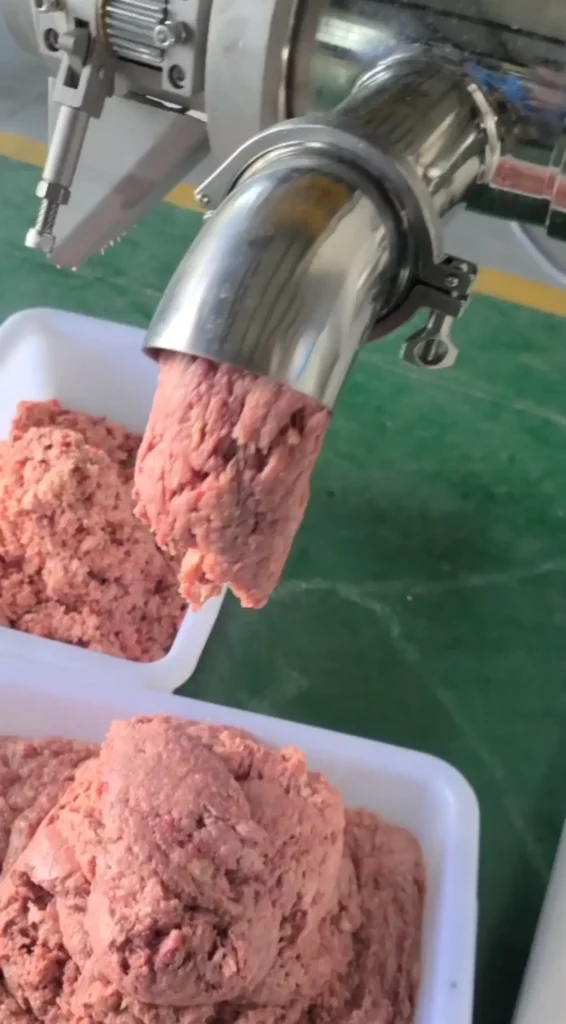
It might look like a minor bump on a spreadsheet. But in a double-shift operation running 24 days a month, you are extracting an extra 5 tons of pure, usable meat paste from bones you were previously throwing away. At current wholesale meat prices in Jakarta, that machine pays for its entire capital expenditure in exactly 74 days. Everything after that is pure, unadulterated profit.
Operating in Southeast Asia: The Unspoken Rules of the Factory Floor
You cannot drop a European-spec machine into a Vietnamese factory and expect it to survive. The climate and the operators will destroy it. Here is how we apply the F-A-B (Feature-Advantage-Benefit) logic to real-world conditions:
- The F-A-B of Metallurgy:
- Feature: The entire chassis and internal extrusion chamber are forged from SUS304 stainless steel.
- Advantage: It provides total resistance to stress corrosion cracking in environments with 90% humidity.
- Benefit: Your machine won’t fail health inspections or require structural welding for at least a decade.
- The Unspoken Rule: Many cheap knock-offs use 304 for the outside panels but hide cheap 201 stainless steel in the internal drive shafts. After six months of washing with chlorinated water, the inside rusts out, snapping the main shaft mid-shift.
- The F-A-B of Electrical Systems:
- Feature: IP65 waterproof-rated Siemens electrical cabinets adapted for local 380V/50Hz grids with heavy-duty voltage fluctuation protection.
- Advantage: It prevents motherboard fry-outs during the frequent power surges common in industrial zones outside Manila or Ho Chi Minh.
- Benefit: Zero unplanned electrical downtime.
- The Unspoken Rule: When your sanitation crew cleans the machine, if they point the high-pressure water gun at a 45-degree angle directly at the main bearing seal, the water will bypass the IP rating and rot the bearings in weeks. Always instruct them to spray parallel to the seals.
- The F-A-B of Material Feeding:
- Feature: An oversized, anti-bridging feed hopper.
- Advantage: Prevents frozen bone clusters from jamming the intake.
- Benefit: One operator can manage the machine instead of two.
- The Unspoken Rule: Say what you want about motor power, but say it loud: if you don’t solve the raw material bridging issue in the hopper, a 15kW motor is just an expensive paperweight.
FAQ: What Plant Managers Ask Behind Closed Doors
Q: Will mechanical deboning ruin the texture of my fish balls or Bakso?
A: Only if you buy a machine with poor thermal management. Because we keep the temperature rise below 3°C, the myosin (the protein responsible for the “bounce” in meatballs) remains completely intact. Your yield goes up, and your texture stays identical to hand-scraped meat.
Q: How long does it take to clean the micro-slotted filter? I can’t afford 2 hours of downtime.
A: It takes exactly 15 minutes if you follow the protocol. We use a quick-release locking ring. One operator can slide the filter sleeve out without heavy tools. However, if you let the meat paste dry inside the 0.5mm slots over the weekend, you will need an ultrasonic cleaner to fix your mistake. Clean it wet.
Q: What happens when a bearing fails? Am I waiting three weeks for parts from overseas?
A: No. We refuse to use proprietary, locked-down components. The main drive uses standard SKF heavy-duty bearings and standard Siemens contactors. You can drive to the nearest industrial hardware market in Bangkok, Jakarta, or Hanoi and buy replacements off the shelf in an hour. We design for maximum uptime, not spare-parts extortion.
Stop bleeding your margins to manual inefficiency. Upgrading to mechanical deboning isn’t an expense; it is the most aggressive cost-reduction strategy available to meat processors today.