Last week, a plant manager in Penang called me, absolutely furious. He bought a cheap deboning machine online because the glossy brochure promised an “85% meat yield” on chicken frames. Now he is getting 55%, his meat paste is full of bone splinters, and his production line is bleeding money. Don’t believe those ads.
If you are running a commercial poultry processing line or producing Bakso ayam (chicken meatballs) in Southeast Asia, chasing fake percentages will bankrupt you. The actual meat yield of an industrial meat bone separator depends entirely on the physics of your raw material and the geometry of your auger. Let’s strip away the marketing garbage and look at the actual numbers from the factory floor.
The Brutal Truth About Meat Yield Percentages
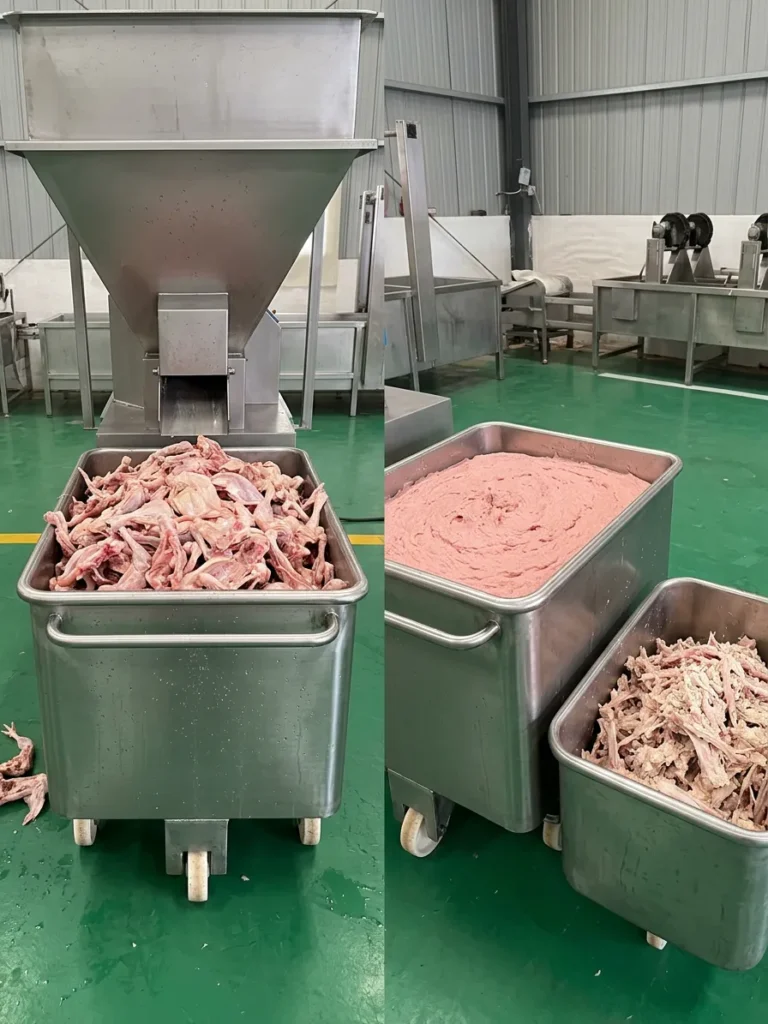
Salesmen love to throw around a flat “80% yield.” Nonsense. The yield fluctuates wildly based on what you are throwing into the hopper. A broiler chicken frame has a completely different bone-to-meat ratio than an old laying hen.
Here is the actual factory data you should expect from a properly calibrated machine:
- Fact 1: Whole Chicken Carcasses yield 65% – 75% MDM.
- The Unspoken Rule: If someone promises you 85% on whole birds, they are crushing the bones so fine that calcium powder is artificially inflating your paste weight. Your meat will taste like sand.
- Fact 2: Chicken Frames (post-breast/leg removal) yield 55% – 65% MDM.
- The Unspoken Rule: This requires the raw material to be chilled between -2°C and 0°C. If you feed room-temperature frames into the hopper in a 35°C Jakarta factory, the fat melts, clogs the 0.5mm filter slots, and your yield drops by 15% instantly.
- Fact 3: Chicken Necks yield 45% – 55% MDM.
- The Unspoken Rule: Necks have massive interlocking vertebrae. If you don’t optimize the screw pitch specifically for necks, you will snap the main drive shaft.
The “Number Trap” in Real Production
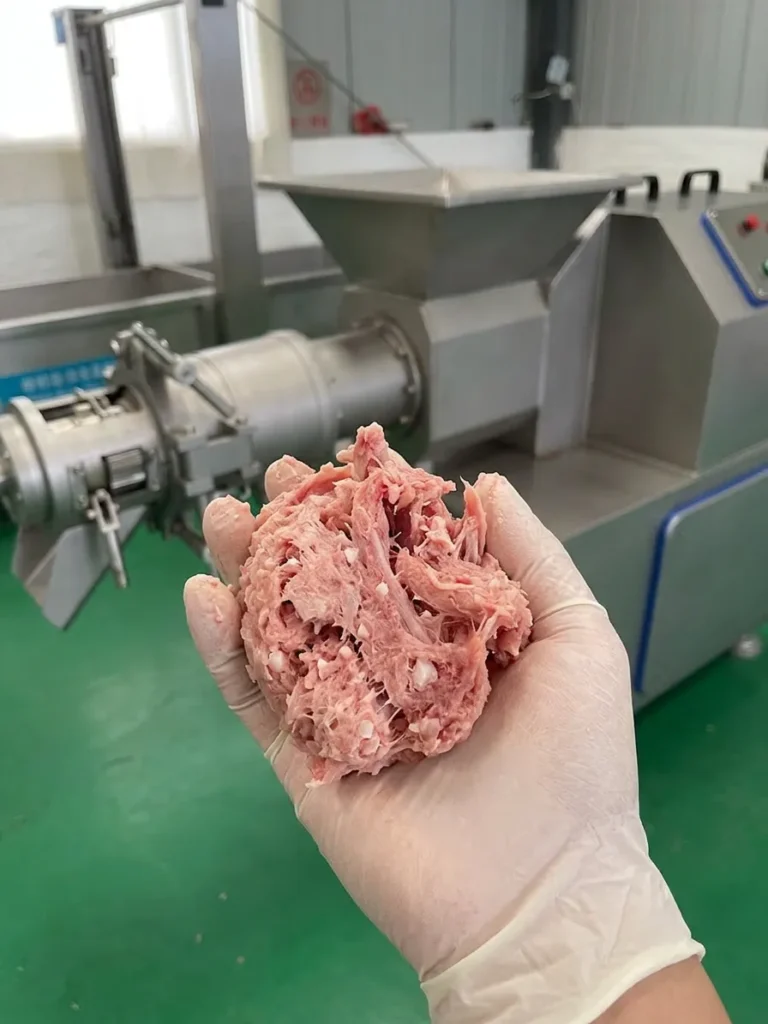
Stop looking at arbitrary percentages. Let’s talk about actual throughput and the “number trap” that catches amateur buyers.
When processing frozen chicken frames for a local Chả lụa (Vietnamese sausage) facility, actual efficiency from our heavy-duty rig jumped from 1.2 tons per hour to 1.55 tons per hour compared to their old machine. It might not sound like a revolution. But in a double-shift operation, you are saving an extra 5 tons of pure meat paste every single month. That is actual cash hitting your bank account, not a fake percentage on a PDF brochure.
The Engineering Reality: How We Extract the Meat (F-A-B Logic)
You cannot squeeze meat out of a bone by just pushing it hard. It requires precise fluid dynamics.
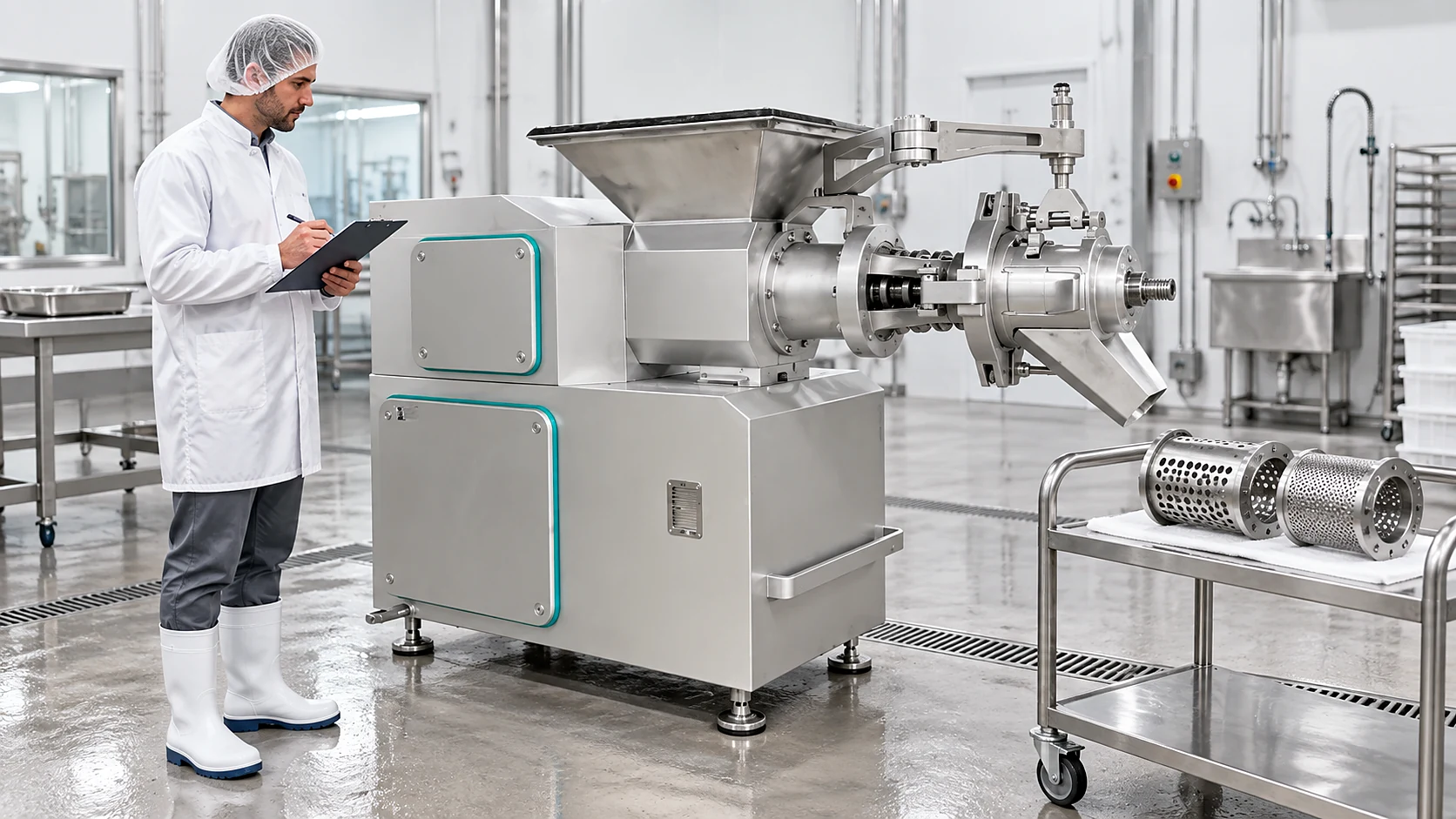
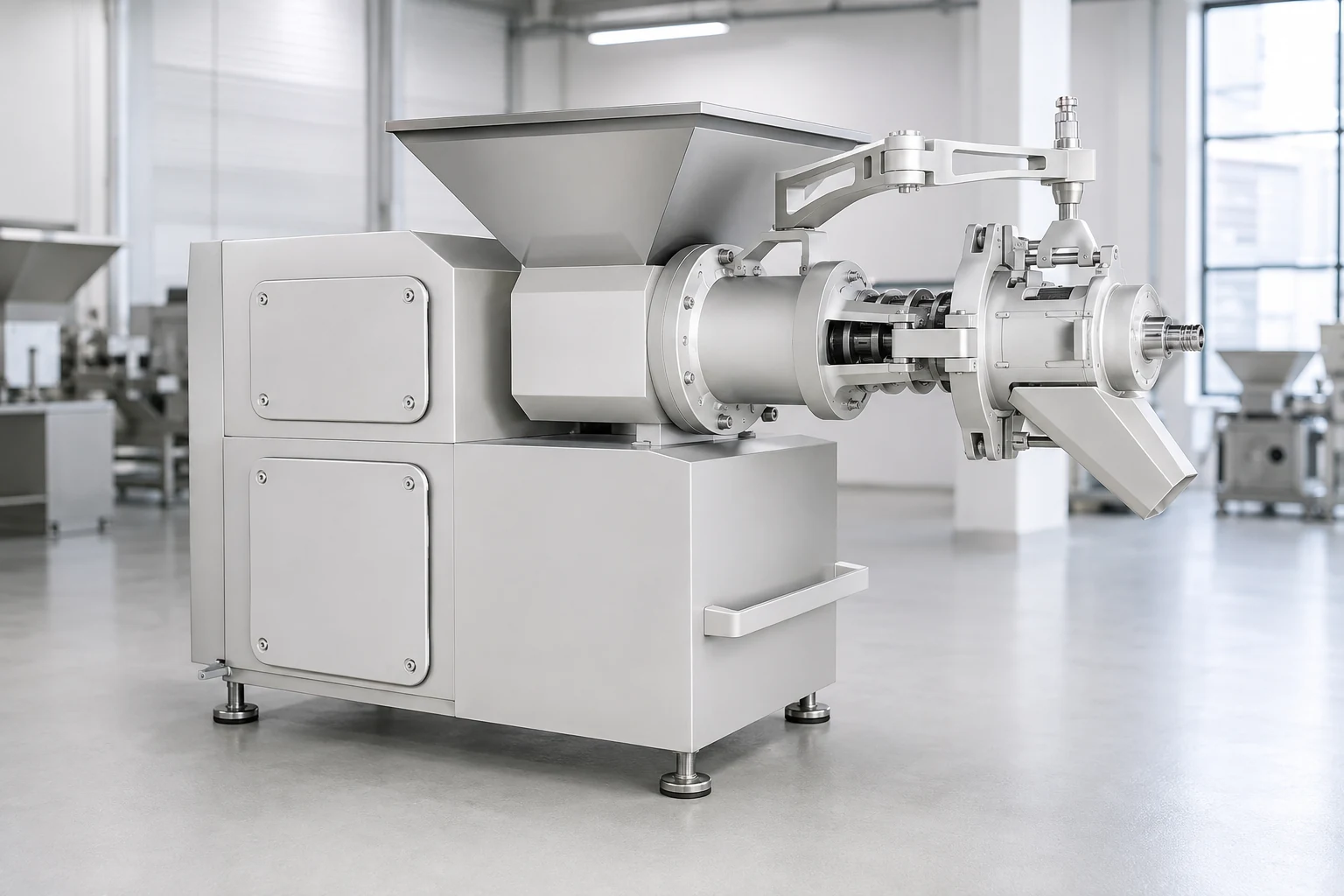
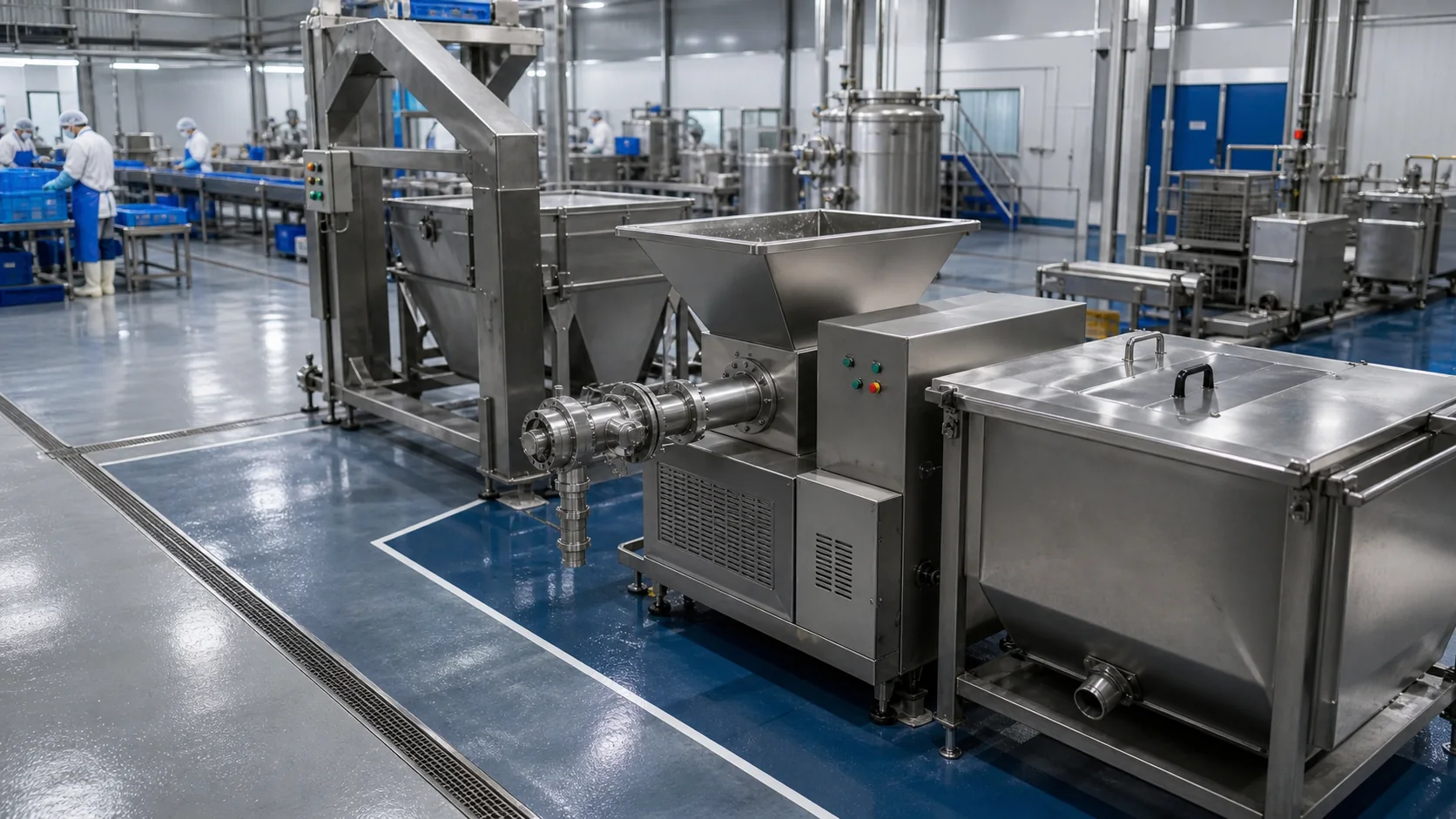
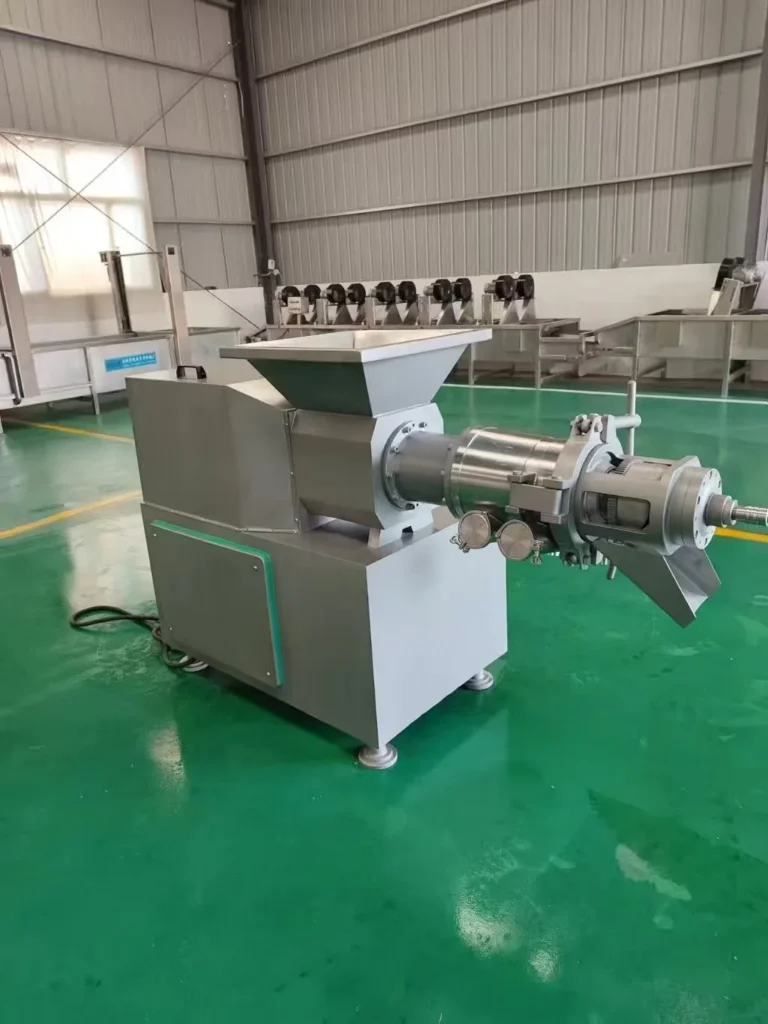
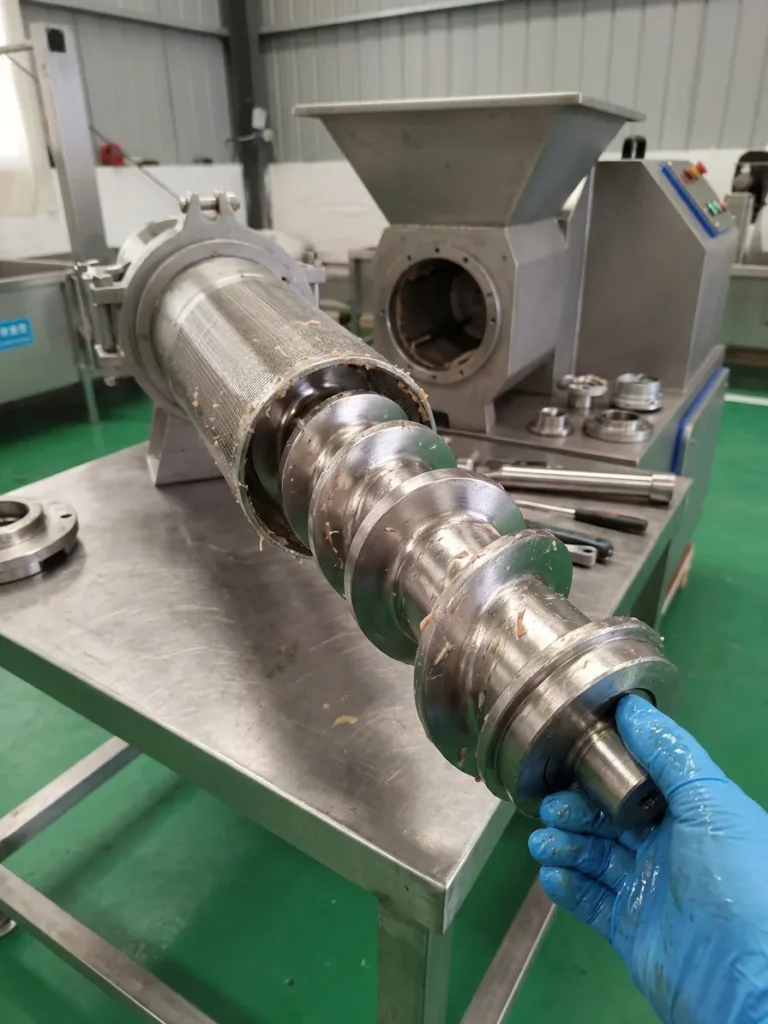
- Feature: We use a custom-machined, variable-pitch auger rotating inside a micro-slotted filter tube.
- Advantage: As the chicken frames move forward, the decreasing pitch forces the internal chamber pressure to spike exponentially. The soft muscle fibers are extruded through the 0.5mm gaps, while the hard calcium structures are driven forward and discharged.
- Benefit: You get maximum protein extraction without bone micro-splinters ruining your final product’s texture.
This is where cheap equipment fails. If your auger isn’t optimized for the specific bone density of your raw material, the friction will literally cook your meat paste before it even exits the machine. We strictly control the meat temperature rise to be within 3°C. ——this is the absolute baseline for 2026 industry standards, and anything less is just a meat cooker.
Operating in Southeast Asia: Surviving the Heat and Humidity
You cannot drop a European-spec machine into a Thai or Indonesian factory and expect it to survive. The climate and the operators will destroy it.
First, let’s talk metallurgy. The entire chassis and internal extrusion chamber must be forged from SUS304 stainless steel to prevent stress corrosion cracking. Many cheap suppliers use 304 for the outside panels but hide cheap 201 stainless steel in the internal drive shafts. After six months of operating in 90% humidity and being washed with chlorinated water, the inside rusts out, snapping the main shaft mid-shift.
Second, let’s talk about maintenance realities. Our machines feature IP65 waterproof-rated Siemens electrical cabinets adapted for local 380V/50Hz grids with heavy-duty voltage fluctuation protection. But here is the real secret: When your sanitation crew cleans this machine, if they point the high-pressure water gun at a 45-degree angle directly at the main bearing seal, that seal will fail in weeks. Always instruct them to spray parallel to the seals. AI manuals won’t tell you that, but a flooded bearing will shut down your line for three days.
Say what you want about motor power, but say it loud: if you don’t solve the raw material bridging issue in the feeding hopper, a 15kW motor is just an expensive paperweight.
FAQ: What Plant Managers Actually Ask Me Behind Closed Doors
Q: Can I use this as a pet food meat paste separator?A: Yes. The pet food industry is actually our fastest-growing sector. Because AAFCO standards require high-quality protein, using our separator on poultry frames gives you a premium, calcium-rich MDM base for wet cat and dog food. Just ensure you swap to the 0.8mm filter sleeve for a slightly coarser texture.
Q: How long does it take to clean the micro-slotted filter? I can’t afford 2 hours of downtime.A: It takes exactly 15 minutes if you follow the protocol. We use a quick-release locking ring. One operator can slide the filter sleeve out without heavy tools. However, if you let the meat paste dry inside the 0.5mm slots over the weekend, you will need an ultrasonic cleaner to fix your mistake. Clean it wet.
Q: What happens when a bearing fails? Am I waiting three weeks for parts from overseas?A: No. We refuse to use proprietary, locked-down components. The main drive uses standard SKF heavy-duty bearings and standard Siemens contactors. You can drive to the nearest industrial hardware market in Bangkok, Surabaya, or Hanoi and buy replacements off the shelf in an hour. We design for maximum uptime, not spare-parts extortion.
Stop bleeding your margins to manual inefficiency and fake yield promises. Upgrading to a properly engineered industrial meat bone separator is the most aggressive cost-reduction strategy available to meat processors today.