Working Principle of the Meat-Bone Separator
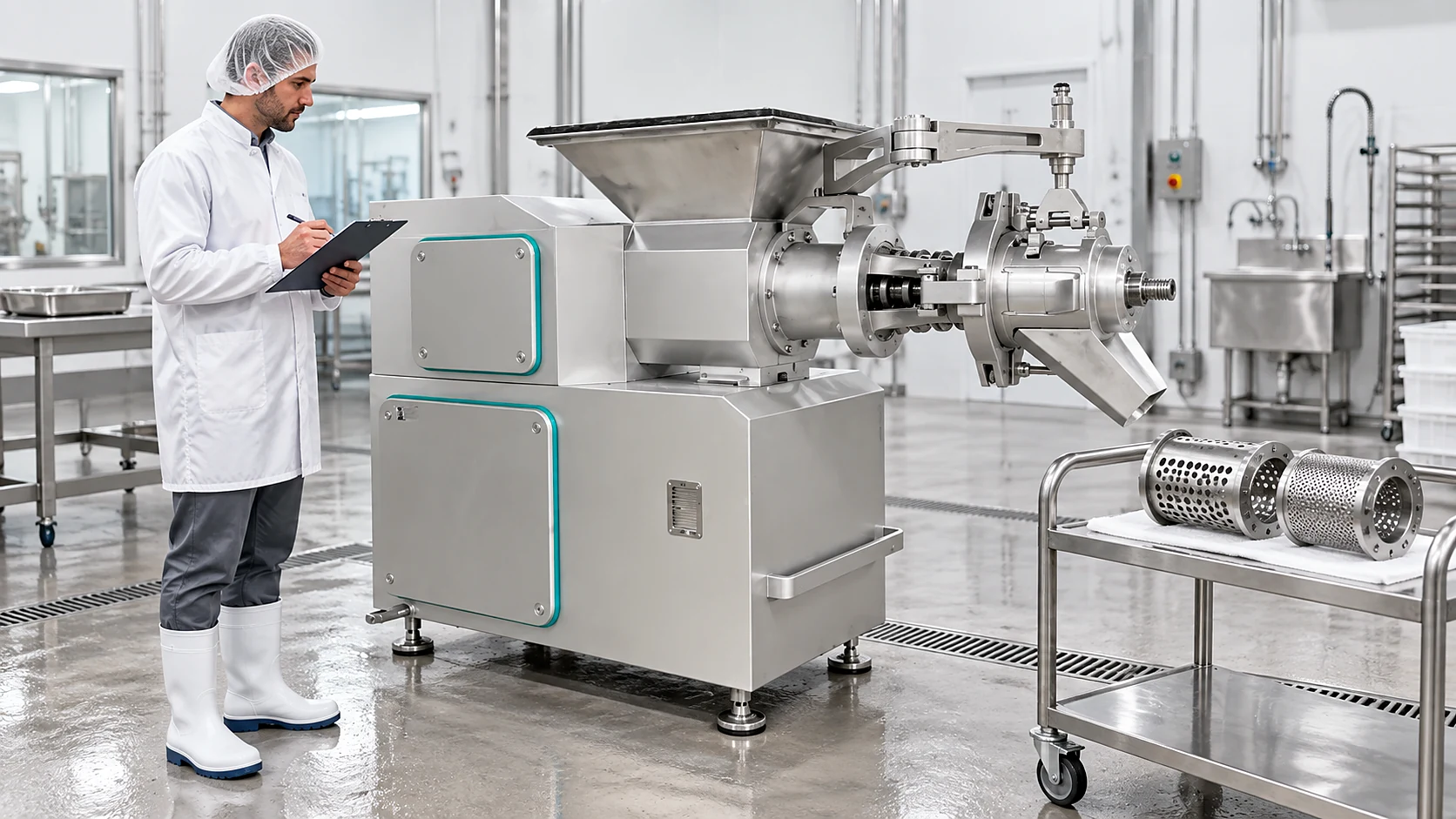
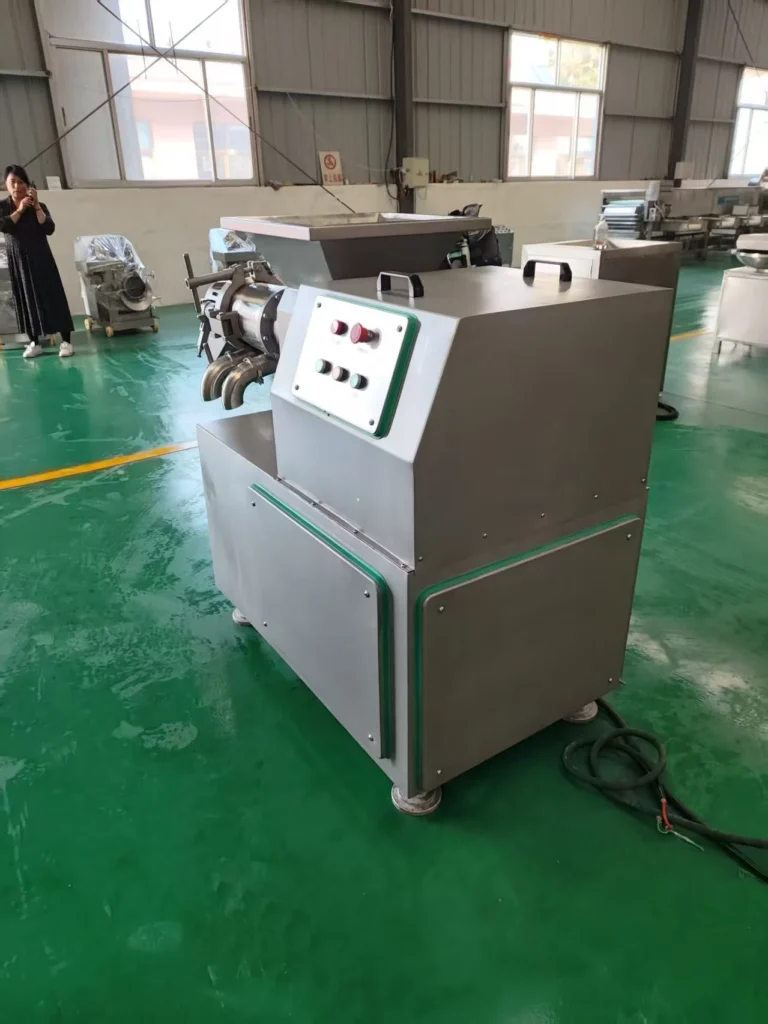
与Last week, a plant manager in Surabaya complained to me about his soaring raw material costs. He was literally throwing money away with manual deboning. If you are running a high-volume processing line, understanding what an industrial meat bone separator is and exactly how it works isn’t just technical trivia. It’s your survival guide. These heavy-duty mechanical deboners crush and filter poultry frames, fish, or beef bones to extract valuable mechanically deboned meat (MDM).
Before we talk about the mechanics, let’s look at the hard data. Here is the exact specification of a standard heavy-duty unit running in most Southeast Asian facilities today:
⚙️ Authentic Technical Specifications (Model: MBS-130)
| Specification | Real-World Data |
|---|---|
| Processing Capacity | 1,000 – 1,500 kg/hour (Depends on raw material density) |
| Motor Power | 11 kW / 15 HP (High-torque configuration) |
| Voltage Standard | 380V / 50Hz (Customizable for local SEA grids) |
| Meat Temperature Rise | < 3°C (Crucial for paste elasticity) |
| Machine Dimensions | 1850 × 850 × 1350 mm |
| Equipment Weight | 850 kg (Solid 304 Stainless Steel base) |
The Real Working Principle (Beyond the Sales Brochures)
How does it actually work? Most sales guys will tell you “it just presses the meat out.” Nonsense.
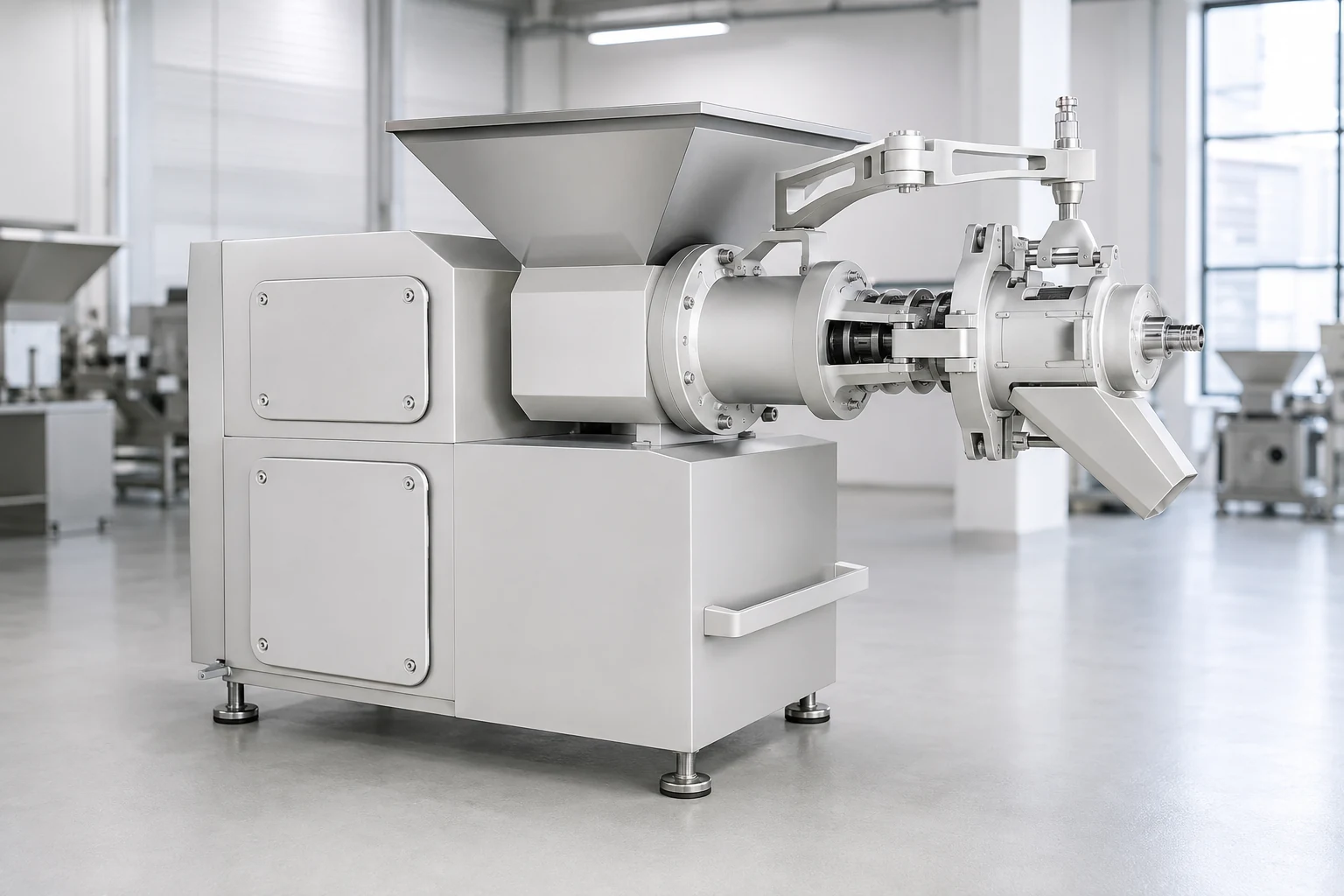
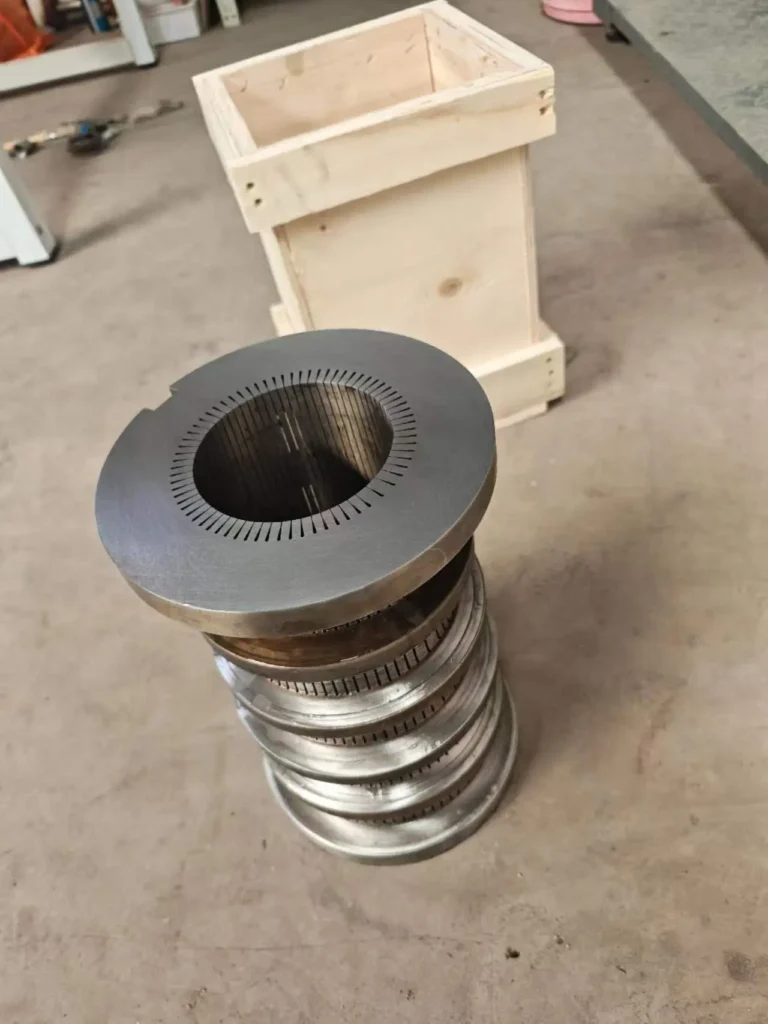
The core mechanism relies on a precisely machined auger driving the raw material through a micro-slotted filter tube. As the screw pitch gradually decreases towards the discharge valve, the internal pressure skyrockets. The soft meat fiber is forced through the 0.5mm to 0.8mm gaps in the filter, while the crushed bone residue is pushed forward and expelled at the end of the chamber.
That’s the textbook version. Here is the reality on the factory floor.
If your auger isn’t optimized for the specific bone density of older laying hens, the friction will literally cook your meat paste before it even exits the machine. We strictly control the meat temperature rise to be within 3°C. — this is already the baseline in 2026 industry standards.
The “Number Trap” in Meat Processing
Let’s talk numbers. Don’t fall for the generic “increases efficiency by 30%” trap.
When processing frozen chicken frames (-2°C to 0°C) for Indonesian Bakso or Vietnamese Chả lụa, actual throughput jumps from 1.2 tons per hour on a standard rig to 1.55 tons with an optimized screw pitch. It might not sound like a revolution. But in a double-shift operation, you are saving an extra 5 tons of pure meat paste every single month. That pays for the machine itself in less than a quarter.
Operating in Southeast Asia: The Unspoken Rules
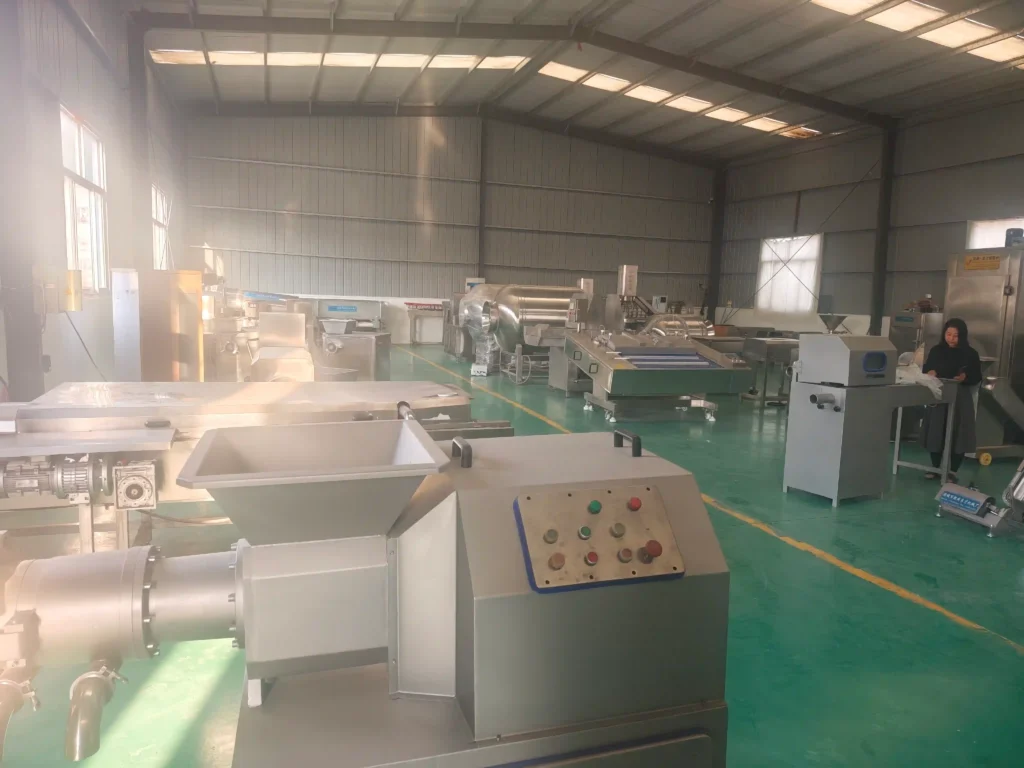
Running heavy machinery in Jakarta or Bangkok means dealing with 35°C ambient temperatures and 90% humidity. Your equipment needs to survive this environment, not just look pretty in a catalog.
- Fact 1: We use pure SUS304 stainless steel for the entire body to prevent stress corrosion cracking.
- The Unspoken Rule: Many cheap suppliers use 201 stainless steel for the internal frame to cut costs. After six months in a humid processing plant, it rusts from the inside out. Don’t buy cheap.
- Fact 2: The machine features IP65 waterproof-rated electrical cabinets for end-of-shift washdowns.
- The Unspoken Rule: When cleaning this machine, if your operators point the high-pressure water gun at a 45-degree angle directly at the main bearing seal, that seal will fail in weeks. Always spray parallel to the seal.
- Fact 3: The 11kW motor provides massive extrusion force.
- The Unspoken Rule: At the end of the day, if you don’t solve the raw material bridging issue in the feeding hopper, all that horsepower is useless.
FAQ: What Plant Managers Actually Ask Me
Q: How hard is it to clean the filter sleeve? A: It’s a nightmare if you let the meat dry. However, our machine features a quick-release locking ring design (Feature). This allows a single operator to dismantle the extrusion chamber in under 3 minutes without using heavy wrenches (Advantage). Ultimately, this saves you 40 minutes of labor cost per shift and completely eliminates the risk of bacterial cross-contamination (Benefit).
Q: Can this machine process beef and pork bones? A: Yes, but you need the heavy-duty series. Don’t try shoving thick pork femurs into a standard poultry deboner. You will snap the auger shaft. Match the machine’s torque to your specific raw material.
Q: Where can I get spare parts in Vietnam or Indonesia? A: We use standardized SKF bearings and Siemens contactors. You can buy these off-the-shelf in any major industrial market in Ho Chi Minh City or Surabaya. You are never held hostage by proprietary electronic parts.