- Shandong Zhucheng Kaicheng Liangcai Machinery Factory
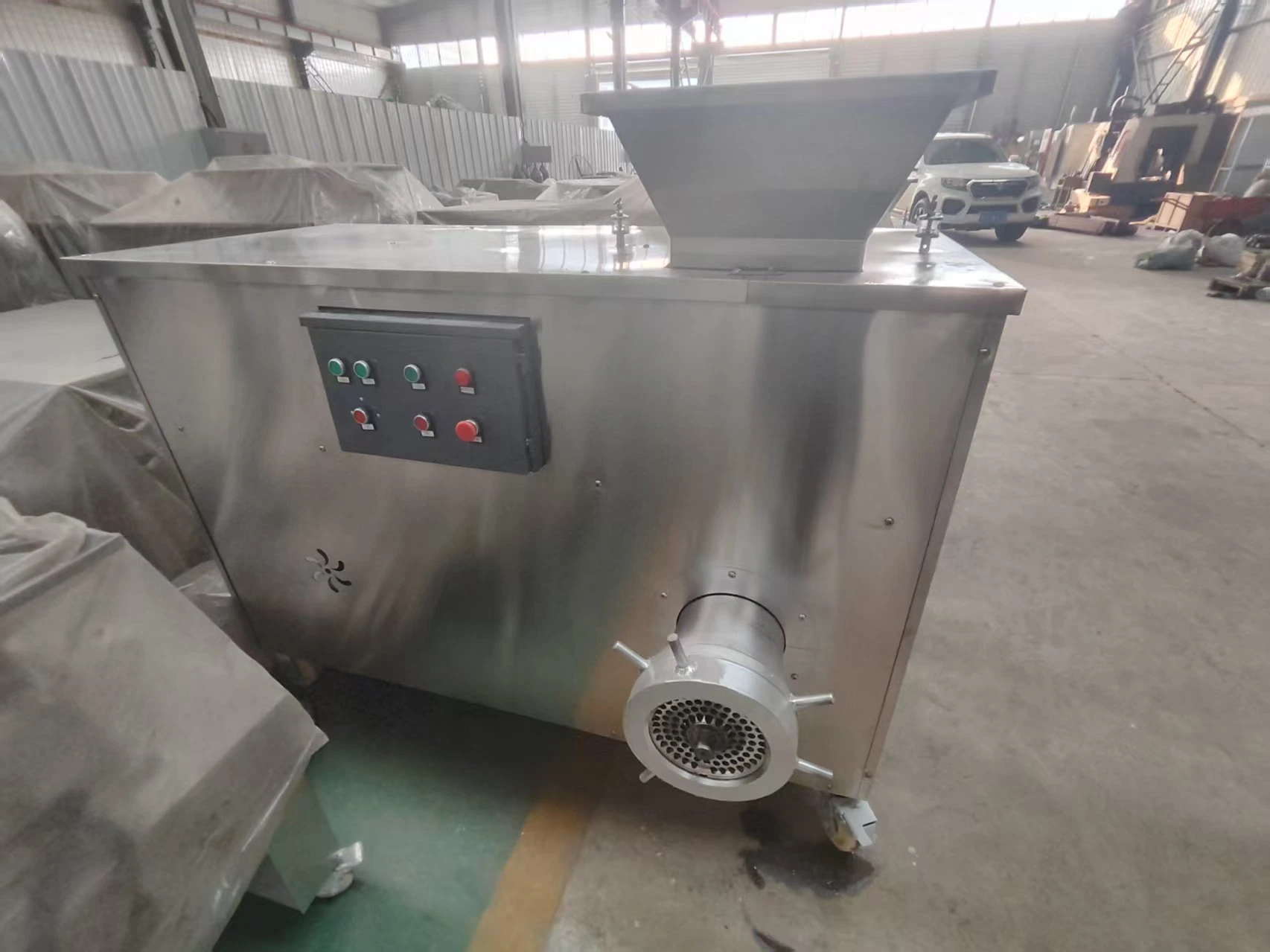
Stop trying to force a -18°C frozen block into a standard meat grinder.
Last week, I visited a sausage factory in Dong Nai (Vietnam). The production manager was sweating because his main grinder was down. Again. They were trying to grind frozen pork back-fat directly. The auger shaft snapped like a dry twig.
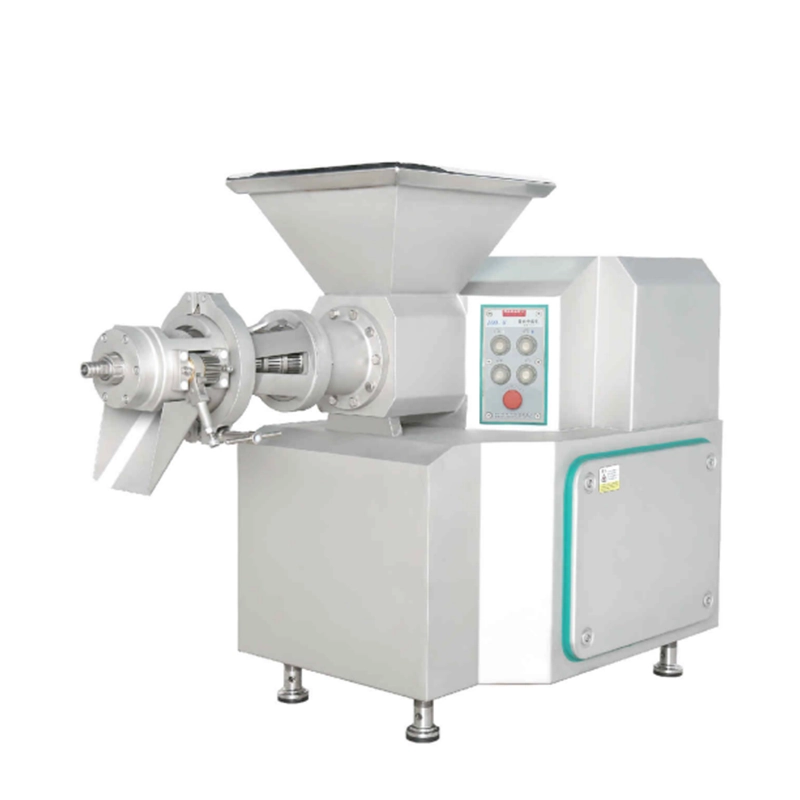
If you want to go from Frozen Block to Fine Mince in one step, you need a Dual-Stage System. And if you want to turn chicken skeletons into premium pet food or soup base, you need a Bone Mud Machine, not a hammer mill.
Here is the engineering breakdown of why these two machines are the backbone of high-volume processing in Southeast Asia.
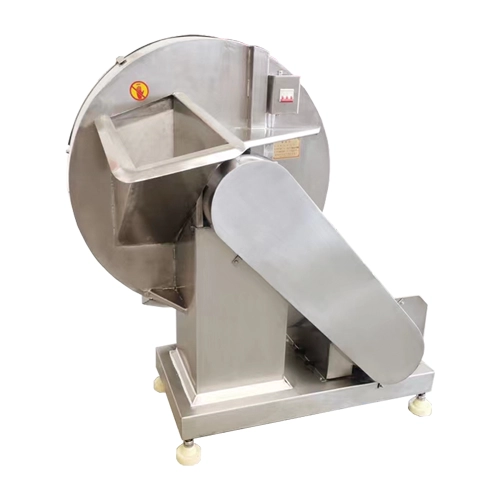
Stop watching your profit melt away on the factory floor. If you are running a meat processing plant in Thailand or Indonesia, you already know the nightmare of handling frozen meat blocks when the ambient temperature hits 36°C with 90% humidity. When you use a separate flaker and then manually transfer the meat to a standard grinder, the meat thaws, the fat smears, and your Bakso (Indonesian meatball) or Sai Ua (Thai sausage) loses its snappy, elastic bite. You need a true Combined Meat Mincer that crushes and grinds in a single, continuous enclosed pass. This isn’t about saving a few minutes of labor. It’s about preserving myosin extraction and preventing bacterial growth.
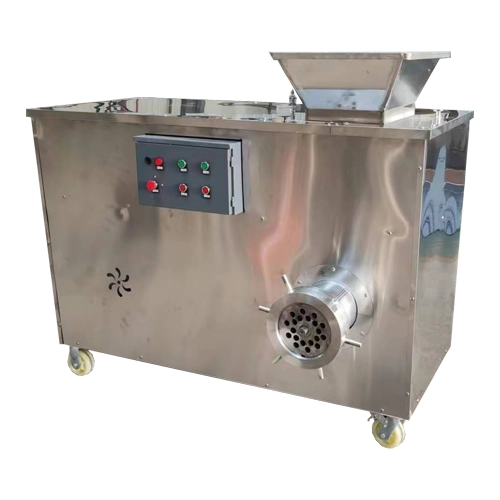
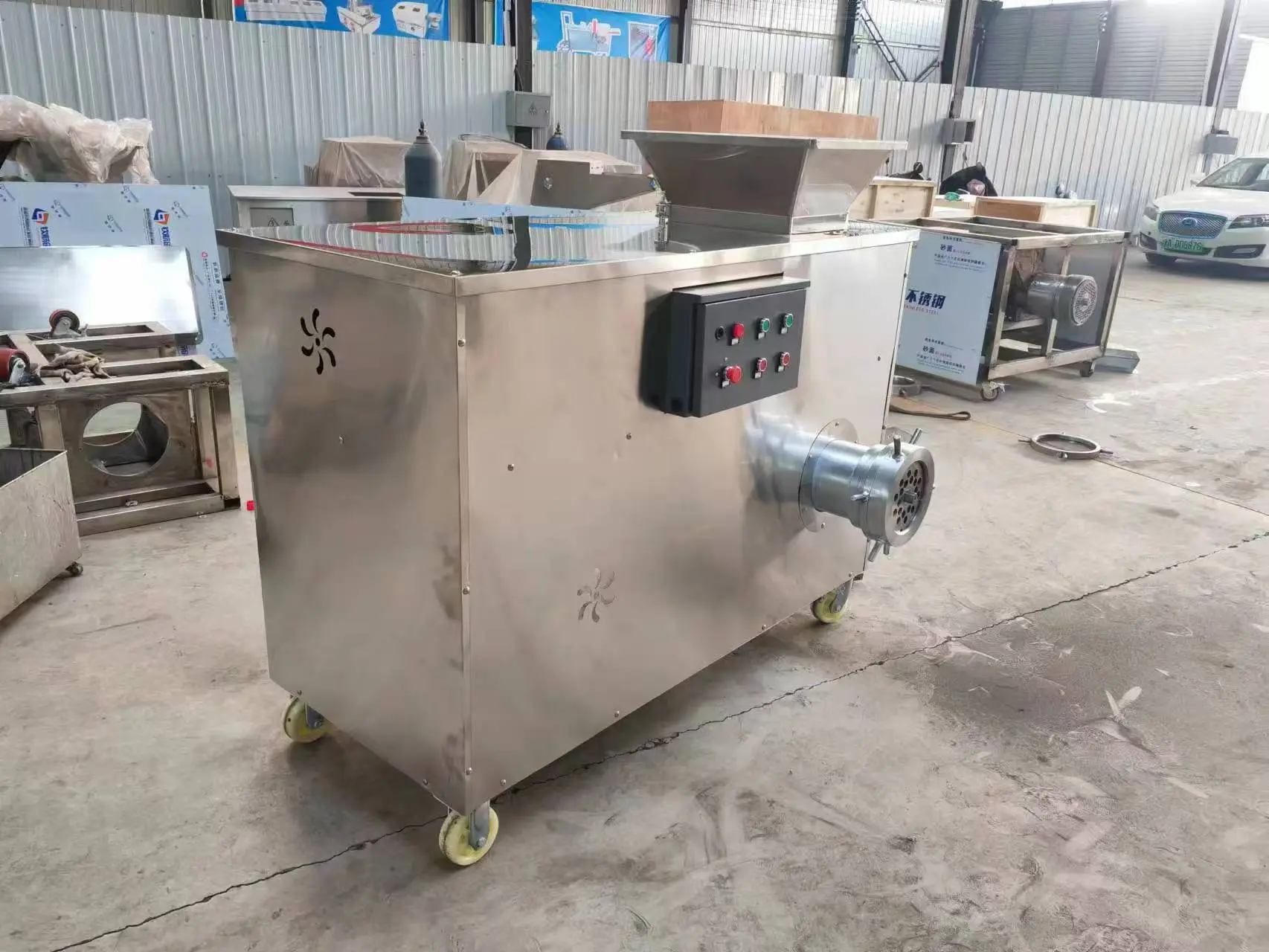
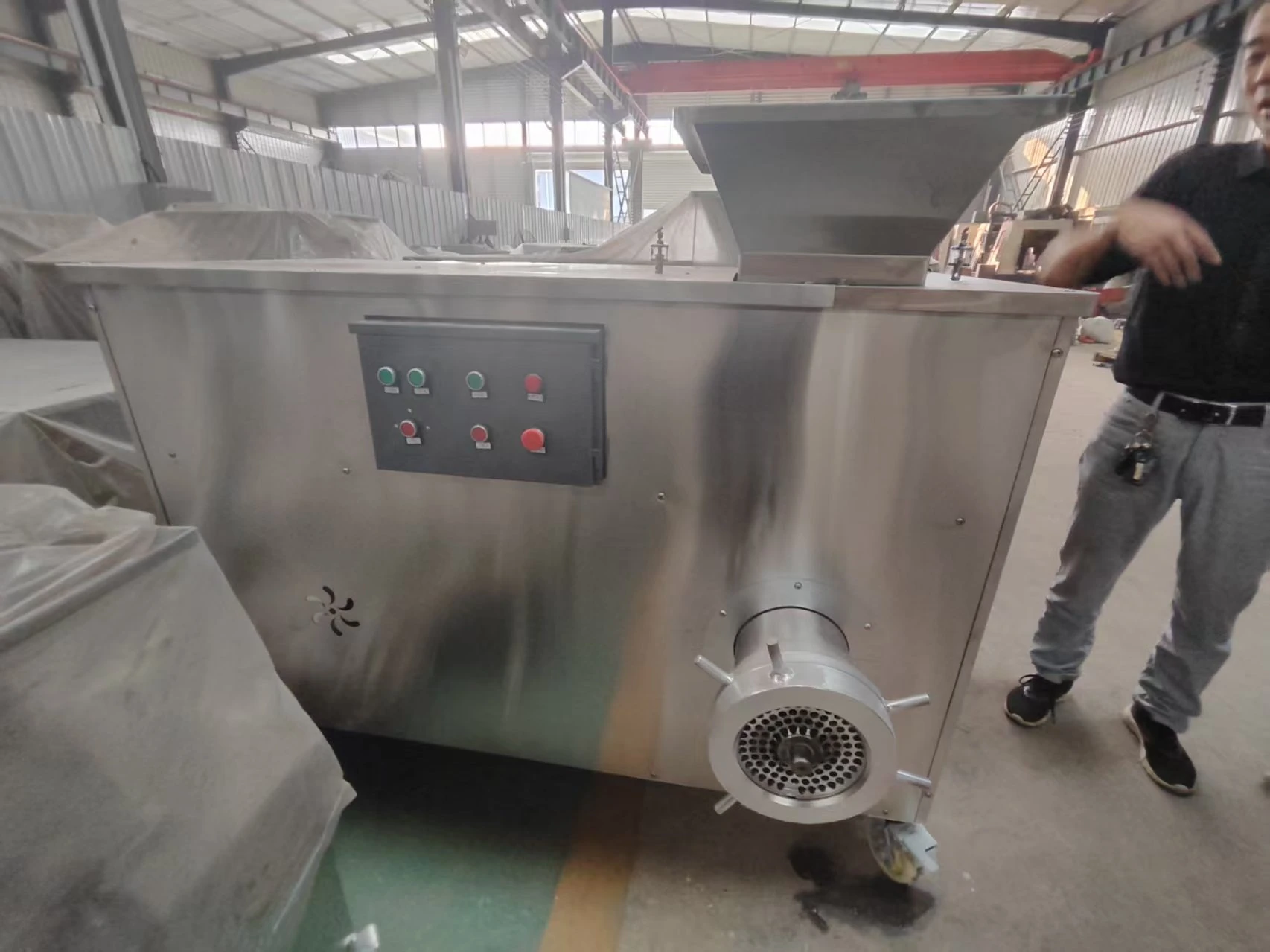
Definition: A two-in-one mechanical reduction system integrating a primary heavy-duty crushing shaft with a secondary mincing auger. Designed to process unthawed frozen meat blocks (-18°C) directly into 6-30mm minced particles without intermediate handling, strictly controlling temperature rise through optimized auger pitch geometry.
| Model | Voltage (V/Hz) | Production (kg/h) | Feed Opening (mm) | Machine Weight (kg) | Power (kW) | Machine Dimensions (mm) | Discharge (mm) | Industry Reality Check (The “Hidden Rule”) |
|---|---|---|---|---|---|---|---|---|
| 280 Type | 380V (Customizable 220V/240V/400V/415V/60HZ) | 800-1000 | 430 × 510 | 800 | Motor 7.5 / Reducer 11 | 1650 × 1150 × 1450 | 6-30 | Perfect for mid-sized pet food raw meat crushing. Don’t overload it with solid bone. |
| 400 Type | 380V (Customizable 220V/240V/400V/415V/60HZ) | 1200-1500 | 550 × 510 | 1000 | Motor 11 / Reducer 11 | 1900 × 1150 × 1450 | 6-30 | The high-volume workhorse. Requires stable local grid power to prevent contactor burnout. |
Most suppliers will try to sell you on a single massive motor trying to do two jobs at once. At the end of the day, if you don’t solve the material bridging issue in the hopper, all that horsepower just spins empty air while heating up your meat. We use an independent dual-drive system: an 11kW reducer for the high-torque crushing shaft, and a dedicated motor for the extrusion auger. The Advantage: It actively pulls the frozen block down, shears it, and feeds it directly into the mincing chamber without hesitation. We keep the meat temperature rise strictly under 3°C during the entire process——this in the 2026 industry standards, is the absolute baseline. The Benefit (Your Profit): Equipment reps love throwing around fake numbers like “efficiency increased by 30%.” Ignore them. Look at the reality. When processing -18°C frozen pork shoulder for commercial sausage patties, actual throughput on our 400 Type goes from 900 kg/h (on older separate flaker/grinder setups) to a stable 1350 kg/h. It doesn’t sound like a massive revolution. But run that across a double shift, and you save 7 hours of manual transfer labor a week, while completely eliminating the spongy, porous rejects caused by fat smearing.
Southeast Asian processing floors are brutal. High ambient heat, constant moisture, and aggressive chloride-based cleaning foams will destroy cheap gearboxes. The Advantage: The entire dual-chamber is built from sanitary 304 stainless steel, engineered to resist chloride stress-corrosion cracking. The Benefit (Your Profit): Less catastrophic downtime. Here is a dirty little secret: when operators wash down an all-in-one meat crusher and grinder, if they blast the main auger drive seals at a 45-degree angle with a high-pressure water gun, the water bypasses standard lip seals and mixes with the reducer oil. The gearbox turns into a blender full of mayonnaise, and your bearings disintegrate. We engineered a secondary purge gap and shrouded the labyrinth seals. You won’t be rebuilding gearboxes just because your night shift got aggressive with the hose.
Q: Will this machine act as a frozen meat flaker and process unthawed blocks directly? Yes. That is the entire point of the dual-shaft design. Do not thaw your meat. Thawing breeds bacteria, causes drip loss, and ruins the cellular structure. Throw the -18°C block directly into the 550×510mm feed opening. The machine will handle the rest.
Q: How hard is it to source replacement parts in Malaysia or Vietnam? We don’t use proprietary, locked-down electrical panels. The motors and reducers run on standard SEA 380V/415V 3-phase power. The electrical contactors are universal. You can source replacements from our local distributors within 24 hours, or even find compatible industrial components at your local hardware supplier in a pinch.
Q: Is it difficult to clean the two-in-one shredding and mincing system? No. The mincing auger, crushing blades, and 6-30mm orifice plates are fully extractable using the included extraction tool. You can pull them out for a complete soak and washdown. Just remember the golden rule: clean the orifice plates immediately after your shift ends before the animal fat polymerizes, and never point the high-pressure nozzle directly into the motor ventilation cowlings.
Do you have project requirements or technical questions? Please let us know in the form below.