- Shandong Zhucheng Kaicheng Liangcai Machinery Factory
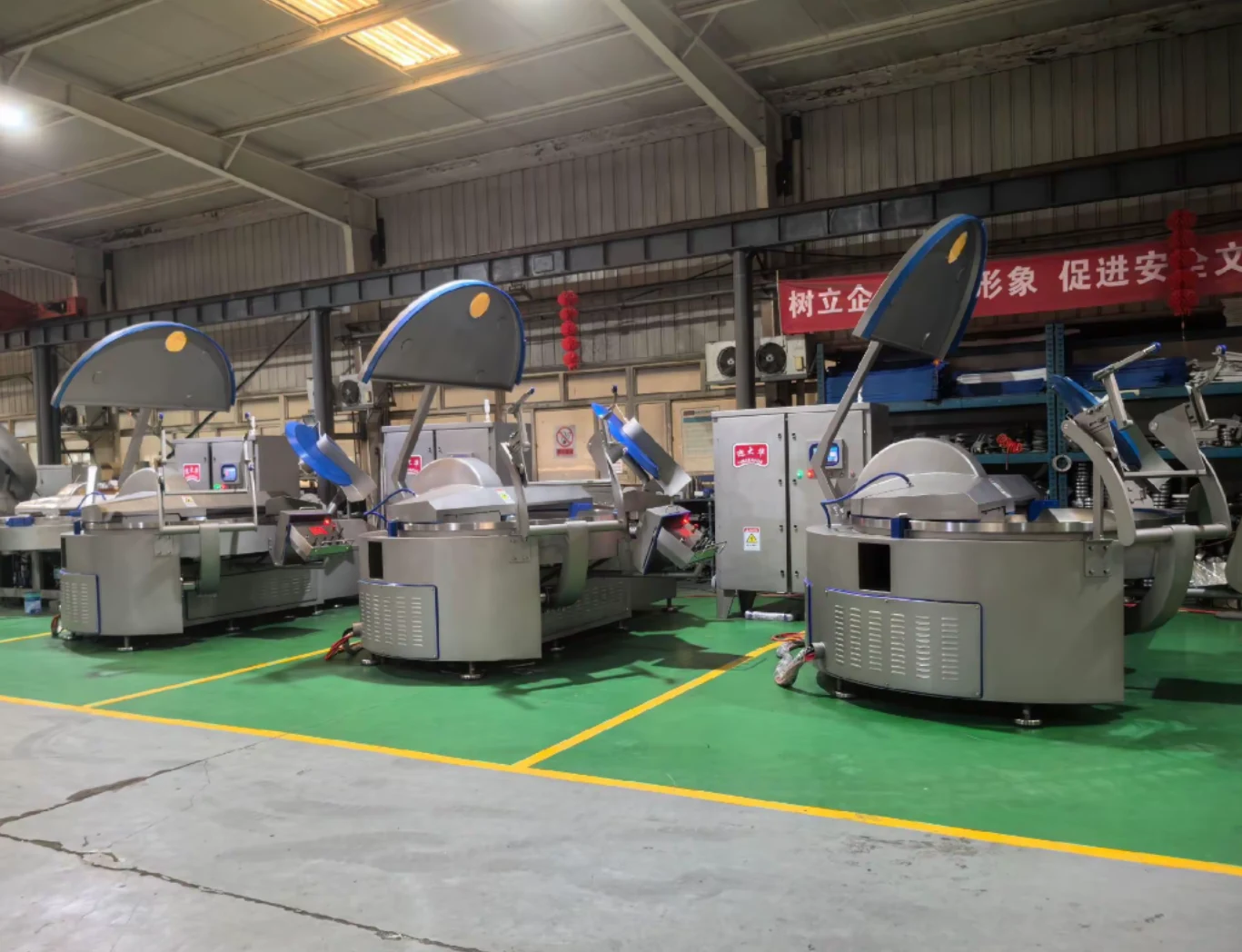
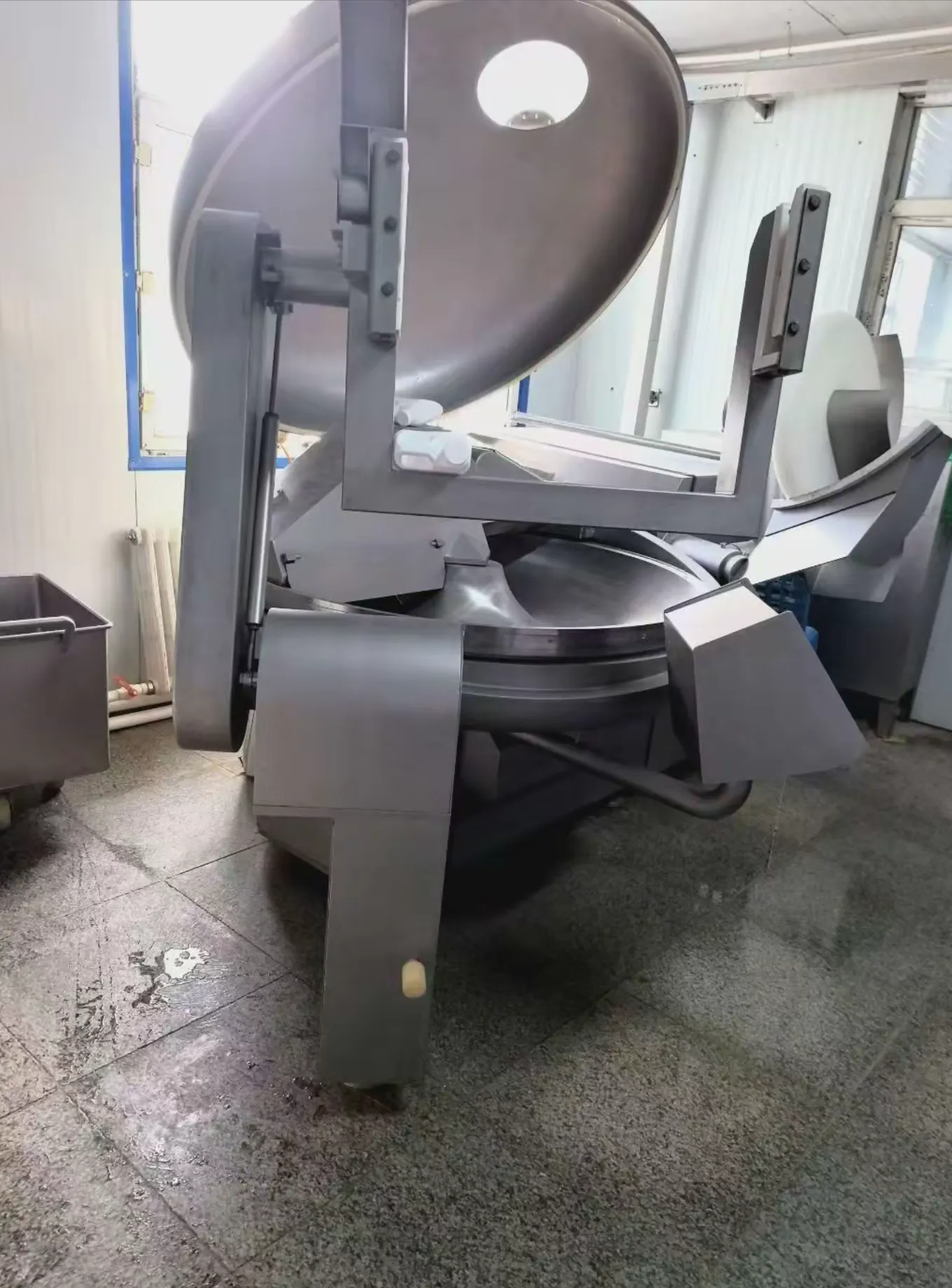
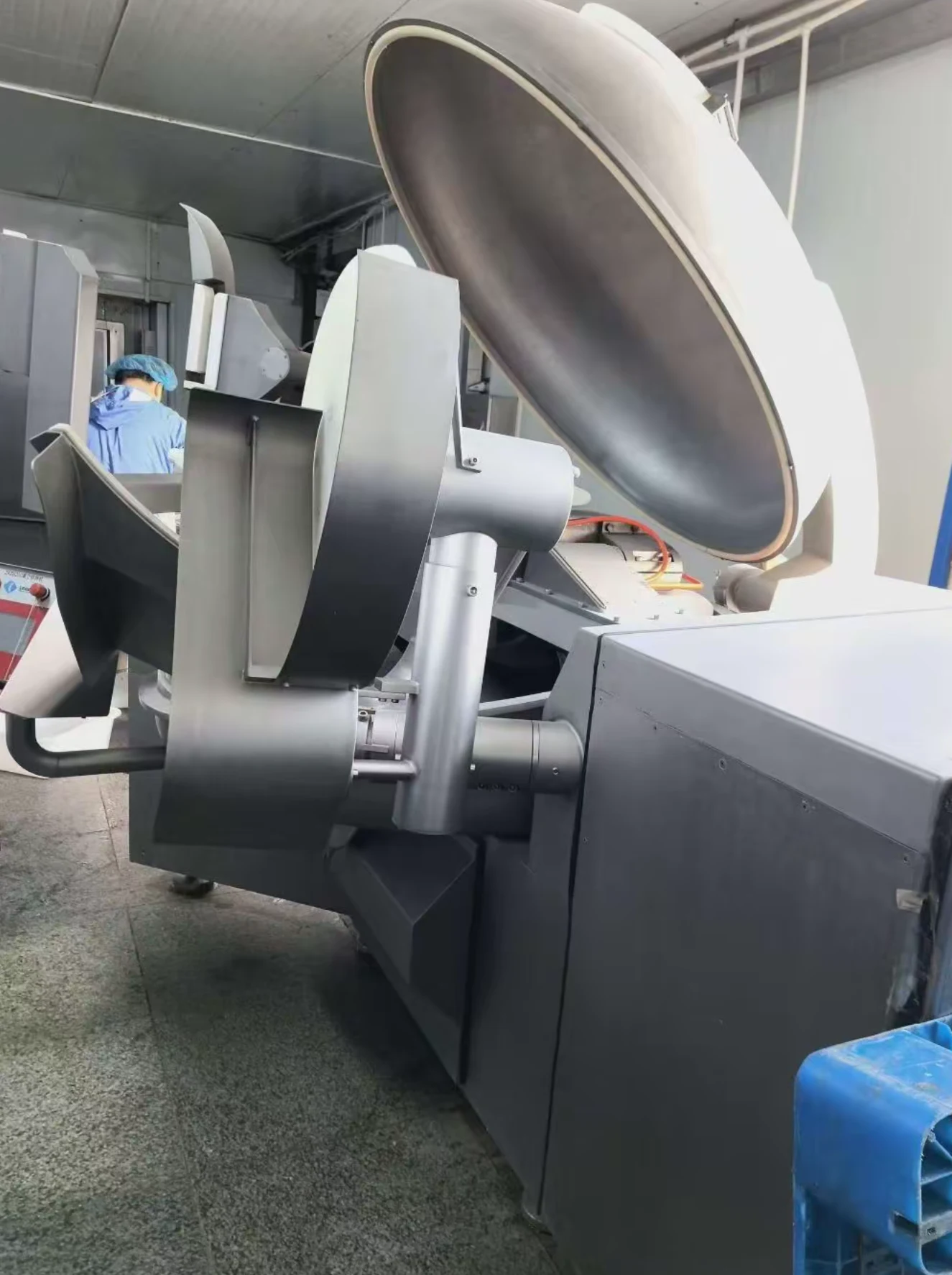
Last week, I watched a factory owner in Semarang throw away 200kg of Bakso Sapi (Beef Meatballs).
The texture was mushy. The fat had separated. Why? Because he was using a slow, 1500 RPM mixer that took 15 minutes to emulsify the paste. By the time the meat was smooth, the temperature had risen to 18°C. The protein network collapsed.
If you want that “crunchy” snap in your Chả Lụa (Vietnamese Ham) or the perfect bounce in your Fish Balls, you are fighting a war against heat.
You need speed. You need 4500 RPM. And once the meat is processed, you need a Vacuum Tumbler that doesn’t require three guys to break their backs loading it.
Here is the engineering breakdown of why these two machines are the backbone of any serious Southeast Asian meat plant.
Last week, a factory owner in Surabaya showed me a 500-kilo batch of Bakso (beef meatballs) that turned spongy and gray because the fat separated during the chopping phase. If you are running a high-volume meat processing plant in Southeast Asia, your search intent for an Industrial Vacuum Bowl Cutter isn’t about finding a fast blender; it is about securing a high-speed, negative-pressure chopping system that extracts soluble proteins without heating the emulsion past the critical 12°C fat-melting point in our tropical climate. Let’s look at the mechanical reality.
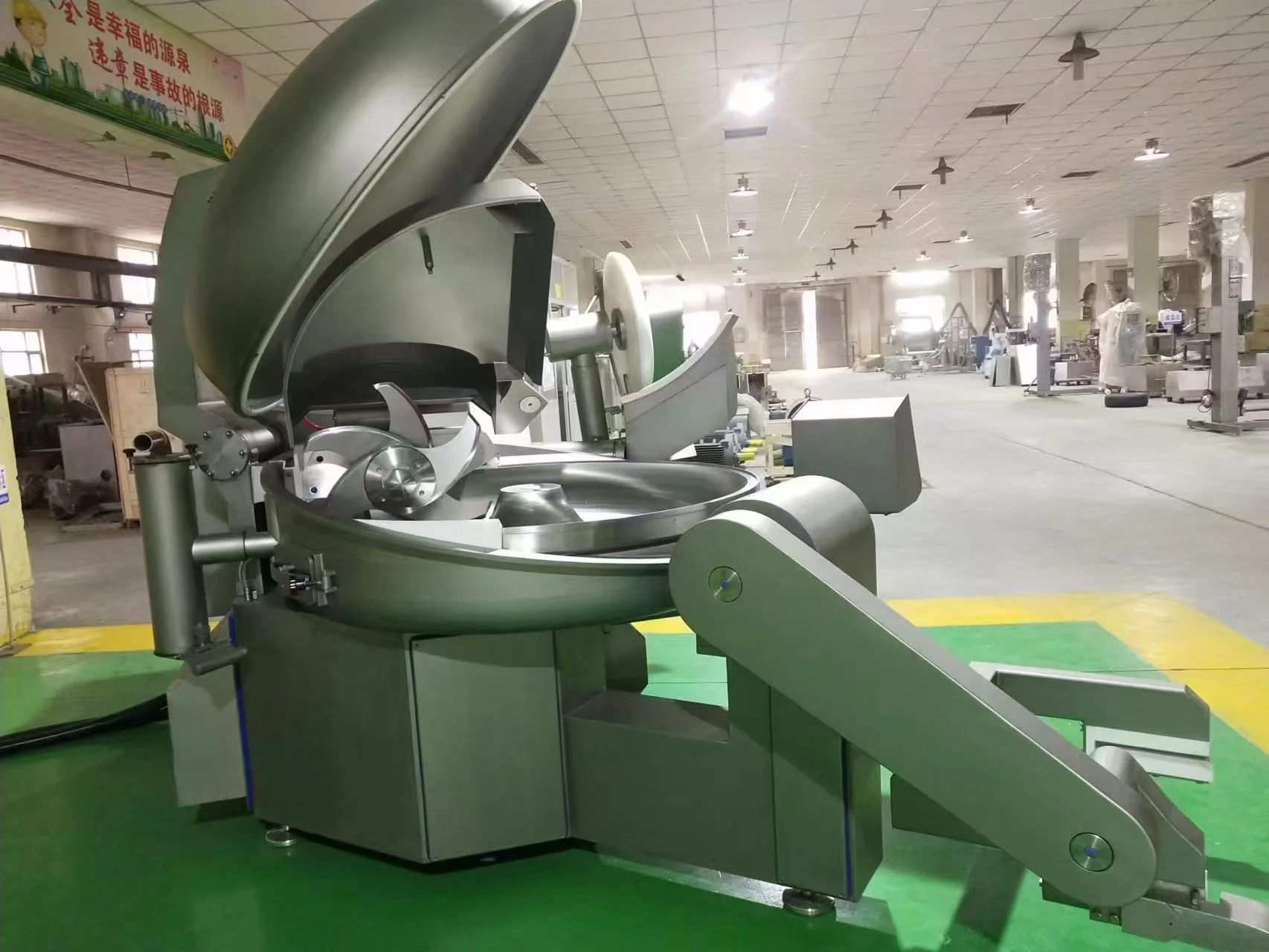
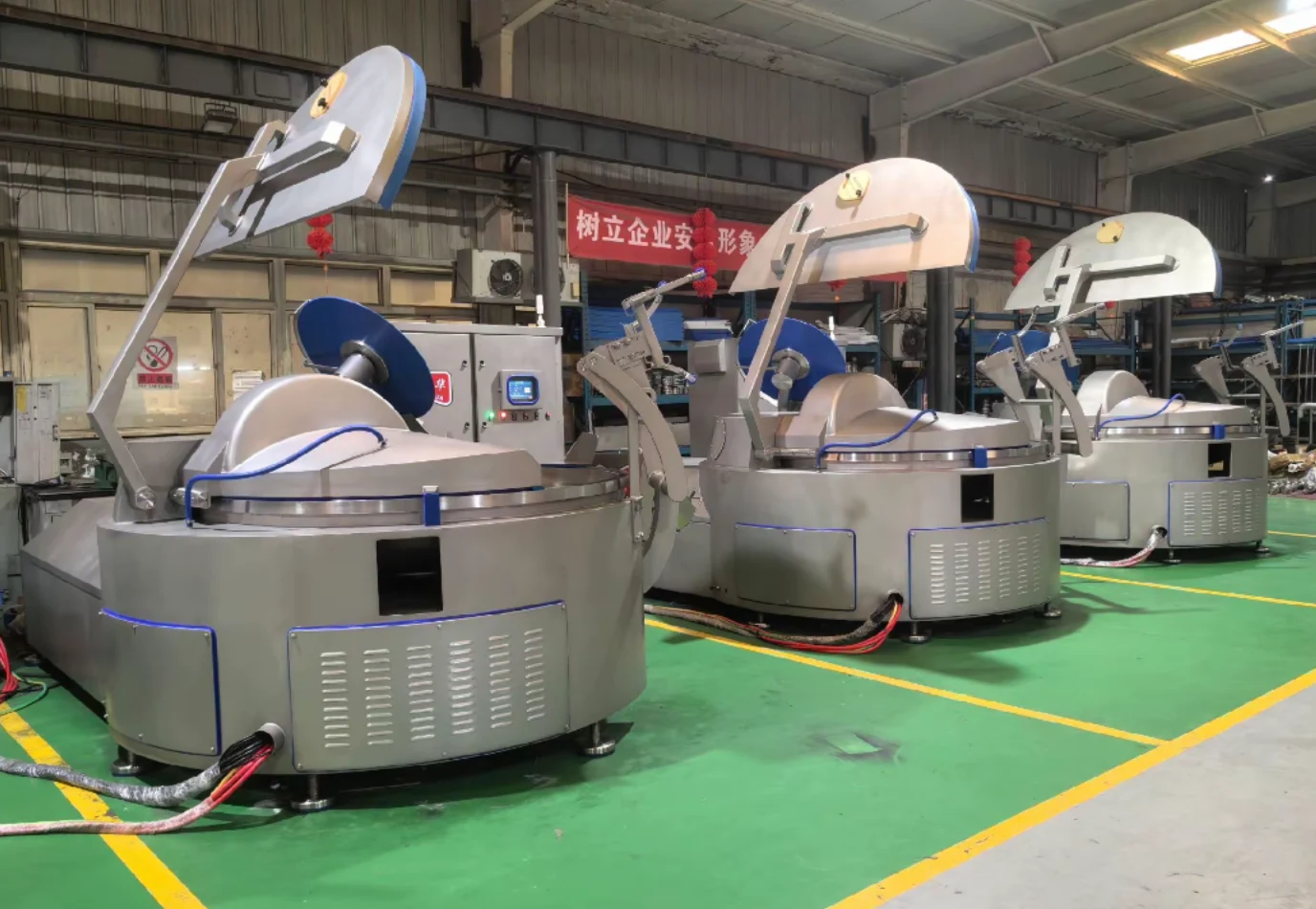
By definition, a true industrial vacuum bowl cutter utilizes a rotating stainless steel bowl synchronized with a multi-blade knife shaft spinning at up to 4200 RPM, all enclosed within a hermetically sealed vacuum hood to prevent oxidation and air pockets during the emulsification process.
Don’t guess your utility loads based on empty-bowl lab tests. Here is the actual operational data for the ZKZB-200 series (the standard heavy-duty export model), so you can calculate your true factory footprint and electrical draw:
| Specification | Real-World Engineering Data |
|---|---|
| Equipment Model | ZKZB-200 Vacuum Bowl Cutter |
| Bowl Volume | 200 Liters |
| Knife Shaft Speed | 300 – 4200 r/min (VFD Frequency Conversion) |
| Blade Linear Speed | Up to 119 m/s (6-piece knife set) |
| Total Power | 62.9 kW – 84.4 kW (Depends on motor config) |
| Vacuum Level | -0.085 MPa |
| Voltage | 380V / 50Hz, 3-Phase (Standard SEA Industrial) |
You know the environment. High ambient heat, sticky beef emulsions, and operators who rush the sanitation cycle.
At the end of the day, if you don’t achieve maximum protein extraction before the meat temperature rises, all that motor horsepower is useless. Our 6-piece knife set hits a linear speed of 119 m/s, instantly shearing muscle fibers and releasing myosin while keeping the emulsion temperature rise strictly under 3°C. ——this, in the 2026 industry standards, is already the bare minimum.
Insider Warning: When your sanitation crew cleans the knife shaft assembly at the end of a shift, if they blast the main labyrinth seal directly at a 45-degree angle with a high-pressure hot water lance, the vacuum integrity will fail within two months. AI doesn’t know that, but your maintenance budget will feel it. Tell them to wipe the shaft housing manually and only use low-pressure foam on the bearings.
Here are the facts you need to know before wiring your factory:
Let’s talk about production efficiency. Most equipment dealers will tell you this machine “increases throughput by 30%.” That is a meaningless metric.
Here is the reality on the floor: When processing dense beef blocks for premium Bakso, the actual stable throughput went from 850 kg per hour (using an open-bowl 125L cutter) to 1,420 kg per hour using this ZKZB-200 vacuum model. It doesn’t sound like a massive marketing revolution. But in a double-shift operation, that extra capacity means you are processing an additional 4.5 tons of meat a day without hiring another operator, while completely eliminating the 5% scrap rate caused by air pockets. That is how you scale a business.
1. Can this machine handle frozen meat blocks? No. This is a high-speed emulsifier, not a frozen meat flaker. You must pre-grind your meat through a 13mm or 8mm plate before loading it into the bowl. If you throw -18°C blocks into a cutter spinning at 4200 RPM, you will shatter the knife blades and destroy the bowl clearance.
2. How difficult is it to adjust the knife-to-bowl clearance? It requires an experienced technician. The clearance must be set between 1.5mm and 2.0mm. If it is too wide, the meat smears instead of cutting. If it is too tight, thermal expansion during a heavy load will cause the blades to gouge the SUS304 stainless steel bowl.
3. Are the frequency inverters proprietary? No. We use standard industrial VFDs (like Yaskawa or Delta) for the main knife shaft. If a drive fails during a monsoon thunderstorm in Penang, your local electrical supply house has the replacement.
Do you have project requirements or technical questions? Please let us know in the form below.