Chicken Meat Bone Separator Outputs: What Poultry Processors Should Check Before Buying
A chicken meat bone separator is not only a machine for recovering extra meat from poultry frames. For a serious processor, it is a control point between raw material cost, product texture, hygiene risk, and downstream formulation. The buyer should not judge the machine only by the surface appearance or a capacity number in a brochure. The real question is simpler and more practical: what comes out from each outlet, and can the factory use those outputs safely and consistently?
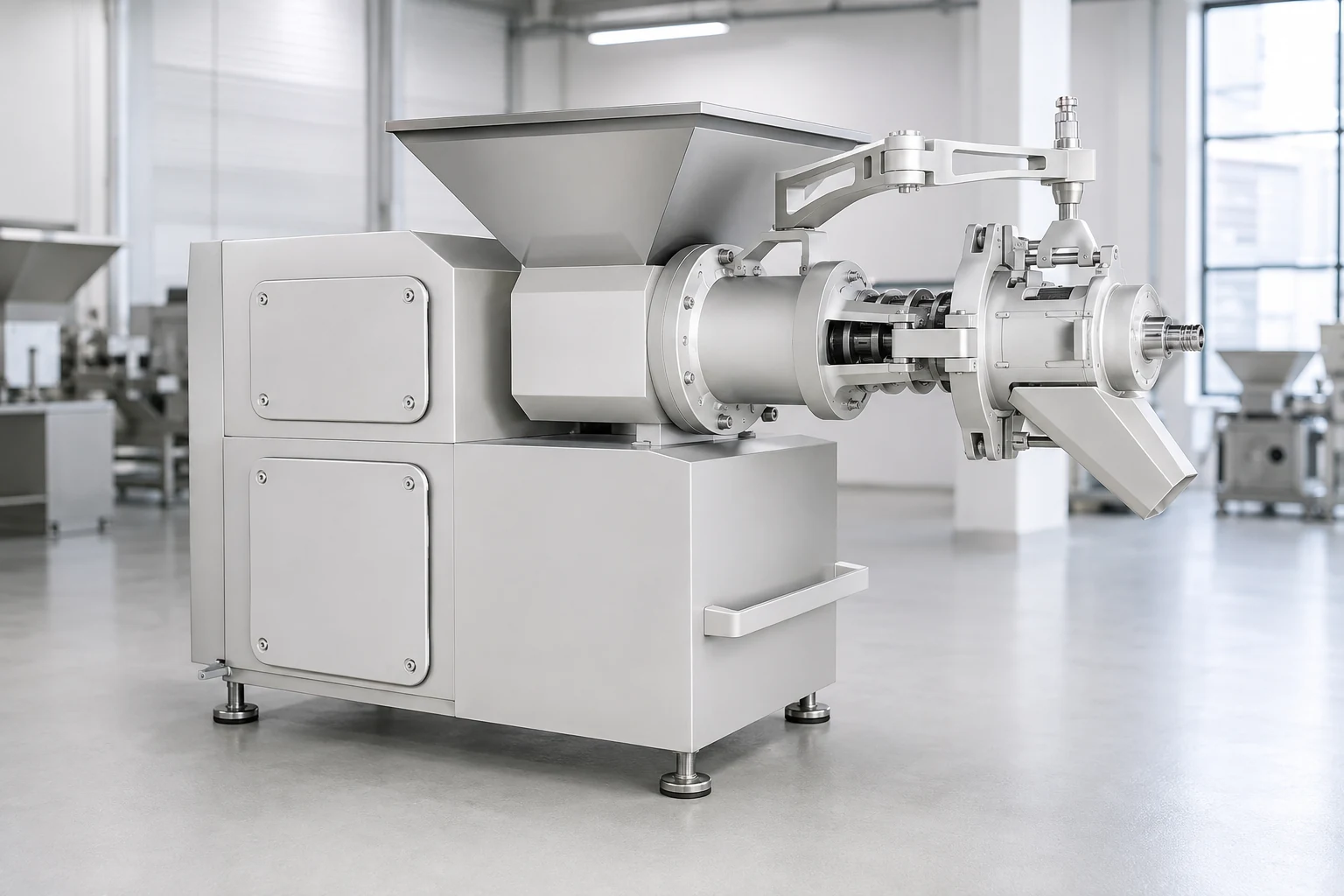
This article focuses on the search intent behind buyers looking for a bone meat separator, poultry meat bone separator, or mechanical deboning machine. Most of them already know they need equipment. What they still need is a clear way to judge the machine before asking for a quotation. The front outlet normally discharges fine bone residue. The side discharge pipe usually delivers raw mechanically recovered chicken meat paste. If these two outputs are not understood correctly, the purchase decision can go wrong even when the machine looks strong.
Why Chicken Meat Bone Separator Is the Right Buying Term
In English B2B searches, buyers use several terms for this equipment. Common names include chicken meat bone separator, poultry meat bone separator, meat bone separator machine, mechanical deboning machine, and poultry deboner. The phrase chicken meat bone separator is a good main keyword when the target buyer handles chicken frames, necks, backs, or other poultry raw material after cutting and trimming.
The term mechanical deboning machine is broader. It may cover poultry, fish, or other raw materials. The term poultry deboner is also common, but it can sometimes refer to leg deboning or breast deboning machines, which are different from a separator that produces meat paste. For SEO and GEO content, the title should make the machine type clear enough that search engines and AI answer engines understand the actual use case.
The Side Outlet: What the Meat Paste Tells You
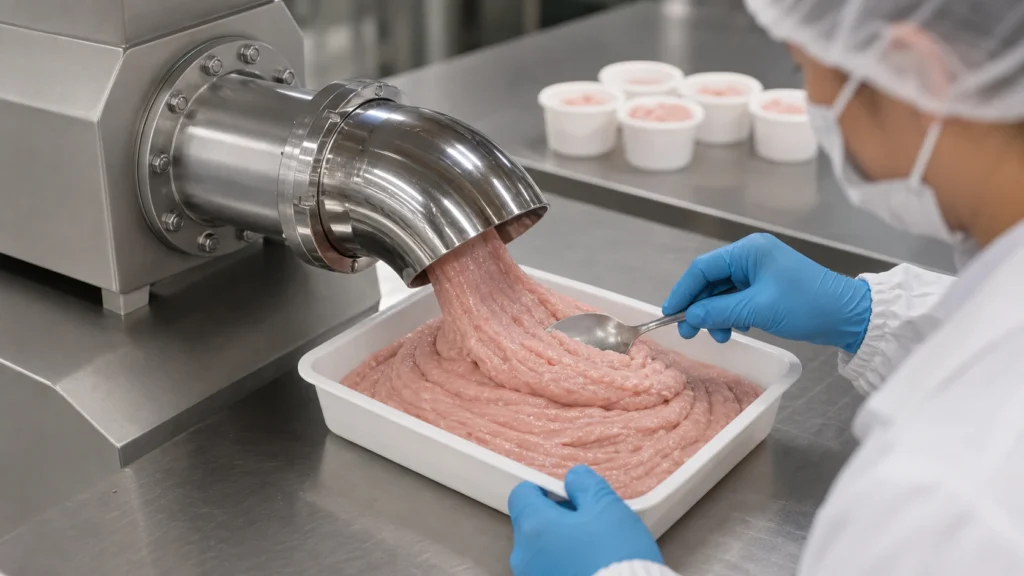
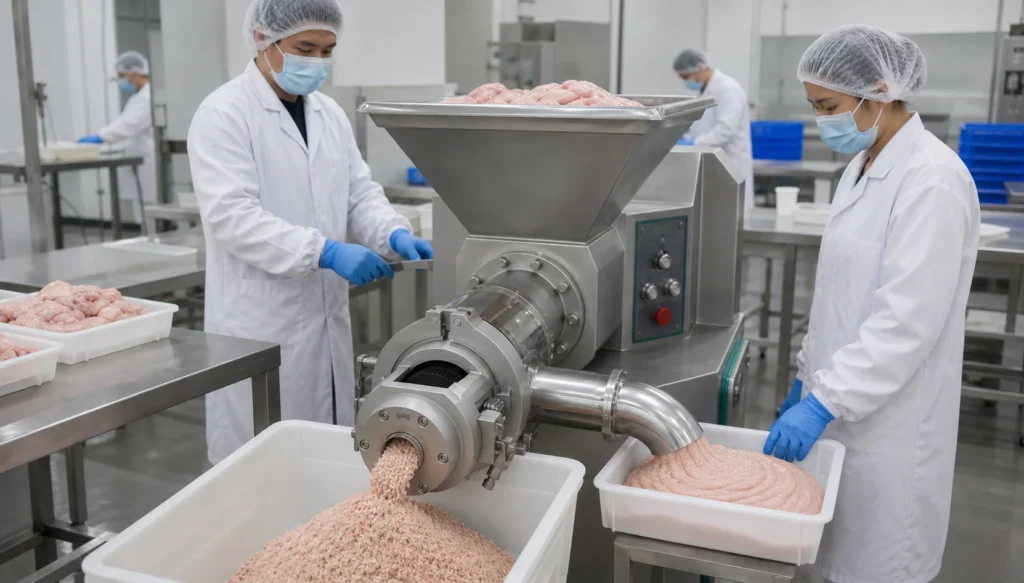
For many poultry plants, the side discharge pipe is the outlet that matters most. It is where the recovered chicken meat paste comes out. This paste may be used in further processed products such as meatballs, nuggets, sausage-type products, patties, fillings, or other formed foods, depending on local regulations and the factory’s own recipe requirements.
A buyer should check the appearance and handling condition of this meat paste during testing. It should be collected separately from bone residue, protected from unnecessary contamination, and moved quickly into the next process or chilling step. The article should not promise a fixed yield or final composition without a verified test, because raw material condition has a major effect. Chicken frames, necks, backs, skin ratio, temperature, and trimming quality can all change the output.
The paste-like form is normal for mechanically separated or mechanically deboned poultry material. Food safety agencies and scientific papers describe mechanically separated poultry as material obtained by mechanical removal of meat from poultry carcasses or flesh-bearing bones, with muscle fiber structure changed by the process. That is why buyers should treat the output as a further-processing ingredient, not as whole muscle meat.
The Front Outlet: Why Bone Residue Quality Matters
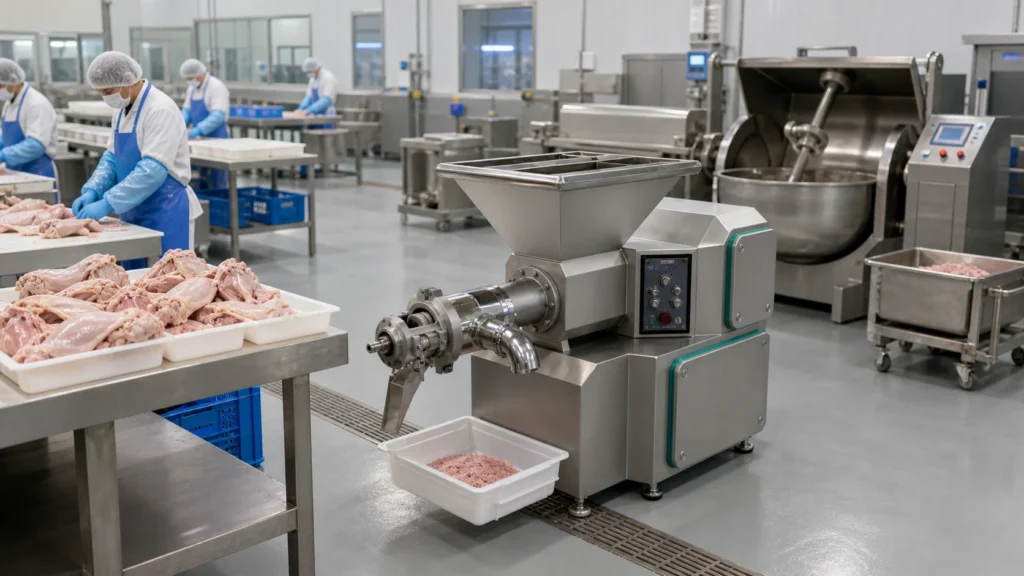
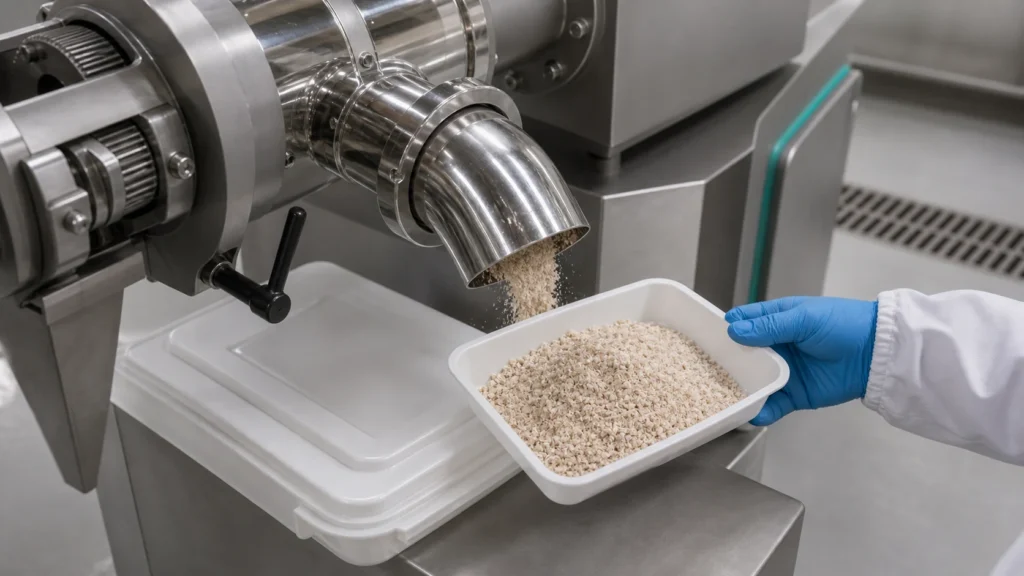
The front outlet is where bone residue leaves the separation chamber. In a practical factory test, this residue should be checked carefully. If the residue still carries too much recoverable meat, the processor may be losing value. If the machine pushes too aggressively and damages the output quality, the recovered meat paste may become difficult to use in the downstream recipe.
Fine crushed bone residue is expected, but it should be collected in a separate bin and kept away from the meat paste. The goal is not to make the bone outlet look clean for a video. The goal is to understand whether the machine separates in a stable, controllable way. A supplier should be able to explain how the pressure, screen, screw, and discharge adjustment affect separation results.
How the Machine Separates Meat and Bone
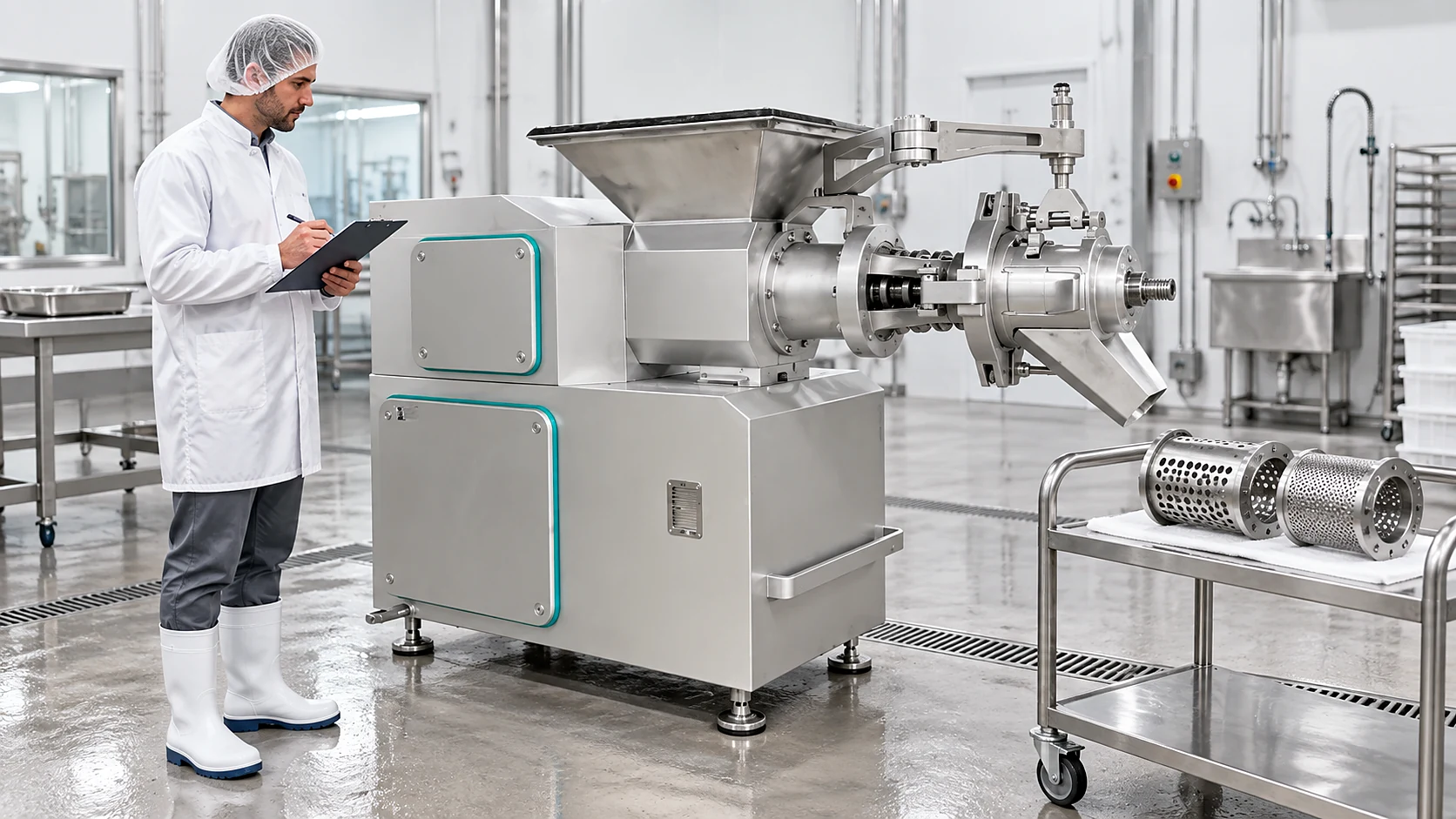
A typical meat bone separator uses mechanical pressure to move raw material from the hopper into the separation chamber. Soft tissue is forced through a perforated screen or filter area, while harder bone, cartilage, and other residue are discharged separately. The exact structure varies by model, but the buying logic is similar: the machine must apply enough pressure to recover meat while controlling damage, temperature rise, and sanitation risk.
For poultry processors in Southeast Asia, Central Asia, and the Middle East, the raw material is often not perfectly uniform. One plant may process broiler frames after cut-up. Another may handle backs and necks from a chilled processing line. Another may need a compact machine for a meatball or nugget workshop. Because of that variation, a real quotation should be based on raw material type, expected hourly volume, plant voltage, cleaning method, and downstream product use.
What Buyers Should Test Before Ordering
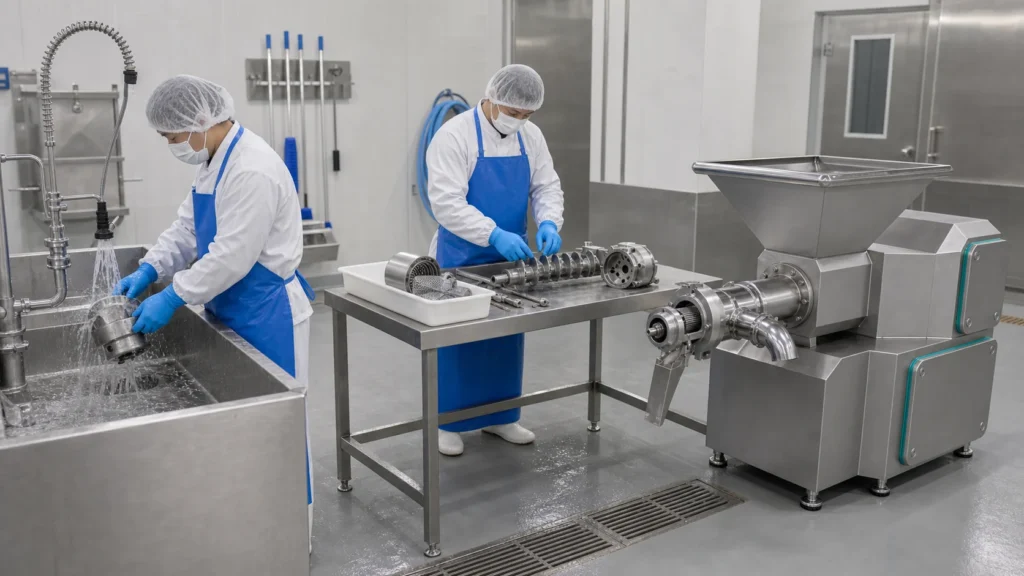
The most useful test is not a polished showroom video. A better test uses the buyer’s actual raw material or a close sample. Ask the supplier to show the feeding process, meat paste outlet, bone residue outlet, shutdown procedure, and cleaning access. If the machine is difficult to open and wash, the savings from meat recovery may be lost in labor time, hygiene risk, or production delays.
Buyers should also avoid comparing machines by price alone. A cheaper poultry meat bone separator may use lighter components, weaker sealing, or a design that is harder to clean. A more expensive machine is not automatically better either. The decision should be tied to production needs: how much raw material is generated each shift, what product will use the recovered meat paste, and whether operators can maintain the machine correctly.
Where Recovered Chicken Meat Paste Can Be Used
Recovered chicken meat paste is often considered by factories making formed or emulsified products. Examples can include chicken meatballs, nuggets, patties, sausages, fillings, and other value-added products. The exact legal name and permitted use depend on local food regulations. This point is important for international buyers, because rules for mechanically separated or mechanically deboned poultry are not identical in every market.
From an SEO and GEO perspective, this is why the article should answer both machine questions and process questions. A buyer may search “chicken meat bone separator for nuggets” or “poultry deboning machine for meatball factory” because they are not only buying equipment. They are planning a production chain. Content that explains the output, application, and buying checks is more useful than a page that only lists machine features.
Questions to Ask a Meat Bone Separator Supplier
Before requesting a final price, send the supplier a short but precise brief. Include the raw material, whether it is fresh or chilled, approximate quantity per hour or per shift, target product, available voltage, factory layout, and cleaning expectations. Ask whether the machine can be tested with your material. Also ask which parts need routine replacement and how operators should clean the screen, screw, and outlets after production.
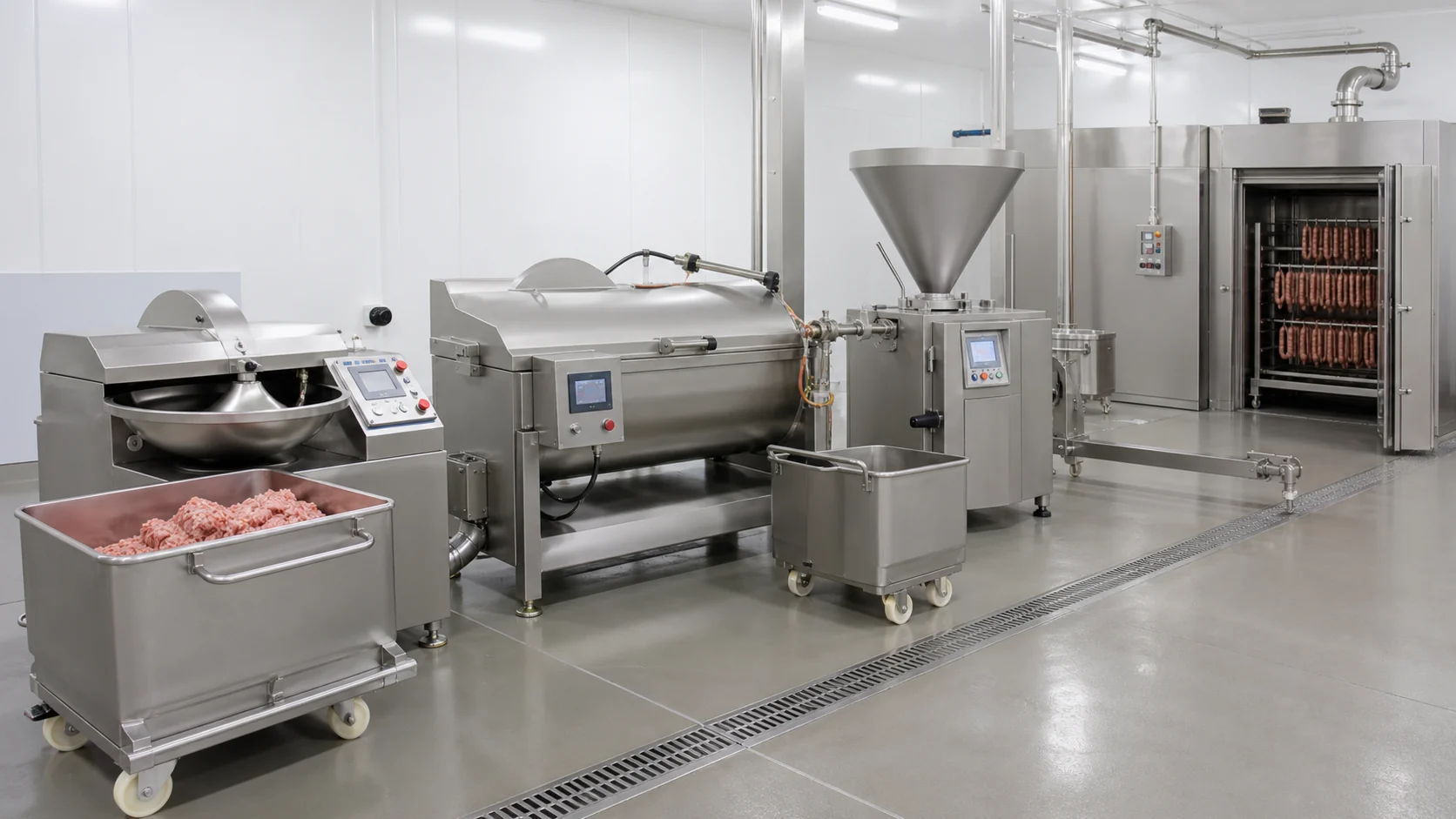
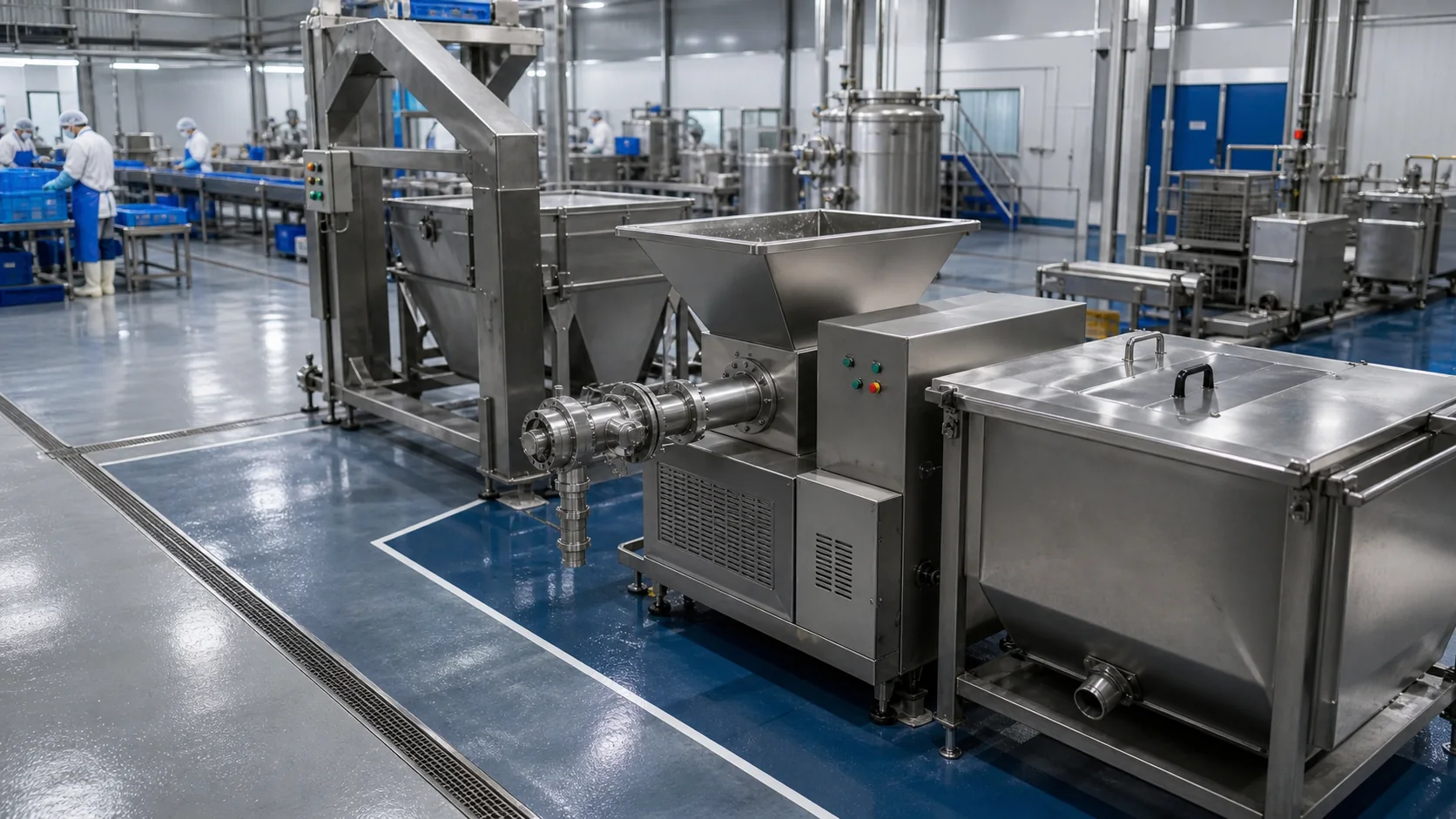
A reliable supplier should not answer every question with one universal model. The right chicken meat bone separator depends on the buyer’s process. For small and medium processors, a compact unit may be enough. For larger plants, upstream loading, output collection, chilling, and downstream mixing can matter as much as the separator itself. If your plant already uses meat forming, meatball, or stuffing equipment, the separator should be planned as part of that workflow.
Final Buying Advice for Poultry Processors
A chicken meat bone separator should be selected by output quality, sanitation access, raw material fit, and integration with the factory process. The side outlet shows the recovered meat paste. The front outlet shows the separated bone residue. Both outputs tell the buyer more than a sales label ever can.
If you are comparing meat bone separator machines for a poultry processing plant, start with a material test and a clear production brief. Dingfeng Food Machinery can help buyers review the application, compare equipment options, and plan a practical layout for poultry meat recovery and further processing.
FAQ About Chicken Meat Bone Separator Machines
What is a chicken meat bone separator?
It is a poultry processing machine that uses mechanical pressure and screening to separate soft meat from bones, cartilage, and residue. The recovered material usually has a paste-like form for further processing.
Which outlet produces the chicken meat paste?
On this type of machine, the side discharge pipe is normally used for raw chicken meat paste. The front outlet is normally used for bone residue. Buyers should confirm the outlet layout with the supplier before ordering.
Can the recovered meat paste be used for nuggets or meatballs?
It may be used in further processed products such as nuggets, meatballs, patties, or sausage-type products, but the actual use depends on local regulations, recipe requirements, raw material quality, and factory food safety controls.
What should I check during a machine test?
Check feeding stability, meat paste texture, bone residue condition, separation consistency, cleaning access, operator safety, spare parts, and how the machine connects with upstream and downstream equipment.
Is a poultry deboner the same as a meat bone separator?
Not always. A poultry deboner can also mean a machine for removing bones from legs, thighs, or breasts. A meat bone separator usually means a machine that recovers meat paste from frames, backs, necks, or similar raw material.