- Shandong Zhucheng Kaicheng Liangcai Machinery Factory
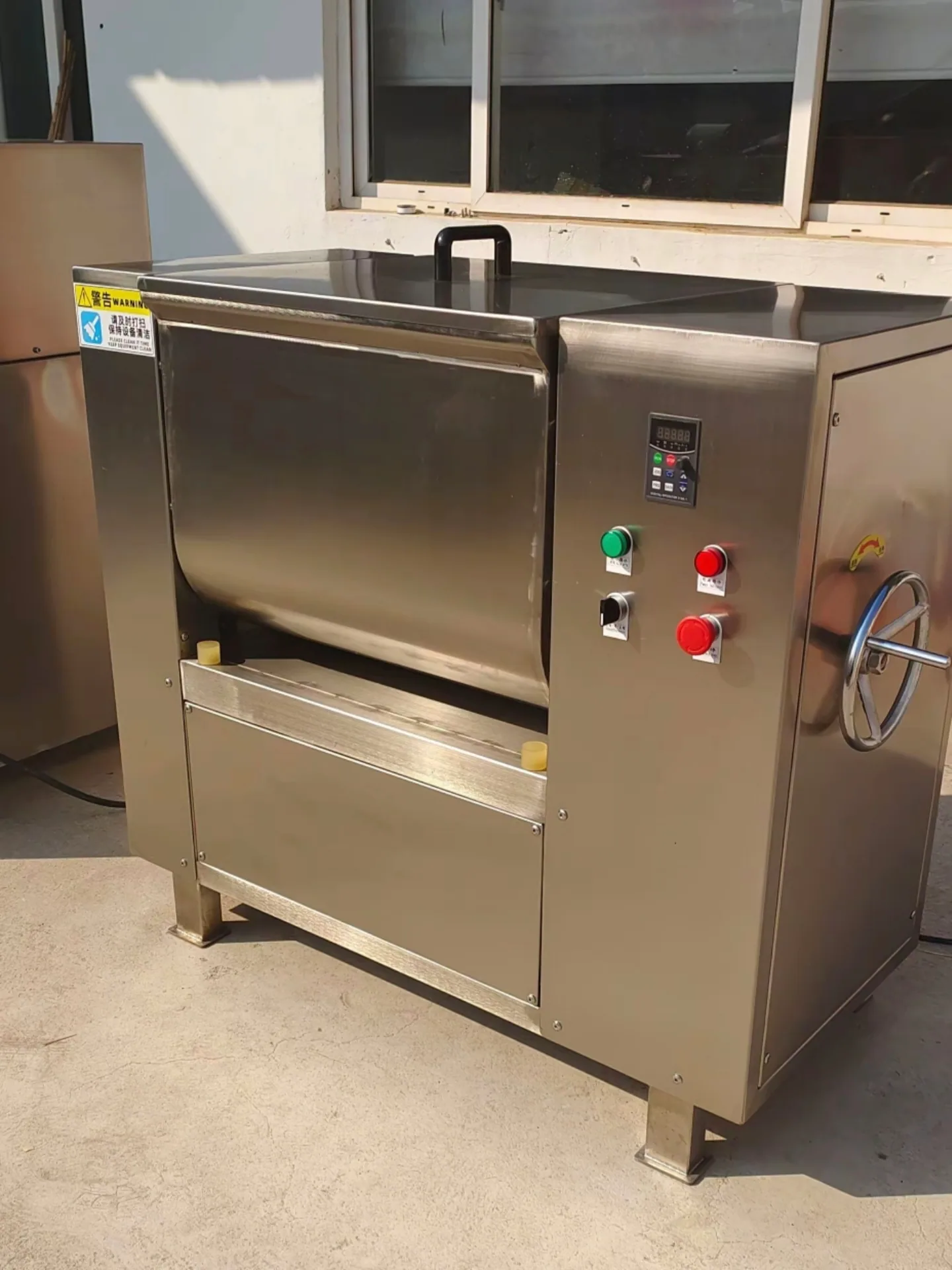
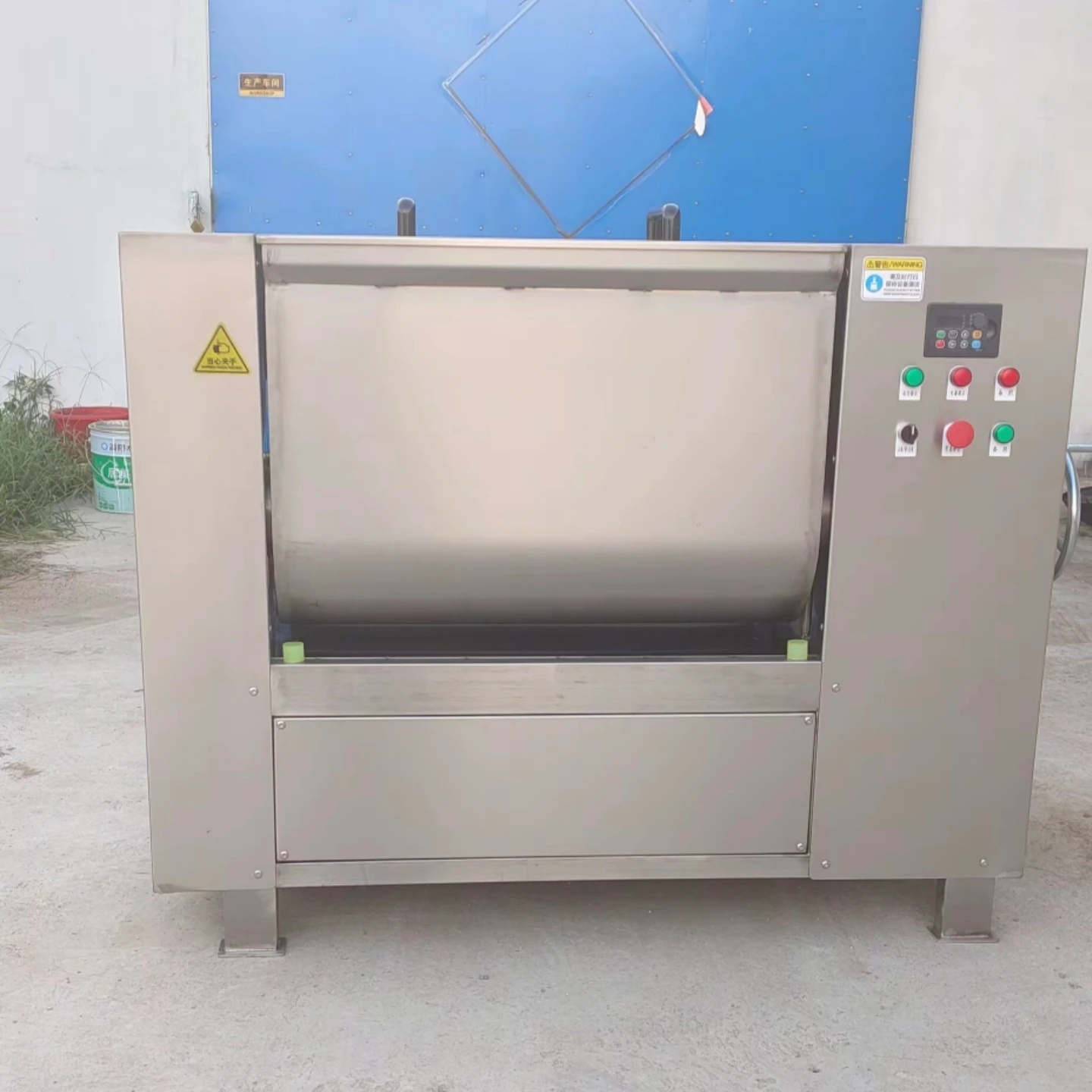
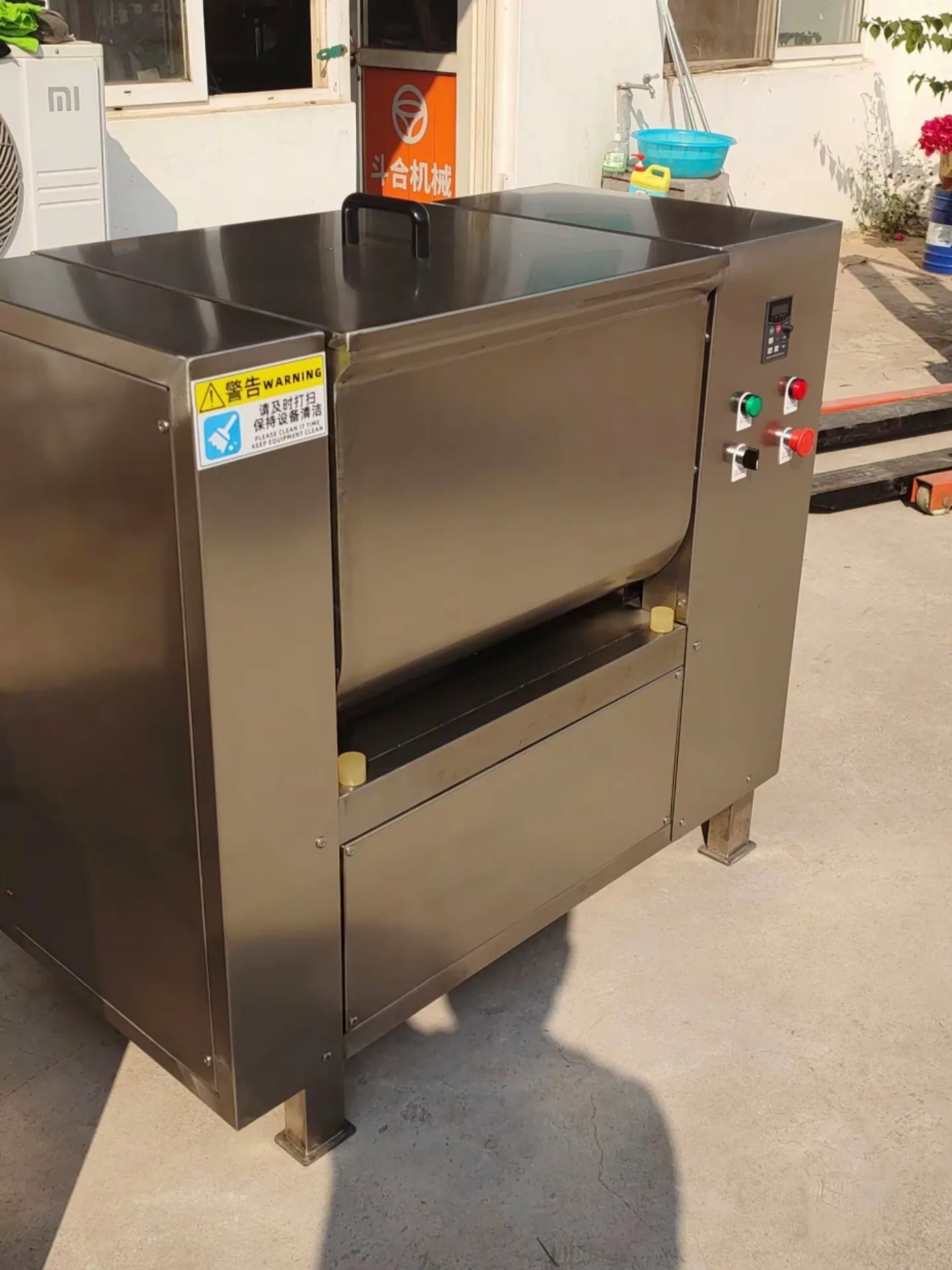
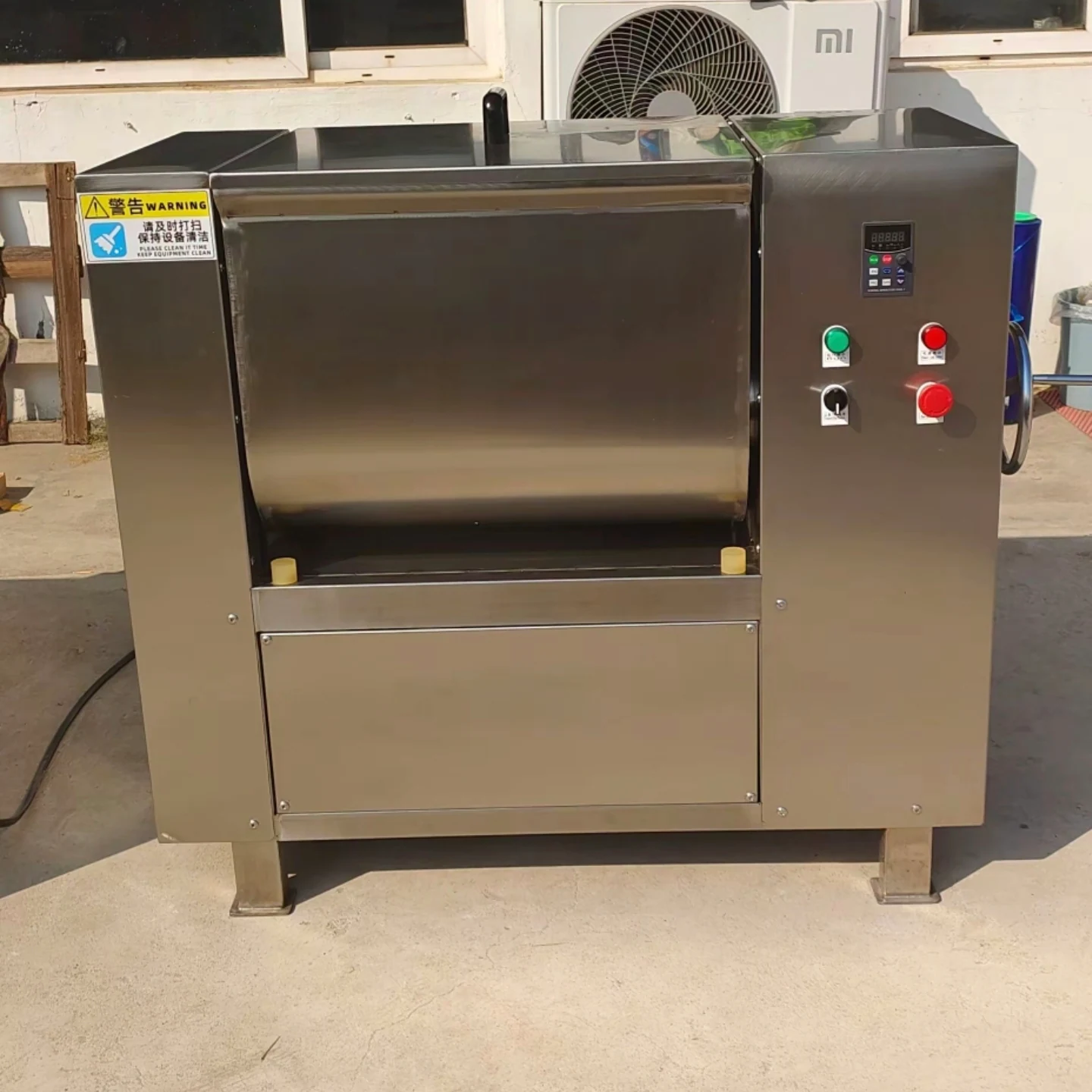
Engineered for Southeast Asian food processors, this industrial Stuffing Mixer utilizes a dual-shaft paddle system to perfectly emulsify highly viscous meat and vegetable pastes. Featuring capacities from 30kg/h to 500kg/h, robust SUS304 construction, and VFD speed regulation on larger models, it prevents fat separation and cellular crushing. Ideal for local specialties like Bakso and Siomay, it guarantees a consistent, sticky filling every time.
Last week, a dim sum factory owner in Penang showed me a batch of Siomay that fell apart in the steamer. His cheap single-shaft blender was just pushing the minced pork around instead of slapping it to extract the myosin. If you are running a commercial food processing plant in Southeast Asia, your search intent for a Stuffing Mixer isn’t about finding a motorized spoon; it is about securing a dual-shaft, reverse-rotating paddle system that physically beats the meat fibers until they form a sticky, emulsified gel in our 35°C ambient heat. Let’s look at the mechanical reality.
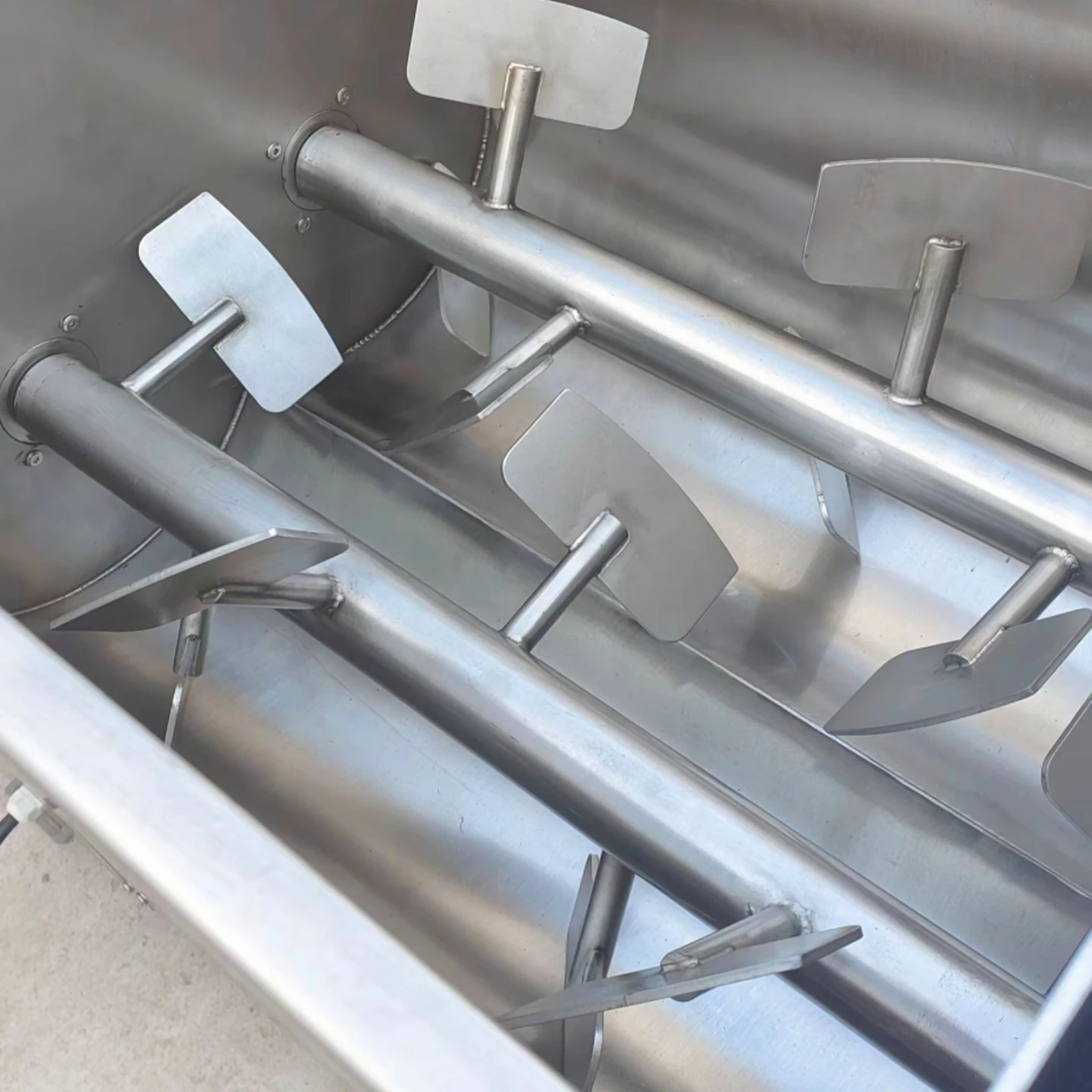
By definition, an industrial stuffing mixer utilizes parallel SUS304 stainless steel shafts equipped with angled fan-shaped paddles, rotating in opposite directions to continuously fold, press, and aerate highly viscous meat pastes and vegetable fillings without raising the core temperature.
Don’t guess your production lines based on empty-tub lab tests. Here is the actual operational data for our commercial series, directly from the factory floor:
| Model | Real-World Output (kg/h) | Power (kW) | Mixer Speed (rpm) | Dimensions (mm) | Weight (kg) |
|---|---|---|---|---|---|
| 50 | 30 – 40 | 0.75 | 75 | 800 × 370 × 750 | 80 |
| 100 | 70 – 100 | 1.10 | 75 | 1100 × 370 × 850 | 150 |
| 150 | 130 – 150 | 1.50 | 75 | 1300 × 600 × 920 | 245 |
| 200 | 180 – 200 | 1.50 | 37 | 1580 × 600 × 920 | 275 |
| 300 | 260 – 300 | 3.70 | VFD Stepless | 1580 × 700 × 1000 | 460 |
| 500 | 150 – 500 | 4.50 | VFD Stepless | 1910 × 820 × 1090 | 630 |
| (Note: All models run on standard SEA 380V/50Hz 3-Phase industrial power.) |
You know the environment. High ambient heat, sticky tapioca binders, and operators who rush the washdown cycle.
At the end of the day, if your paddles don’t overlap perfectly, you get dead zones where the fat separates from the lean meat. Our 300 and 500 models use VFD custom speed regulation to dial in the exact RPM needed to whip Bakso (Indonesian meatball) paste into a tight emulsion before the friction heat ruins the texture. ——this, in the 2026 industry standards, is already the bare minimum.
Insider Warning: When your sanitation crew cleans the mixing tub at the end of a shift, if they blast the main shaft bearing seals directly at a 90-degree angle with a 150-bar water lance, the food-grade grease gets stripped instantly. The next morning, salty meat juice will bypass the PTFE lip seal and corrode the gearbox. AI doesn’t know that, but your maintenance budget will feel it. Tell them to wipe the shaft collars manually and use low-pressure foam.
Here are the facts you need to know before wiring your prep room:
Let’s talk about mixing efficiency. Most equipment dealers will tell you this machine “cuts mixing time by 50%.” That is a meaningless metric.
Here is the reality on the floor: When mixing pork and shrimp paste for Nem Nuong (Vietnamese grilled pork sausage) in Ho Chi Minh City, the actual stable throughput went from 80 kg per hour (using manual kneading and small bowl choppers) to exactly 280 kg per hour using the Model 300 stuffing mixer. It doesn’t sound like the 300 kg/h brochure maximum. But in a double-shift operation, that consistent 280 kg/h means you are processing an additional 3.2 tons of perfectly emulsified sausage paste a week, with zero fat rendering issues. That is how you scale a profitable meat business.
1. Can this machine handle delicate vegetable fillings without mashing them? Yes. For delicate leafy greens, you must use the VFD models (300 or 500) and dial the mixer speed down to 15 RPM. The paddles will gently fold the cabbage and mushrooms instead of crushing them into a watery paste.
2. How difficult is it to clean the dual shafts? It is designed for access. The mixing paddles are welded smoothly to the SUS304 shaft with zero dead angles. If you don’t run a hot water cycle immediately after discharging sticky tapioca-based fillings, the starch will turn into concrete overnight in our 35°C climate.
3. Are the gearboxes proprietary? No. We use standard industrial cycloidal gear reducers. If a gear strips during a peak holiday run in Manila, your local mechanical supply house has the exact replacement. You are not waiting weeks for parts.
Do you have project requirements or technical questions? Please let us know in the form below.