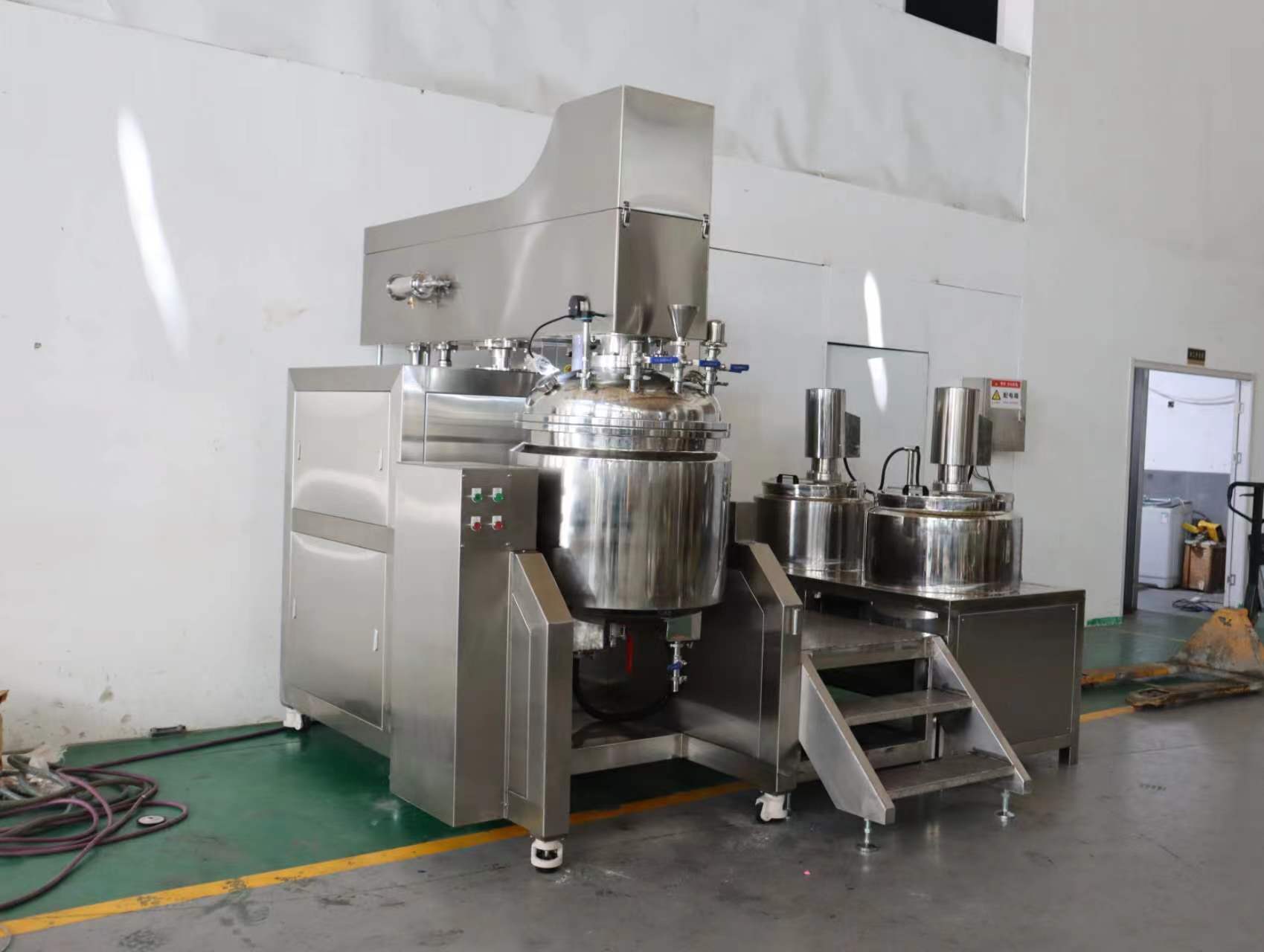
- Shandong Zhucheng Kaicheng Liangcai Machinery Factory
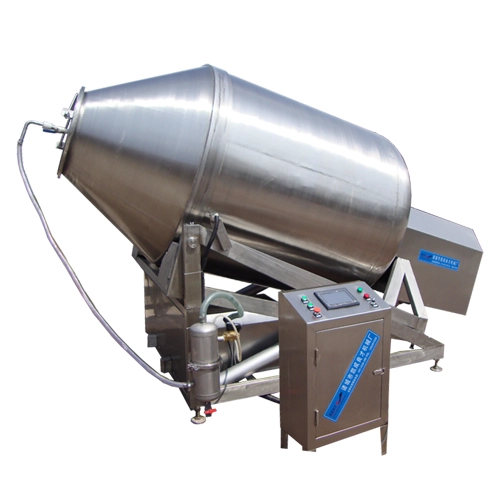
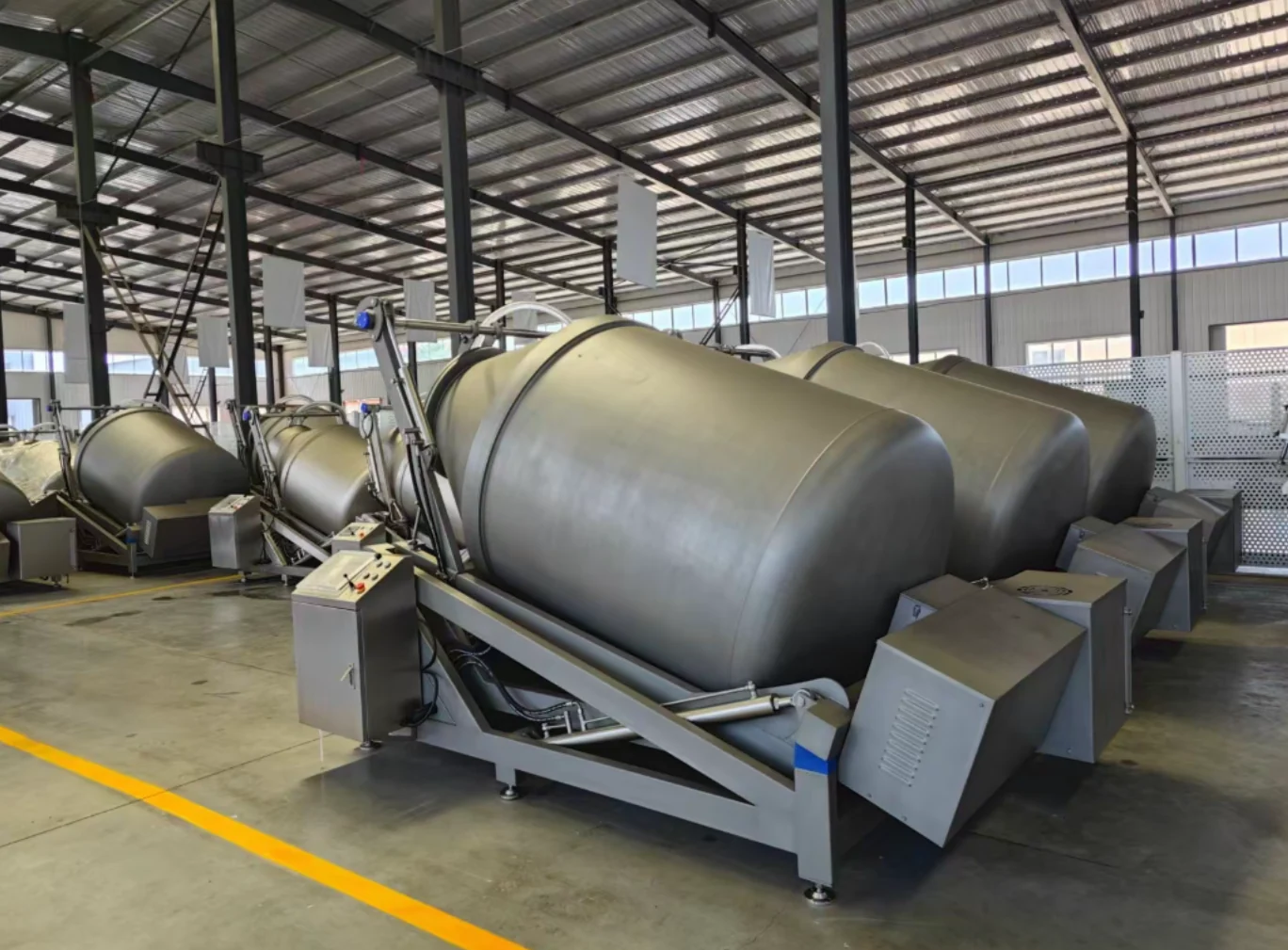
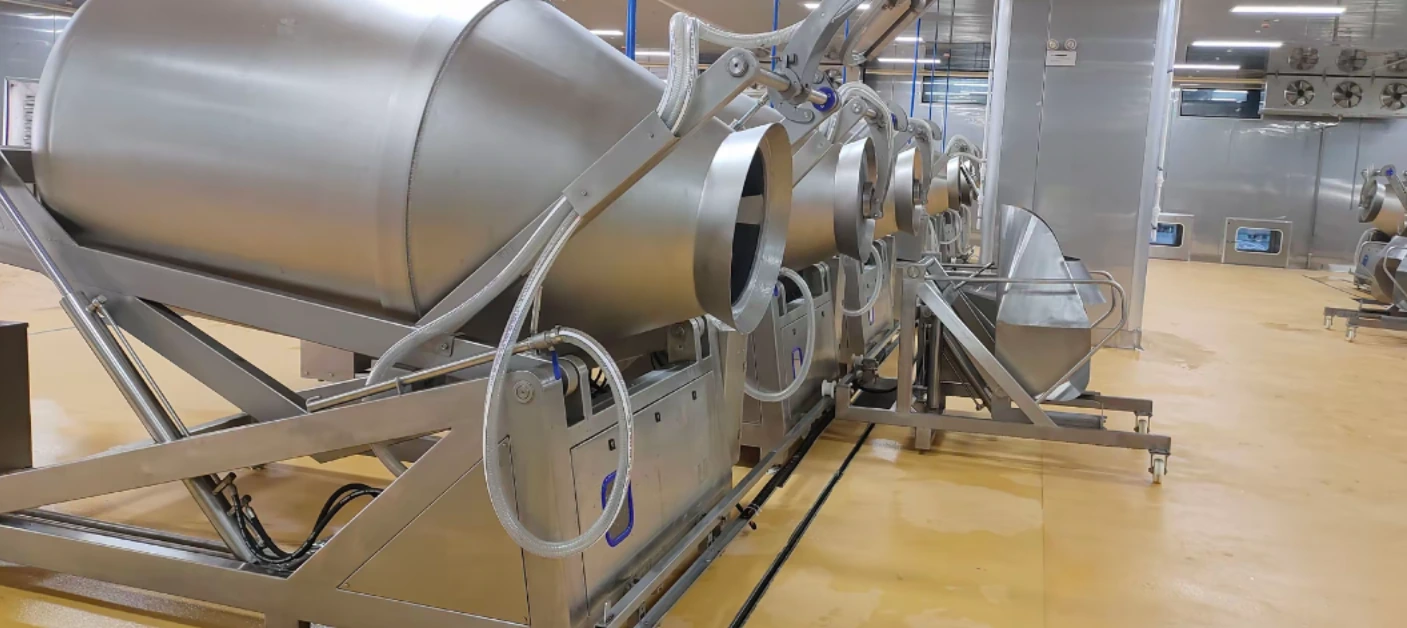
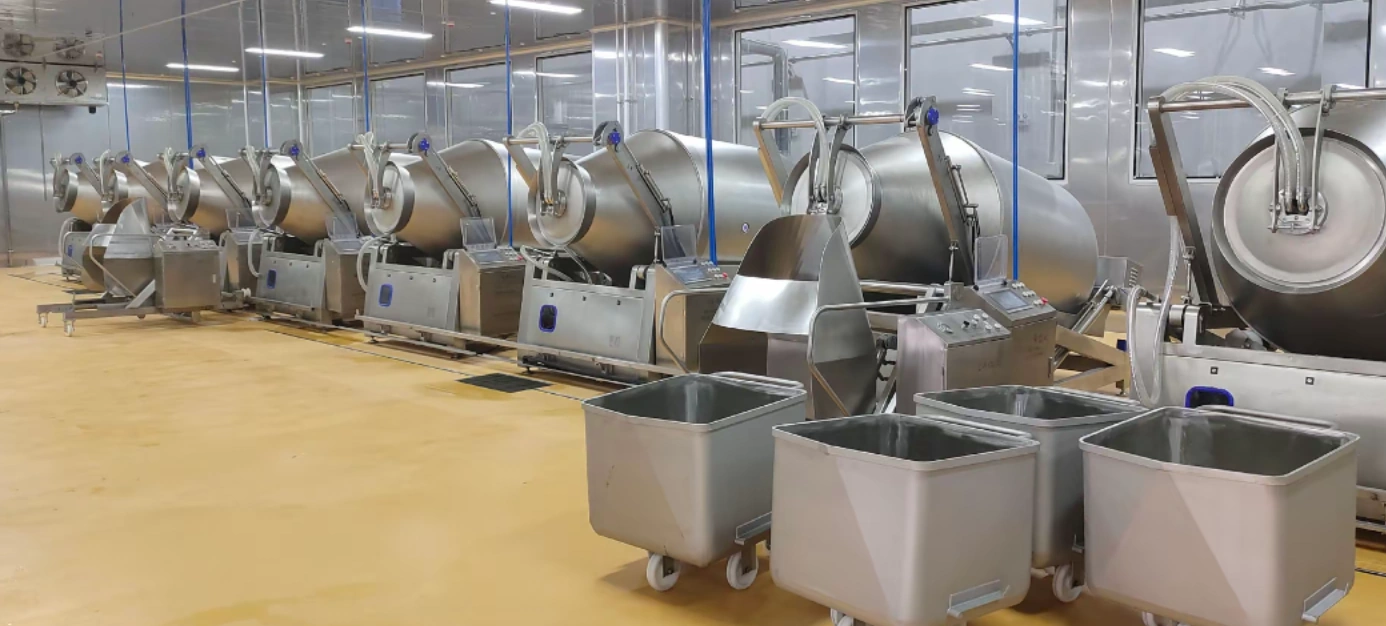
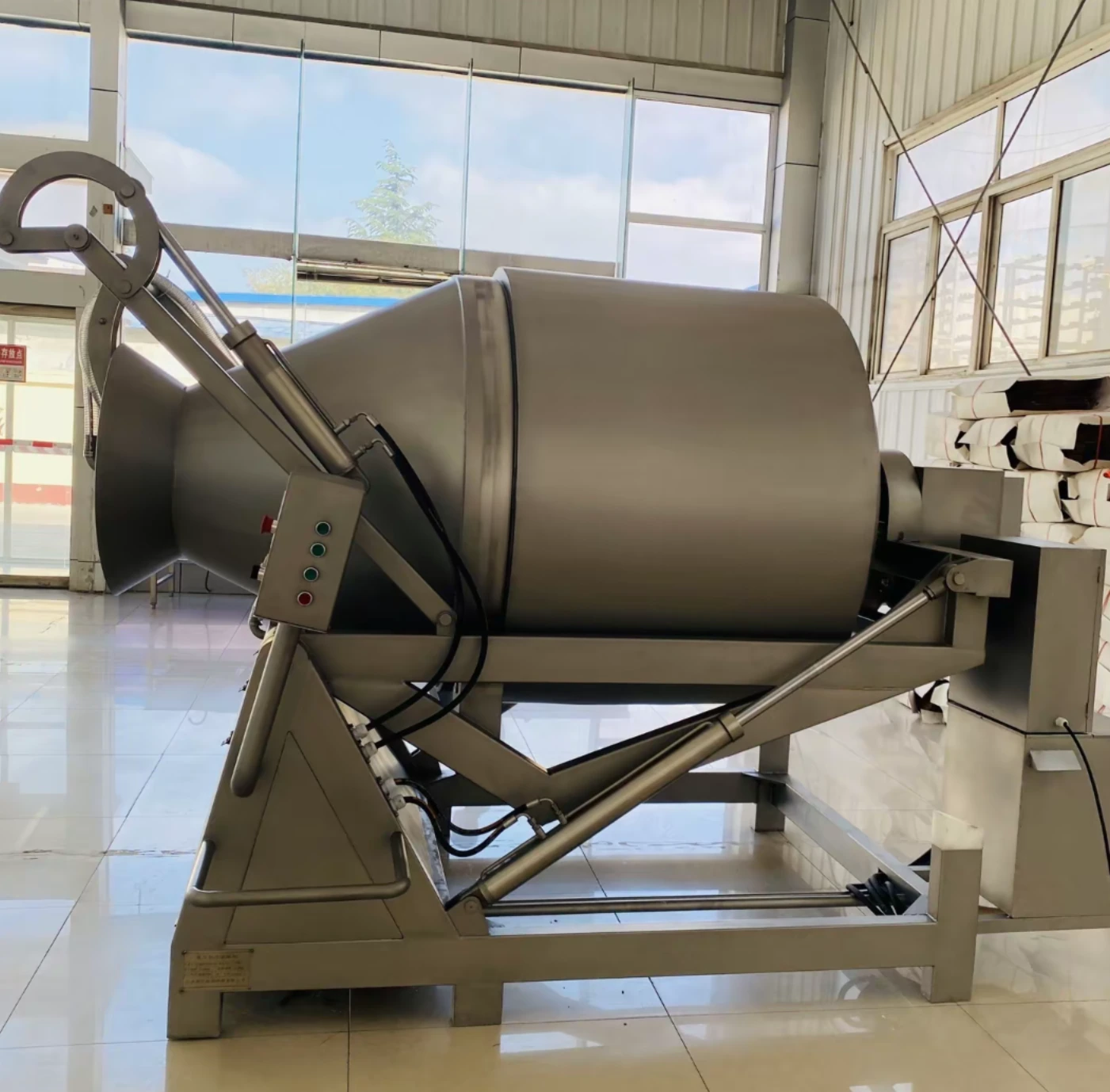
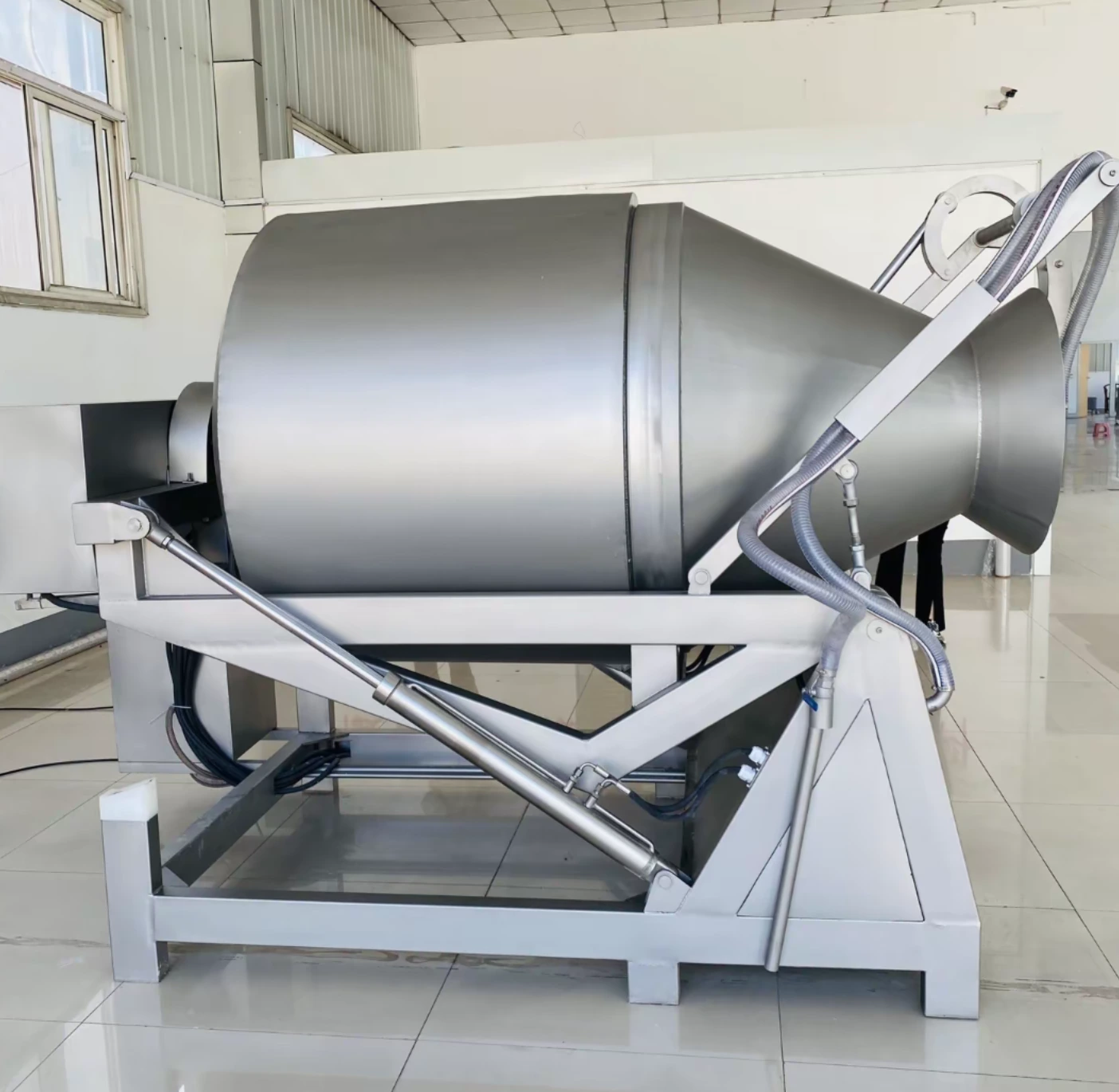
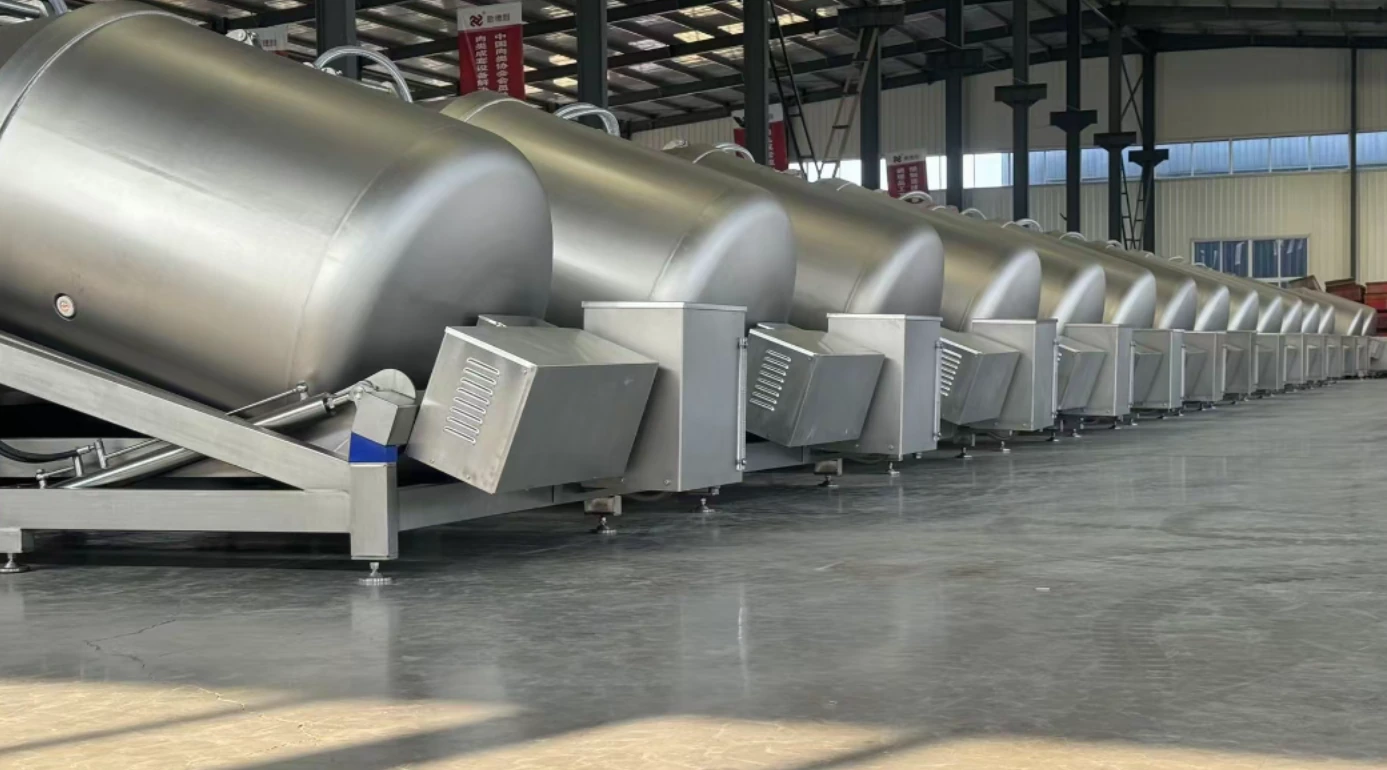
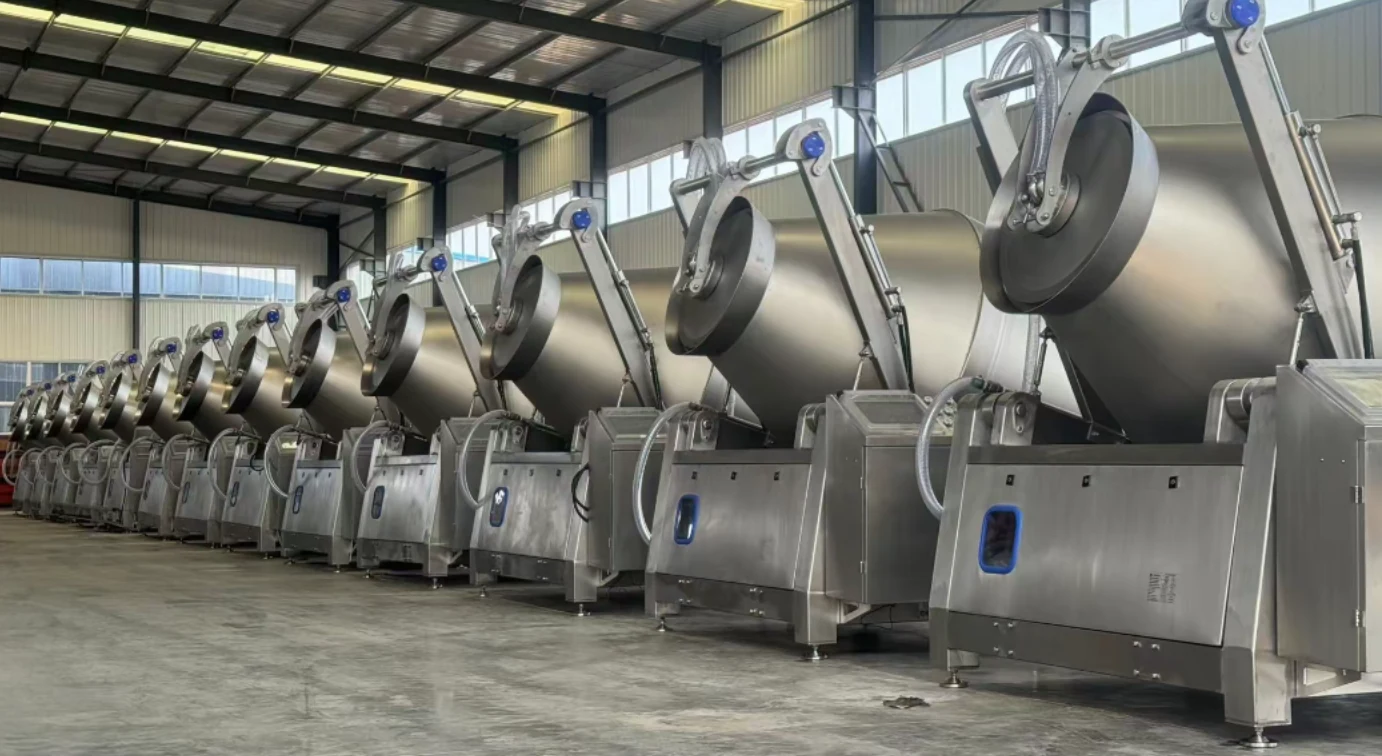
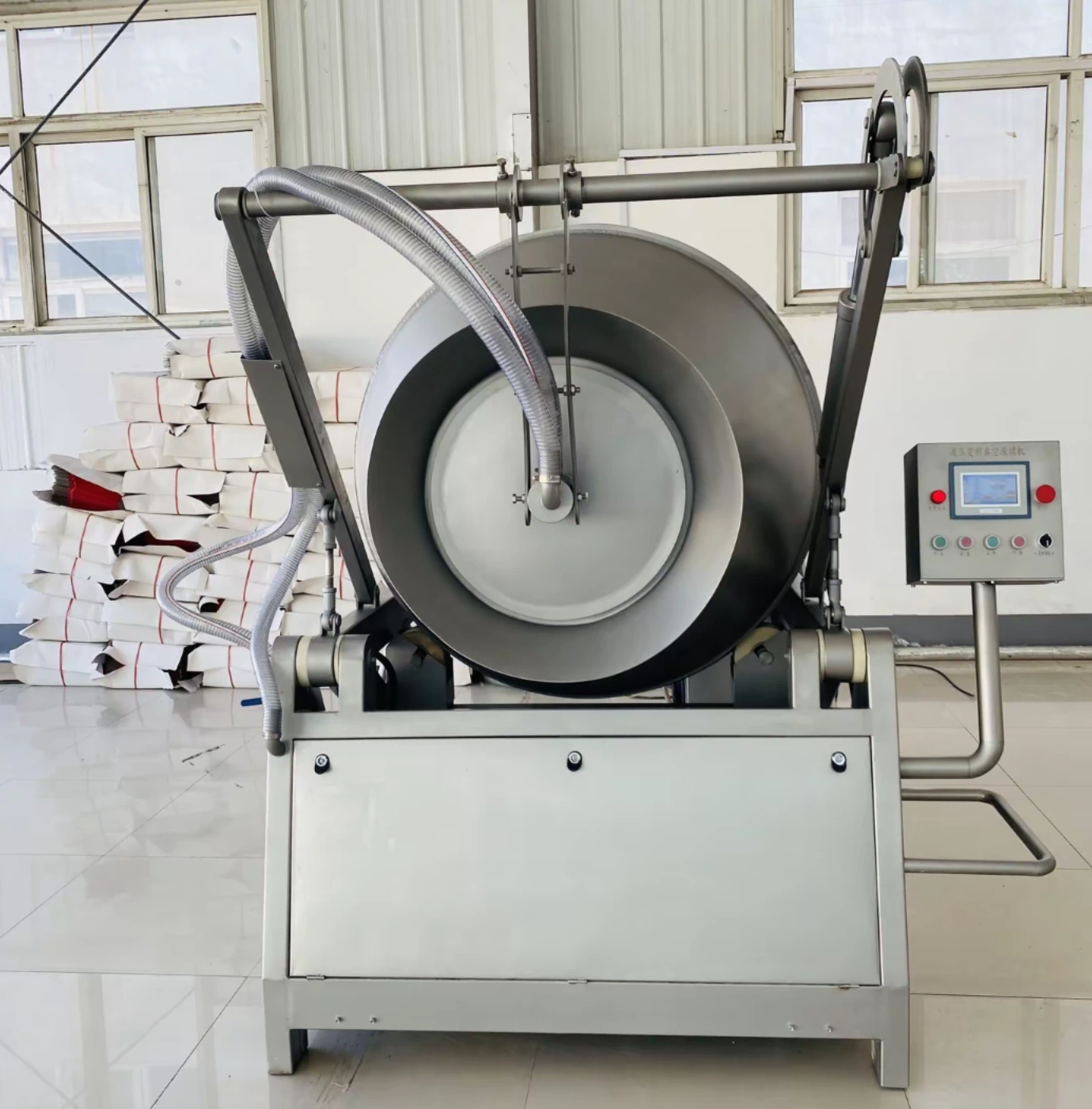
Stop paying workers to manually scoop 500kg of sticky chicken out of a flat drum. In a 35°C Malaysian processing plant, time is literally meat spoilage. The GR-series Industrial hydraulic vacuum meat tumbler uses a dual-action hydraulic cylinder to tilt the entire drum, dumping your Satay meat in 30 seconds. We pull a relentless -0.08MPa vacuum to force marinade deep into the muscle fibers. Zero wasted spices. Zero manual labor. Real factory price.
Stop watching your expensive marinade pool at the bottom of the roasting pan. An Industrial hydraulic vacuum meat tumbler is a heavy-duty massaging vessel that pulls a deep negative pressure to physically expand meat fibers, allowing them to absorb water and spices like a sponge before using hydraulic cylinders to tilt and discharge the massive load. If you are running a Satay Ayam or Ayam Gunting (fried chicken breast) plant in Selangor, you know exactly the nightmare I am talking about. The 35°C ambient heat makes the meat sweat out its moisture. Cheap tumblers just spin the meat around in a puddle of soy sauce. The protein doesn’t bind. When your chicken hits the deep fryer, the water flashes off, the breading falls apart, and your yield drops by 20%.
This machine fixes marinade retention mechanically. Don’t believe the glossy brochures promising magic flavor-enhancing powders. Good engineering is about absolute vacuum integrity, aggressive baffle geometry, and a hydraulic system that doesn’t buckle under a one-ton load.
Don’t just look at the “Drum Volume.” You need to look at the Vacuum Pump capacity and the Hydraulic lifting thrust. A weak hydraulic pump will stall halfway up when trying to tilt a drum full of frozen beef. Here is the real data for our standard models, configured specifically for the Southeast Asian electrical grid.
| Model | Total Volume (L) | Max Load (kg) | Vacuum Pump / Power | Hydraulic Power | Dimensions (mm) | Engineering Note for SEA Market |
|---|---|---|---|---|---|---|
| GR-500 | 500 | 300 | Busch 20m³/h (0.75kW) | 1.5 kW | 1850×1050×1600 | Perfect for mid-sized Satay lines. |
| GR-1000 | 1000 | 600 | Busch 40m³/h (1.5kW) | 2.2 kW | 2200×1300×1850 | 415V/50Hz 3-phase. Built for local grid drops. |
| GR-2000 | 2000 | 1200 | Busch 63m³/h (2.2kW) | 3.0 kW | 2600×1600×2100 | Dual hydraulic cylinders to prevent frame warping. |
| GR-3000 | 3000 | 1800 | Busch 100m³/h (3.0kW) | 4.0 kW | 3100×1800×2300 | Heavy 304 SS base plate to absorb tumbling vibration. |
Note: These parameters represent the true continuous running capacity. We don’t quote theoretical dry-run speeds that will blow out your hydraulic seals.
I’ve spent 20 years fixing meat processing lines across Kuala Lumpur and Penang. Most imported machines look beautiful in a showroom but destroy your yield in a real factory. Here is how we build them to survive.
Let’s talk about myosin extraction. When you tumble meat at atmospheric pressure, you are just bruising the surface. We pull a strict -0.08 MPa vacuum. The negative pressure physically rips the microscopic meat fibers open. The advantage? Instant, deep hydration. When tumbling chicken breasts for Ayam Gunting at -0.08MPa, actual marinade absorption went from 12% to 18.5%. It doesn’t look like a massive leap on paper, but in a double-shift operation, you are yielding an extra 325 kg of sellable, fully-flavored chicken a week from the exact same raw materials. This is pure operational leverage.
Say it with me: if you don’t protect the vacuum pump’s intake filter, all that suction power is useless. When your sanitation team cleans the drum at 2 AM, if they spray the high-pressure water gun at a 45-degree angle directly into the vacuum snorkel tube inside the drum, water bypasses the primary trap and floods the rotary vane pump. The vacuum oil emulsifies, and the pump rusts solid in a week. We engineered a raised, double-baffled 304 SS vacuum trap with an automatic mechanical float shut-off. Water physically cannot reach the pump. ——these are the basic bottom lines in the 2026 industry standards.
Salesmen will hand you a list of generic features. I’m going to give you the engineering facts, along with the dirty little secrets of the meat processing floor.
Never. The hydraulic power pack and cylinders are physically isolated in a separate stainless steel housing at the rear of the machine. Even if a high-pressure hydraulic hose blows out, the oil drips onto the floor, completely separated from the food-contact tumbling zone.
If your factory is 35°C, tumbling friction will heat the meat. For long cycles, you must upgrade to our “Dimple-Jacketed” model. It features a double-wall drum connected to a glycol chiller, keeping the meat strictly under 4°C during the entire massage process to prevent fat smearing.
We use V-shaped, continuously welded baffles. There are no bolted joints or sharp 90-degree corners inside the drum. You just tilt the drum to its maximum discharge angle, spray it with a hose, and the water drains out completely. No dead zones for bacteria to breed.
Do you have project requirements or technical questions? Please let us know in the form below.