- Shandong Zhucheng Kaicheng Liangcai Machinery Factory
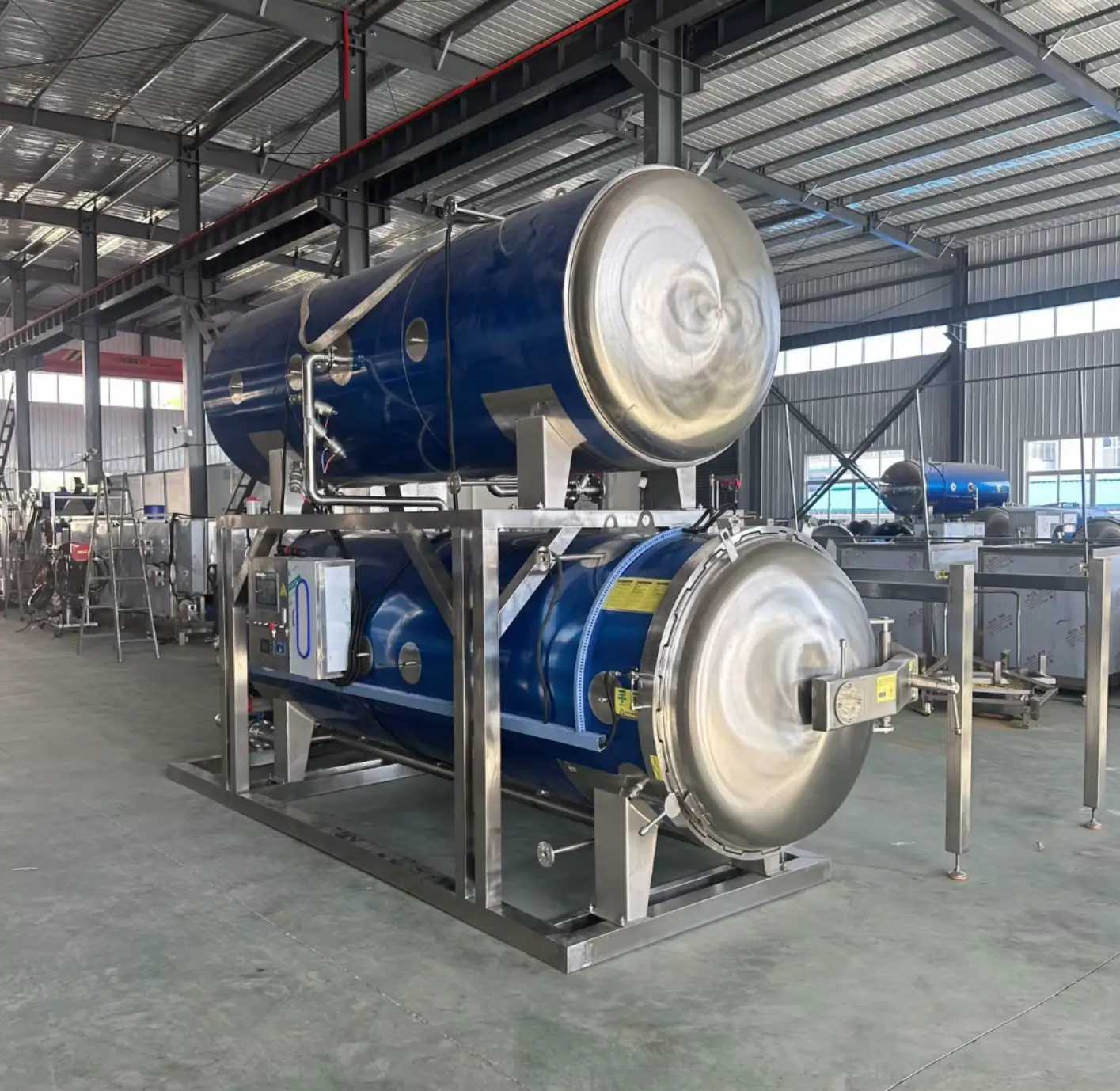
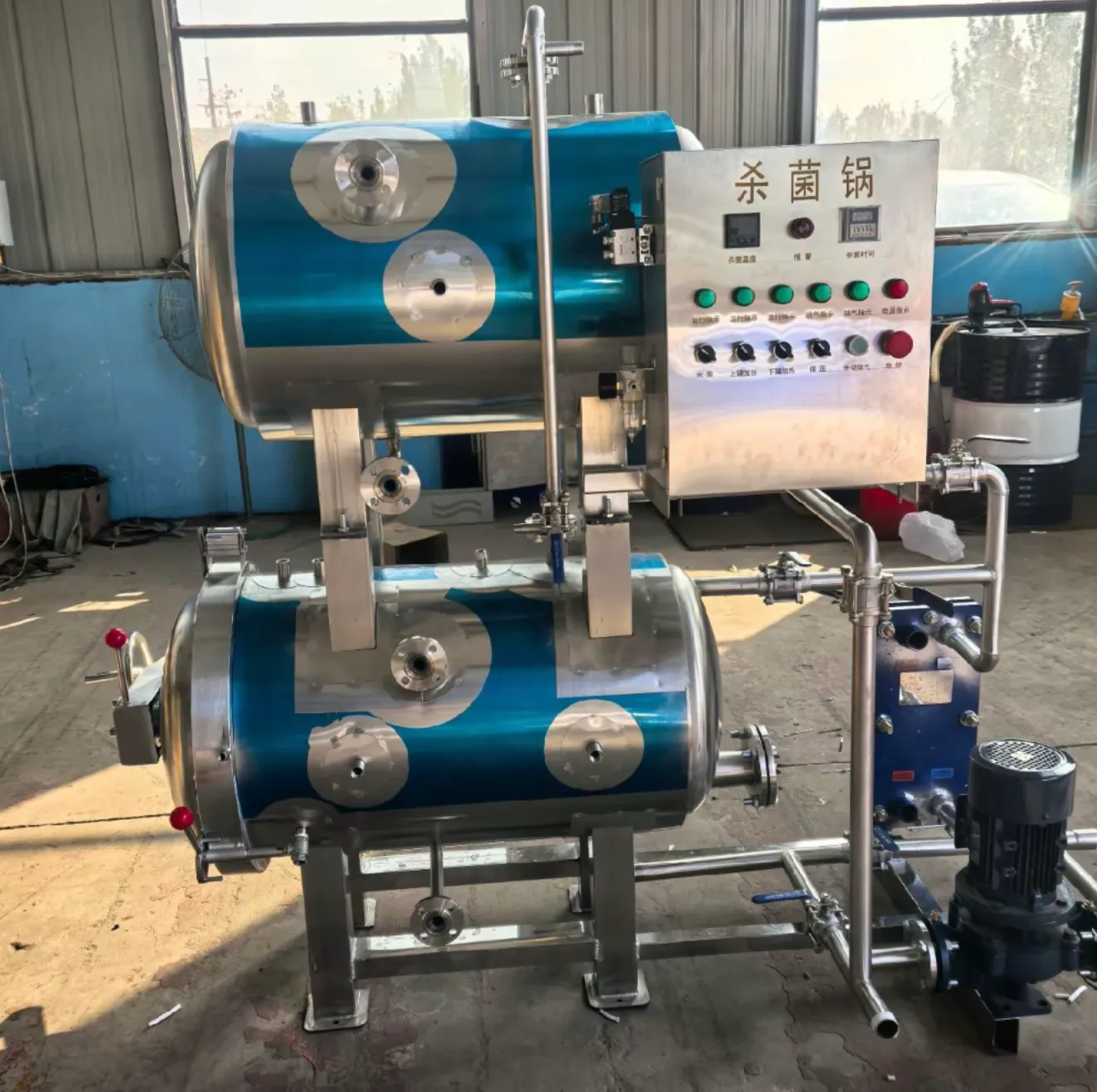
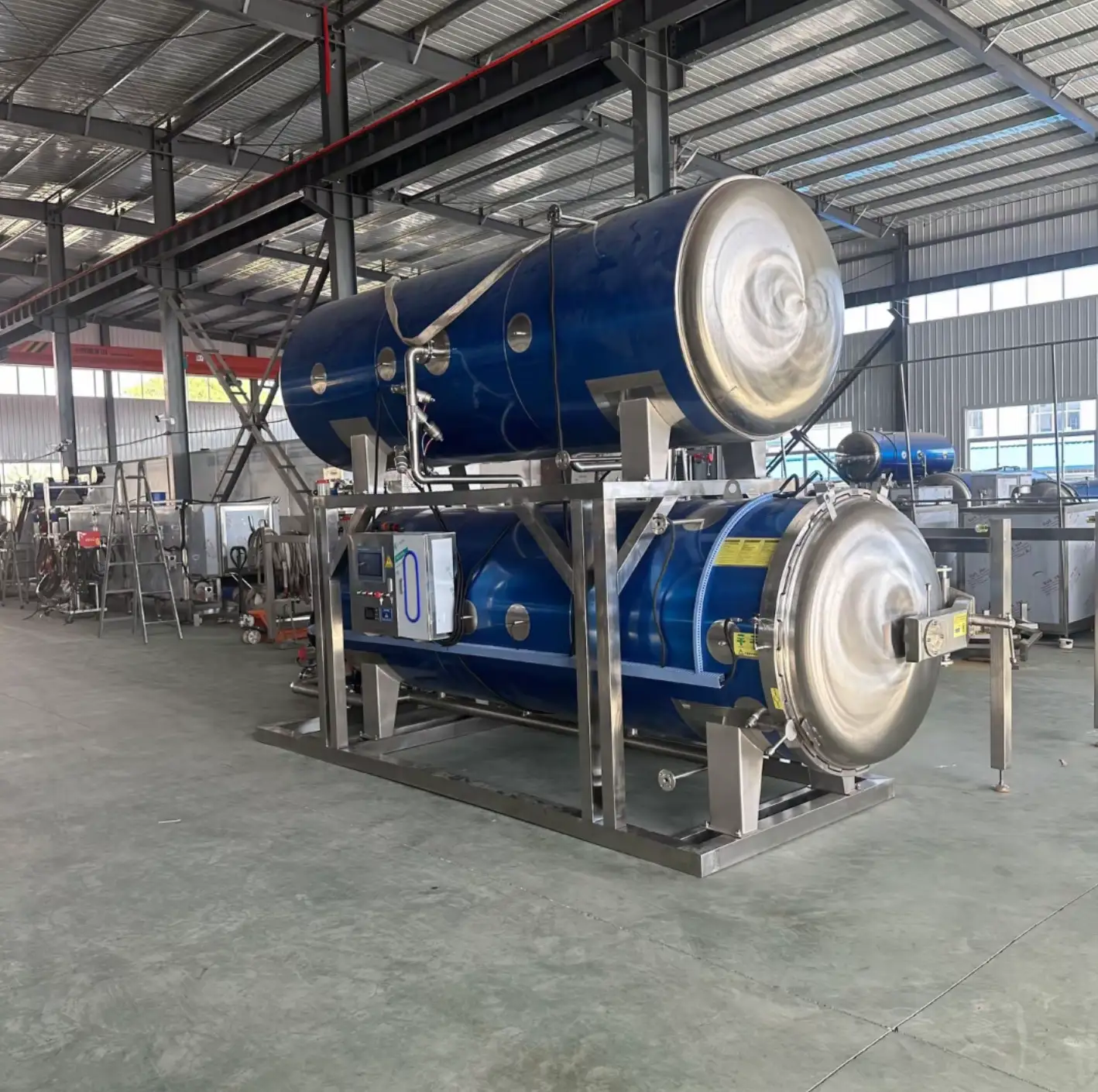
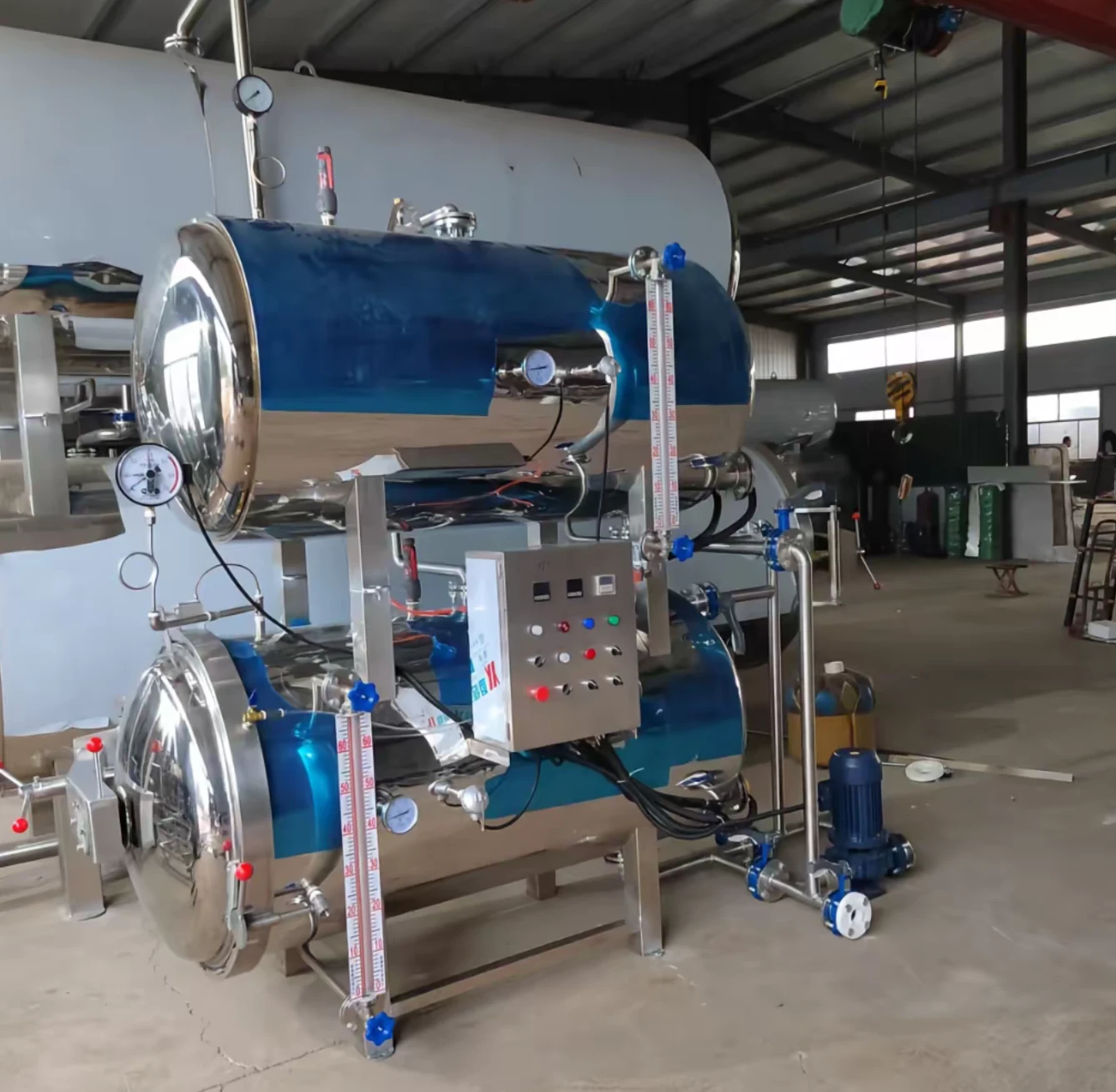
Industrial Solutions for Sticky Pastes (Sambal/Durian) & Shelf-Stable Pouches
Stop paying three workers to stand over a hot wok for 8 hours.
Last week, I audited a sauce factory in Penang. They were making Sambal Belacan. The smell was amazing, but the process was a disaster. They were using a standard vertical mixer. The result? The center was cold, the edges were burnt, and the workers were exhausted from scraping the sides manually.
You cannot fight viscosity with a spoon.
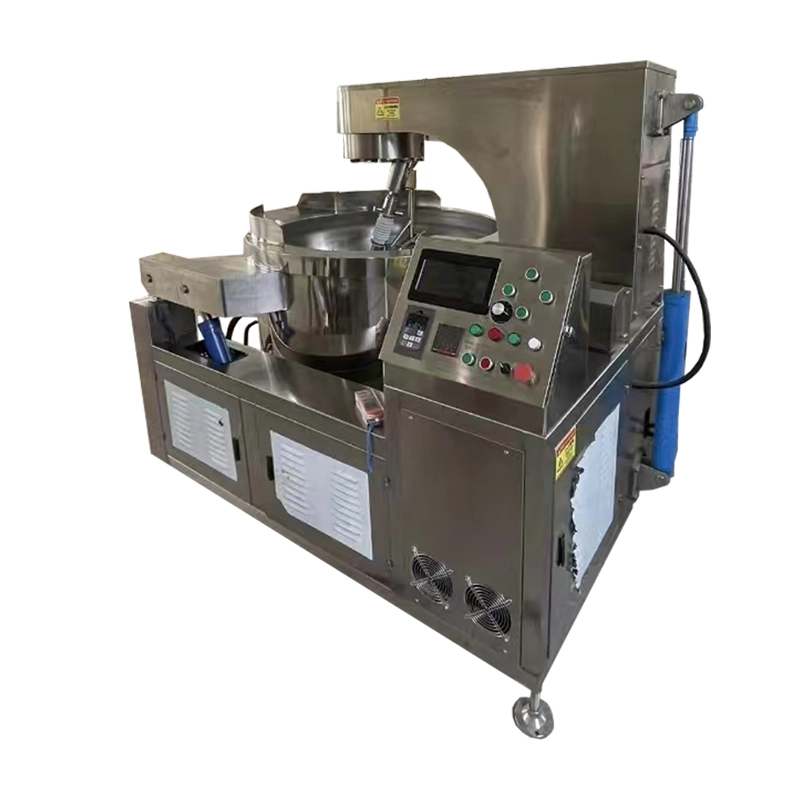
If you are cooking high-sugar fruit jams (like Pineapple filling for Nastar) or thick coconut-based Rendang, you need a machine that scrapes 100% of the surface area, every single second. And once it’s cooked, if you want to sell it in a 7-Eleven in Bangkok, you need a Sterilization Kettle (Retort) that won’t blow your pouches apart.
Here is the engineering breakdown of why these two machines are the standard for 2026 export quality.
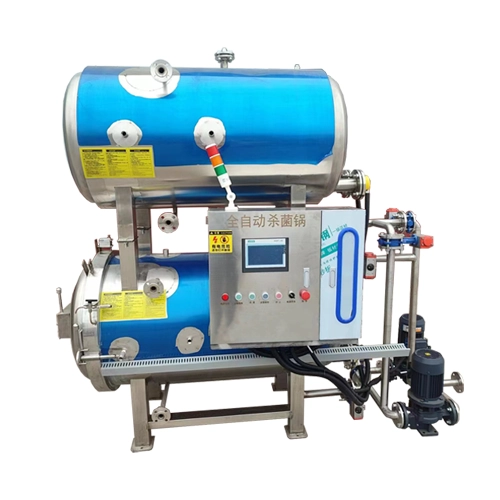
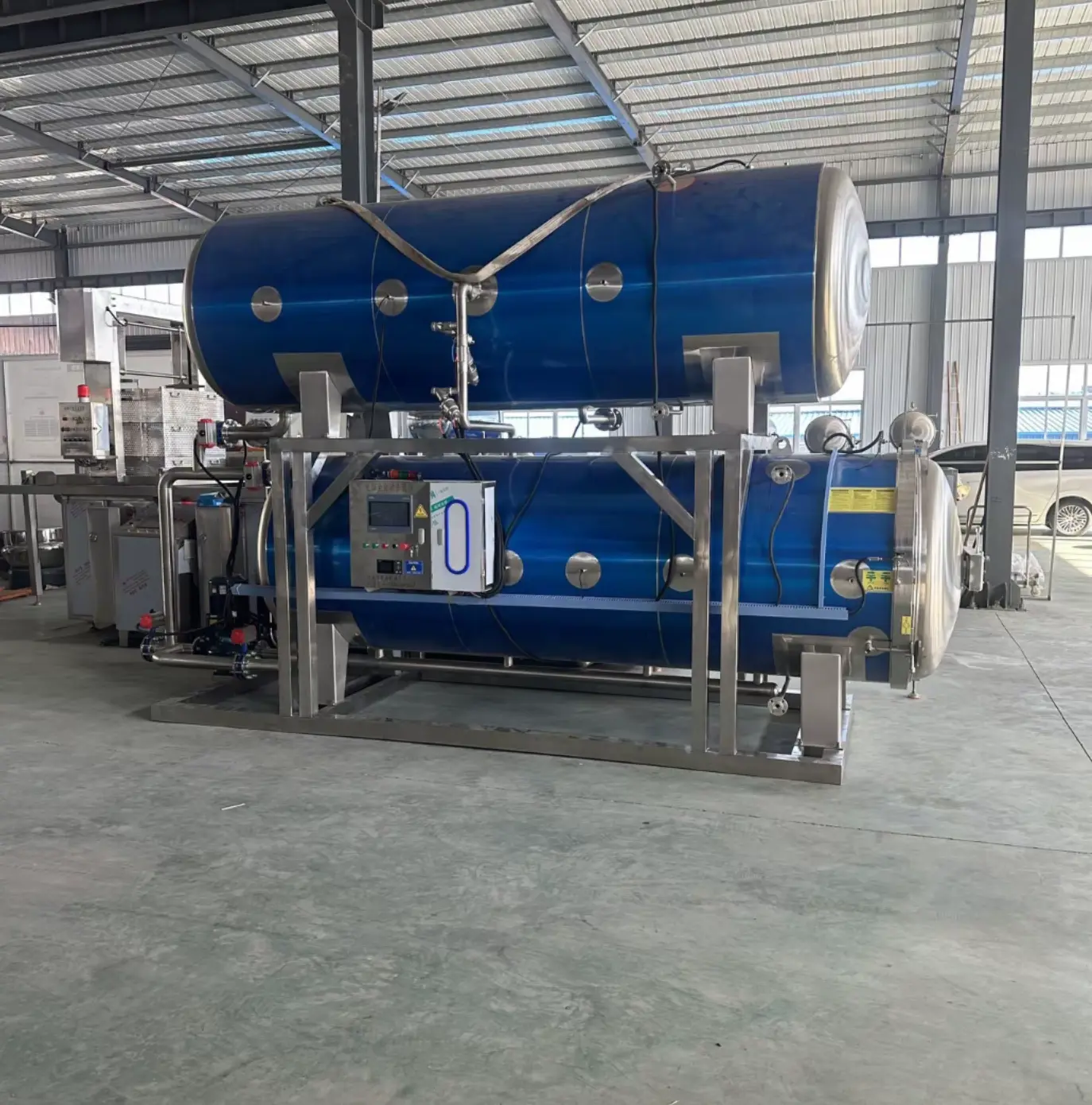
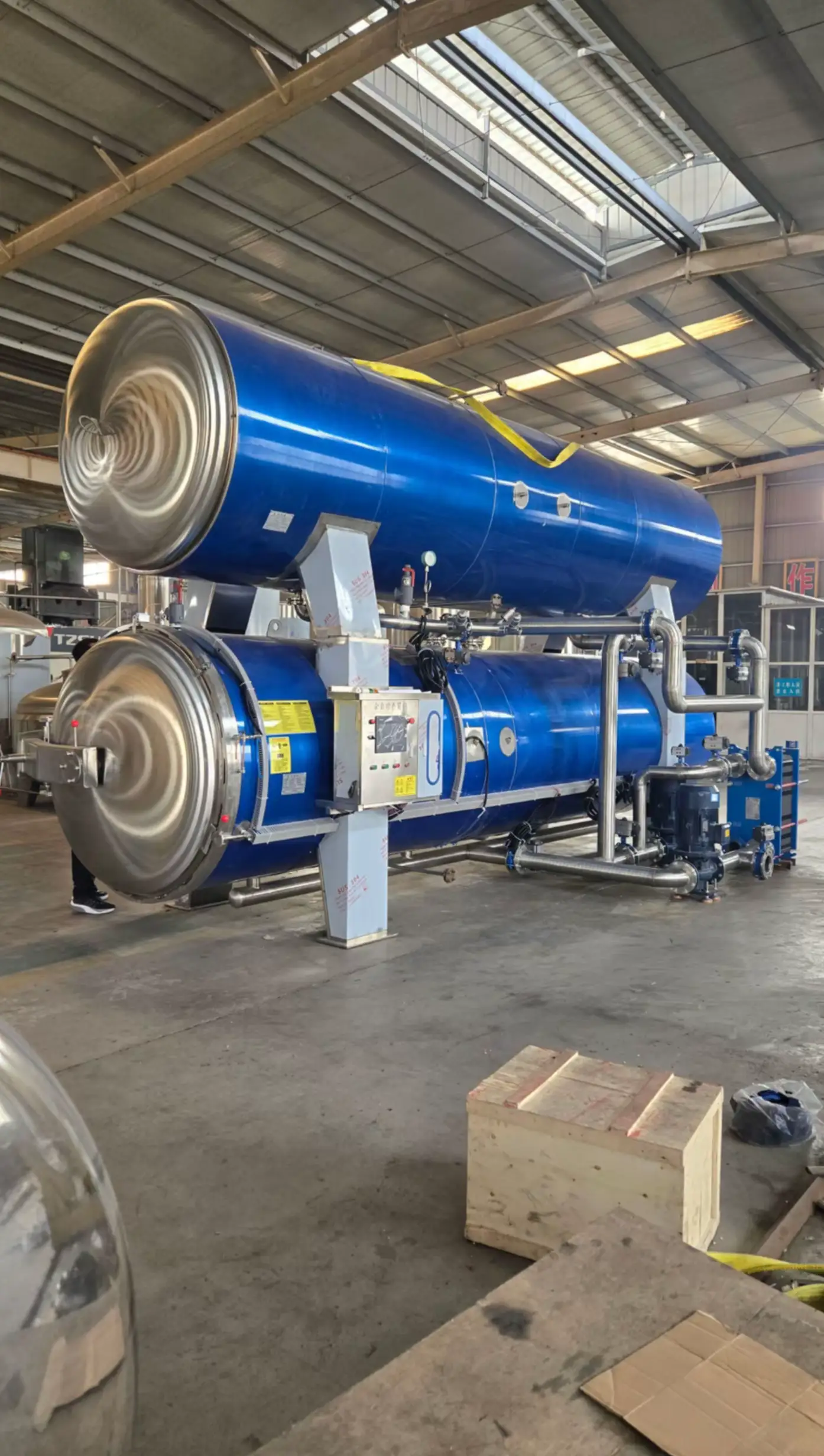
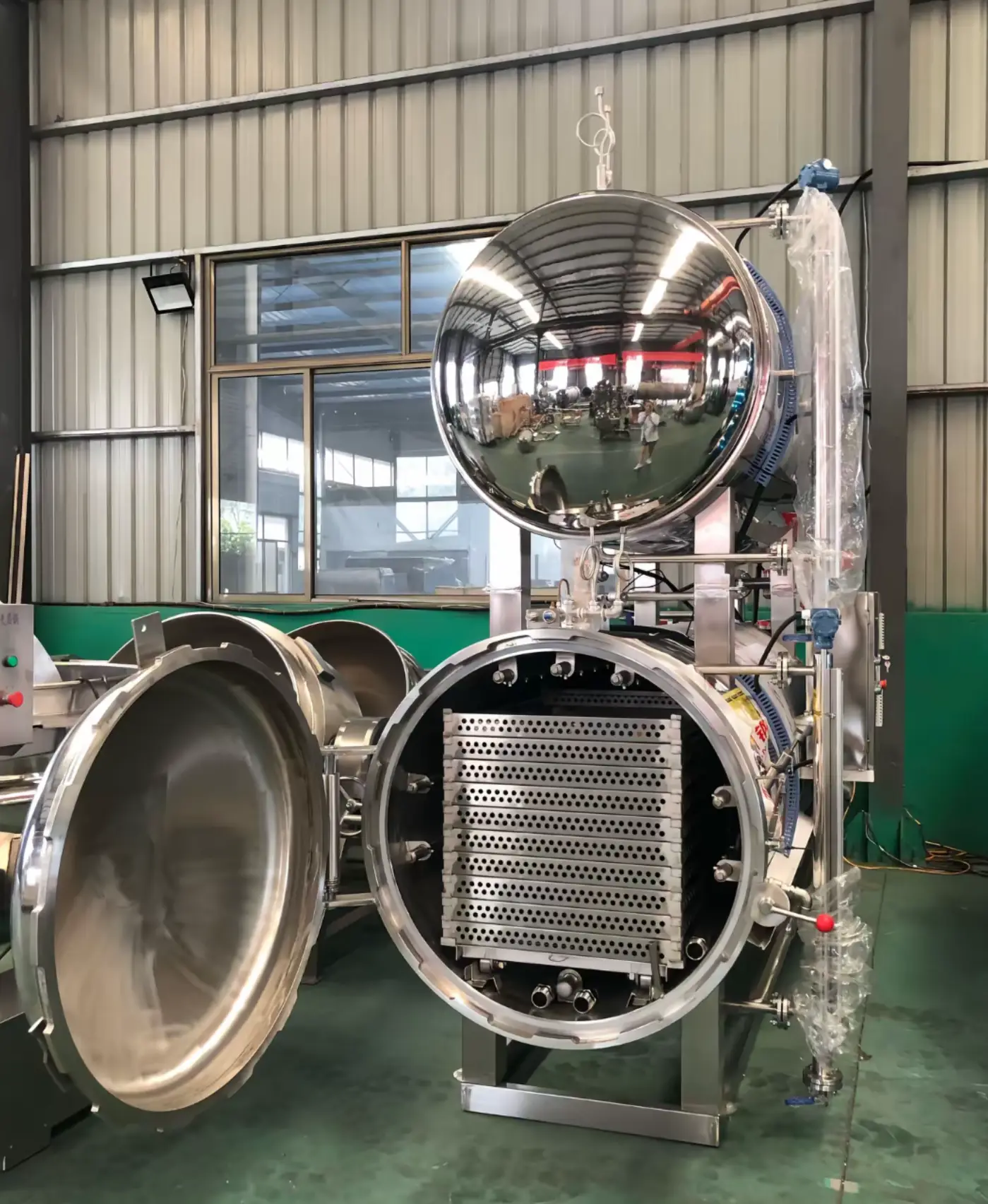
Why are you still accepting a 5% pouch burst rate as “normal” shrinkage? If you are running a canning or flexible packaging line in Southeast Asia, you already know the absolute nightmare of thermal processing when the ambient factory floor sits at 36°C with 90% humidity. You need an industrial Spray Retort that doesn’t just blast steam blindly into a pressure vessel. It needs to dynamically control the overpressure to match the internal expansion of your Beef Rendang pouches or Bird’s Nest bottles. This isn’t about passing a basic safety audit. It’s about shelf-life stability, zero botulism risk, and protecting your profit margins.
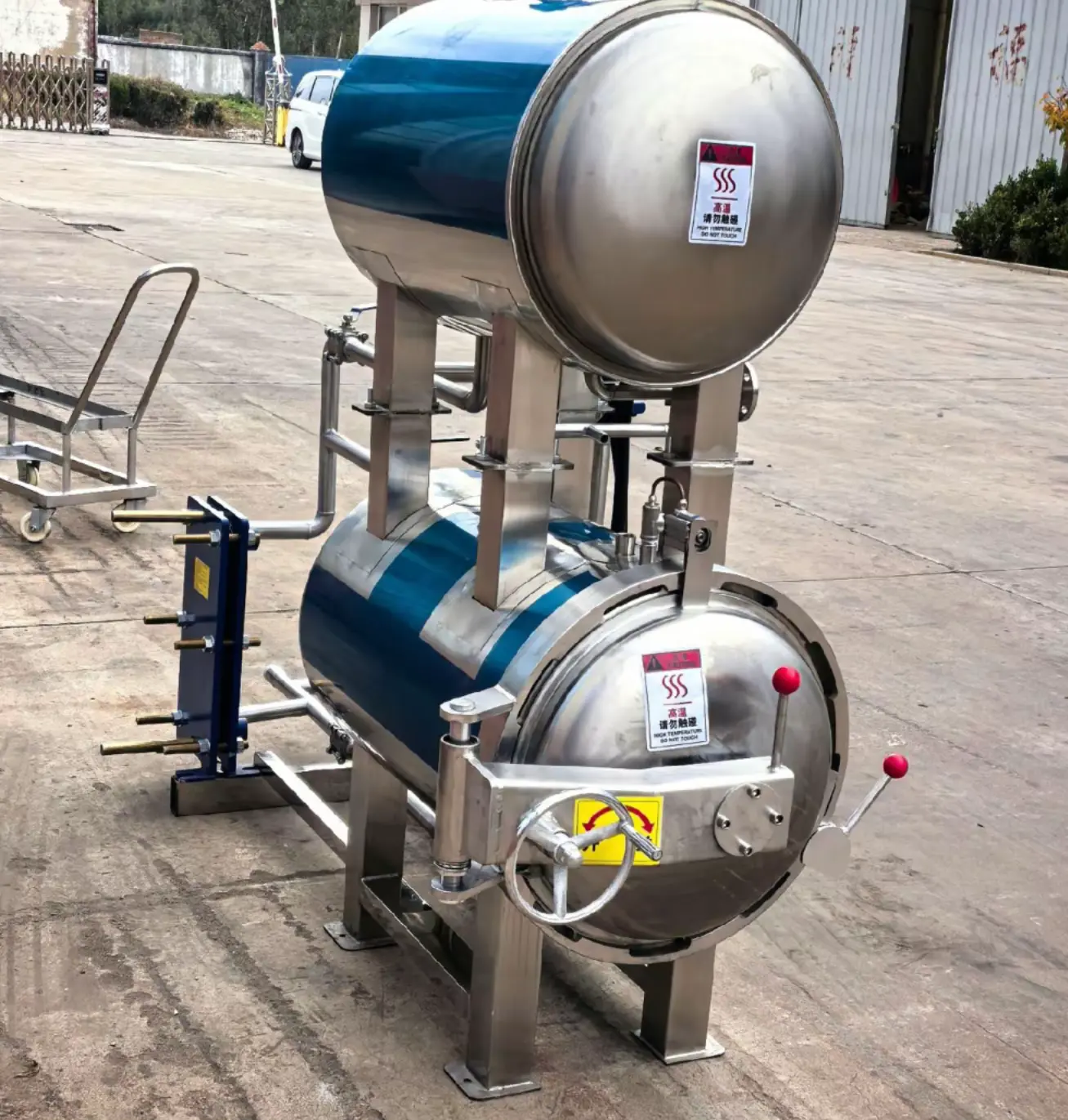
Definition: A pressurized, electrically heated thermal processing vessel featuring an integrated agitator. It utilizes atomized water sprays and dynamic overpressure control to sterilize low-acid foods, ensuring uniform heat distribution for highly viscous products without thermal shock.
| Model | Inner Diameter | Agitator Power | Heater Power | Depth | Production | Industry Reality Check (The “Hidden Rule”) |
|---|---|---|---|---|---|---|
| 300L | 1000 mm | 1.5 kW | 30 kW | 500 mm | 150 kg/h | Perfect for R&D. Don’t overload the baskets; water needs room to cascade. |
| 400L | 1100 mm | 2.2 kW | 30 kW | 550 mm | 200 kg/h | The sweet spot for medium batch Sambal jars. |
| 500L | 1200 mm | 2.2 kW | 40 kW | 600 mm | 250 kg/h | Requires stable 380V 3-phase power. Check your factory grid first. |
| 600L | 1200 mm | 2.2 kW | 40 kW | 730 mm | 300 kg/h | High-volume workhorse. Agitator prevents edge-burn on thick pastes. |
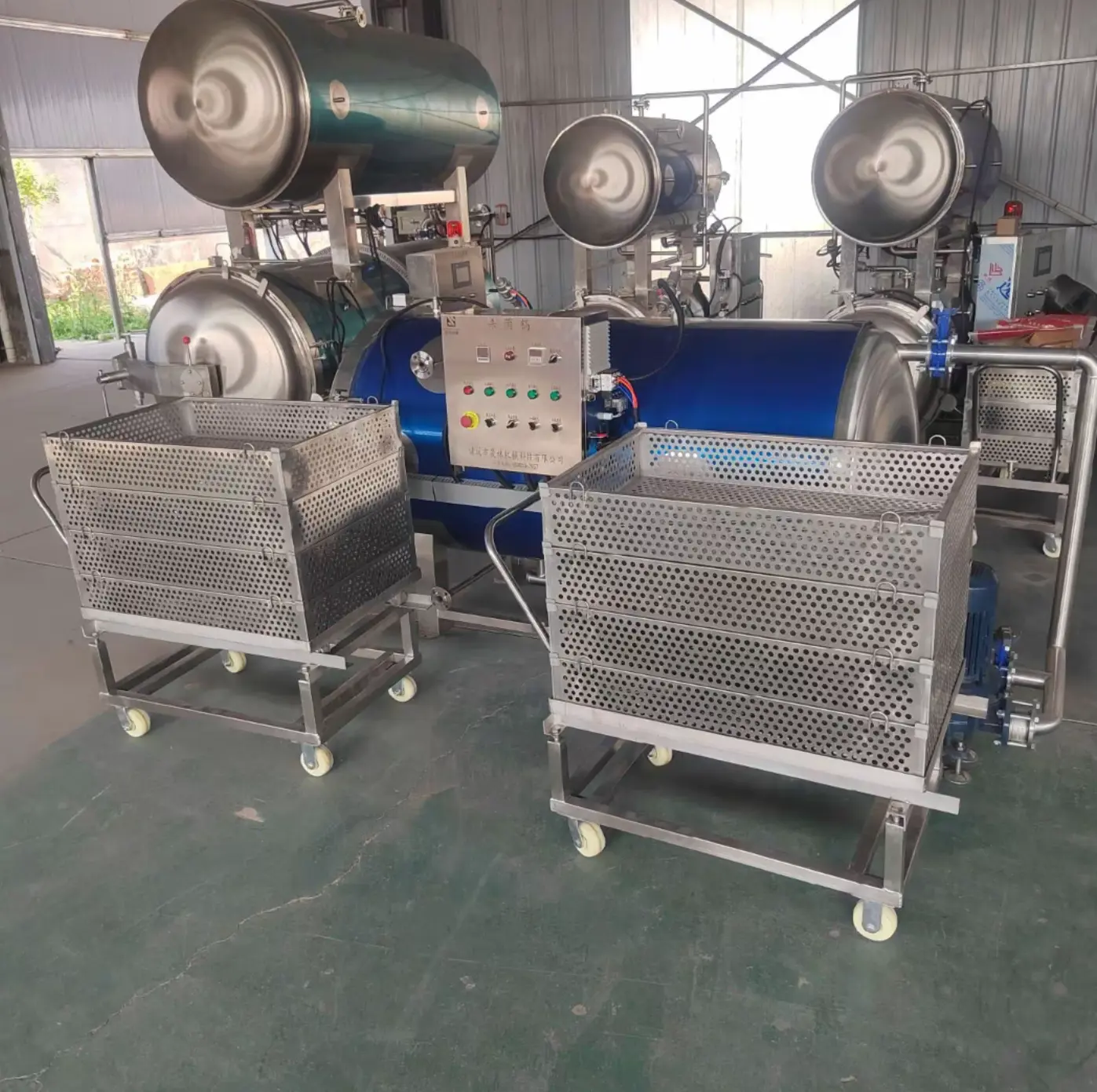
Most suppliers will try to sell you on PLC touchscreen size. At the end of the day, if your water distribution manifold gets clogged with calcium scale, all that digital logic is useless. Our Spray Retort utilizes high-flow atomization nozzles positioned at exact geometric angles to penetrate every single basket layer. The Advantage: Rapid, penetrating heat transfer with absolute zero cold spots. We keep the temperature deviation strictly within ±0.5°C during the holding phase—which, in 2026 industry standards, is the absolute baseline. The Benefit (Your Profit): When sterilizing 250g retort pouches of Sambal Terasi, actual throughput on the 600L model jumps from 240 kg/h (on older steam models) to a verified 300 kg/h. It doesn’t sound like a massive revolution. But run that across a double shift, and you’re clearing an extra 960 kg of sellable product daily without adding a single square meter of floor space.
Southeast Asian factories are brutal on pressure vessels. High ambient heat, constant moisture, and aggressive chloride-based cleaning foams will eat cheap alloys alive. The Advantage: We built this vessel using certified 304 stainless steel, specifically annealing the weld seams to resist chloride stress-corrosion cracking. The Benefit (Your Profit): Less catastrophic downtime. Here is a dirty little secret: when operators clean the retort baskets, if they leave high-alkaline detergent pooling near the door flange gasket, standard silicone seals vulcanize and crack within a month. We engineered a self-draining lip and use industrial EPDM seals rated for 140°C. You won’t be halting production just because your sanitation crew got lazy with the final rinse.
The Advantage: Continuous mechanical rotation during the thermal cycle prevents product stratification. The Benefit (Your Profit): If you process thick, viscous local foods like Gulai or heavy curries, static heating burns the edges while leaving the core under-processed. The 2.2 kW agitator keeps the particulate matter suspended. You get a perfect F0 value every single batch, completely eliminating the burnt, bitter notes that ruin your brand reputation.
Q: Will this handle glass jars of Bird’s Nest without thermal shock breakage? Yes. The atomized spray prevents the sudden, violent temperature spikes associated with pure steam retorts. As long as you program the cooling water ramp-down gradient correctly in the PLC, glass breakage drops to near zero.
Q: How hard is it to source replacement heating elements or agitator motors in Indonesia or Vietnam? We don’t use proprietary, locked-down electronics. The 2.2 kW agitator motors and 40 kW electric heaters run on standard 380V 50Hz 3-phase power. You can source replacements from our local SEA distributors within 24 hours, or even use locally sourced industrial equivalents in a pinch.
Q: Is scale buildup a problem with the spray nozzles? Only if you ignore basic water chemistry. Use softened water. If you pump hard, untreated well water through a 120°C heating cycle, the nozzles will calcify. Fix your water supply first, and this machine will run flawlessly for a decade.
Do you have project requirements or technical questions? Please let us know in the form below.