- Shandong Zhucheng Kaicheng Liangcai Machinery Factory
Stop running your factory like it’s 1990.
Last week, I visited a meatball (Bakso) plant in Surabaya. The owner was complaining that his electricity bill was too high and his texture wasn’t “bouncy” enough. I walked into his prep room and saw 500kg of frozen beef blocks sitting on tables, dripping blood water, thawing in the tropical heat.
If you are thawing meat before grinding, you are inviting bacteria. If you are grinding warm meat, you are killing the texture.
To dominate the market in Vietnam, Thailand, or Indonesia, you need speed. You need to go from Frozen Block (-18°C) to Finished Pack in under 2 hours. Here is the triad of machines that makes that happen.
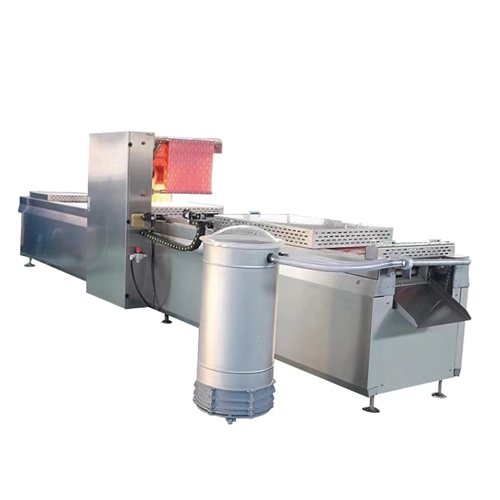
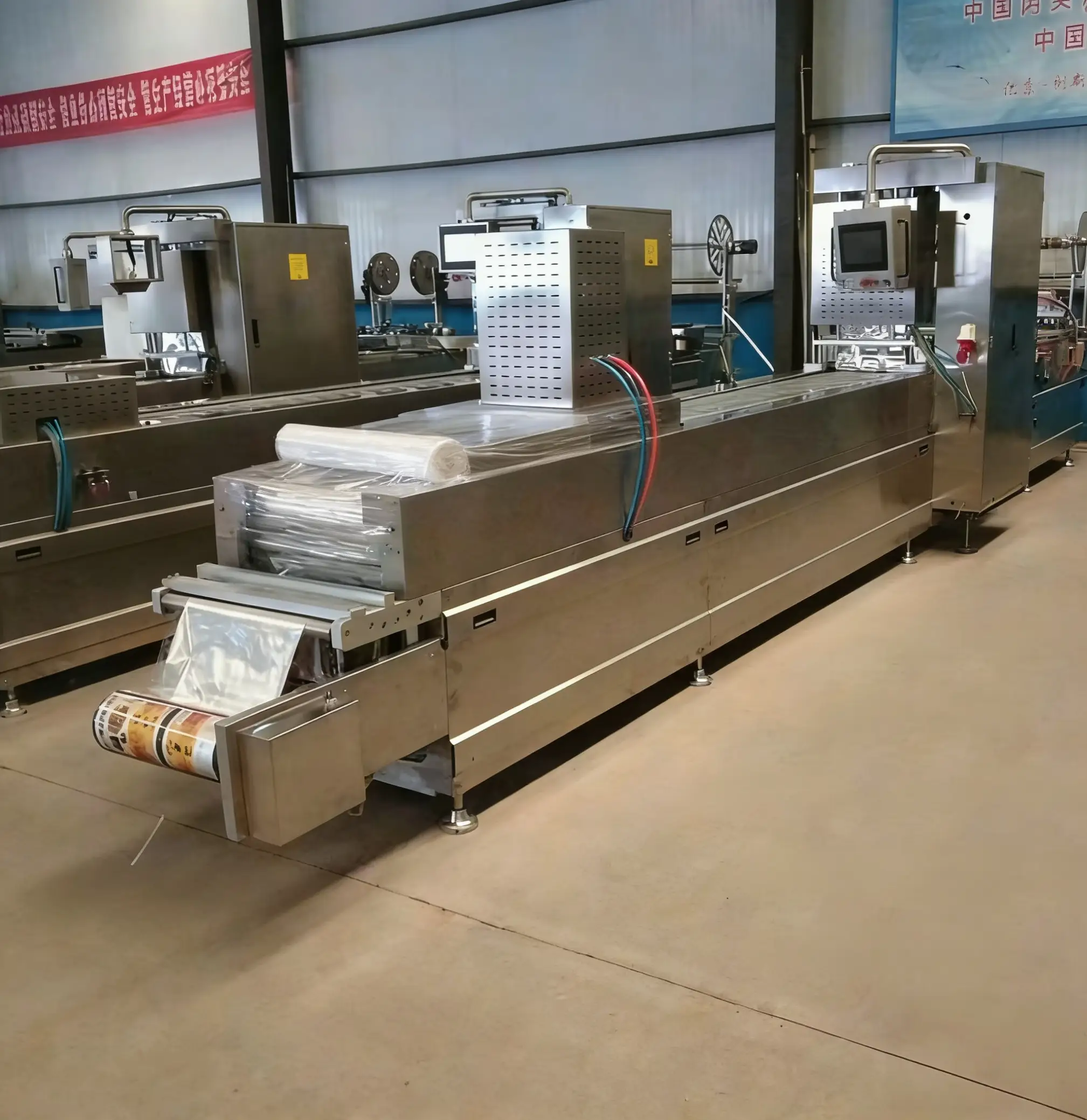
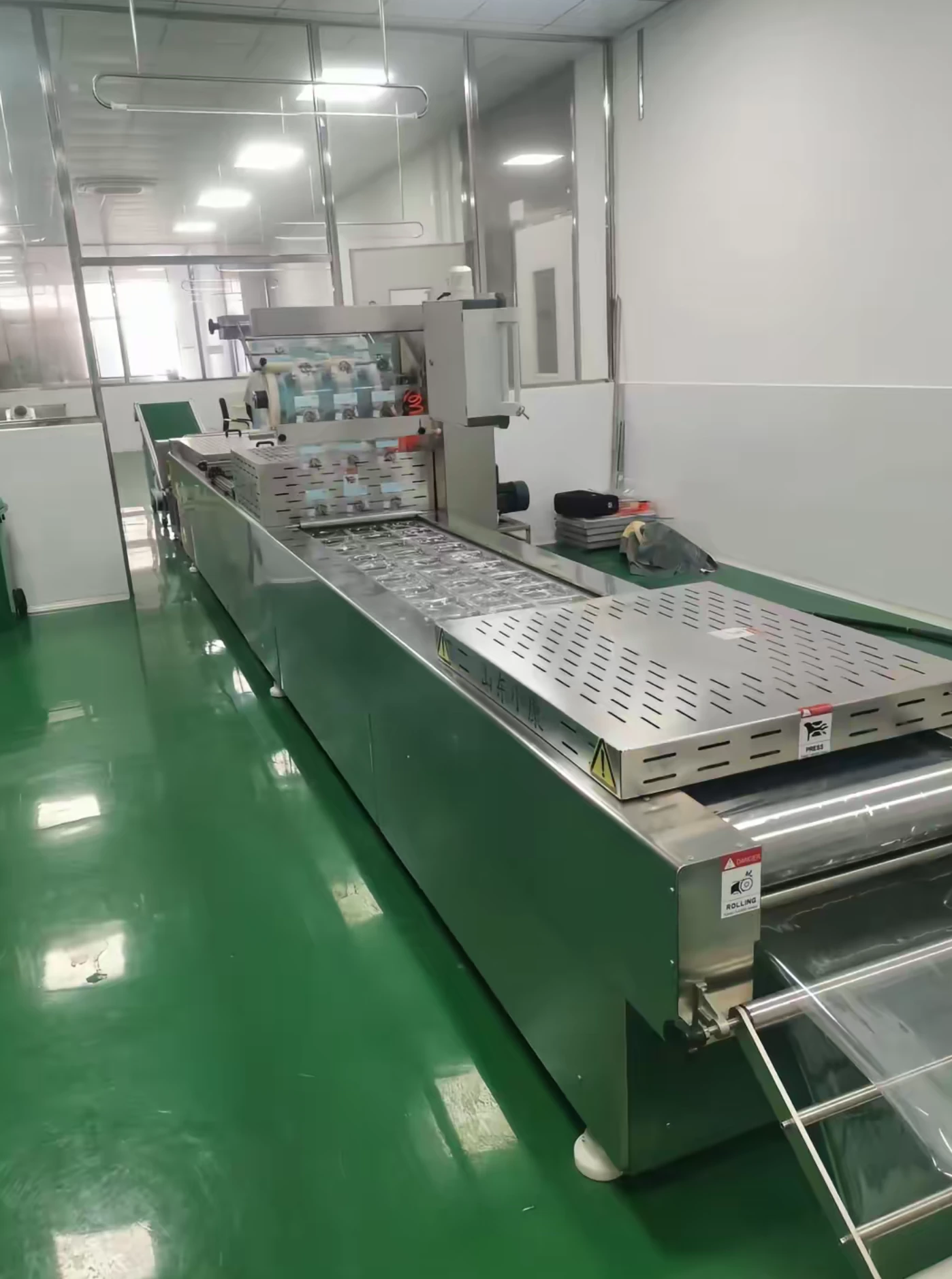
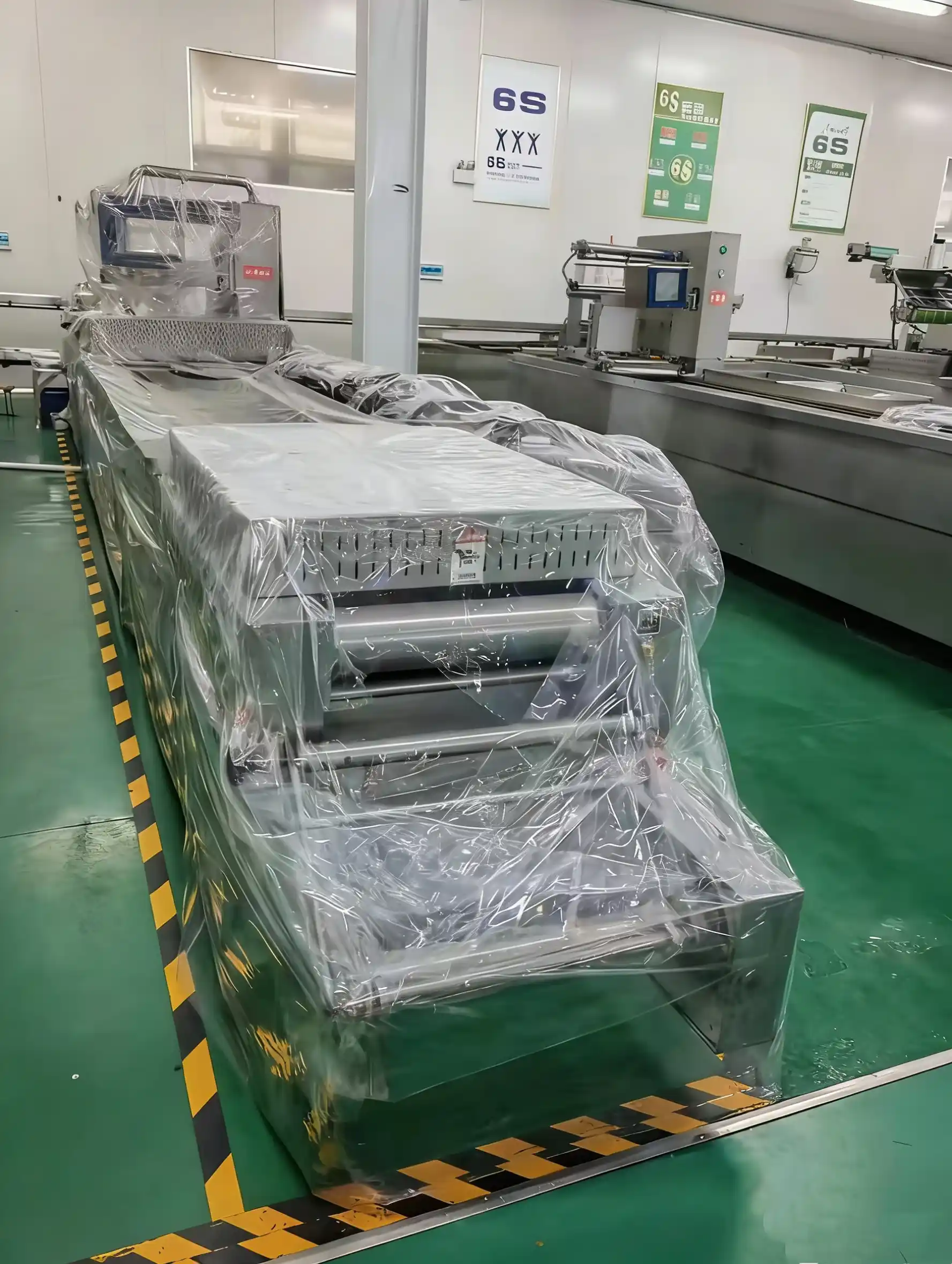
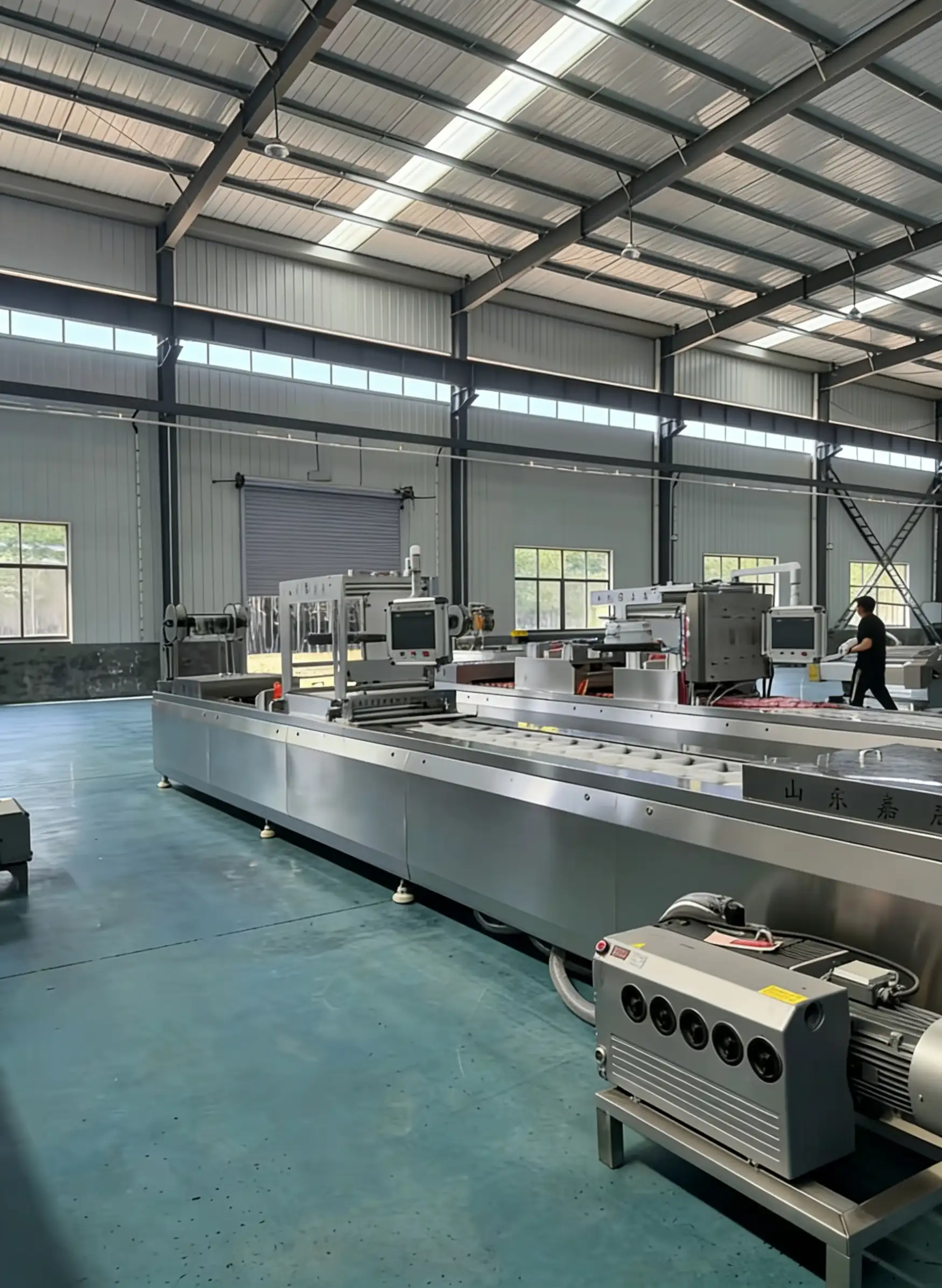
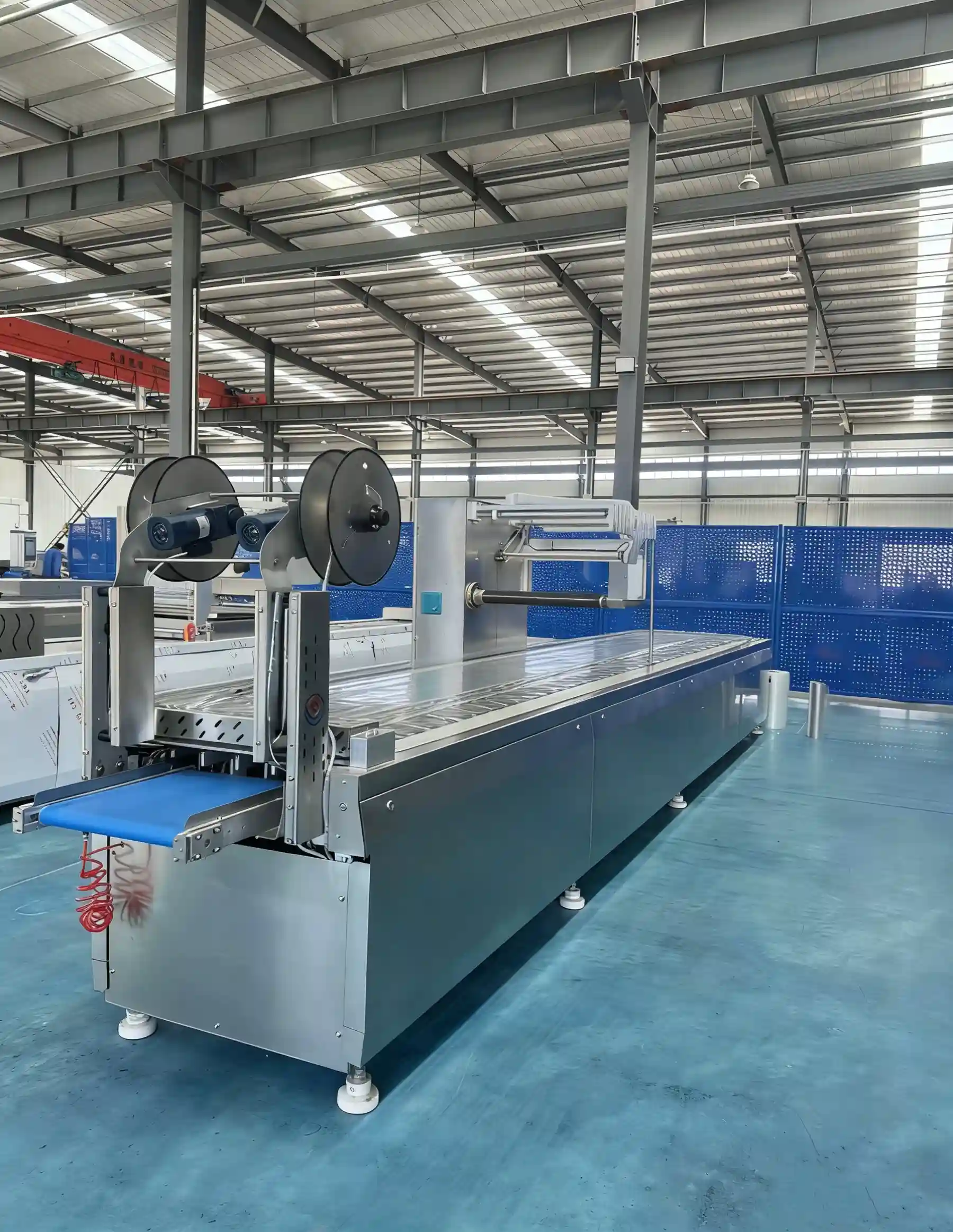
Stop blaming your operators for blown seals and wrinkled film. A Fully Automatic thermoforming Vacuum Packaging Machine is a heavy-duty continuous packaging system that heats and forms a bottom plastic web into a custom tray, loads the product, evacuates the air, and seals it with a top web in one synchronized cycle. If you are packing Chả lụa (pork roll) or Nem chua in a humid Ho Chi Minh City factory, you know the exact nightmare I’m talking about. The 90% humidity messes with the film’s tensile strength. The 35°C ambient heat makes cheap aluminum sealing plates warp over time.
This machine fixes that. Don’t buy the glossy brochure lies. Good engineering is about absolute thermal stability and vacuum integrity on a wet, chaotic production floor.
Before we talk about features, let’s look at the actual hardware. Here is the standard data for our 420mm film-width model, configured specifically for the Southeast Asian electrical grid.
| Parameter | Specification | Engineering Note for SEA Market |
|---|---|---|
| Model | TVP-420 | Standard industrial size for medium/large plants. |
| Capacity | 6 – 8 cycles/min | Depends on drawing depth and vacuum target. |
| Vacuum Pump | 100 – 160 m³/h | Genuine Busch (Germany). High moisture tolerance. |
| Power & Voltage | 12 kW | 380V / 50Hz | 3-phase. Heavy-duty wiring for local grid drops. |
| Dimensions | 4500 x 1000 x 1800 mm | Modular frame. Can be extended for longer loading zones. |
| Film Width | Bottom: 422mm / Top: 396mm | Standard metric roll sizes available locally in VN. |
Note: These parameters represent the true continuous running capacity. We don’t quote theoretical dry-run speeds that snap your drive chains.
I’ve spent 15 years fixing packaging lines across Binh Duong and Dong Nai. Most imported machines look beautiful in a showroom but bleed money in a real factory. Here is how we build them to survive.
Let’s talk about film stretching. When you heat a 150-micron PA/PE bottom film to 110°C, the stretching ratio must be perfectly uniform across the forming die, otherwise the corners thin out and micro-leaks destroy your shelf life. This is the reality. Our forming station uses a multi-point servo-driven plug assist combined with positive air pressure to ensure the corner thickness never drops below 45 microns. The advantage? You get a rigid, crystal-clear pocket for your sausages. The benefit? Zero returns from supermarkets due to lost vacuum.
When packing 250g blocks of processed meat, the actual film scrap rate dropped from 4.2% to 1.1%. It doesn’t sound like a revolution, but running a standard 10-hour shift, that saves you 18 rolls of top film a month. This is pure profit going straight back into your pocket.
At the end of the day, if you don’t solve the heat dissipation of the sealing station, all that vacuum power is useless. Continuous sealing at 150°C in a non-air-conditioned plant will fry standard sensors. We isolate the electrical cabinet and use an oversized, independent water-cooling loop for the sealing plates.
Salesmen will hand you a list of generic features. I’m going to give you the engineering facts, along with the dirty little secrets of the food processing floor.
It takes one operator about 20 minutes. The forming and sealing dies slide out on a rail system. You don’t need a forklift or three guys straining their backs. If a machine requires a heavy crane to change a mold, your production manager will simply refuse to run small-batch orders.
Yes. The machine is pre-piped for gas flushing (Nitrogen/CO2). We use a highly sensitive proportional valve to control the gas mixture. If you are packing fresh beef or poultry and need that bright red color to last 14 days on the shelf, this is exactly what you need.
We use standard international components: Omron PLC, Schneider contactors, and SMC pneumatics. You can buy replacements in any major industrial hardware market in Ho Chi Minh City or Hanoi. You are never held hostage waiting for proprietary circuit boards to be shipped from overseas.
Do you have project requirements or technical questions? Please let us know in the form below.