Meat separator pressure and screen settings should be approved as a tested operating window, not chosen by chasing the highest possible recovered-meat weight. In a screw-and-filter machine, prepared bone-bearing material moves through a separation zone where controlled compression encourages softer tissue through the filter while a harder, bone-rich fraction continues to its own discharge. The useful setting is the one that meets the plant’s written requirements for both streams, product temperature, stable operation and downstream use.
This guide is for poultry and meat processors planning a controlled factory trial. It does not prescribe one universal pressure or screen. The correct combination depends on the separator design, approved raw material, destination-market rules, required texture and the laboratory method used to evaluate hard-particle carryover.
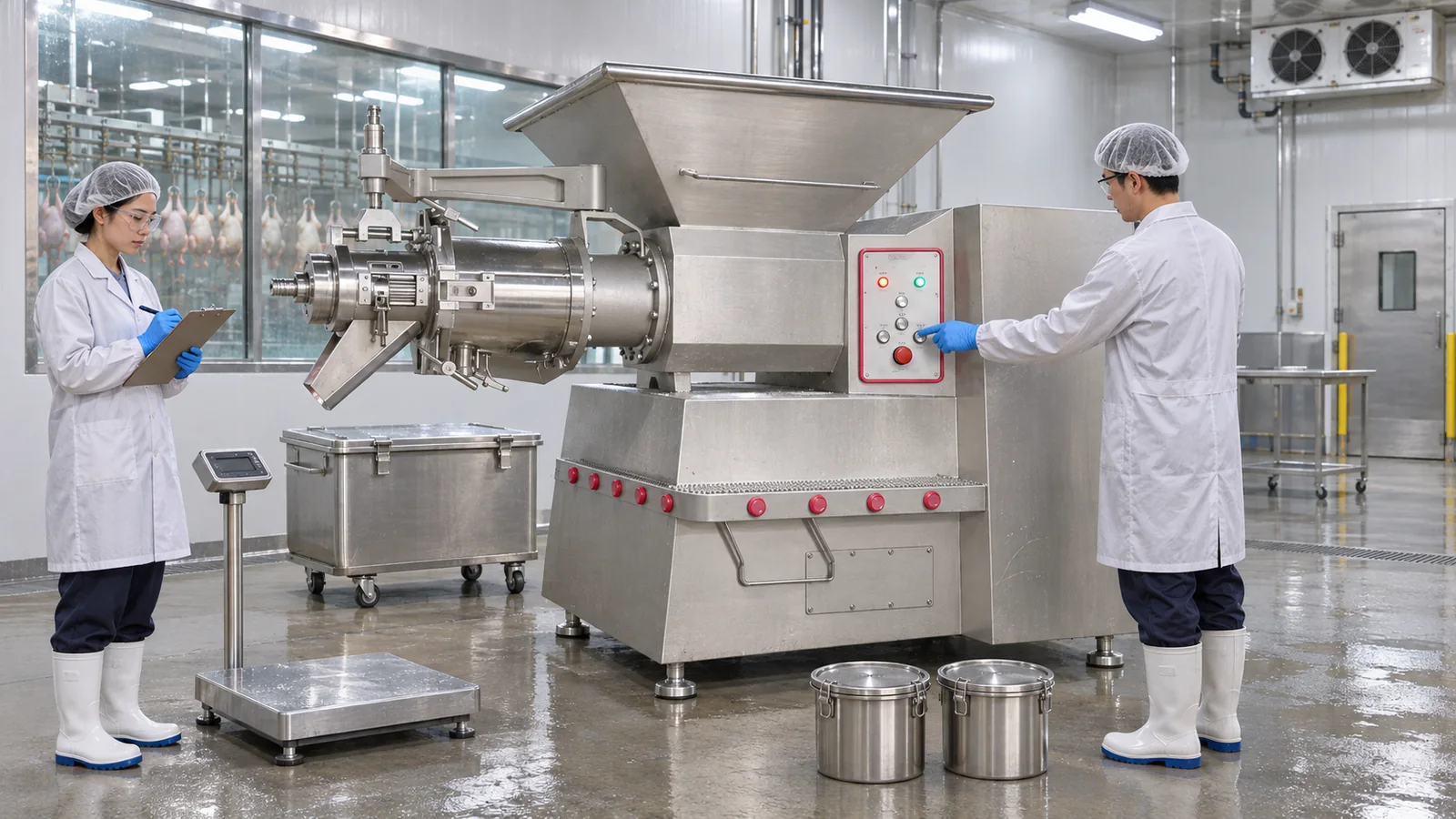
What meat separators actually control
Industrial meat separators exploit a physical difference between softer tissue and harder material. The machine does not inspect every fragment and make an independent decision. It creates a controlled path in which material is conveyed, compressed and presented to a separation element.
The feed path establishes the starting condition
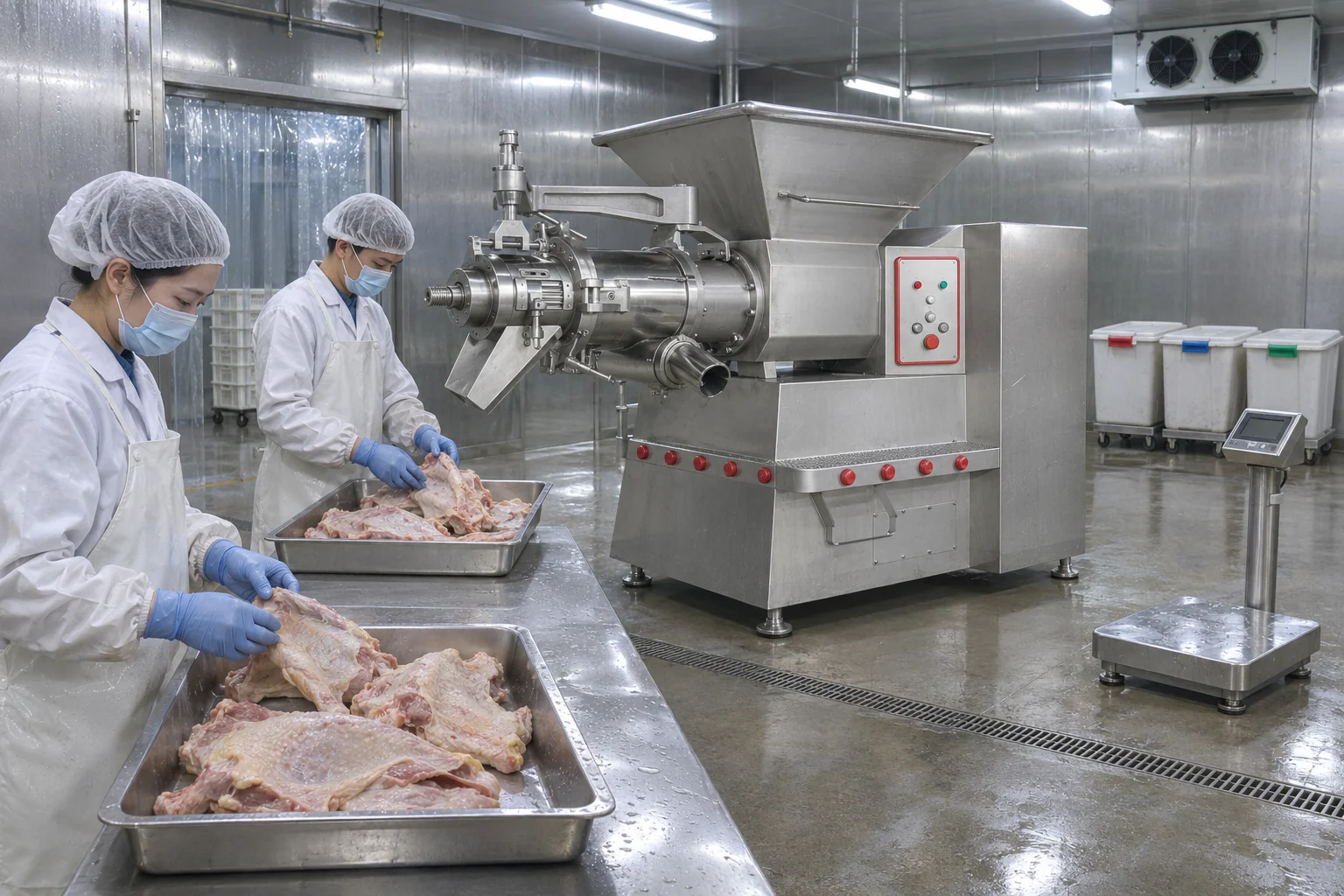
Species, anatomical mix, trimming history, piece size, incoming temperature and the share of skin, cartilage or loose soft tissue all change how the feed behaves. A setting that works with one controlled batch may give a different result with another. Before adjusting the machine, define the raw material as carefully as described in our poultry-frame preparation guide.
The screw creates movement and compression
In a screw-type mechanical meat separator, the rotating screw carries material toward the separation head. The available volume and outlet restriction create compression. Softer material can pass through the filter openings; the harder fraction follows the retained path toward the bone-rich discharge. The exact geometry is model-specific, so an operator should never infer a safe adjustment direction from another machine.
The separation element defines a physical boundary
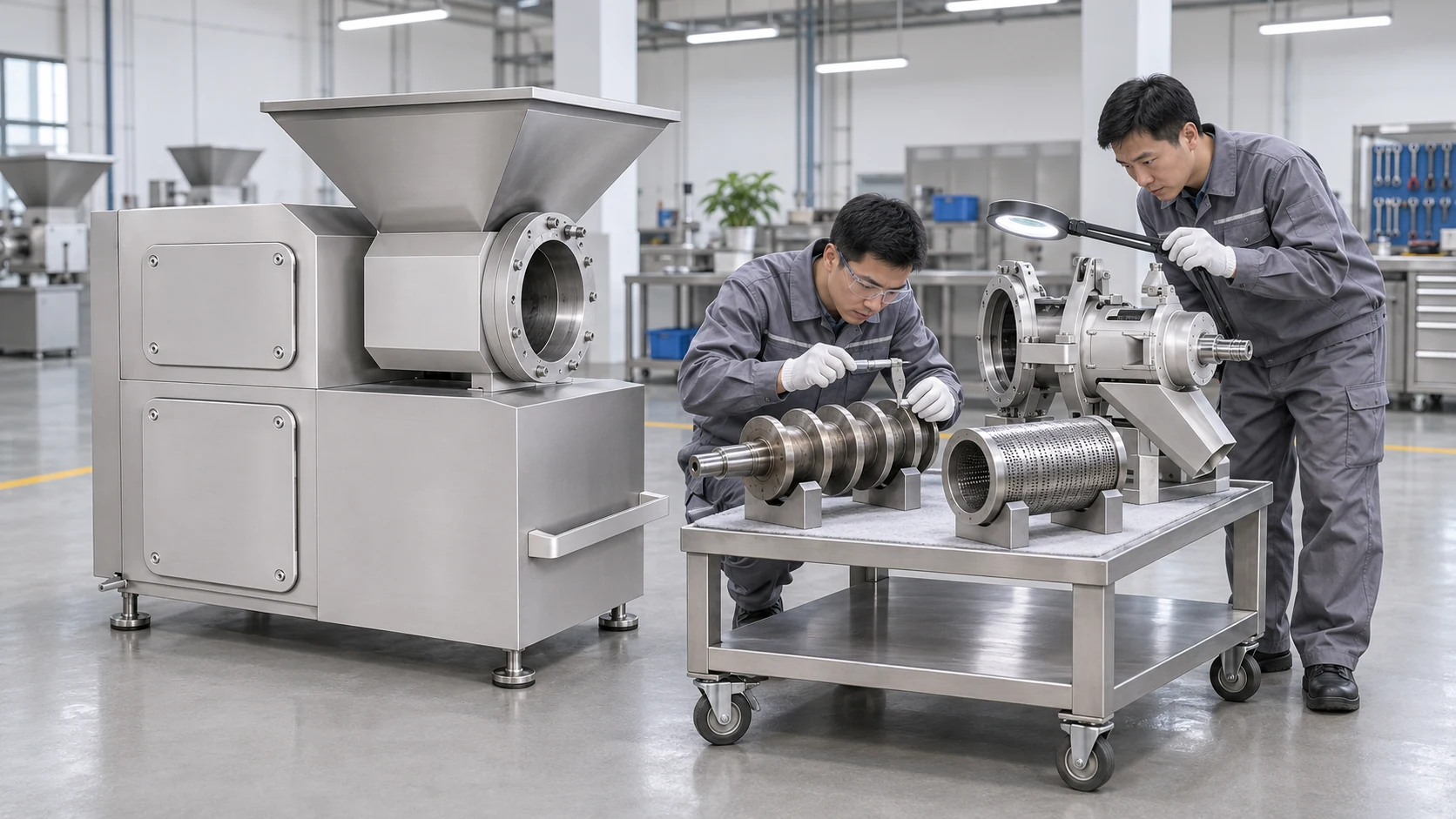
A screen, slotted filter or perforated separation element is not merely a spare part. Its opening geometry, installed condition and pairing with the screw influence the material that can pass. Changing the element may alter texture, hard-particle control, flow resistance and temperature behavior at the same time.
The restriction determines how the material is loaded
The pressure-related adjustment controls resistance at the retained-material path. Increasing resistance may change recovered output, but it may also change the condition of the bone-rich residue, product texture, temperature rise and machine load. Therefore, a pressure indicator or adjustment position is a reproducibility reference, not proof of product quality.
Pressure is a process variable, not a performance claim
More pressure can move more soft tissue through a separation element under some conditions. That does not mean the accepted product improves. A factory should reject the idea that yield alone defines the best setting.
Why maximum pressure can be the wrong target
If the setting is pushed beyond the useful operating window, the recovered stream may become less suitable for its intended formulation, the retained fraction may become unusually dry or pulverized, and frictional heating may increase. The exact symptoms vary by material and machine, which is why the trial must measure rather than assume.
Why a low setting can also fail
Insufficient restriction may leave recoverable soft tissue with the bone-rich fraction or create an unstable discharge. A low number is not automatically a quality setting. The objective is controlled separation with repeatable outputs, not simply minimum mechanical load.
Record the actual reference position
For every trial step, record the adjustment reference exactly as the manufacturer defines it. Include the installed screw and screen identity, raw-material lot, feed condition and time at stable operation. A vague note such as “medium pressure” cannot reproduce an approved result after cleaning, maintenance or a product change.
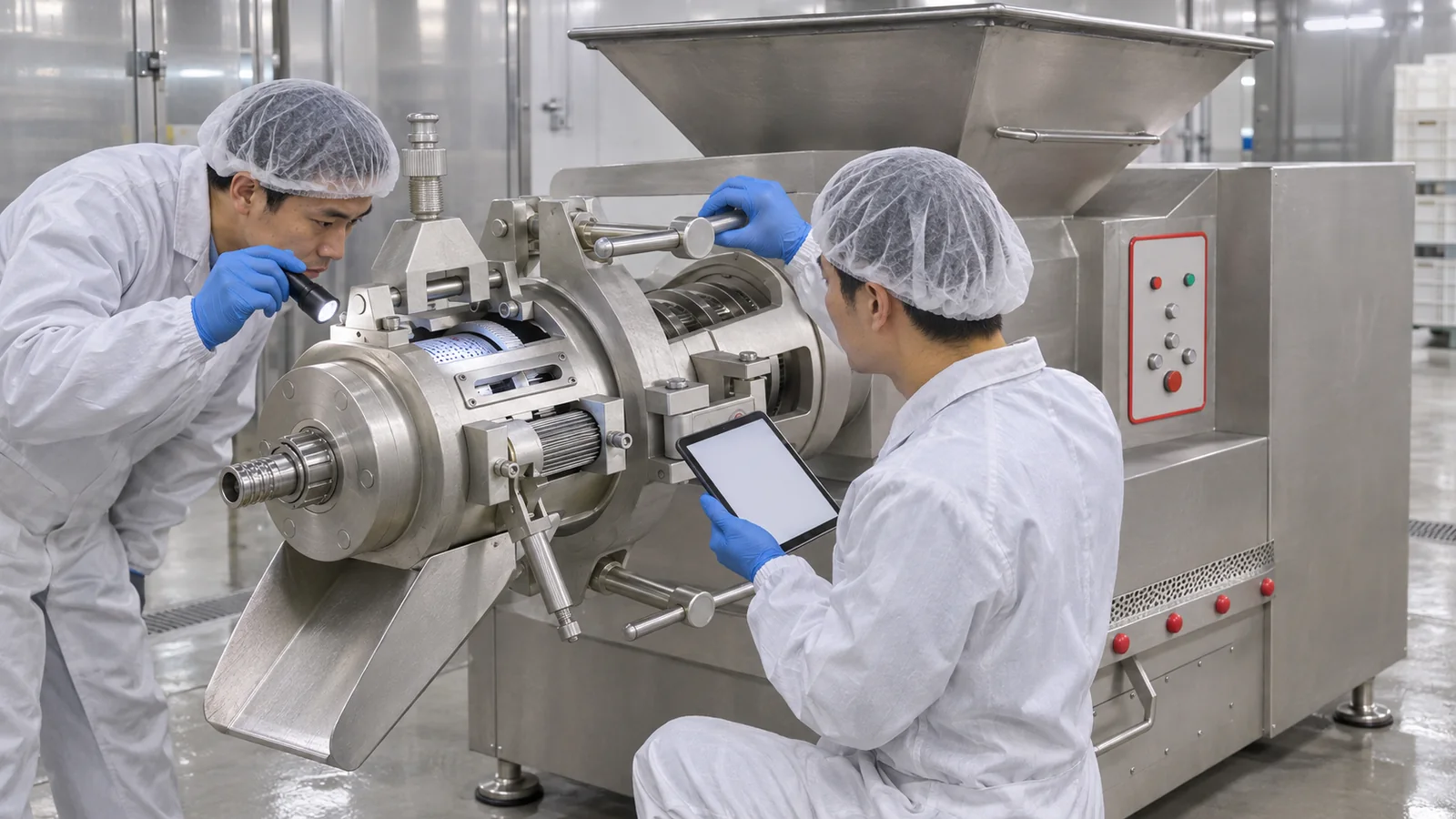
How screen selection changes the trial
Screen selection should begin with the required output and the machine maker’s approved options. It should not begin with the assumption that a smaller opening always means better quality or that a larger opening always means more capacity.
Opening geometry affects what can pass
Round perforations, slots and other approved geometries present different flow paths. The relationship between opening size and finished material depends on screw geometry, pressure, raw material and the downstream product. Buyers should ask for the exact separation element used during the supplier trial, not only a generic screen description.
Condition matters as much as nominal size
A worn, damaged, blocked or incorrectly seated screen can change the result even when its nominal specification has not changed. The same is true for screw wear or a mismatched pair. If a previously stable process drifts, review component condition using the separator parts and maintenance inspection guide before compensating with a new setting.
A configuration must remain traceable
Assign each approved screw, screen and restriction component an internal identity. Record installation date, inspection status and the trial in which it was used. This turns the separation head into a controlled process configuration rather than an anonymous collection of interchangeable parts.
Define acceptance before changing a setting
A meaningful trial starts with a written decision rule. The team should know what would make a setting acceptable, conditional or rejected before the machine starts.
Recovered-meat criteria
Define the required texture, appearance, temperature, handling behavior and downstream function. When hard-particle or calcium limits apply, use the validated method required by the plant and destination market. Visual inspection alone cannot confirm a regulatory or contractual limit.
Bone-rich residue criteria
The retained stream is also evidence. Inspect whether it contains obvious recoverable soft tissue, whether its condition is consistent, and whether discharge remains stable. Do not call it “clean bone” unless the plant has defined and verified what that description means.
Operating criteria
Record feed continuity, stops, unusual noise, vibration, motor load or other machine indicators available on the approved control system. A setting that produces an acceptable sample for a few seconds but cannot run steadily is not an operating window.
Mass-balance criteria
Weigh prepared feed, accepted recovered material, bone-rich discharge, retained material and identified losses using a consistent method. The total should be reconciled within the plant’s measurement tolerance. This is more useful than quoting a percentage without defining its numerator, denominator and exclusions.
Run a one-variable operating-window trial
Change one controlled factor at a time. If pressure, screen, feed mix and temperature all change together, the team cannot know which change caused the result.
Step 1: freeze the trial definition
Choose one species and anatomical mix, one preparation method, one target incoming-temperature range, one screen configuration and one weighing method. Use enough material to reach stable operation. Capacity planning should follow the principles in the meat bone separator capacity guide, but this trial’s purpose is process control rather than maximum hourly output.
Step 2: establish a conservative reference
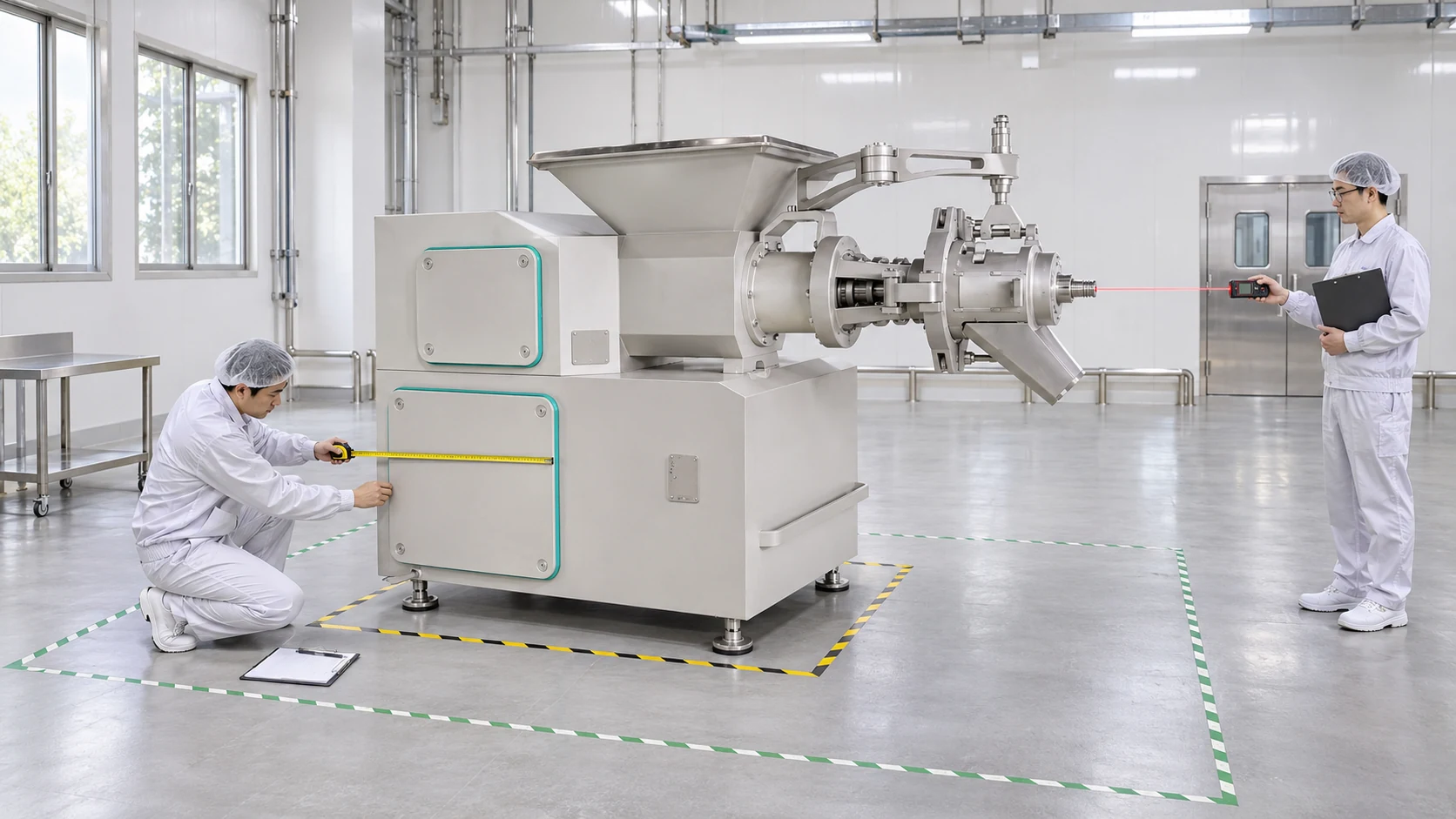
Start from the manufacturer’s approved setup and safety procedure. Confirm guards, collection routes and component assembly. The reference step creates a baseline; it is not expected to be the final optimum.
Step 3: wait for stable operation
Do not take the decision sample from startup material unless startup performance is the specific question. Allow feed and discharge to become stable under the agreed method, then collect timed and identified samples from both streams.
Step 4: change one setting within the approved range
Make one documented adjustment, run to stability again and repeat the same measurements. Do not make an unapproved mechanical change while the machine is running. Isolation, adjustment and restart must follow the machine manual and plant safety procedure.
Step 5: compare the complete result
Review recovered mass, bone-rich residue, temperature, texture, hard-particle or laboratory result, stability and operator intervention together. The best step is the one that satisfies all critical limits with a reasonable control margin.
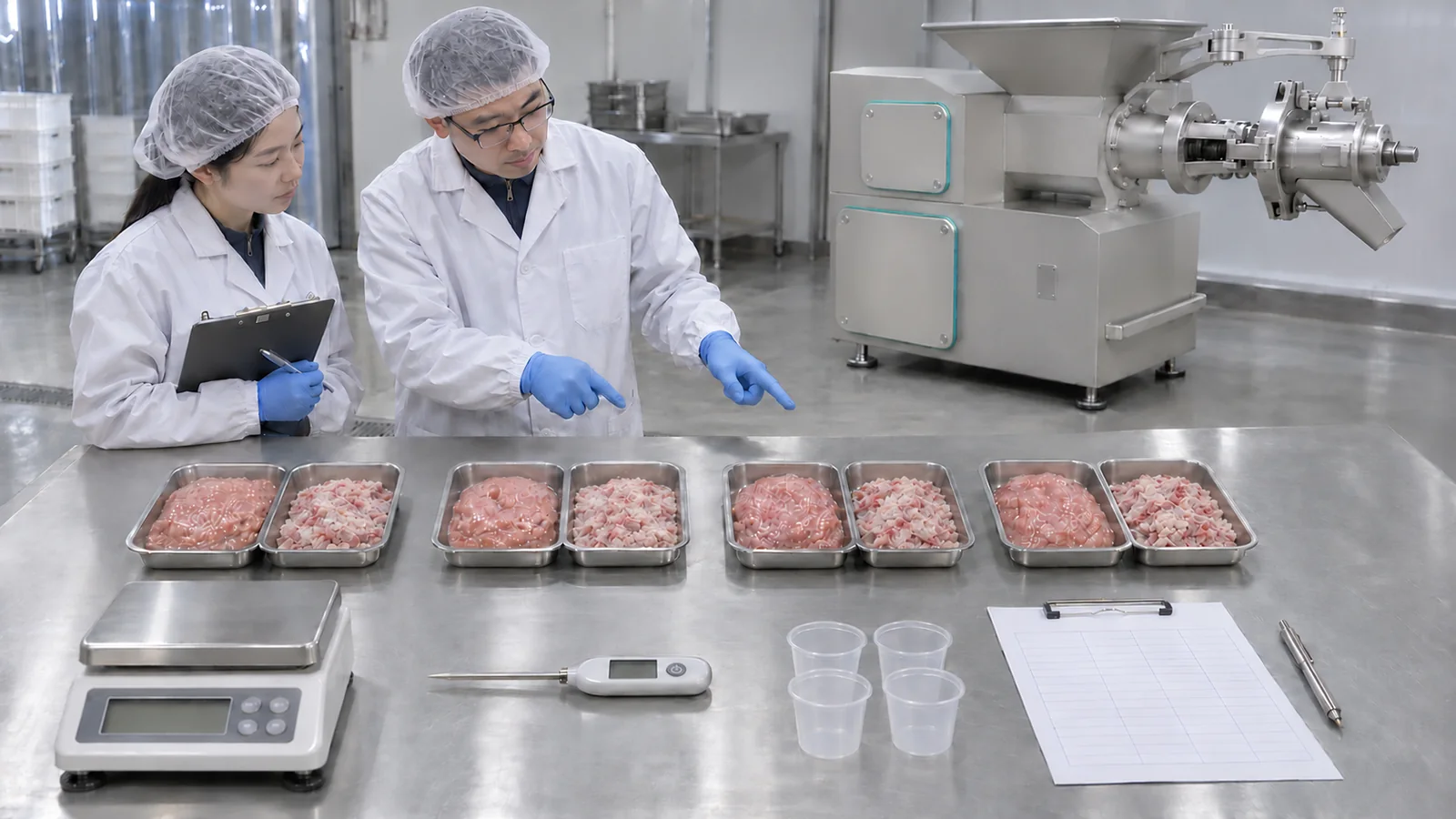
Use both output streams to diagnose the process
Recovered material tells only half of the story. Paired samples from the same time window make troubleshooting faster and prevent an apparent yield gain from hiding a poor retained stream.
High recovered mass with deteriorating quality
Check whether the adjustment increased pressure, whether incoming material changed, whether the separation element is correct and whether temperature rose. Do not assume a single cause. Restore the approved reference if a critical limit is exceeded.
Low recovered mass with soft tissue in the residue
Review feed preparation, continuity, restriction, screen condition and component pairing. An upstream mix change or blocked separation area can look like a pressure problem. Inspect the complete process before increasing the setting.
Unstable texture or intermittent discharge
Look for inconsistent piece size, bridging, mixed anatomical material, temperature variation or an interruption in feed. A stable machine cannot compensate for an uncontrolled raw-material stream.
Gradual drift across several production days
Compare current records with the accepted baseline. Progressive changes can indicate component wear, screen blockage, assembly variation or raw-material drift. Maintenance and sanitation records help separate mechanical change from product change. The cleaning and pre-operational release guide explains how to verify that the machine is clean, dry and correctly reassembled before diagnosis.
Build an approved operating window
An operating window is a controlled combination of configuration, feed definition, adjustment range and acceptance limits. It should be narrow enough to protect product quality but practical enough for normal raw-material variation.
What the master record should contain
- Machine and separation-head identity.
- Screw, screen and restriction component references.
- Approved species, anatomy, preparation and incoming-temperature range.
- Adjustment reference and allowed control range.
- Sampling point, timing, mass-balance method and laboratory method.
- Limits for recovered material, bone-rich residue, temperature and stable operation.
- Corrective action and authority to release or stop production.
When to repeat the trial
Repeat or formally review the operating-window study after a material-family change, screen or screw change, significant repair, unexplained output drift, relocation that changes the line interface, or a change in the finished-product requirement. A setting should not remain approved merely because it has been used for a long time.
What buyers should request before ordering
A supplier quotation should describe more than motor power and headline capacity. Ask for an application trial using representative material and a report that connects configuration to measured outputs.
Send a precise trial brief
Provide species, anatomical mix, previous processing, piece-size range, incoming condition, expected daily feed, downstream product and destination-market requirements. State which measurements the supplier must record and which samples must be retained.
Ask for configuration evidence
Request the exact screen, screw and pressure-adjustment references used in the accepted trial, together with approved alternatives and changeover instructions. A video without configuration identity cannot reproduce the result at the buyer’s factory.
Define the release decision
Agree on who evaluates the samples, which method applies, how mass balance is calculated and what happens if one output fails. To prepare a representative machine test or quotation, use the equipment inquiry page and include the raw-material and acceptance information above.
The practical decision rule
Approve a meat separator setting only when the same controlled trial shows acceptable recovered material, acceptable bone-rich residue, controlled temperature, stable machine behavior and a reconciled mass balance. If one critical outcome fails, do not hide it with a higher yield number. Return to the last approved reference, identify the changed variable and test again.
Frequently Asked Questions
How does pressure affect a meat separator?
Pressure changes how the prepared material is loaded against the separation element. It can affect recovered output, residue condition, texture, temperature and machine load, so it must be evaluated with all acceptance criteria rather than yield alone.
Does a smaller separator screen always produce better meat?
No. The result depends on opening geometry, screw and screen pairing, pressure, raw material and the required downstream product. Use only approved separation elements and confirm the result in a controlled trial.
What should be measured during a meat separator trial?
Measure prepared feed, accepted recovered material, bone-rich discharge, identified losses, incoming and outgoing temperature, product texture, stable operation and any required hard-particle or laboratory result.
Why must the bone-rich residue be inspected?
The retained stream shows whether recoverable soft tissue may be leaving the machine or whether the process has become unusually aggressive. It is essential evidence when interpreting a change in recovered-meat mass.
Can one pressure setting be used for every poultry material?
No. Species, anatomy, trimming history, piece size, temperature and material mix can change separation behavior. Each approved material family needs a defined and verified operating window.
When should a meat separator operating window be revalidated?
Review or repeat the trial after a material-family change, screen or screw change, significant repair, unexplained output drift, relocation affecting the line, or a change in finished-product requirements.