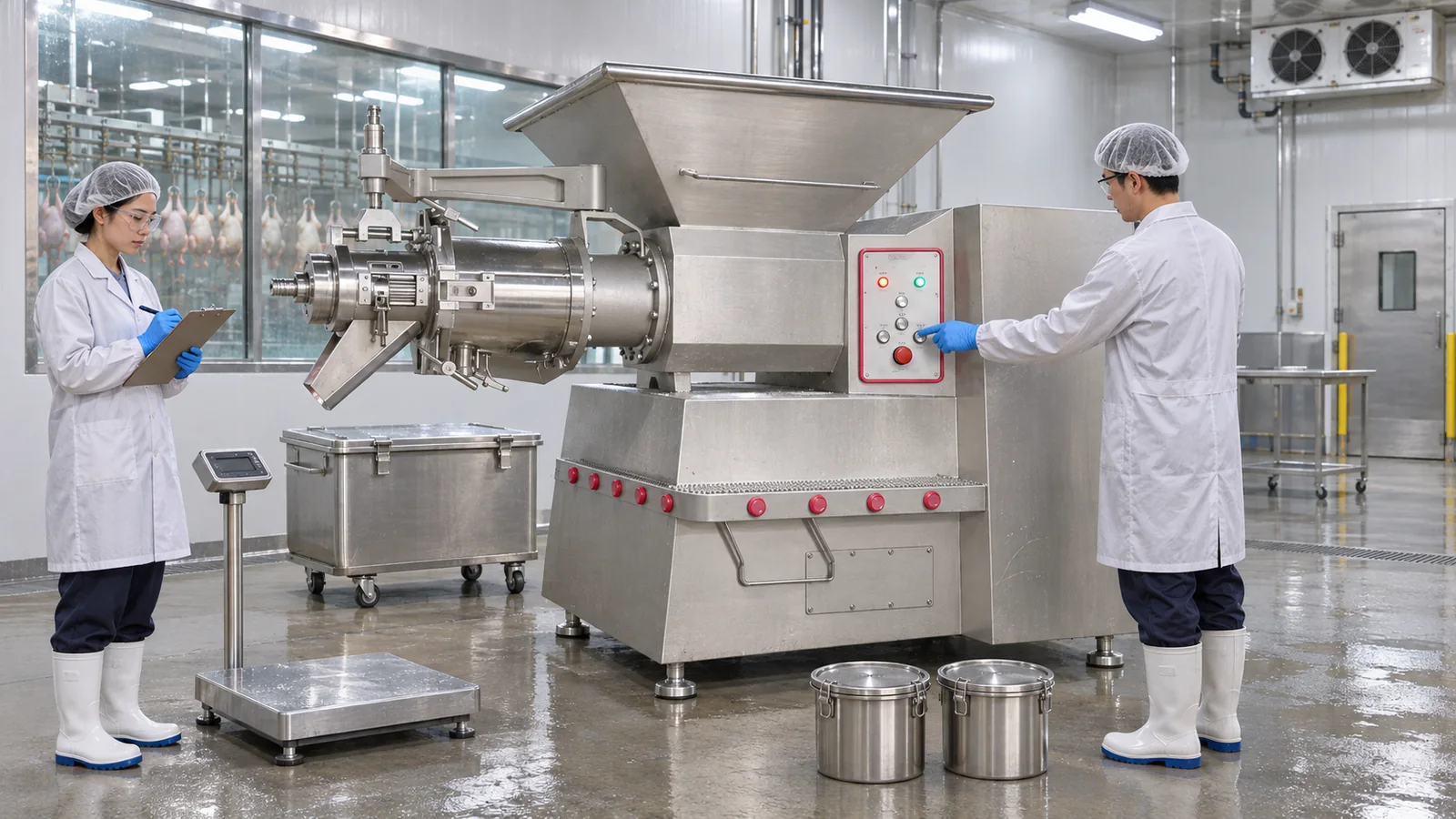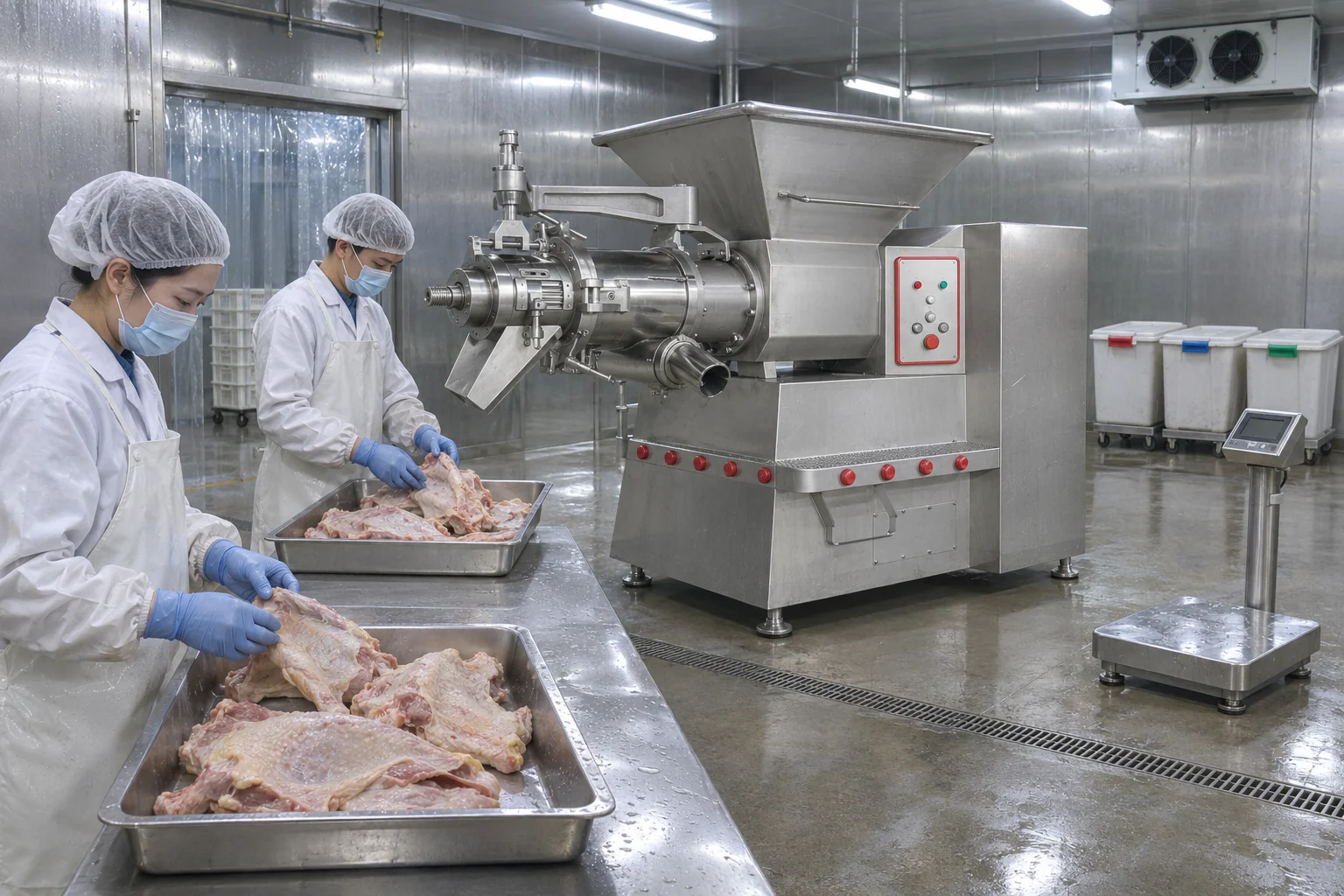
Meat bone separator capacity should be sized from the plant’s sustained raw-material flow, not from a brochure’s highest kg/h number. The correct target is the amount of approved bone-in material that the complete line can prepare, separate, collect and transfer during the real operating window while the recovered stream still meets the buyer’s specification. Raw material, temperature, screen, pressure, feeding consistency, container changes and cleaning all affect that result.
This guide gives poultry processors, project engineers and equipment buyers a practical way to define required capacity before requesting a quotation. It does not assign one universal output to every chicken frame or promise a fixed recovery rate. Instead, it converts daily production data into a testable capacity requirement and an acceptance plan.
What Does Meat Bone Separator Capacity Actually Mean?
Capacity can describe several different measurements. A supplier may state input throughput, recovered-material output, peak mechanical feed rate or a range observed with a particular raw material. These numbers are not interchangeable. For equipment selection, the buyer should ask first: capacity of what material, measured where, for how long and under which settings?
Separate Input Rate From Recovered Output
Input rate is the mass of prepared raw material entering the separator per hour. Recovered output is the mass leaving through the soft-tissue outlet. Bone-rich residue leaves through the other outlet. If a machine receives 1,000 kg of prepared material, the recovered output cannot be discussed accurately without also recording residue and unaccounted material. A percentage without the calculation basis is not enough for a purchase decision.
The line capacity requirement should normally begin with input mass because the plant knows how many kilograms of frames, necks, backs or other approved material arrive each shift. Recovered output can then be evaluated during a representative trial against the plant’s quality and regulatory requirements. Buyers who need a process refresher can review what MDM meat means in poultry processing.
Distinguish Peak Rate From Sustained Rate
A short peak observed while the hopper is full does not equal a stable hourly line rate. Sustained rate includes normal feeding, vessel changes, brief stops and the behavior of the material after the machine reaches steady operation. Ask suppliers to identify test duration, inlet condition, screen, pressure setting and whether reported kg/h represents a short peak or a stable period.
Start With the Daily Raw-Material Balance
Collect production records before selecting a model. For each material family, record the normal daily mass, peak daily mass, number of production days, shift length and the time at which the material becomes available. Do not combine very different inputs into one average. Chicken frames after cut-up may require a different trial from necks, backs or mixed trimmings.
Use a Simple Capacity Calculation
The basic required input rate is:
Required separator input rate = separator feed mass per production period / available separating hours.
Use the mass that will actually be routed to the separator, not total plant slaughter weight. Use the hours in which separation can genuinely run, not the full paid shift. For example, if raw material arrives only after a cut-up line starts and separation must stop before sanitation, the available window is shorter than the shift.
Run the calculation for a normal day and a credible peak day. If the peak is seasonal, identify how frequently it occurs. This prevents a buyer from oversizing an entire line for a rare event or undersizing it around an average that hides recurring peaks.
Convert Shift Time Into a Real Operating Window
Available separating hours should be built from the plant’s own operating plan. Subtract scheduled pre-operational checks, product changeovers, screen changes, breaks that stop feeding, end-of-run emptying and required cleaning. Record unscheduled interruptions separately so they can be discussed during scale-up. Do not apply a generic utilization factor taken from another factory.
Map the Minutes That Stop Feed
A useful time study follows one shift and marks every period when approved material is available but the separator cannot accept it. Common causes include waiting for a tote, inconsistent pre-sizing, foreign-material checks, blocked transfer, full collection vessels, downstream mixer delays and operator availability. The largest repeated loss often sits outside the separator.
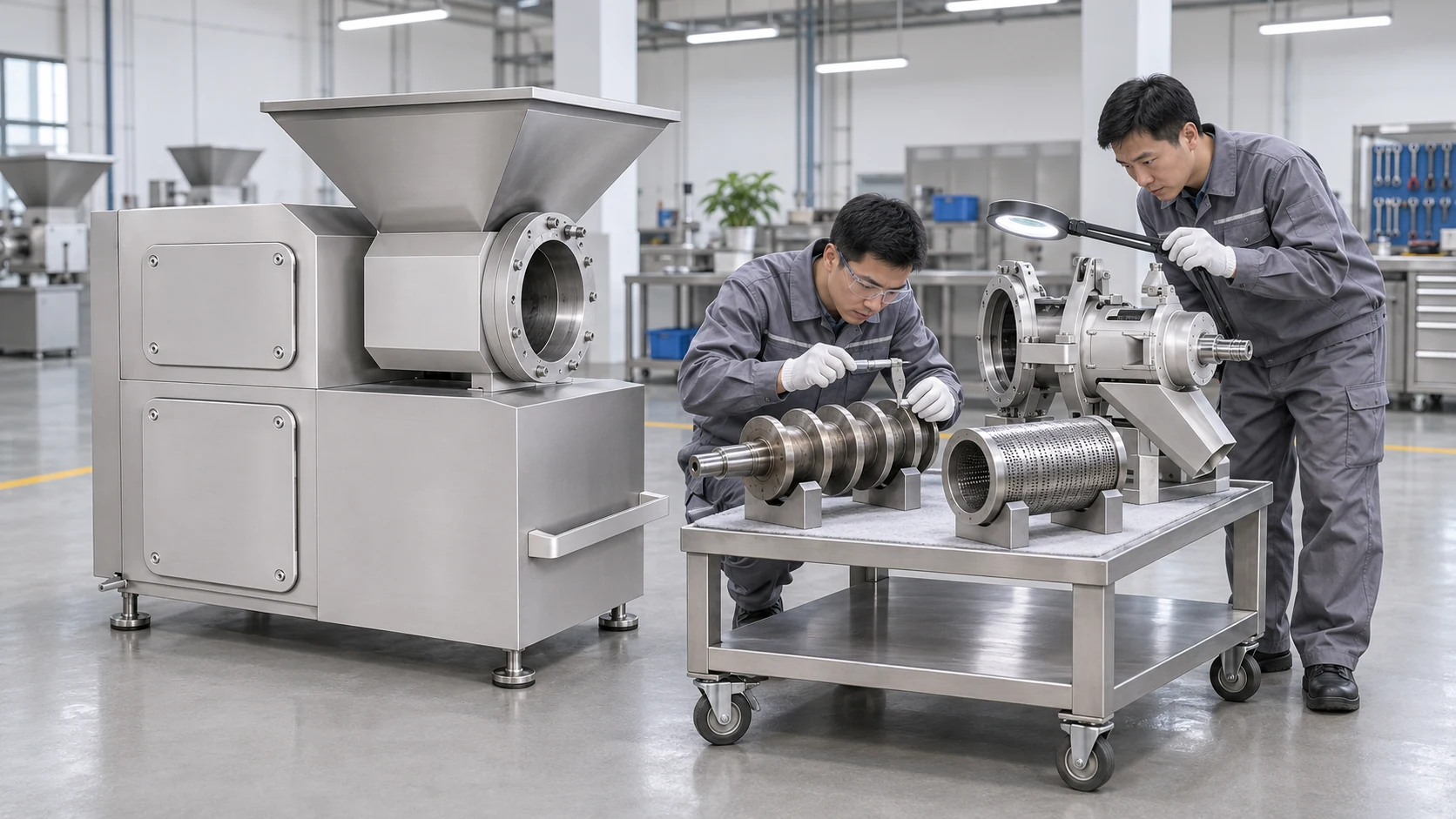
When a project includes several recipes or species, show each changeover. A nominally fast machine may still create a poor production day if screens are difficult to change or the surrounding equipment cannot be cleaned within the scheduled window. The separator parts and maintenance inspection guide lists wear and access points that should be checked during this review.
Why Raw Material Changes Achievable Throughput
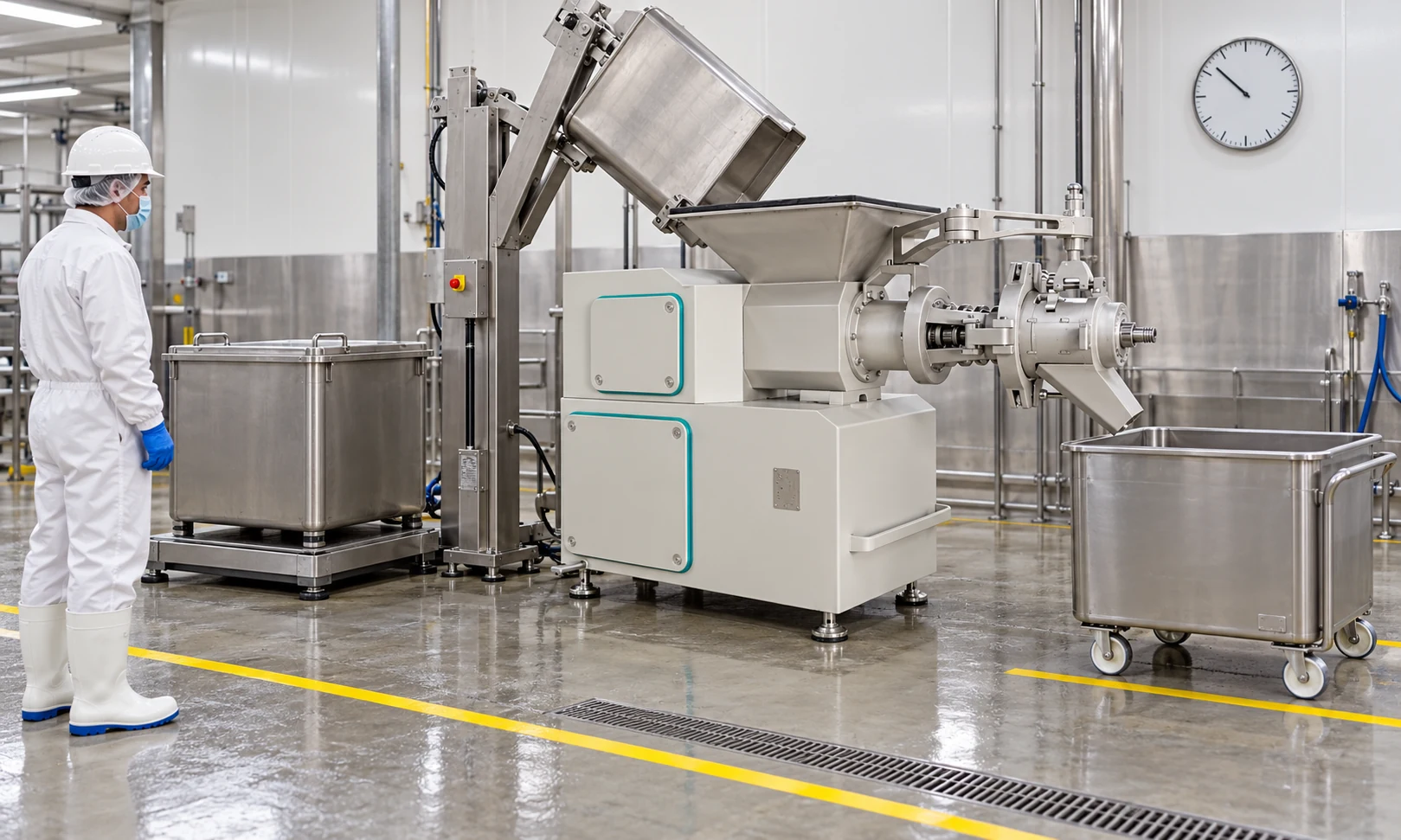
Published model ranges are useful for screening, but they do not replace a material-specific test. Species, anatomical part, bone hardness, dimensions, skin content, tissue distribution, storage history and inlet temperature can change feeding behavior and resistance inside an industrial meat separator. Suppliers should confirm which materials are approved for the proposed configuration.
Preparation Consistency Matters
Large irregular pieces can bridge in a hopper or overload a preparation step, while unnecessary aggressive size reduction may change product condition before separation. Define the required maximum dimensions and whether a cutter or pre-breaker is necessary for the exact model. A standard industrial meat grinder has a different process function and should not be assumed to accept bone-in material.
Temperature and Storage History Belong in the Trial Record
Measure inlet and outlet conditions according to the plant’s approved procedures. Do not compare trials run with different storage histories as though the machine alone caused the difference. If chilled and partially frozen material are both expected, treat them as separate test conditions unless the supplier confirms one approved operating range.
Check the Upstream Bottleneck Before Buying a Larger Separator
The separator cannot maintain its selected rate if receiving, inspection or preparation delivers material in irregular bursts. Record the sustained capacity of every upstream step that directly feeds it. Include manual handling, lift-and-tip cycles, conveyor loading and the time required to remove unsuitable material.
Define a Controlled Buffer
A small identified buffer can decouple normal variation from the separator, but it must fit the plant’s time, temperature, hygiene and traceability controls. Define maximum buffer mass, maximum waiting time, container identity and first-in-first-out method. More open accumulation is not a substitute for balancing the line.
Ask the supplier to show the allowed feed method and minimum operator tasks. If a hopper must be kept within a particular level or a feeder requires continuous supervision, include that labor and timing in the capacity plan.
Check the Downstream Bottleneck and Both Outlet Streams
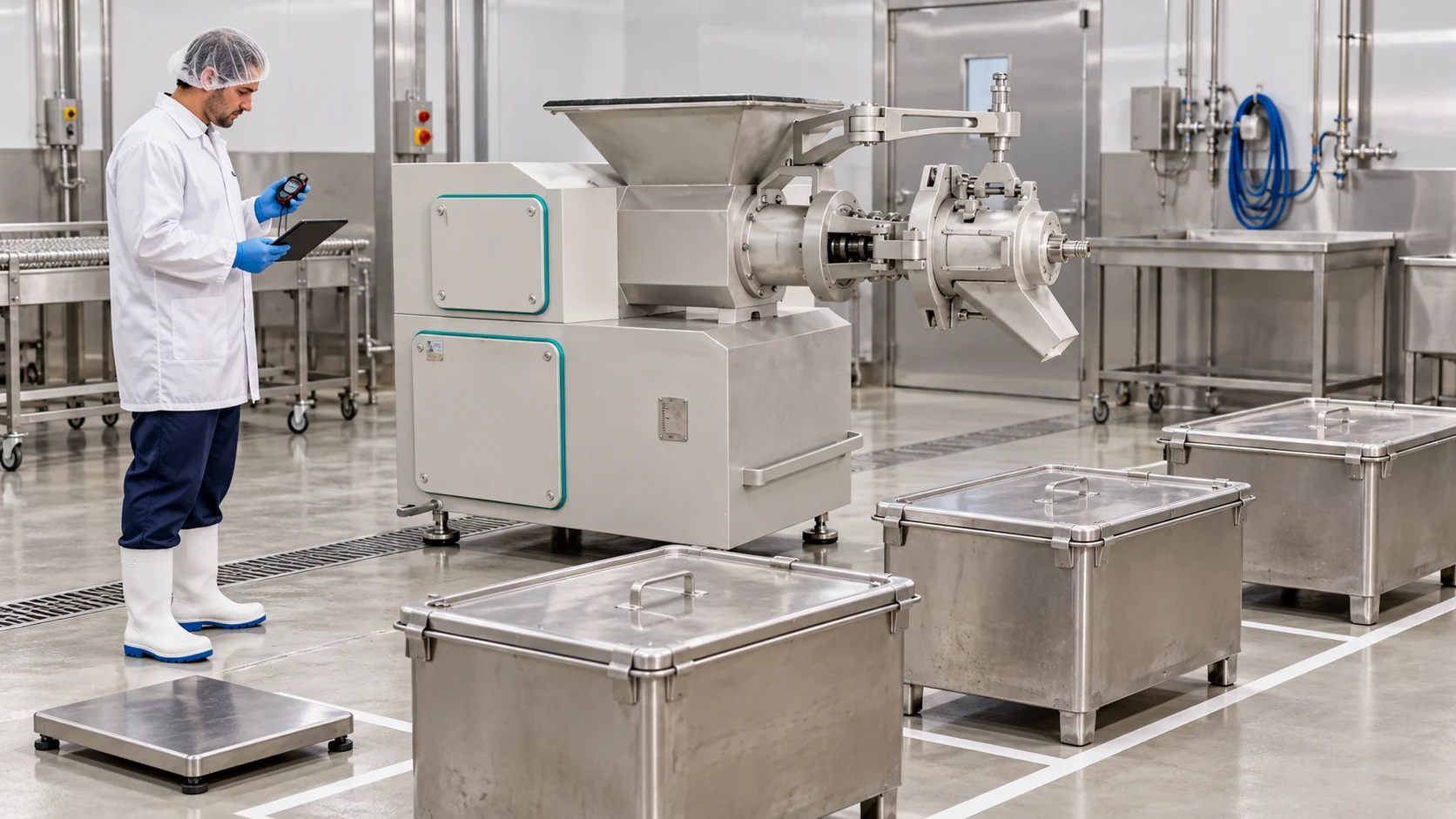
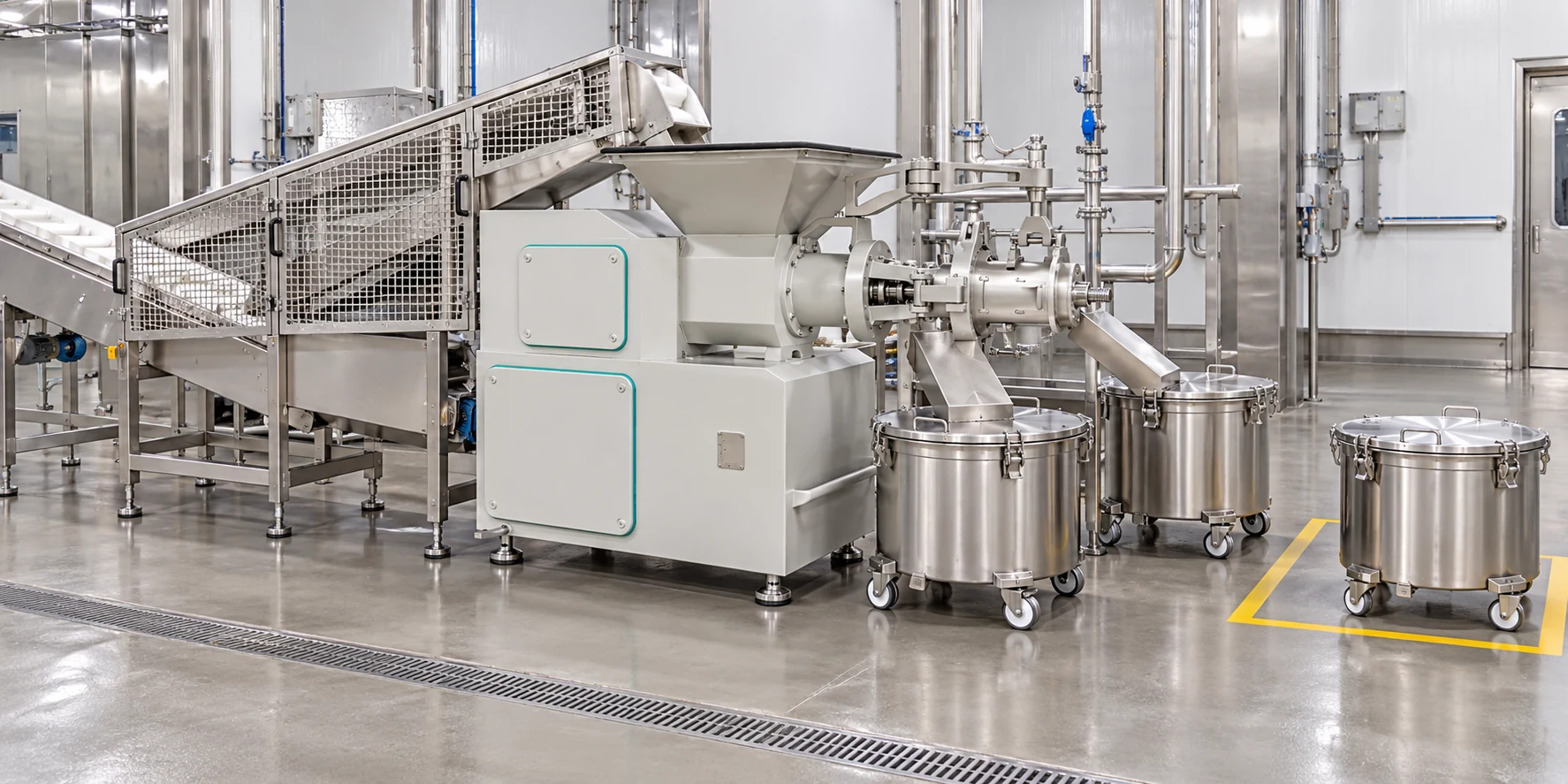
A meat bone separator creates two physical flows. Recovered material needs hygienic collection or transfer, while bone-rich residue needs a separate route. The line stops if either destination fills, blocks or becomes unavailable. Capacity sizing therefore includes vessel volume, change time, transfer rate and the next process step.
Calculate Container Change Frequency
For each outlet, divide usable container mass by the expected stream rate to estimate how often a change is needed. Use trial data for stream rates and do not fill vessels beyond their approved working capacity. Then observe whether a full vessel can be removed and an empty one positioned without stopping or crossing the other stream.
If recovered material is pumped, verify that pump and pipework capacity suit its actual consistency. If it moves to mixing, emulsification, chilling or another process, compare that step’s sustained intake with the separator’s expected output. A complete mechanically deboned meat production system should be evaluated as connected functions, not as one isolated machine rating.
Run a Representative Throughput Trial
The best capacity evidence is a controlled trial using normal production material. Send enough material to establish steady operation and include normal variation rather than only hand-selected easy pieces. Agree the test plan, sampling method and acceptance criteria before the run.
Record the Conditions Needed to Repeat the Result
At minimum, record material identity, anatomical part, total input mass, representative dimensions, inlet condition, preparation method, screen, pressure or relevant setting, stable run time, stoppages, recovered material mass, residue mass, material remaining in the machine and outlet conditions. Note which measurements come from calibrated plant instruments.
Evaluate throughput together with recovered-material quality, residue condition, temperature behavior, machine stability, cleaning time and wear observations. A faster setting is not an improvement if it fails the approved output specification or creates repeated stoppages. The earlier guide on checking chicken separator outputs can support the acceptance review.
Scale From Evidence, Not From a Single Best Run
Use the stable portion of the trial and document any adjustments. If important material families behave differently, calculate the operating window for each. The supplier should explain which model and configuration can meet the required sustained input rate with reasonable operating margin under the agreed conditions. Any margin should be stated explicitly rather than hidden in a headline number.
One Larger Unit or Two Smaller Units?
A single larger unit can reduce footprint and simplify feeding, but it also concentrates production dependency. Two units may provide flexibility for different materials, cleaning windows or future growth, yet they add conveyors, controls, cleaning surfaces, spare parts and labor. The decision should compare total line operation, not only motor power or purchase price.
Questions for a One-Unit Design
- Can the plant hold or redirect material safely during planned cleaning or maintenance?
- Does the selected unit run stably on normal low-volume days as well as peaks?
- Are critical wear parts and service support available within the plant’s acceptable downtime?
Questions for a Two-Unit Design
- Can upstream preparation feed both units consistently?
- Can downstream collection and transfer accept both outlet flows at the same time?
- Will separate recipes, screens or cleaning schedules create measurable operating value?
These questions also belong in a broader poultry meat bone separator selection review.
Capacity Data to Put in the RFQ
A useful request for quotation should let different suppliers respond to the same operating case. Include the following information instead of asking only for “the best capacity”:
- Species and exact anatomical parts to be processed.
- Normal and peak separator-feed mass per day.
- Time when material becomes available and the real separating window.
- Inlet dimensions, temperature condition and storage history.
- Current and proposed preparation equipment.
- Recovered-material specification and intended next process.
- Residue collection or transfer method.
- Container sizes, vessel-change method and downstream transfer rate.
- Utilities, available footprint, drainage and sanitation constraints.
- Required trial materials, records and acceptance criteria.
Ask each supplier to state whether capacity means input or output, which raw material supports the figure, which screen and settings were used, how long the test ran, and what supporting equipment is included. This makes quotations easier to compare and reduces late changes to conveyors, vessels or electrical supply.
A Practical Decision Rule
Select a meat bone separator only after the proposed configuration demonstrates a sustained input rate at or above the plant’s calculated requirement with representative material, while both output streams meet the agreed handling and quality conditions. Then confirm that upstream preparation, downstream transfer, cleaning access, utilities, spares and service can support the same result.
If the required data are not yet available, the next step is not to guess a larger model. Build a one-page mass balance, run a timed production observation and prepare a representative supplier trial. Send those records through the equipment inquiry page so the supplier can recommend a testable configuration rather than a brochure number.
Frequently Asked Questions
What capacity meat bone separator does a poultry plant need?
Divide the mass of approved material routed to separation by the real available separating hours, then verify the result with representative trials. Include peak days, changeovers, cleaning, vessel changes and upstream and downstream limits instead of using the full paid shift.
Does meat bone separator capacity mean input or recovered meat output?
It may mean either, so every quotation should define the measurement point. Input rate is prepared material entering the machine; recovered output is one outlet stream and must be evaluated together with bone-rich residue and unaccounted material.
Why does throughput change with different poultry raw materials?
Part type, bone condition, dimensions, skin and tissue content, inlet temperature, storage history, preparation, screen and operating settings can all change feeding resistance and stable throughput. Important material families should be tested separately.
Should a buyer choose the highest published kg/h model?
Not automatically. A larger separator adds little value if preparation, feeding, collection or downstream transfer cannot sustain its rate. Model selection should follow a complete line mass balance and a representative trial.
How long should a separator capacity trial run?
It should use enough representative material to reach stable operation and capture normal feeding and vessel handling. Agree the test duration and stable measurement period with the supplier before the trial rather than relying on a short hopper-emptying peak.
Which data should be sent with a capacity RFQ?
Send species and part, normal and peak daily feed, available operating window, dimensions, inlet condition, preparation method, output specification, both outlet handling routes, utilities, footprint, cleaning constraints and proposed trial criteria.