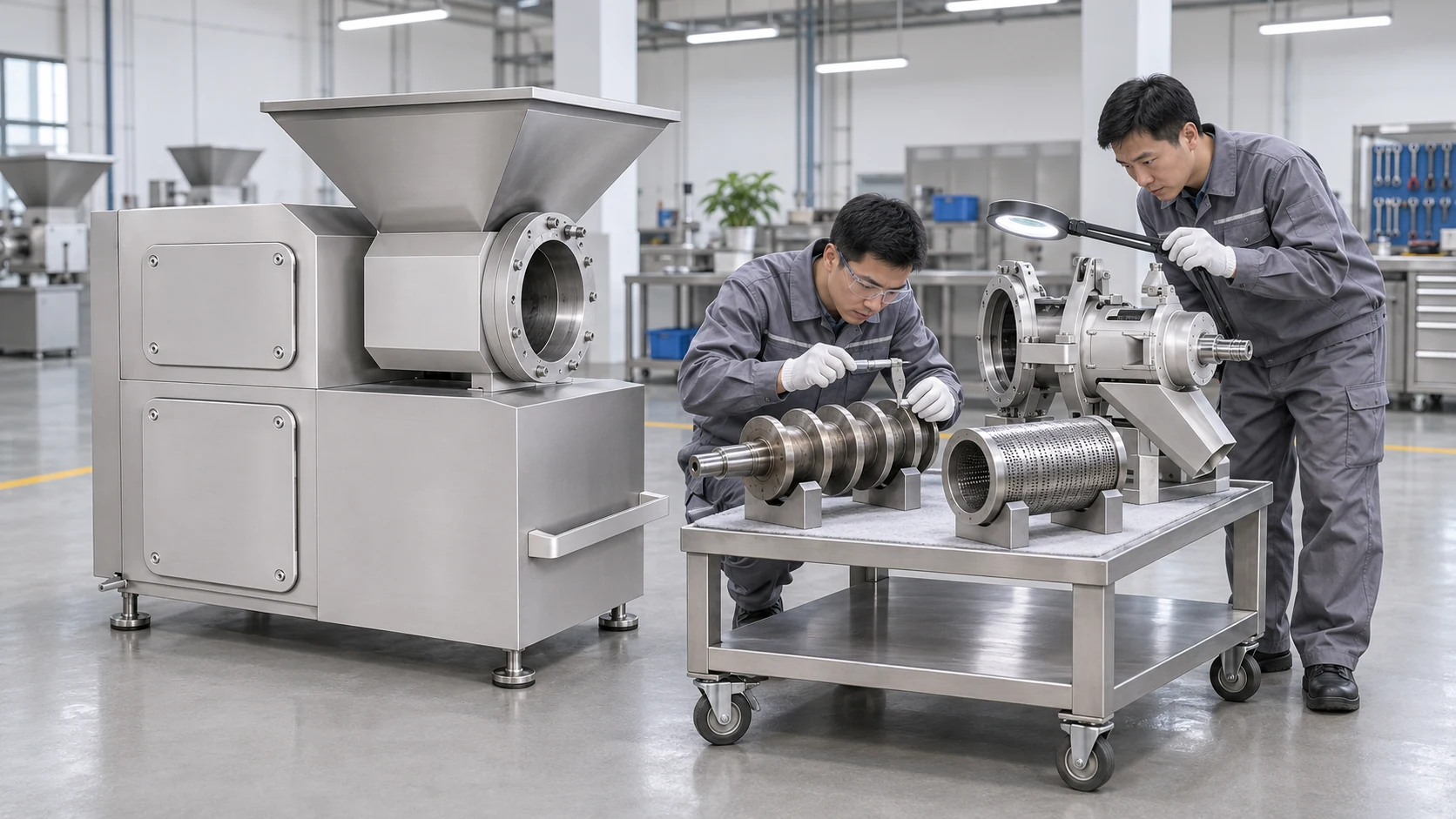
Meat separators produce more repeatable results when poultry frames are defined, sorted and prepared as controlled raw material rather than treated as a mixed by-product stream. The machine can separate recoverable soft tissue from a bone-rich residue, but it cannot make inconsistent incoming material behave like one stable recipe. Frame type, remaining skin and meat, broken bone condition, storage history, inlet condition and feed consistency all influence how a trial should be run and how its outputs should be judged.
This guide explains how poultry processors can prepare chicken frames for an industrial separation trial, establish a practical incoming-material specification and compare output samples without relying on one headline yield number. It is intended for slaughterhouse downstream processors, meat plants, sausage factories and pet-food manufacturers evaluating a new line or trying to make an existing operation more consistent.
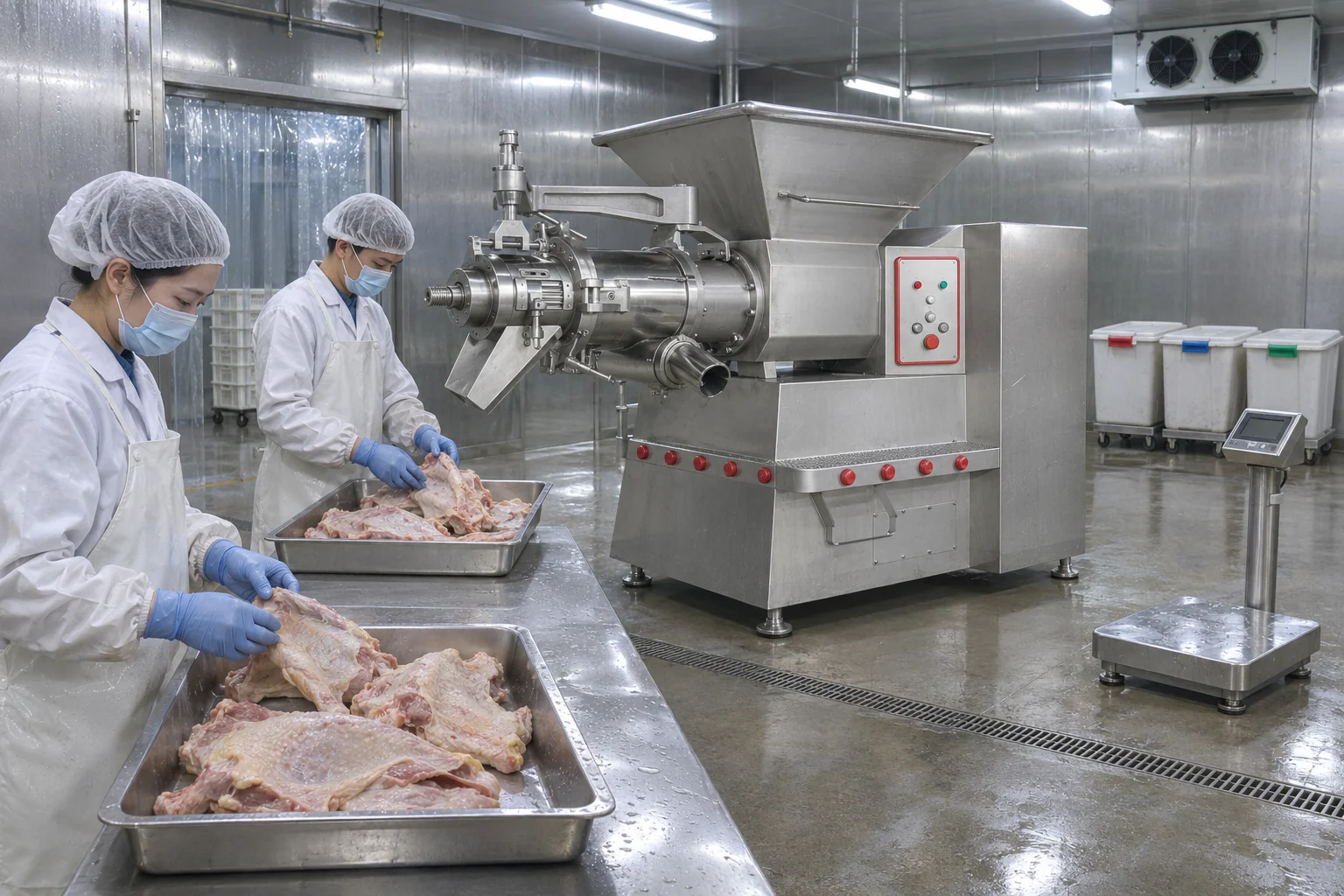
Why Raw Material Preparation Matters to Meat Separators
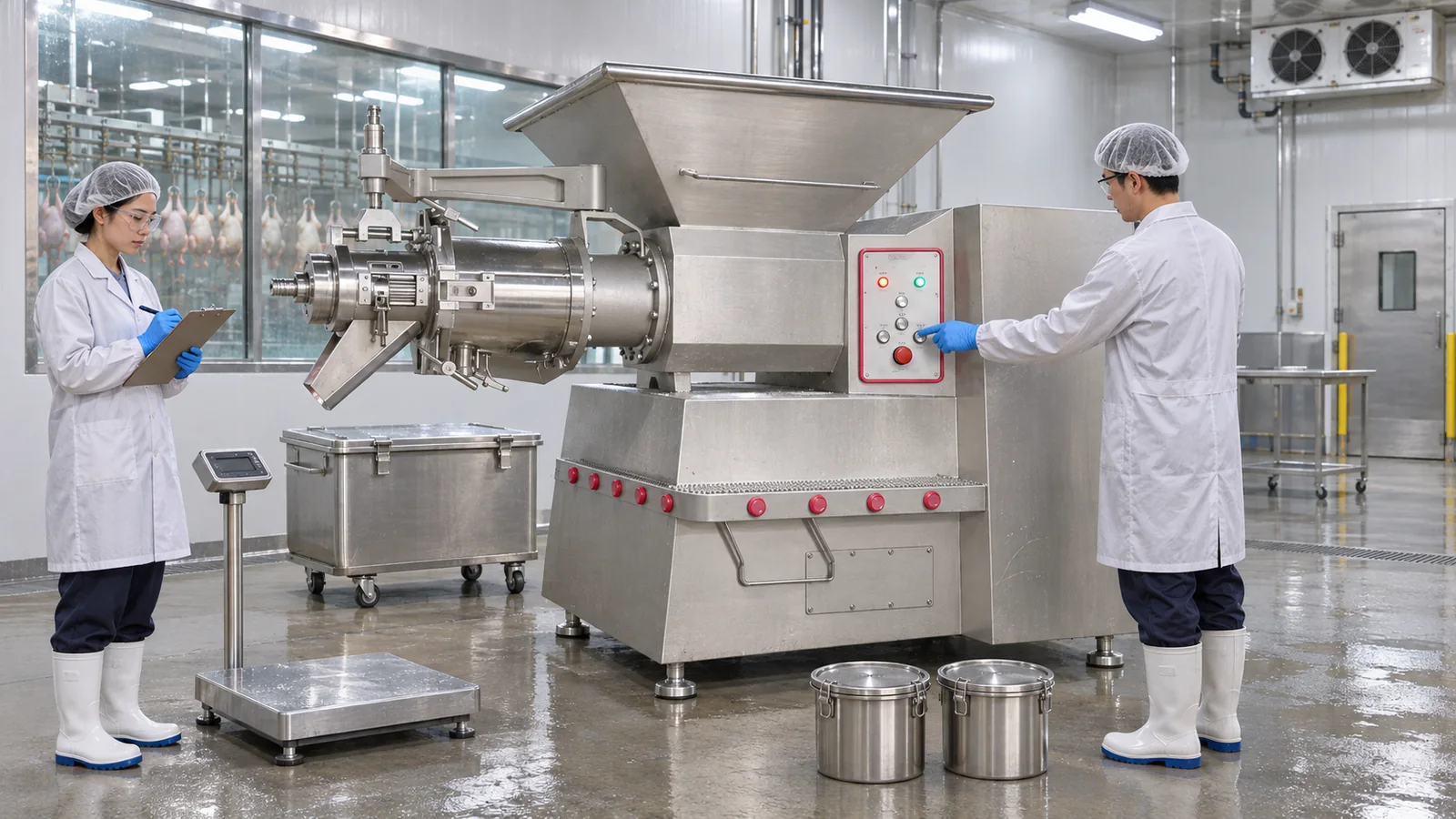
A separator is part of a process, not a correction device for every variation created upstream. Screw-type systems move prepared bone-in material through a separation head so that the softer fraction passes through the filtering area while a harder bone-rich fraction continues to its discharge route. The condition of the feed therefore affects resistance, flow and the physical character of both outputs.
Two batches described simply as “chicken frames” may be very different. One may contain broad breast and back frames after consistent cut-up. Another may include necks, small fragments, skin-heavy pieces and frames with very different amounts of residual tissue. Comparing those batches without recording their composition can make a machine appear unstable when the real change began before the hopper.
Define the Material Before Discussing Performance
A useful material description states the poultry species, anatomical parts, cut-up source, approximate piece-size range, whether the material is fresh, chilled or otherwise conditioned, and how much skin and soft tissue normally remains. It should also identify unwanted items that must be removed before feeding. This description is more useful than a general phrase such as “poultry bones.”
Processors who need a basic explanation of the recovered ingredient can first review what MDM meat means in poultry processing. The legal name, permitted species, use and composition limits still depend on the destination market and the plant’s approved food-safety system.
Do Not Mix Different Material Families in the First Trial
The first acceptance trial should use a reasonably uniform material family. Chicken frames, necks and mixed small poultry parts should be tested separately unless the normal production recipe intentionally combines them at a controlled ratio. Separate trials make it easier to understand feeding behavior, recovered-meat texture and residue condition. A mixed trial can be added later after the plant knows how each main component behaves.
Build a Poultry Frame Receiving Specification
A receiving specification gives production and quality teams the same definition of acceptable feed. It does not need to be complicated. It should describe what may enter the separator, what must be removed and which batch details must travel with the material.
Record Source, Time and Lot Identity
Link each tote to the cut-up line, production period and relevant lot. Record when the frames were produced, when they entered controlled storage and when they reached separation. If material from several periods is combined, the plant should know that the resulting batch has a wider history. This information helps distinguish equipment behavior from changes in holding time or upstream operations.
Control Piece Size Without Unnecessary Damage
Large or interlocked pieces can bridge in some hoppers, while excessive pre-cutting can change the condition of the feed before separation. The correct maximum dimension and any pre-breaking requirement must come from the proposed model and the actual frame geometry. Do not assume that a standard meat grinder can prepare bone-in material. Grinding and mechanical separation are different functions, and equipment must be approved for the material it receives.
Remove Foreign and Nonconforming Material
The preparation station should reject packaging fragments, metal, hard foreign objects and any material outside the approved recipe. It should also separate abnormal pieces that would make the trial unrepresentative. The plant’s hazard controls and inspection method take priority; the article does not replace them.
Classify Chicken Frames by What Remains on Them
Visual classification can be simple enough for daily use. The goal is not to grade every frame perfectly. The goal is to prevent a tote dominated by one extreme condition from being compared with a different tote as though they were identical.
Use Practical Frame Classes
A plant can create reference photographs for three or four common conditions, such as lean frames after close cutting, standard frames from normal production and frames with more remaining skin or soft tissue. Each class should show natural variation and a clear boundary for rejection. The team can then estimate the class mix in every trial batch.
Reference photographs must show real broad poultry carcass frames after the major cuts have been removed. Whole chickens and bare decorative skeletons are not useful inspection references. The classification should match what operators actually receive from the plant’s cut-up process.
Keep Necks and Small Fragments Visible in the Batch Record
Necks and small bone-in fragments may feed differently from broad frames. If they are part of the production stream, record their approximate share rather than allowing them to disappear inside a general weight total. When their proportion changes, the plant can then decide whether to adjust the batch recipe, run a separate material family or repeat the trial.
Prepare a Controlled Trial for Meat Separators
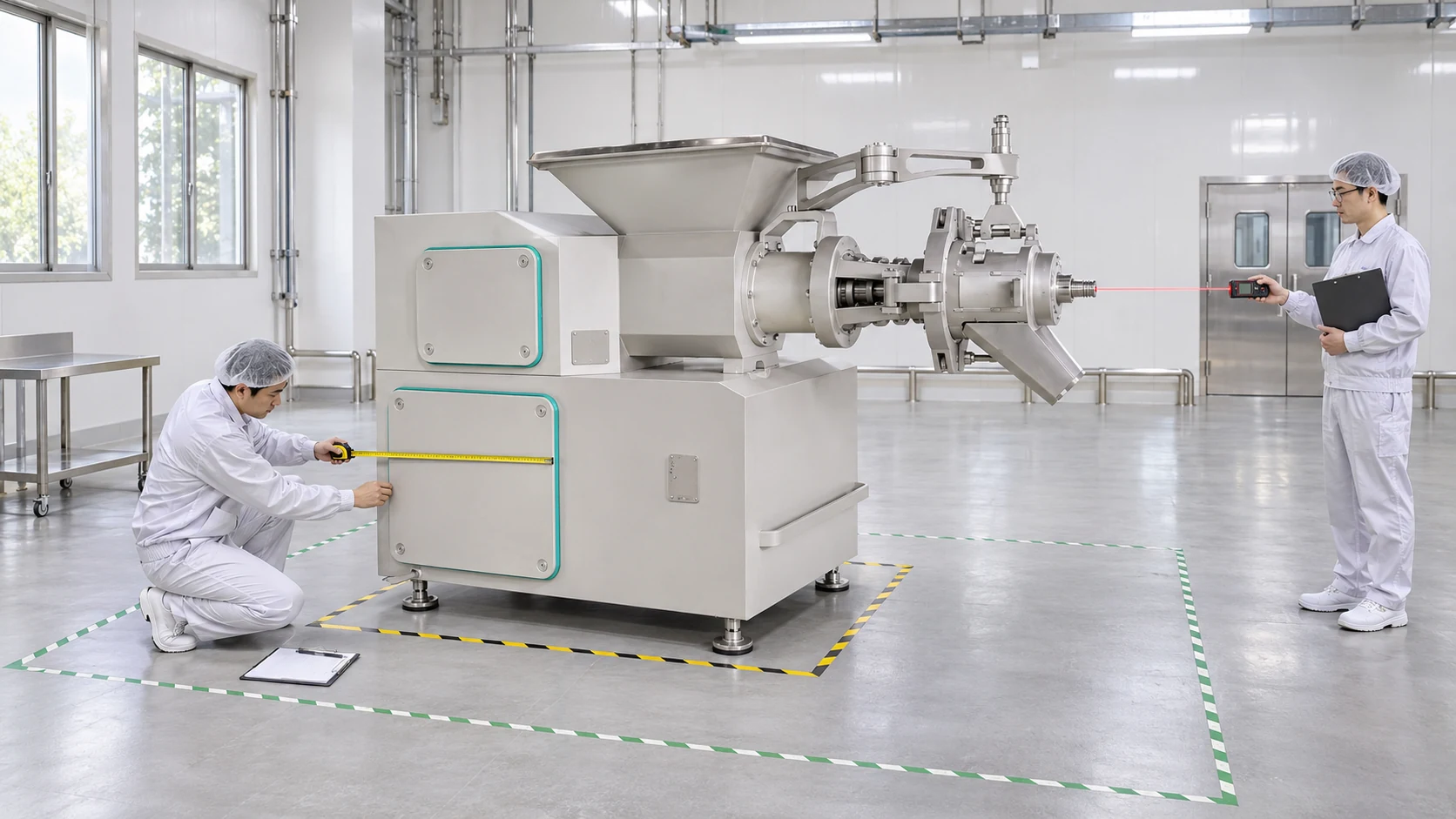
A controlled trial should answer whether the proposed configuration can process the buyer’s actual material while producing acceptable outputs. It should not be a short demonstration with an unknown sample. Agree the raw material, batch size, operating sequence, sampling points and acceptance checks before the machine starts.
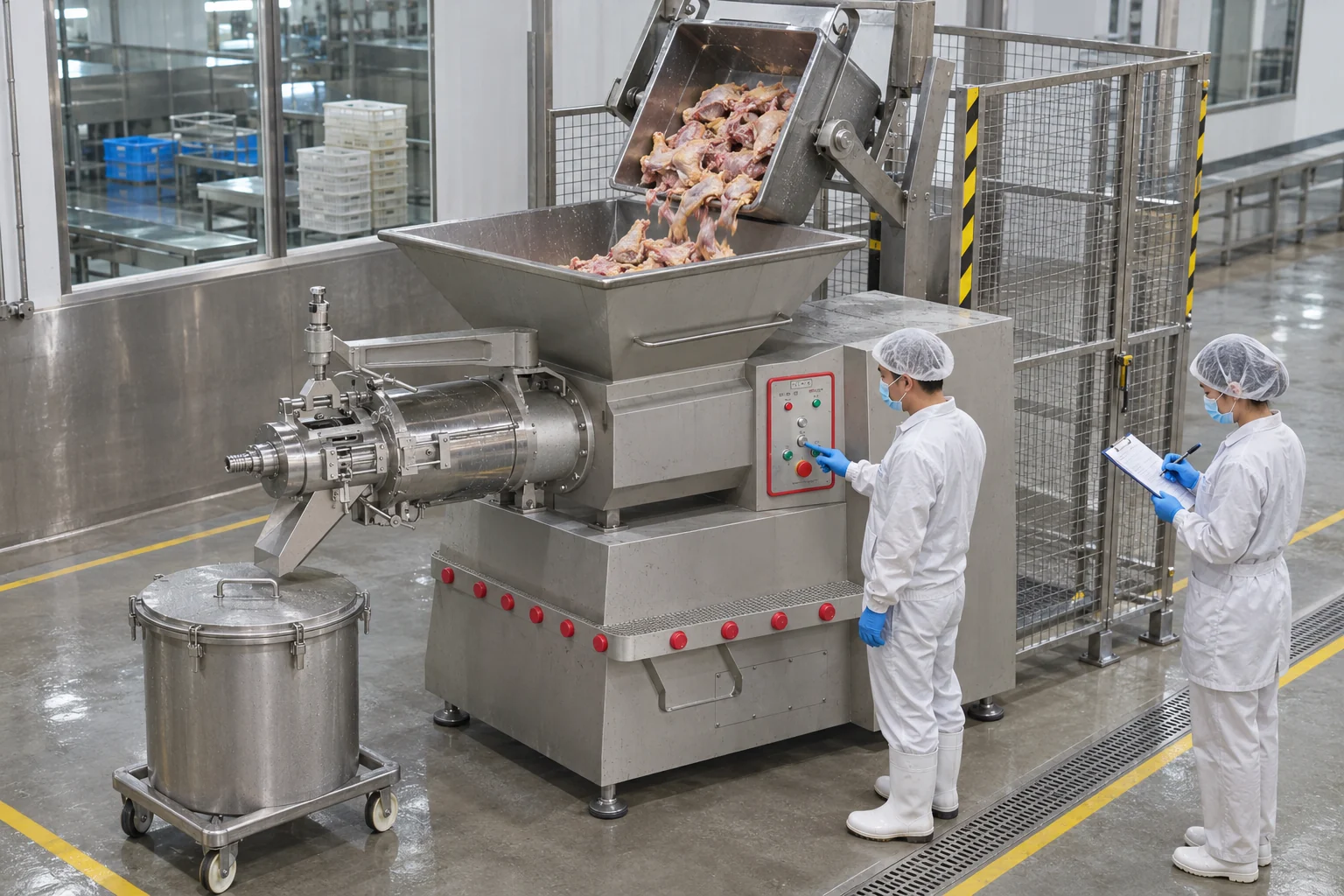
Weigh the Batch and Measure Stable Run Time
Record the prepared input mass separately from packaging, tote and rejected material. Time the period of stable feeding, but also record stops, bridging, vessel changes and operator interventions. A short hopper-emptying peak is not the same as sustained line performance. For projects where daily flow is the main issue, use the separate meat bone separator capacity sizing guide.
Change One Important Variable at a Time
If screen, pressure-related setting, feed condition and raw-material mix all change together, the result cannot show which change mattered. Begin with the supplier’s approved configuration for the actual material. Keep the incoming batch as consistent as practical, collect both output streams and change only one agreed variable between trial runs.
Record the Machine Configuration
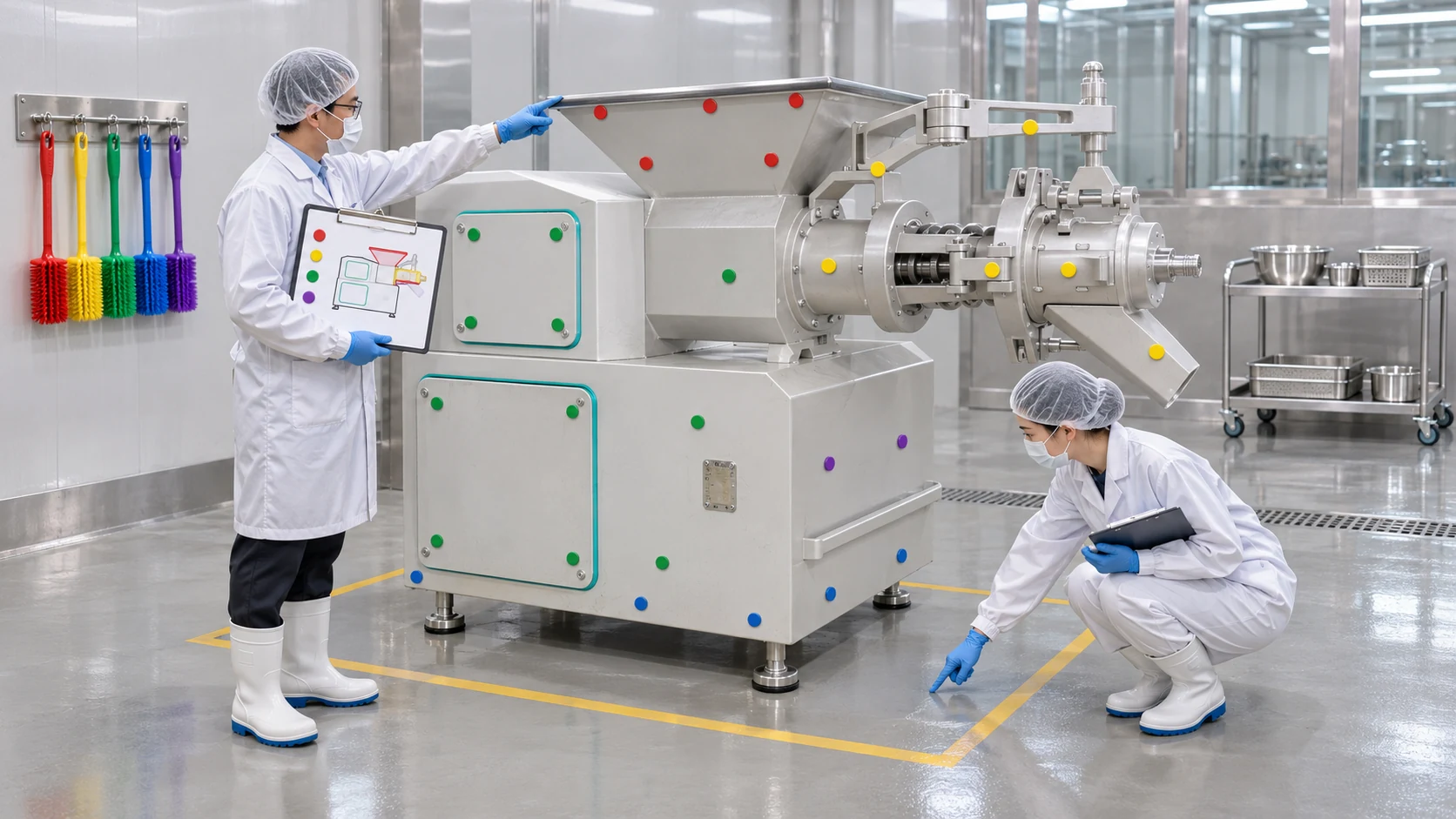
The trial sheet should identify the machine model, separation-head components, relevant setting positions and the condition of wear parts. It should also record assembly verification before operation. A trial made with an incorrectly assembled or worn head cannot be used as reliable purchasing evidence. The separator parts and maintenance inspection guide provides a separate review of these components.
Inspect Both Output Streams, Not Only Recovered Meat
Meat separators create at least two material streams that must be evaluated together: recovered soft material and bone-rich residue. Looking only at the attractive stream can hide poor control, excessive residual soft tissue or a configuration that does not match the buyer’s product requirement.
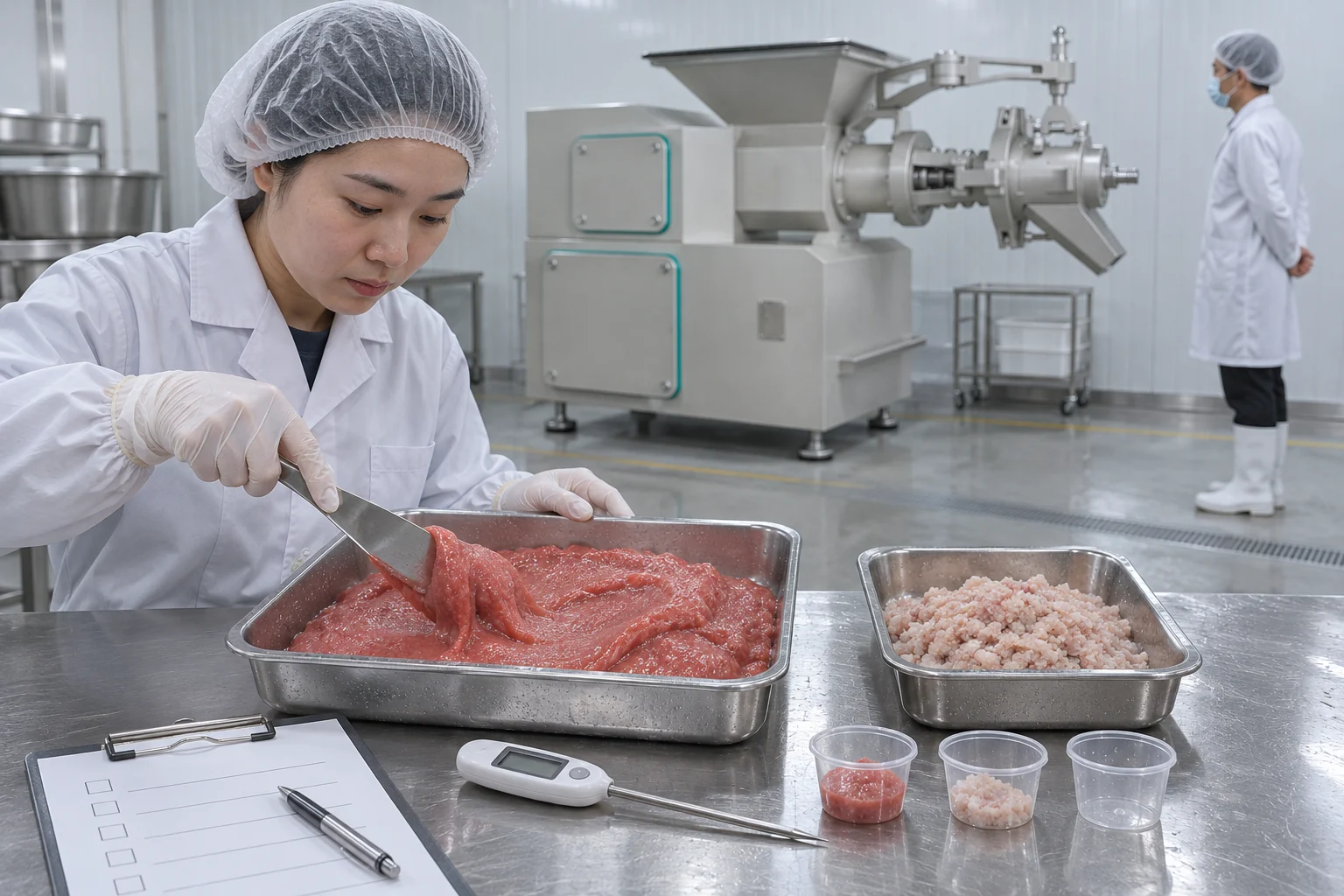
Evaluate Recovered Material Against Its Intended Use
Collect representative samples during stable operation rather than taking only the first material leaving the machine. The plant may examine color, visible texture, consistency, temperature and other approved quality indicators. Laboratory composition or safety checks should follow the buyer’s specification and applicable rules. Visual appearance alone does not prove composition or compliance.
The recovered poultry material should be judged for the process that follows. A sausage formulation, formed product or wet pet-food recipe may require different handling and acceptance criteria. The separator supplies an ingredient stream; it does not replace downstream formulation, mixing, emulsification, thermal processing or packaging controls.
Inspect Bone-Rich Residue as Process Evidence
Bone-rich residue should be sampled at the same time as recovered material. Record its appearance, consistency and any unusual accumulation. The team can compare residue samples between controlled runs to see whether a setting change simply moved more soft tissue into one stream or caused an unacceptable change elsewhere. Disposal or further use must follow the plant’s approved route and local rules.
Reconcile the Batch Mass
Weigh prepared input, recovered material, bone-rich residue and recorded rejects. Account for material retained in equipment or transfer vessels as far as the trial method allows. The mass balance does not need to be perfect to be useful, but a large unexplained difference should be investigated before a performance conclusion is accepted.
Turn Trial Results Into a Daily Control Plan
The most useful trial outcome is not one impressive number. It is an operating window that production can recognize and repeat. Convert the accepted trial into a short material specification, a feeding procedure, a sampling schedule and clear actions when incoming frames or outputs move outside the normal range.
Create a One-Page Raw Material Standard
The standard can include approved part families, reference photographs, maximum dimensions, storage and inlet conditions, rejection examples and the required lot information. Operators should be able to use it at the tote, not only in an engineering office. When cut-up settings change upstream, quality and separation teams should review whether the reference standard remains valid.
Use Trend Data Instead of Chasing Every Small Change
Track material class mix, batch mass, stable run time, interruptions, recovered output, residue output and agreed quality observations. A single result may reflect normal variation. Repeated movement in the same direction is more useful for deciding whether to inspect upstream cutting, feed preparation, machine assembly or wear parts.
What to Send When Requesting a Meat Separator Proposal
A supplier can recommend a more relevant configuration when the inquiry describes the material and required product, not only the desired kilograms per hour. Include species, anatomical parts, frame photographs, normal and peak mass, piece-size range, incoming condition, storage history, expected operating window, intended downstream use and available utilities.
Also state how the plant will collect each output, what quality checks will be used and whether a representative material trial is required. Review the broader poultry meat bone separator selection guide for additional purchasing questions. For a proposal based on real frames and line conditions, send the material description through the equipment inquiry page.
A Practical Decision Rule
Choose and operate meat separators around a defined raw-material family and an agreed output specification. If the supplier cannot explain which frames are approved, how the trial will be measured, which configuration will be used and how both outputs will be evaluated, the proposal is not ready for comparison. A controlled material standard makes the machine easier to select, the trial easier to interpret and daily production easier to manage.
Frequently Asked Questions
What raw materials should be tested in meat separators?
Test the actual approved material families the plant will process, such as defined chicken frame or neck batches, and record their source, condition and composition. Do not use one unknown mixed sample to represent every poultry by-product.
Should chicken frames be cut before entering a meat separator?
Only when the selected model and actual frame geometry require controlled size reduction or pre-breaking. Confirm the allowed maximum dimensions with the supplier because unnecessary cutting can change the feed condition before separation.
Can frames, necks and small poultry pieces be mixed in one trial?
They can be tested as a controlled recipe if that mixture reflects normal production, but the first trials are easier to interpret when major material families are evaluated separately. Record the proportion of each component in any mixed batch.
Which results should be recorded during a meat separator trial?
Record prepared input mass, stable run time, interruptions, machine configuration, recovered material, bone-rich residue, rejects and agreed quality observations. Both output streams and the batch mass balance are needed for a useful conclusion.
Why can the same meat separator produce different results on chicken frames?
Frame anatomy, remaining skin and tissue, broken bone condition, piece size, storage history, inlet condition, feed consistency, machine configuration and wear-part condition can all change the process. Control or document these variables before comparing results.
What information should be sent for a meat separator quotation?
Send species, anatomical parts, clear frame photographs, normal and peak mass, piece-size range, incoming condition, storage history, operating window, intended product use, utility information, output handling method and proposed trial criteria.