A meat bone separator is often judged by capacity, price, and a simple product photo. That is not enough for a serious poultry processor, sausage factory, or pet food plant. The parts inside the separation head decide how the machine handles bone-in raw material, how stable the recovered meat stream looks, how often the machine needs cleaning, and how quickly a factory can restart when one wearing part reaches the end of its service life.
This article focuses on the parts and structure of an industrial meat bone separator machine. It is written for buyers who already understand the basic purpose of mechanical meat separation, but still need a practical way to compare machines before sending an inquiry or approving a purchase order.
Why Meat Bone Separator Parts Matter Before Purchase
The main job of a meat bone separator is to recover soft tissue from suitable bone-in material while discharging a separate bone-rich residue. In simple terms, meat paste should leave through one outlet, while crushed bone residue should leave through another. The finished result is not controlled by the outer cabinet alone. It depends on the feed section, screw or pressing structure, screen area, discharge gap, motor drive, and how accurately these components work together.
For many buyers in Southeast Asia, Central Asia, and the Middle East, the machine will be used after poultry cutting, slaughterhouse trimming, sausage preparation, or pet food raw-material handling. These factories usually care about labor saving, raw material utilization, stable downstream mixing, and easy sanitation. A weak separation head can create unstable output, frequent blockage, difficult cleaning, or a spare-parts problem that stops the whole line.
The Search Intent Behind This Article
The intent is commercial and technical. A buyer searching for meat bone separator parts is usually not looking for a casual definition. They may already have a separator, or they may be comparing suppliers and want to know whether the machine has replaceable screens, a strong screw section, accessible covers, and practical spare parts. This is a strong inquiry-stage search because it connects directly with machine reliability, after-sales support, and long-term operating cost.
The selected focus keyword is meat bone separator parts. It is supported by saved project data around meat bone separator, meat separator manufacturer, poultry meat bone separator, and mechanically deboned meat equipment. Current Semrush validation was not available in this turn, so the keyword choice is based on saved Semrush-derived cluster evidence, current SERP wording, B2B terminology, and the user’s supplied machine photos.
Key Parts of a Meat Bone Separator Machine
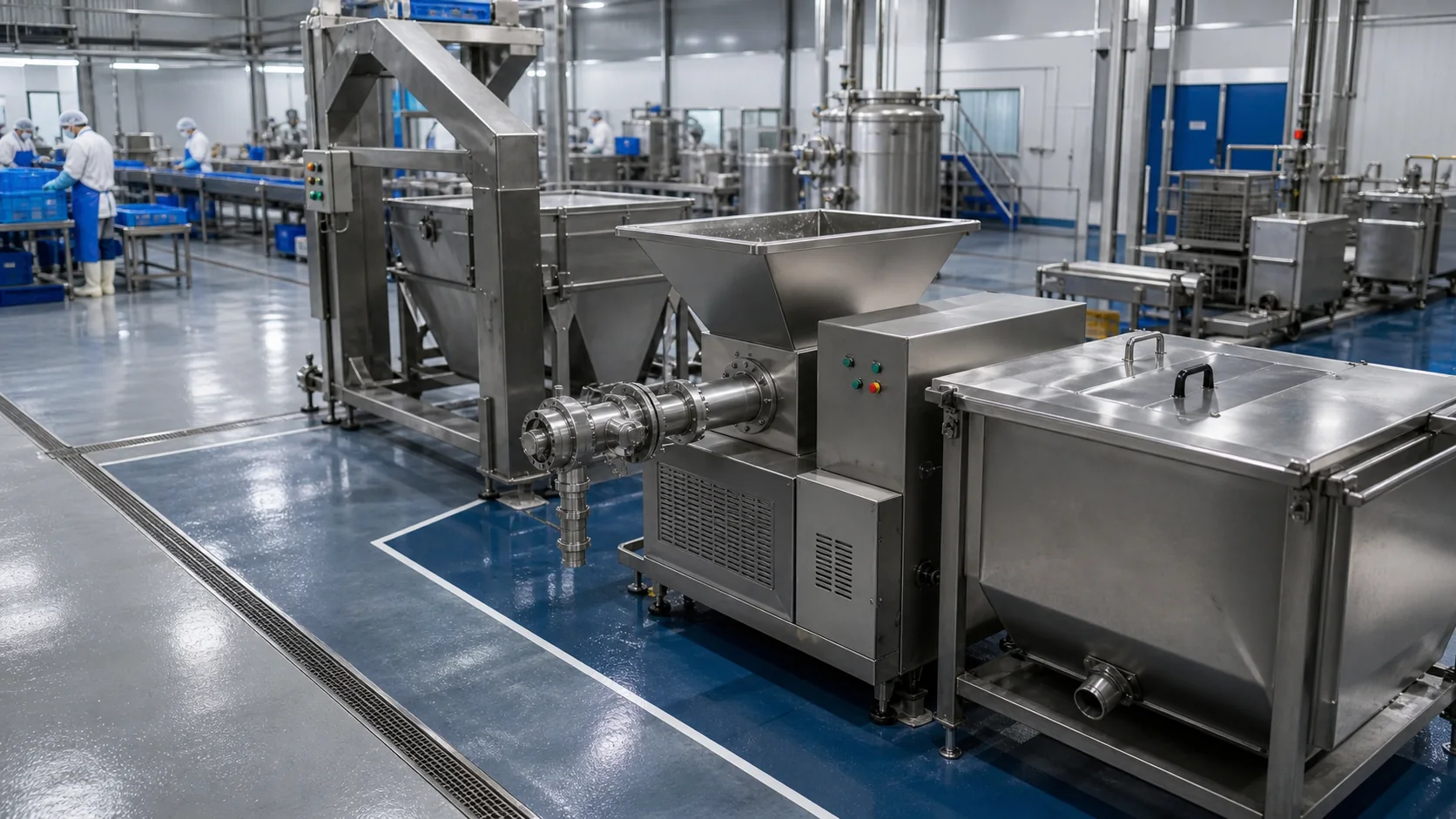
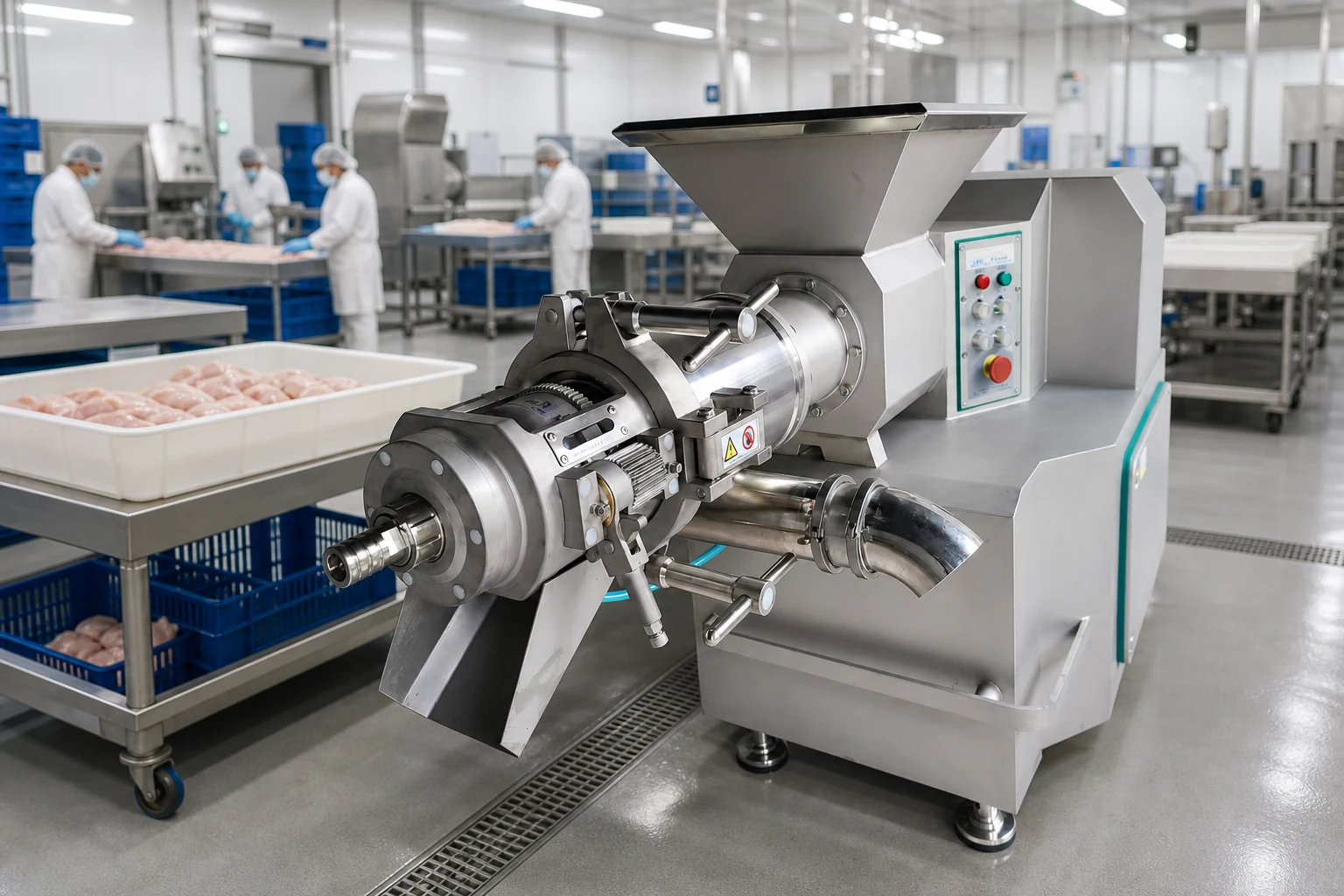
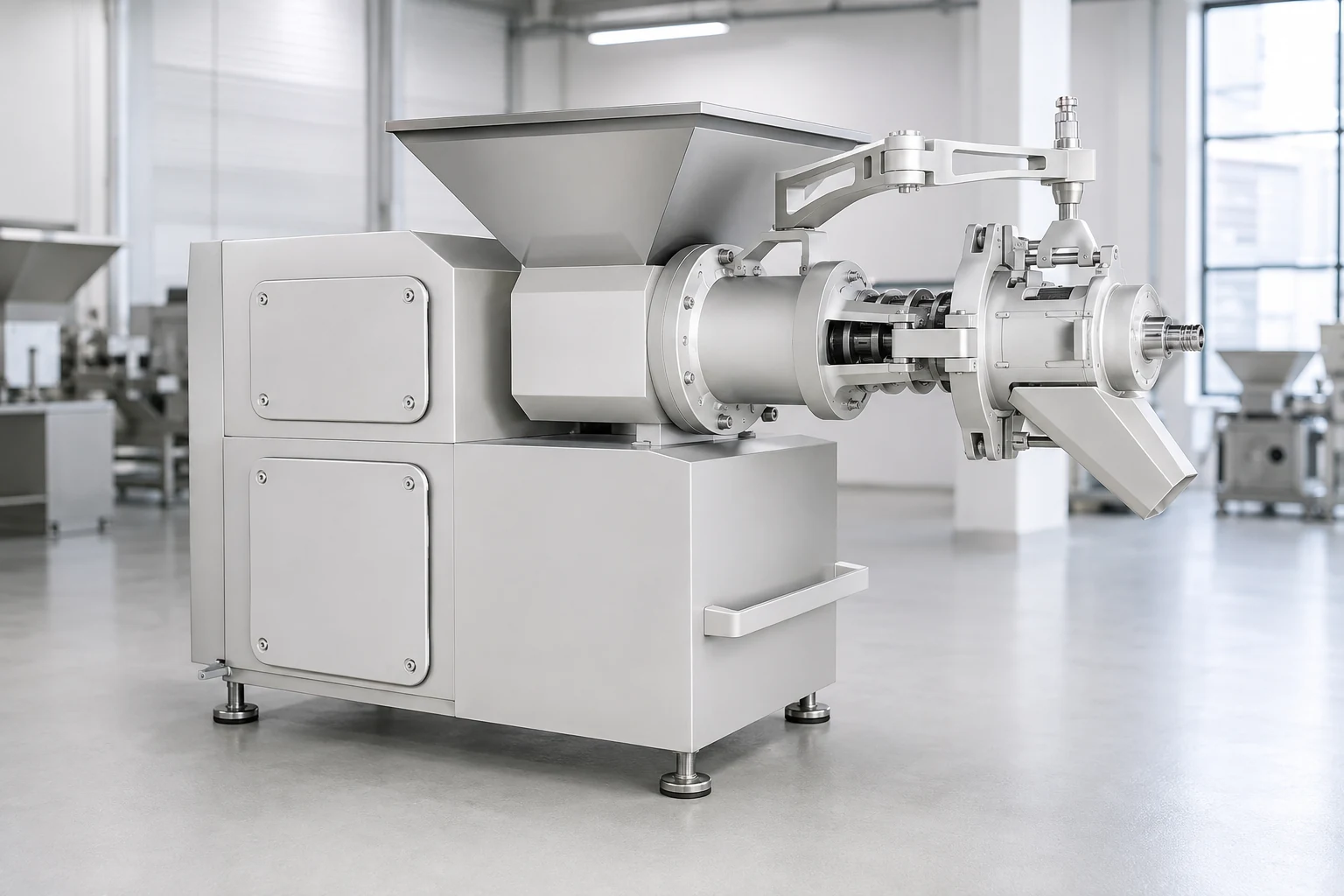
Most industrial separator designs include a hopper or feed inlet, a driven feed screw or pressing screw, a separation head, a screen or filter structure, a meat outlet, a bone residue outlet, a motor and drive system, a control panel, and an enclosed machine body. The exact design varies by supplier and model, so the buyer should not assume every machine has the same internal layout.
A supplier should be able to explain which parts contact the raw material, which parts are consumable, which parts require routine inspection, and which parts should be kept as spare parts in the factory. If the supplier only sends a capacity number without explaining the separation section, the buyer still does not have enough information to judge the machine.
Feed Hopper and Raw Material Entry
The feed hopper affects how easily operators can load poultry frames, chicken necks, fish frames, or other suitable bone-in materials. A well-designed hopper should allow steady feeding without encouraging workers to push material by hand. For food safety and operator safety, the feeding area should be discussed carefully during quotation. Buyers should ask what raw material size is suitable and whether pre-cutting or pre-crushing is required.
Screw Press or Feed Auger Section
The screw or auger section moves the raw material toward the separation area and creates the pressure needed for separation. In many screw-press style machines, this section has a large influence on output stability. If the screw is poorly matched with the screen or raw material, the machine may over-compress the product, heat the meat, or discharge residue that still carries too much recoverable meat.
When comparing machines, buyers should ask whether the auger is easy to remove, how it should be cleaned, and whether replacement parts are available. It is also useful to confirm whether the supplier can provide close-up photos or videos of the separation head, not only a polished full-machine picture.
Screen, Filter, and Separation Head Details
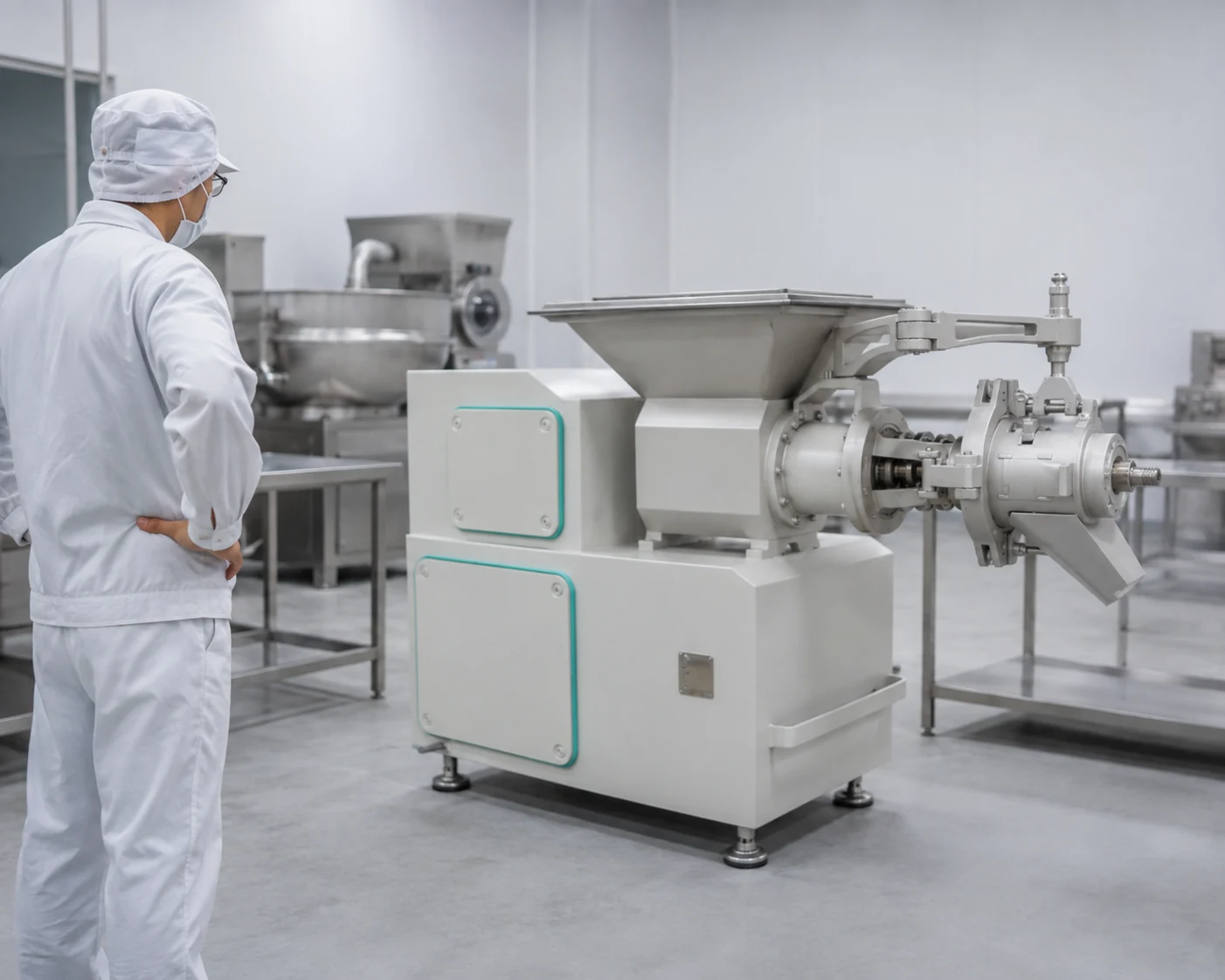
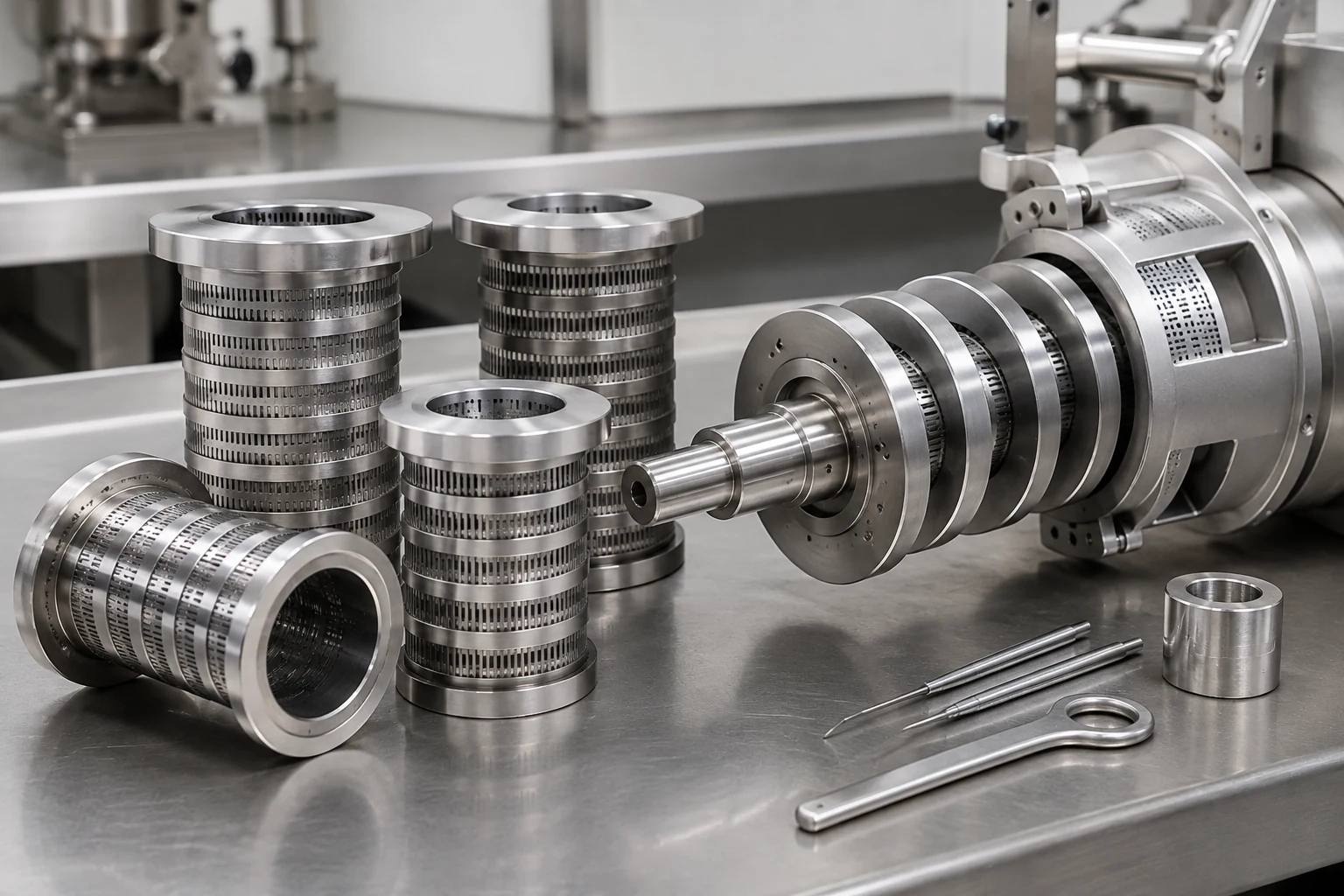
The screen or filter section is one of the most important parts of a meat bone separator. It helps separate recoverable soft tissue from bone-rich residue. In practical use, this area needs careful cleaning and inspection because it contacts raw material directly and may be affected by bone hardness, raw material temperature, and particle size.
Search results and supplier pages commonly describe meat bone separators as machines with a feed inlet, screw press, meat outlet, bone residue outlet, motor, body, and base. Some technical descriptions also mention a sieve, screen, rotating drum, or pressure system depending on the machine type. These descriptions support one important buying point: the buyer should look at the working parts, not only the outside shell.
Why Spare Screens Should Be Discussed Early
A screen is not just a small accessory. It can influence product texture, cleaning time, and the cost of keeping the machine running. For a factory that produces mechanically deboned meat, pet food ingredients, or sausage raw material, a damaged or worn screen can become a production risk. Buyers should ask whether spare screens are supplied with the machine, how long replacement normally takes, and whether the supplier can ship parts quickly.
It is not responsible to promise a universal screen life because wear depends on raw material type, bone hardness, feed preparation, operating hours, and cleaning practice. A more reliable supplier will explain the conditions that affect wear instead of giving one fixed number for every factory.
Two Outlets: Meat Paste and Bone Residue
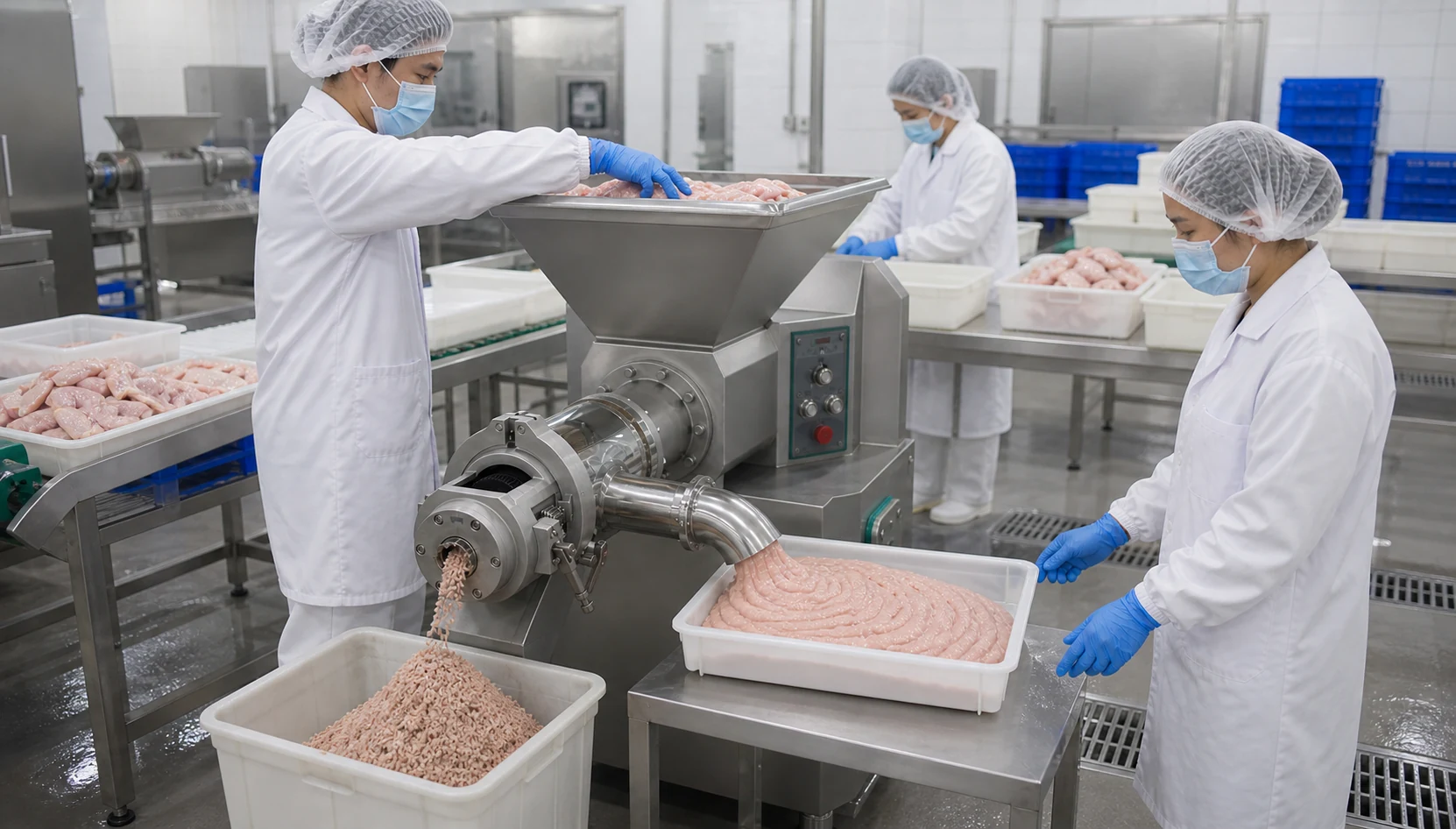
A buyer should confirm the function of each outlet before ordering. In the user’s machine photos, the front discharge area is associated with bone residue, while the side pipe is associated with meat paste. This distinction matters because operators need to place receiving bins correctly, keep the outlets clean, and evaluate both streams during a trial.
The recovered meat should be assessed by the buyer’s own product requirements. For example, a sausage plant may focus on texture and downstream mixing behavior, while a pet food factory may care more about usable protein recovery and stable blending with other ingredients. A poultry processor may pay close attention to residue condition because residue that still contains too much soft tissue can indicate poor separation or unsuitable adjustment.
Maintenance Access Is Part of Machine Value
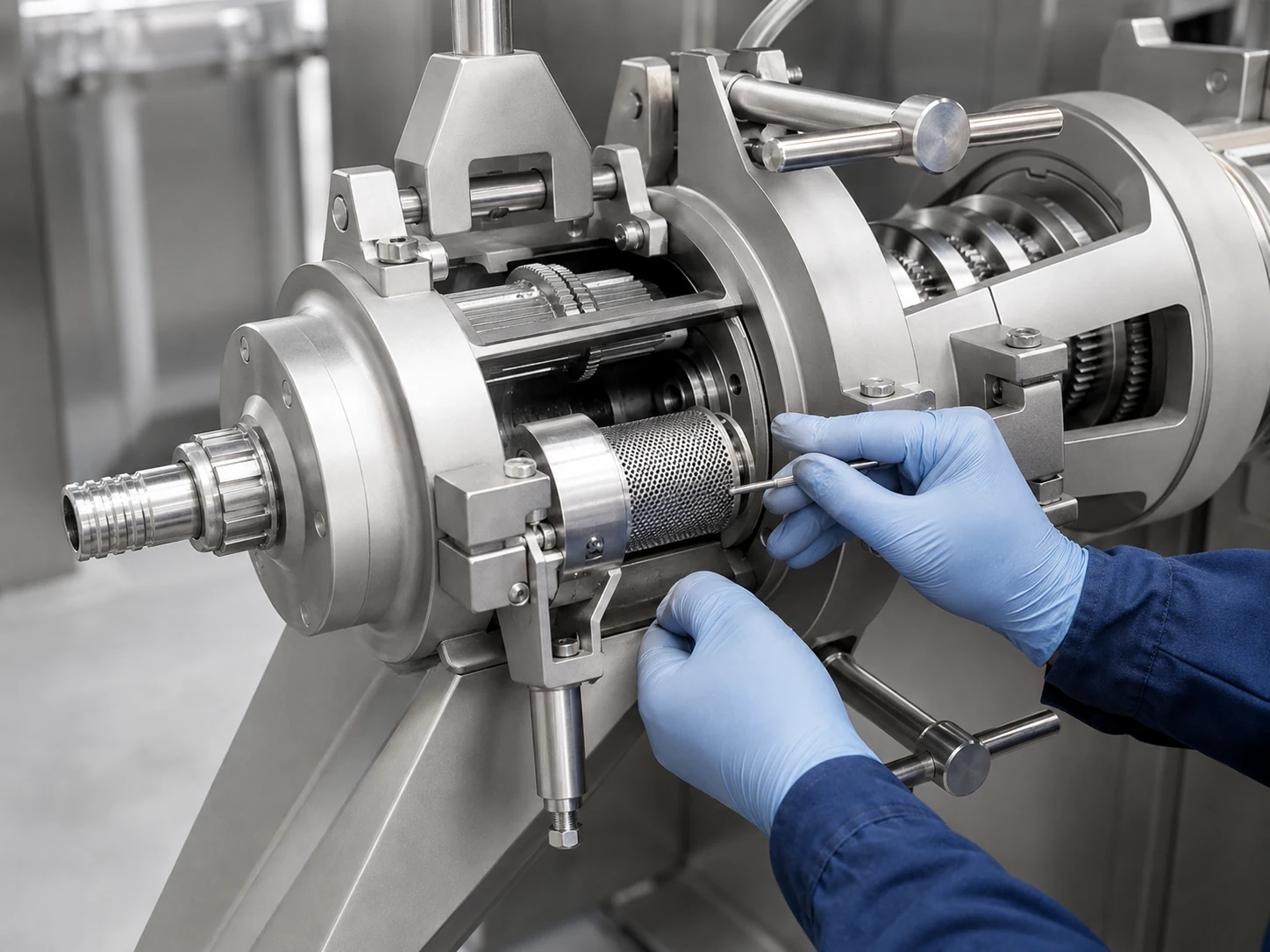
Maintenance access is not a secondary detail. A separator that is hard to open, clean, or reassemble may create more downtime than expected. Operators need safe access to the separation head, screw area, and screens. The supplier should explain how cleaning is performed after a shift, which parts should be removed, and which tools are required.
Current competitor and technical pages often emphasize quick disassembly, low maintenance, or easy cleaning. Buyers should treat those claims as questions to verify. Ask for a cleaning video, an exploded structure view if available, and a spare-parts list. If a supplier cannot show the parts clearly, the buyer may not know what will happen after three months of operation.
What to Ask About Wear Parts and Spare Parts
A practical quotation should include more than the machine body. It should make clear which wearing parts are included, which parts are optional, and which parts are recommended for the first year of operation. This is especially important for factories located far from the supplier, where international shipping time can turn a small part into a production delay.
Useful questions include: Which parts are considered consumable? Are screens, screws, seals, bearings, and discharge components available separately? Can the supplier identify parts by model and serial number? Are photos, part codes, or drawings provided? How are emergency replacement parts shipped? These questions are not just for maintenance staff. They help the purchasing manager compare the real operating risk of different suppliers.
How Raw Material Affects Part Wear
A meat bone separator should be selected according to raw material, not only according to the product name. Poultry frames, chicken necks, fish frames, and heavier red-meat bones do not behave the same way. Some sources describe auger-based separators for tougher materials, while belt or drum pressure systems may be used for gentler separation in fish or soft tissue applications. The buyer should therefore tell the supplier the raw material type, size, temperature, and upstream preparation method.
For poultry and pet food applications, the equipment may sit near a meat grinder, bone crusher, vacuum mixer, or packaging line. DF Food Machinery’s pet food meat recovery separator system is one relevant product page for buyers who want to evaluate recovery equipment in a complete processing context.
Separator Parts and Downstream Processing
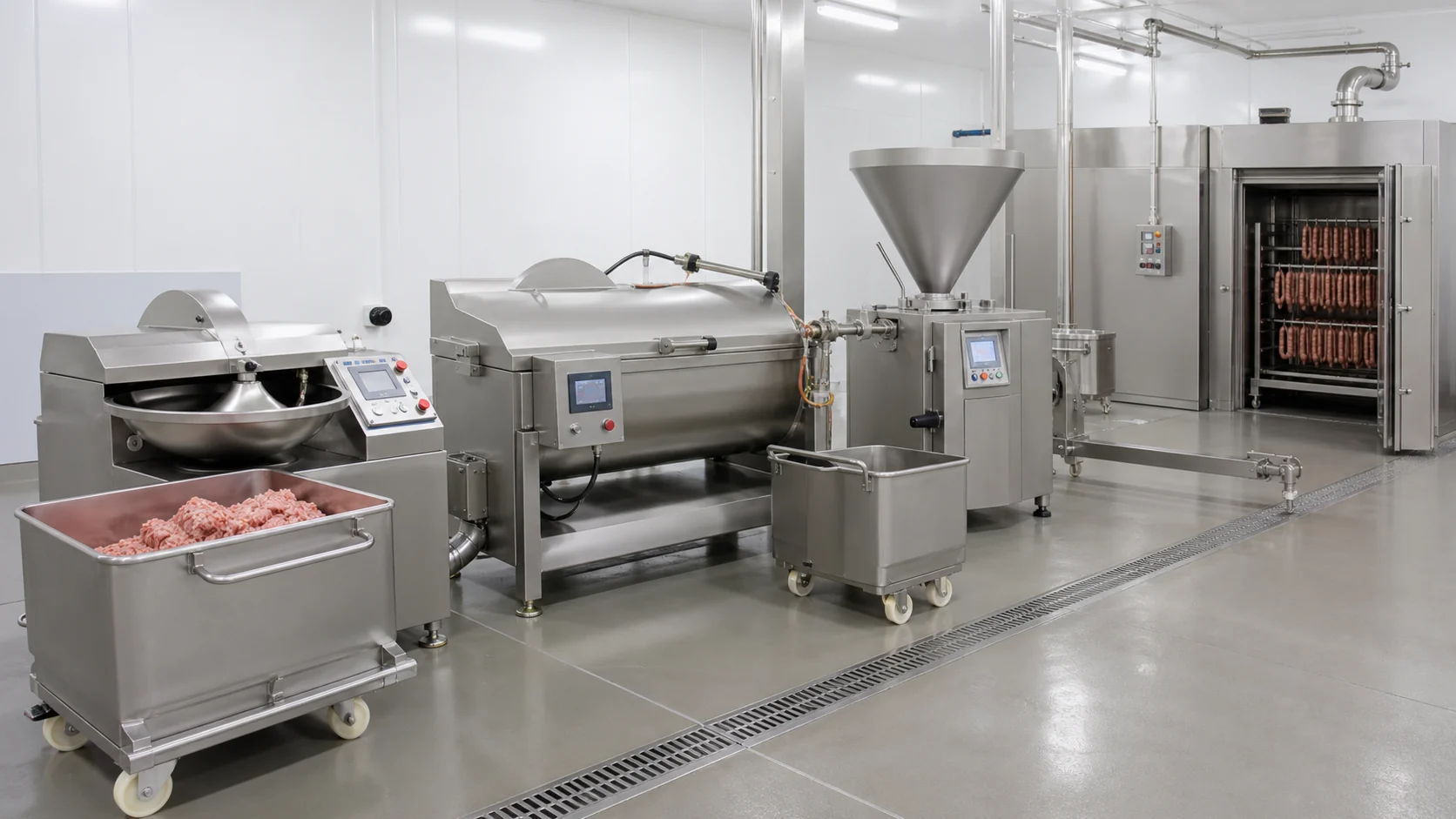
The quality of separator output affects the next process. A sausage factory may send recovered meat into a vacuum meat mixer or bowl cutter. A pet food factory may combine recovered meat with other ingredients before cooking, mixing, or packaging. A slaughterhouse may use the separator to reduce waste and create a further-processing material stream.
This is why parts and adjustment matter. If the recovered meat stream is inconsistent, downstream mixing becomes less predictable. If bone residue is too wet or still carries visible meat, the buyer may need to review raw material preparation, machine adjustment, screen condition, or operating practice. A separator should be evaluated as part of a line, not as an isolated machine standing in a catalogue.
Meat Bone Separator vs Meat Grinder Parts
A meat bone separator is not the same as an industrial frozen meat grinder machine. A grinder reduces prepared meat into a selected particle size. A separator is designed to separate soft tissue from bone-rich material and discharge two different streams. The parts are therefore judged differently.
In many factories, both machines may be needed. A grinder can prepare meat before mixing or sausage production, while a separator can recover meat from suitable bone-in material. The article industrial meat grinder vs meat bone separator explains this process relationship in more detail. Buyers should avoid asking a normal grinder to perform a separator’s job unless the machine is specifically designed and confirmed for bone-related processing.
Buying Checklist for a Meat Bone Separator With Spare Parts
Before ordering, ask the supplier for a complete quotation that lists the machine model, suitable raw materials, recommended feeding condition, motor and power requirements, machine dimensions, contact-material information, safety covers, control method, included spare parts, optional spare parts, and after-sales support. If exact specifications are not available, they should be confirmed in writing before payment.
The buyer should also request photos or video of the hopper, separation head, screen area, meat paste outlet, bone residue outlet, and disassembly process. The four images in this article show why those views matter: a full-machine photo helps identify the machine category, but the spare-parts and detail photos help the buyer understand maintenance and operating risk.
When to Contact a Supplier
Contact the supplier when you can describe your raw material clearly. A useful inquiry should include the raw material type, whether it is poultry, fish, or another material, the approximate size after cutting, the target output, the desired final product, the workshop voltage, and whether the separator will connect with a grinder, mixer, sausage line, or pet food line.
If your project involves sausage production, review the sausage production line article to understand how recovered meat may connect with mixing, filling, smoking, and packaging. If you are still comparing machine categories, the guide on how to choose a meat bone separator machine can support the earlier selection stage. For a project discussion, send your material photos and target output through the contact page.
Practical Conclusion
A meat bone separator should not be purchased only from a front-view catalogue image. The serious questions are inside the machine: how the material enters, how the screw or pressure section moves it, how the screen separates soft tissue, how the meat paste and bone residue leave the machine, and how fast the factory can clean or replace key parts. When these points are clear, the buyer can compare suppliers with much less risk.
For meat-processing plants, pet food factories, sausage producers, and slaughterhouse downstream processors, the best separator is not simply the cheapest unit. It is the machine whose working parts match the raw material, whose spare parts are available, and whose supplier can explain the separation process honestly before the order is placed.
Frequently Asked Questions
What are the main parts of a meat bone separator?
The main parts usually include a feed hopper, screw or pressing section, separation head, screen or filter structure, meat outlet, bone residue outlet, motor drive, control panel, body, and base. The exact design should be confirmed with the supplier for the specific model.
Which meat bone separator parts are most important to check before buying?
Buyers should pay close attention to the screen, screw or auger, separation head, outlet layout, cleaning access, safety covers, and spare-parts availability. These parts strongly affect operation, maintenance, and downtime risk.
Does a meat bone separator use the same parts as a meat grinder?
No. A meat grinder is designed to reduce prepared meat to a selected particle size, while a meat bone separator separates soft tissue from bone-rich material. Some parts may look similar from outside, but the working purpose and separation structure are different.
Why should spare screens be discussed before ordering a separator?
Screens are direct working parts in the separation process and may wear depending on raw material, bone hardness, operating hours, and cleaning practice. Discussing spare screens before ordering helps reduce production downtime later.
What should I send to a supplier before requesting a meat bone separator quotation?
Send the raw material type, material size after cutting, target output, intended final product, workshop voltage, available space, and whether the machine will connect with a grinder, mixer, sausage line, or pet food line.
Can DF Food Machinery help select meat bone separator spare parts?
DF Food Machinery can discuss separator configuration, spare-parts needs, outlet layout, and related meat-processing equipment after reviewing the buyer’s raw material, process target, and production plan.