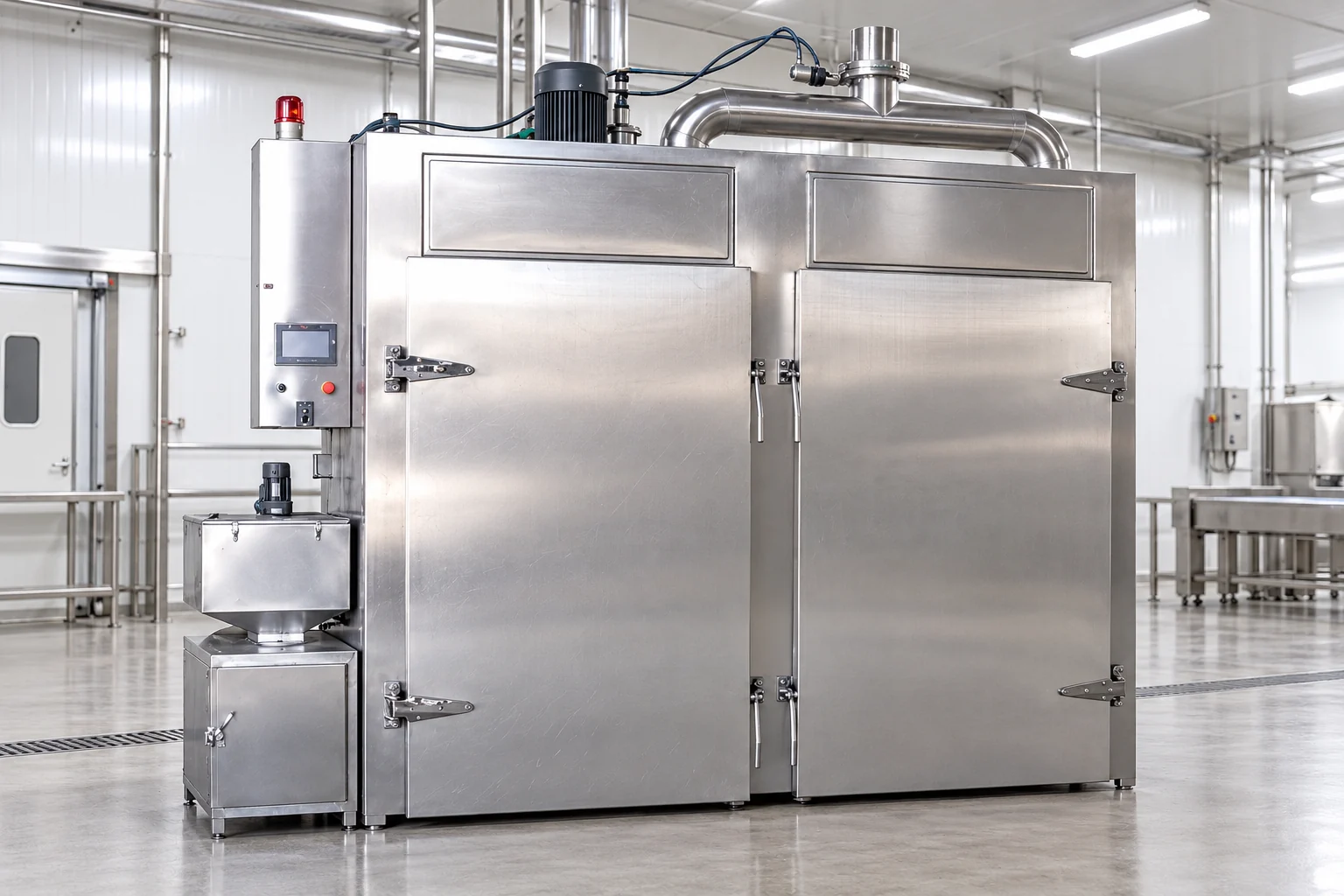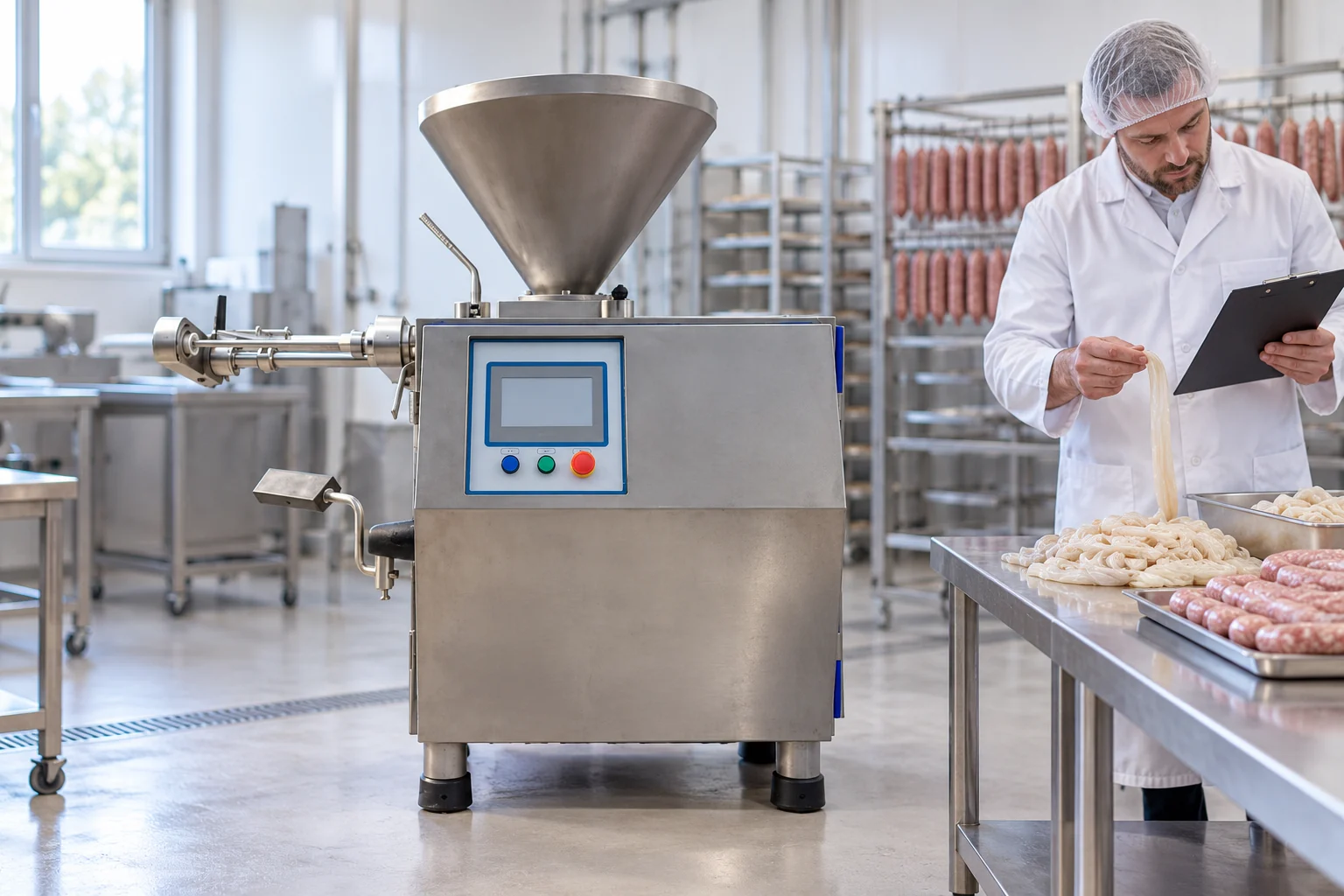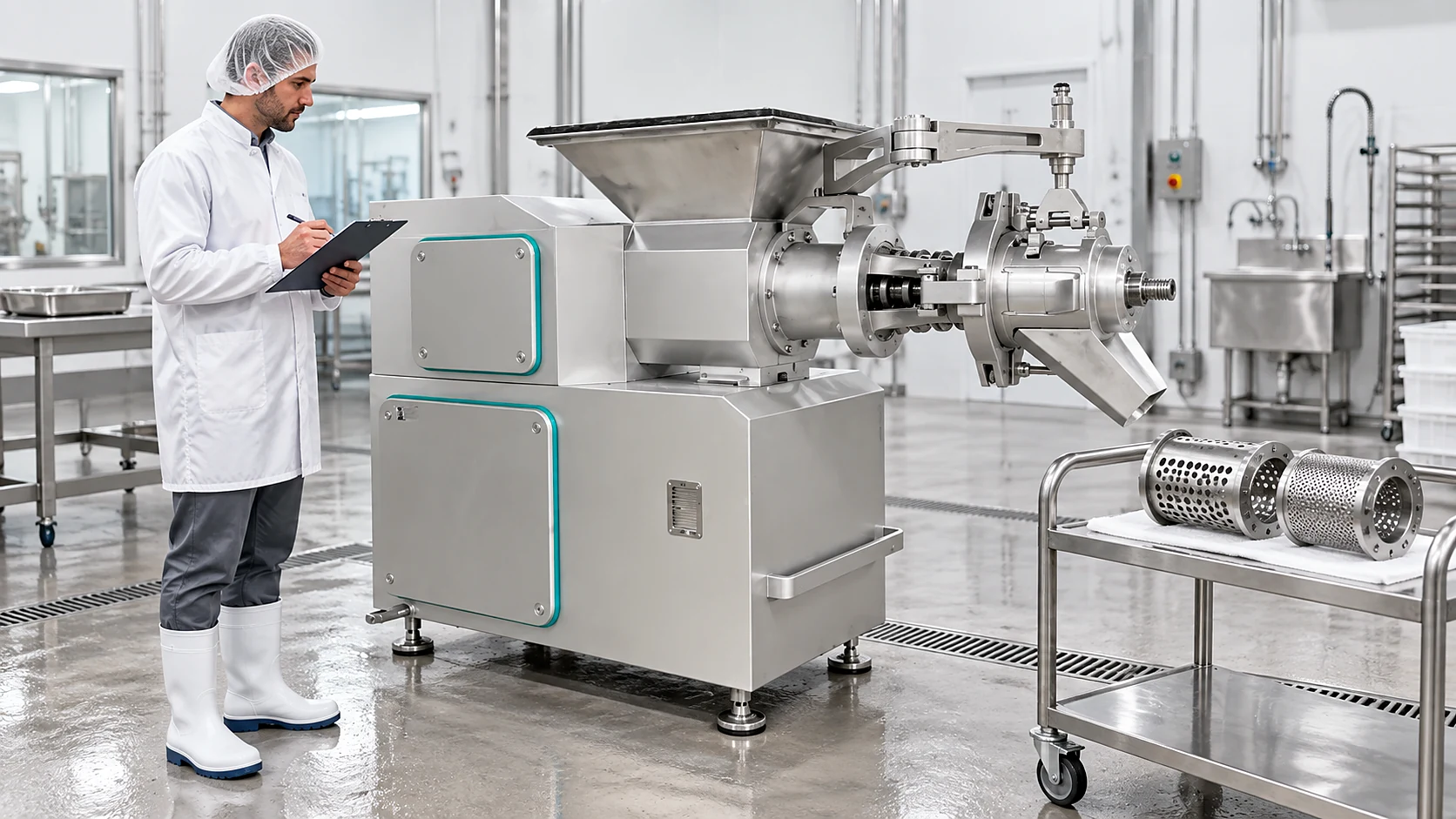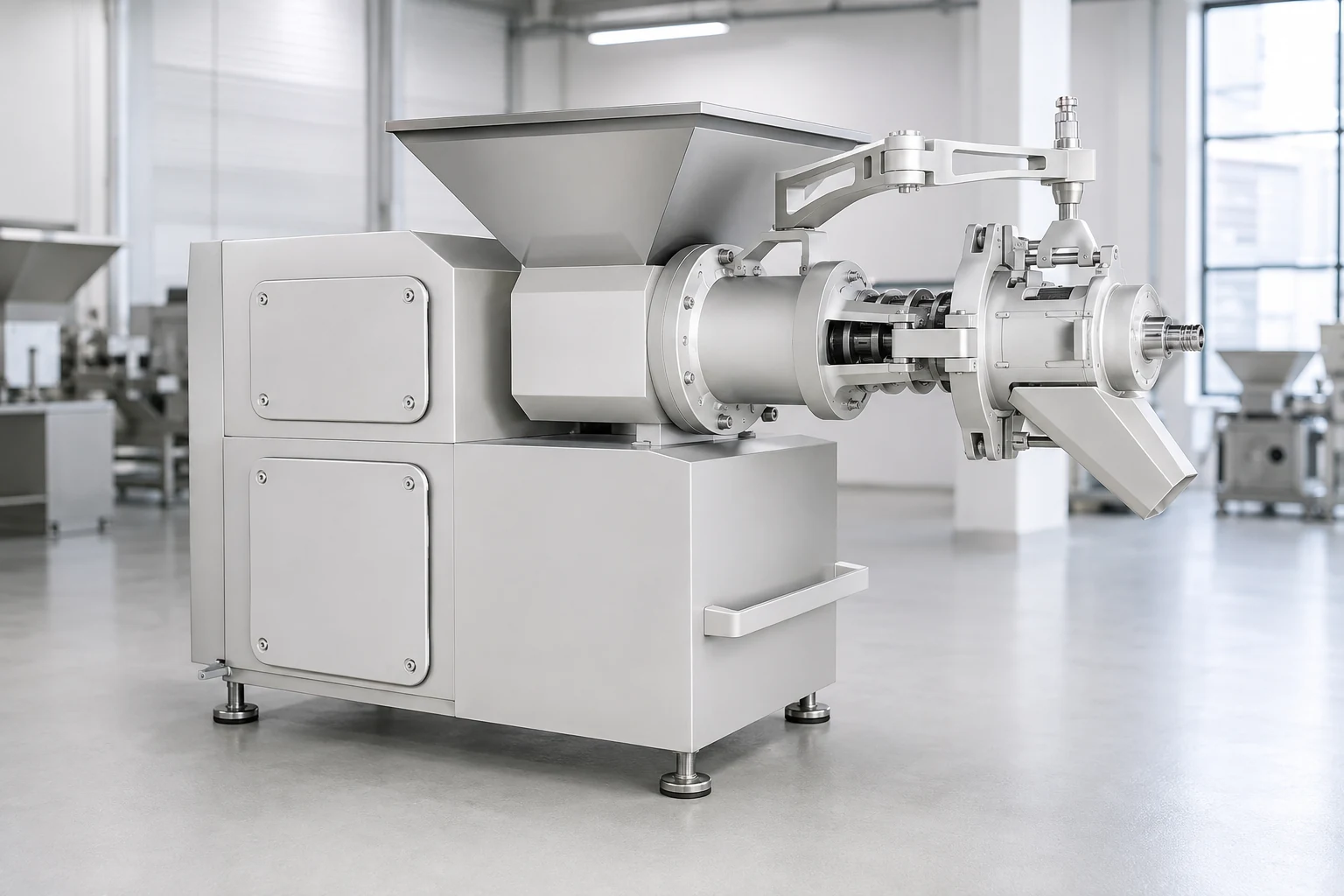
MDM meat is meat recovered from flesh-bearing bones or poultry carcass material by mechanical separation. In poultry processing, the term commonly refers to a fine, paste-like raw material produced after valuable whole-muscle cuts have already been removed. It is not the same as a fillet, hand-deboned meat, or ordinary ground meat. The exact legal name, permitted raw materials, uses, and labeling rules depend on the destination market.
That short definition answers the vocabulary question. A processing plant, however, needs a more practical explanation: what material enters the separator, what leaves it, how the step fits after cut-up, and which facts must be verified before the recovered meat enters a sausage, emulsified product, pet-food, or other approved process.
What Does MDM Meat Mean in a Poultry Factory?
MDM usually means mechanically deboned meat, while regulatory texts may use mechanically separated meat, or MSM. In everyday equipment discussions, the terms are sometimes treated as interchangeable. A buyer should not assume that every supplier, customer, or authority uses them in exactly the same way.
The practical common point is mechanical recovery. Poultry frames or other approved bone-in material still carry edible soft tissue after primary cutting and deboning. A separator applies mechanical force and a separation surface so that a soft meat stream passes through selected openings while a bone-rich residue leaves through a different route.
MDM Begins After Primary Meat Removal
The separator is not the first machine in a poultry plant. Whole birds are slaughtered, chilled, cut into portions, and deboned according to the plant’s products. High-value breast, leg, and other saleable cuts normally leave the line before residual frames are considered for mechanical recovery. This process position matters because the condition of the incoming frame affects every later observation.
The Name Does Not Define the Final Recipe
Calling a raw material MDM does not tell a technologist whether it is suitable for a particular formulation. Species, source parts, temperature history, separation method, particle characteristics, composition, microbiological controls, and local rules still need review. A product name is a starting point, not an approval for unrestricted use.
How Is MDM Meat Produced?
A useful process map is: approved residual raw material, controlled preparation, mechanical separation, separate collection, product verification, rapid transfer, and downstream processing or storage. Each step should be defined in the plant’s own procedures.
Step 1: Prepare a Consistent Raw Material
The plant identifies the exact poultry parts that will enter the process. Frames from one cut-up program may differ from necks, backs, or mixed carcass remnants. Large or irregular pieces may require size reduction before separation, but pre-breaking must be matched to the separator rather than assumed. Foreign material and unsuitable parts must be excluded through the plant’s approved controls.
Step 2: Feed the Mechanical Separator
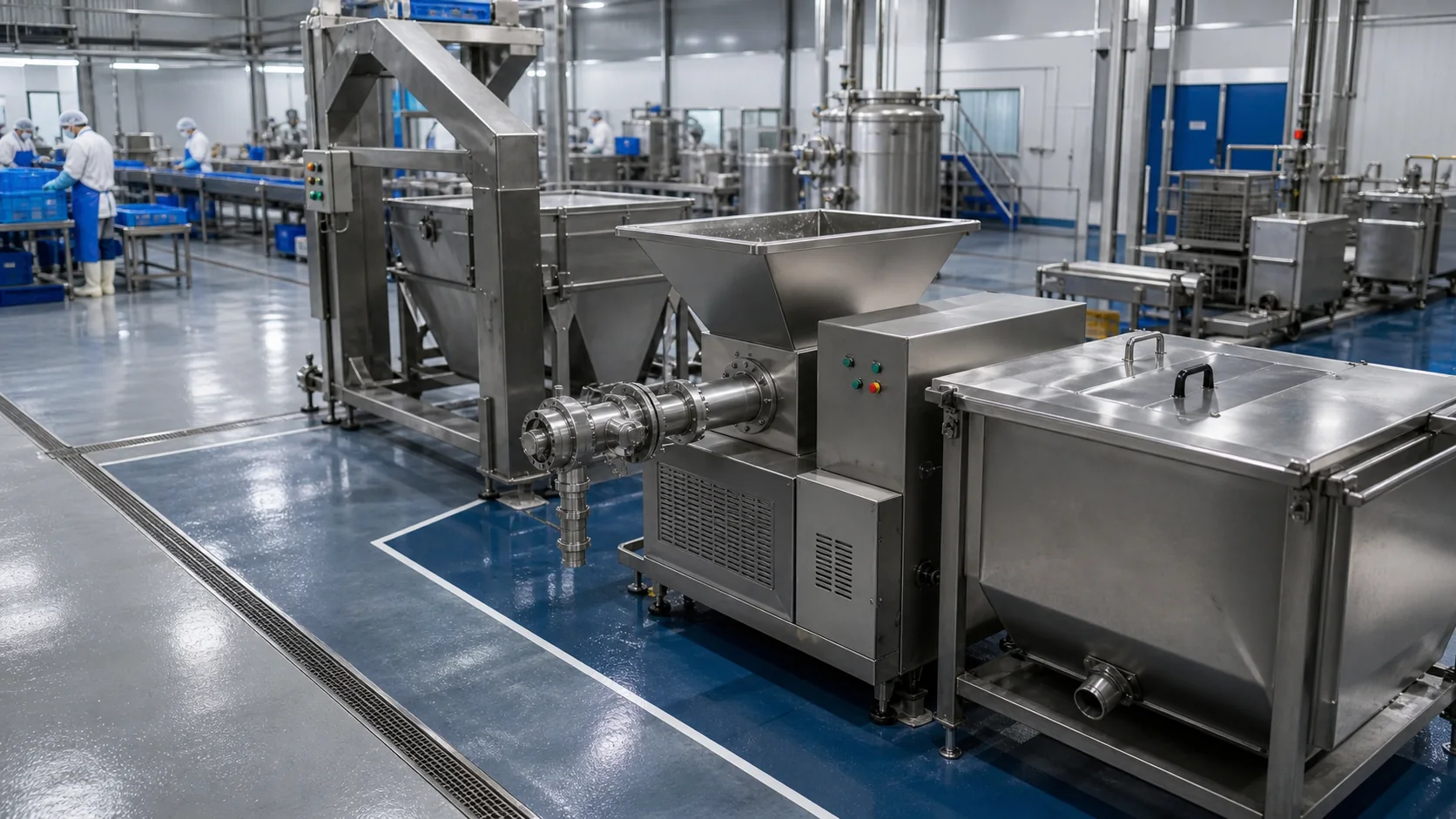
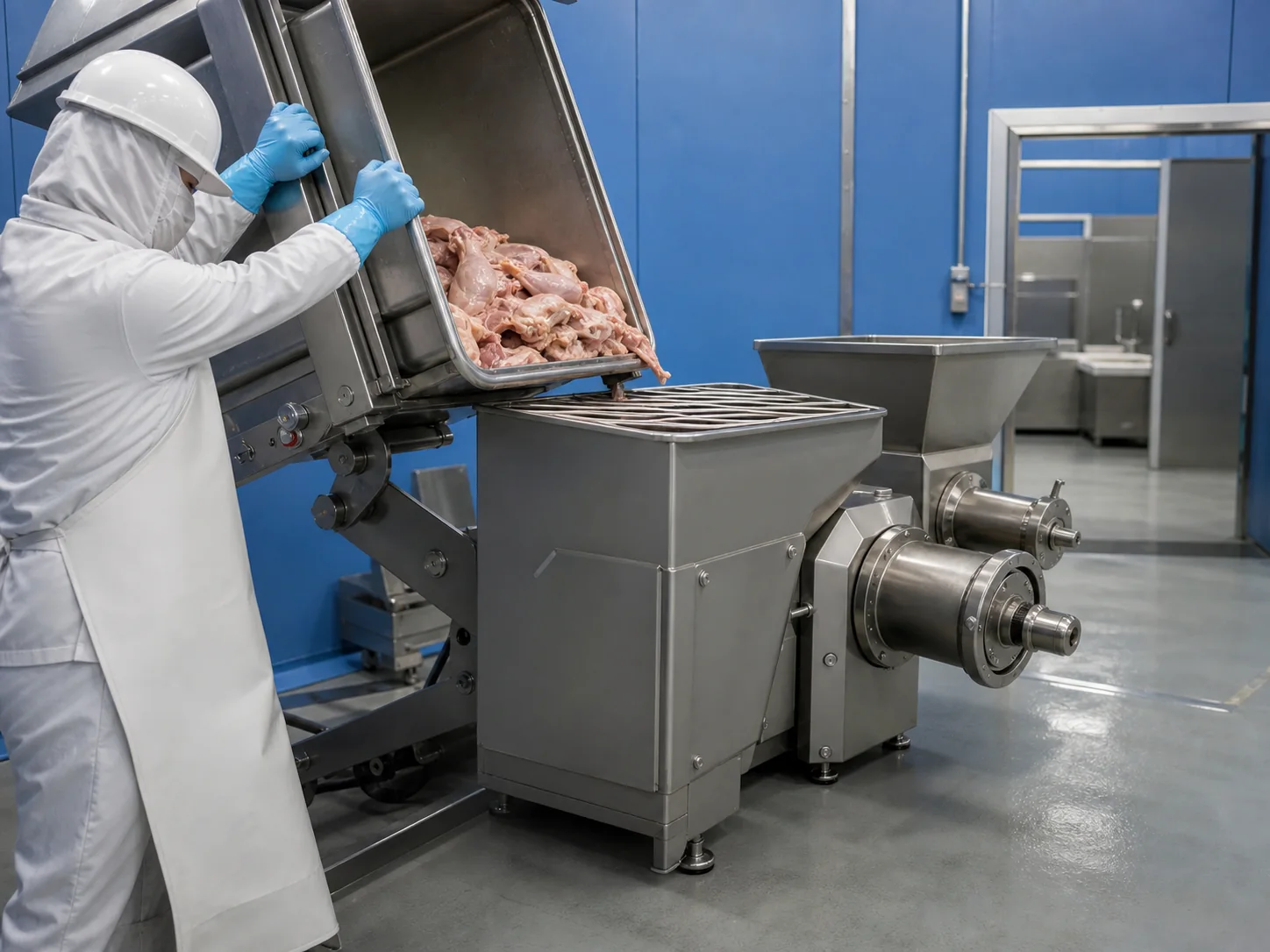
The prepared material enters a hopper or controlled feed system. Inside the machine, a screw, press, belt, rotary element, or another separation arrangement moves the material against a perforated surface. Industrial technologies differ, so a generic article should not claim one pressure, screen size, or speed for all equipment.
Step 3: Keep the Two Output Streams Separate
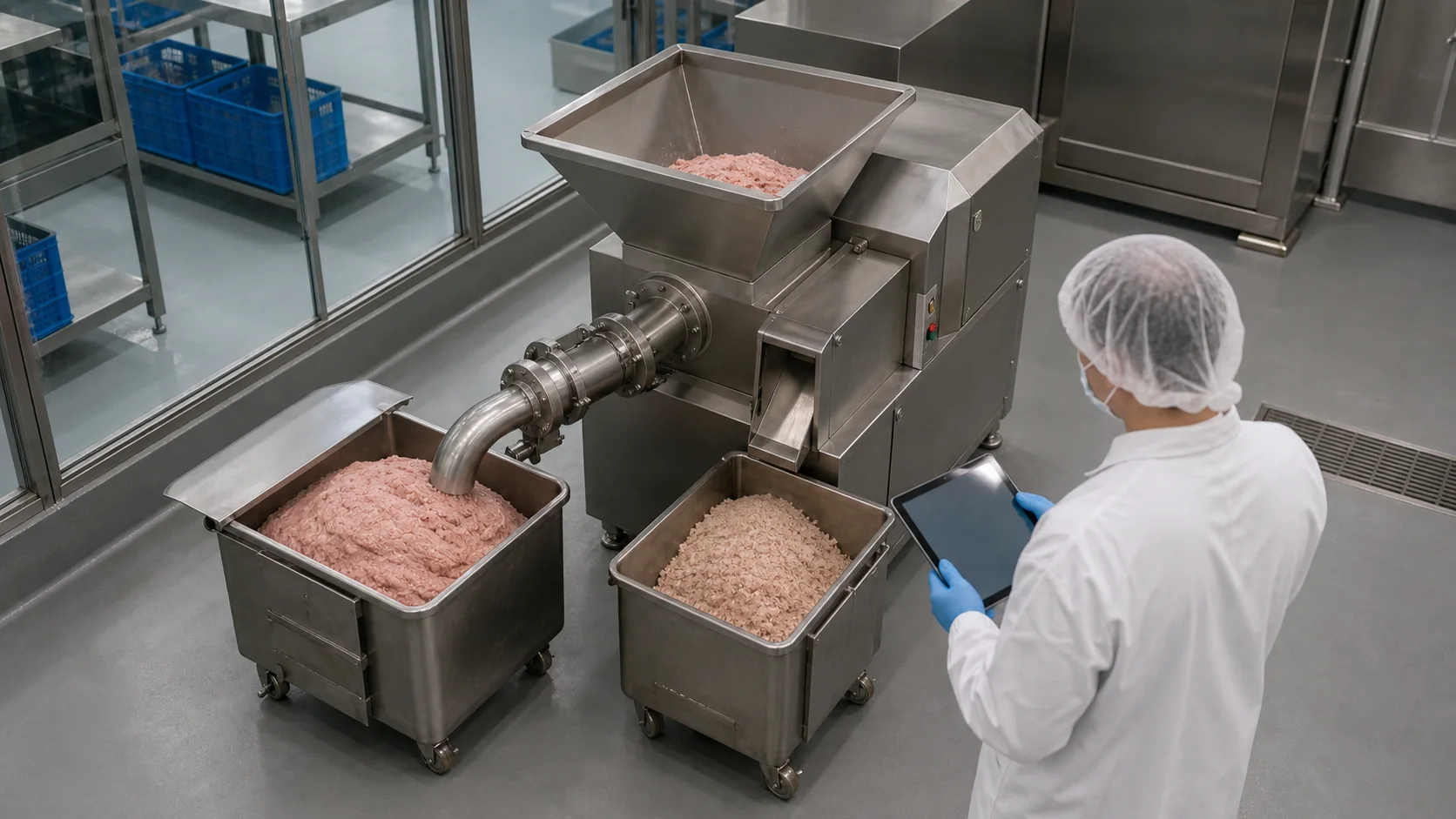
The soft stream is collected as recovered raw meat. The second stream is bone-rich residue containing material that did not pass through the separation surface. A credible trial records both. Looking only at the meat outlet hides evidence about how aggressively the system is working and whether the selected configuration suits the incoming material.
MDM Meat Is Not the Same as Ground Meat
A grinder reduces boneless or otherwise approved material into smaller particles through a plate. A mechanical separator performs a hard-versus-soft separation. Both products may look comminuted, but the equipment function, input, and classification are different.
| Material | Typical starting point | Primary operation | Key question |
|---|---|---|---|
| Hand-deboned meat | Whole-muscle cuts or parts | Meat is removed from bone by manual or automated anatomical cutting | Which cut and specification were produced? |
| Ground meat | Boneless or approved prepared meat | Particle size is reduced through a grinder | Which plate and formulation requirement apply? |
| MDM meat | Approved flesh-bearing bones or poultry carcass material after primary recovery | Soft tissue is mechanically separated from a bone-rich fraction | How is the recovered stream classified and controlled in the target market? |
Why the Distinction Matters to Buyers
A plant asking for a grinder when it needs separation may receive the wrong process. A plant asking for a separator when it only needs particle-size reduction may add unnecessary complexity. The purchase specification should therefore describe the input material and desired output rather than relying on a short machine name.
Which Variables Shape the Recovered Meat?
The machine is only one influence. Raw material and process discipline often explain why two trials on apparently similar separators produce different observations.
Raw-Material Source and Preparation
Species, anatomical parts, the amount of attached tissue, trimming practice, piece size, and the presence of skin or connective tissue all affect the feed presented to the separator. Test material should represent normal production rather than an unusually favorable sample prepared only for a demonstration.
Time and Temperature Control
MDM is a raw meat material and should remain inside the plant’s validated food-safety system. Delays, uncontrolled warming, and poor transfer arrangements are process risks. Equipment selection should therefore include the space, containers, covers, and downstream route needed to move both streams without unnecessary exposure.
Separation Configuration and Adjustment
Separation surfaces, restrictions, feed rate, and other machine-specific settings can change output behavior. More recovered material is not automatically better if the resulting stream no longer meets the plant’s specification. Buyers should define acceptance criteria before the test and ask the supplier to document the configuration used.
Where Can MDM Fit in Further Processing?
Mechanically recovered poultry may be considered as a raw material for approved further-processed products, but suitability is recipe- and market-specific. The equipment supplier can demonstrate separation. The processor remains responsible for formulation, hazard controls, legal classification, labeling, and customer specifications.
Sausage and Emulsified Meat Products
Some processors evaluate a fine recovered meat stream for products where controlled mixing, chopping, seasoning, stuffing, and heat treatment follow. The technologist must verify binding behavior, texture, composition, sensory targets, and regulatory limits for the actual recipe. A separator trial cannot replace that formulation work.
Pet-Food Processing
Pet-food plants may use poultry recovery systems as part of a raw-material preparation line. Human-food and pet-food rules are not interchangeable, and export customers may impose additional specifications. The correct discussion begins with intended product category and destination, not with a claim that one machine output is suitable for every market.
Downstream Equipment Does a Different Job
After separation, a plant may still require mixing, grinding of another boneless stream, bowl cutting, emulsifying, forming, stuffing, cooking, retorting, freezing, or packaging. The exact sequence depends on the finished product. Buyers planning a recovery cell can also review the site’s mechanically deboned meat production system before preparing a material-test brief.
How Do U.S. and EU Definitions Differ?
Processors should treat market rules as a design input. The USDA Food Safety and Inspection Service describes mechanically separated meat as a paste-like or batter-like product created by separating edible tissue from bones through a sieve or similar device. Its guidance also distinguishes species and labeling treatment in the United States.
European Union rules use their own definition and hygiene framework. The European Commission’s communication on mechanically separated meat explains that the product comes from flesh-bearing bones after boning or poultry carcasses, using mechanical means that result in loss or modification of muscle-fibre structure.
Do Not Export One Market’s Assumptions
A label accepted in one country may be incomplete or incorrect in another. Species restrictions, permitted uses, temperature requirements, microbiological criteria, ingredient declarations, and customer standards can differ. Before ordering equipment for an export project, obtain advice from the competent authority or a qualified local food-law professional.
What Should a Buyer Test Before Choosing a Separator?
A representative test turns a general machine discussion into an evidence-based decision. The test should be planned jointly, but the plant should own its acceptance criteria.
Describe the Input Before Sending Samples
- Identify the species and exact poultry parts.
- Record whether the material is fresh, chilled, or frozen and the condition expected at feeding.
- Provide representative photos and typical piece-size information.
- Explain upstream cutting, deboning, and any pre-breaking step.
- State the destination market and intended downstream product category.
Inspect Both Outputs
Document the recovered meat and the bone-rich residue under the same operating period. Samples should be clearly identified. Appearance alone is not enough; the processor should select appropriate laboratory, composition, physical, microbiological, and product-development checks for its specification and market.
Repeat Under a Defined Protocol
A single attractive tray is weak purchasing evidence. Ask which machine configuration was used, how long the trial ran, how startup material was handled, and whether the result can be repeated. Compare suppliers using the same raw-material brief and the same measurement method.
The existing poultry meat bone separator selection guide provides a broader machine-selection checklist, while the article on chicken meat bone separator outputs focuses on observing the two discharge streams.
Hygienic Design Is Part of Product Control
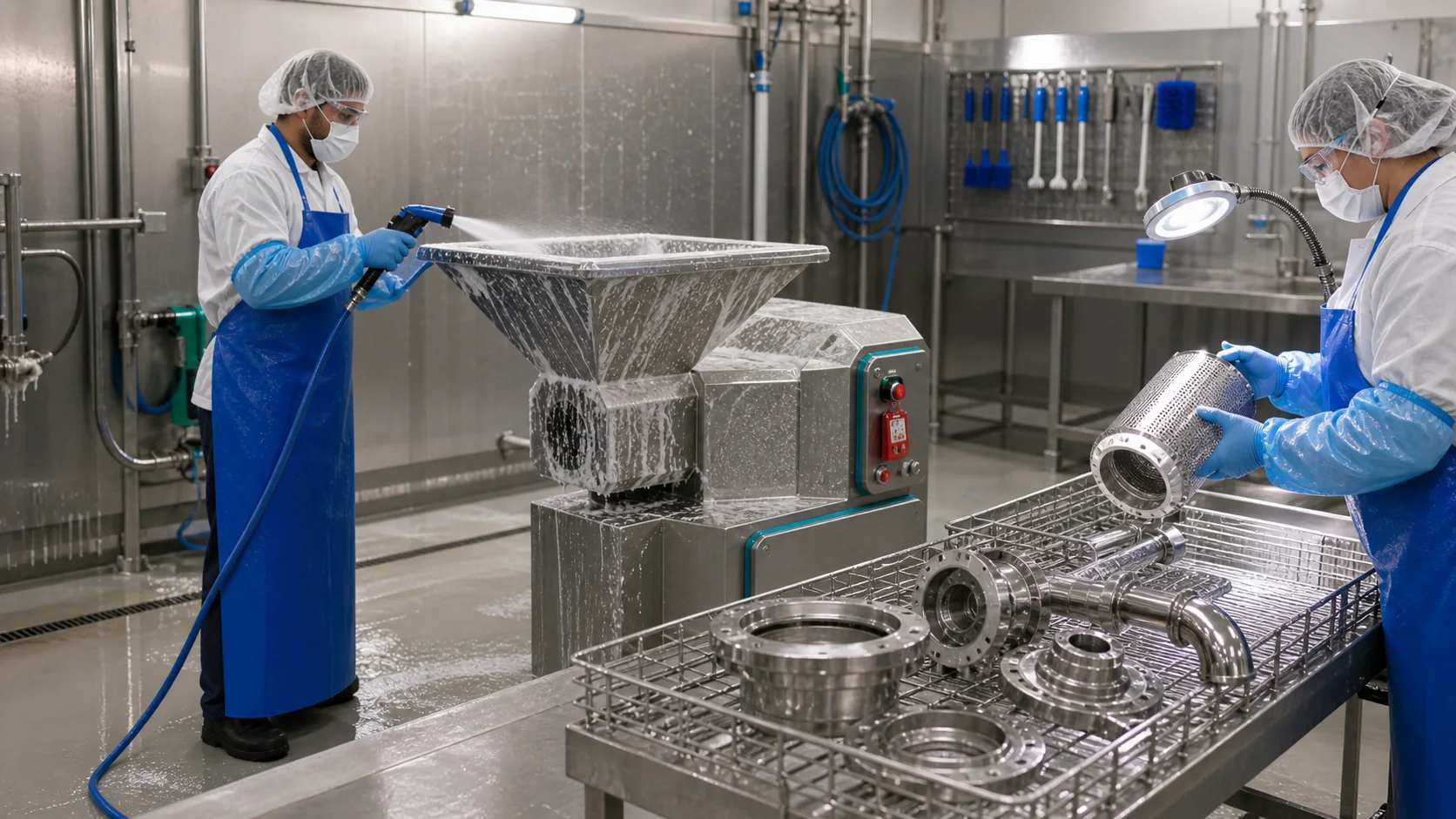
The separation section contacts raw animal material and needs a defined shutdown, disassembly, cleaning, inspection, and reassembly routine. Buyers should ask for a live demonstration rather than judging hygiene from polished exterior panels.
Review Access and Removable Parts
Check how operators reach the hopper, feed path, screen or separation surface, seals, outlets, and product-contact joints. Confirm the tools, lifting method, storage rack, and time window required by the plant’s sanitation program. Any lockout and safety procedure must follow the supplied machine documentation and local requirements.
Verify Cleaning Before Routine Production
A commissioning plan should include sanitation verification using the plant’s approved methods. The result should feed back into written procedures, inspection points, chemical use, reassembly checks, and operator training. A generic promise of easy cleaning is not a validation record.
When Is a Mechanical Separator the Wrong Answer?
A separator is not automatically appropriate when the plant wants intact muscle cuts, a simple ground-meat particle size, or a product category that does not permit the proposed raw material. It may also be premature when the buyer cannot define its incoming material, downstream use, utilities, sanitation route, or compliance responsibilities.
In those cases, clarify the process before selecting the equipment. Send the supplier real material information and request a documented test. Dingfeng Food Machinery can review a project brief through the contact page, but final product approval and legal compliance remain the processor’s responsibility.
MDM Meat Should Be Specified as a Process, Not a Buzzword
For a poultry processor, the useful question is not only “What is MDM meat?” It is “Which approved raw material will we separate, under which controls, into which two streams, for which validated downstream product and market?” That question connects the definition to real factory decisions.
A well-planned project identifies the raw material, distinguishes separation from grinding or anatomical deboning, tests both outputs, designs hygienic handling, and checks destination-market rules before production. The separator then becomes one controlled step in a complete process rather than a machine purchased on a vague yield claim.
Frequently Asked Questions
What is MDM meat?
MDM meat is meat recovered from approved flesh-bearing bones or poultry carcass material by mechanical separation. It is a fine raw material and is not the same as an intact fillet, hand-deboned meat, or ordinary ground meat.
Is MDM meat the same as mechanically separated meat?
The terms are often used for closely related products, but authorities and markets may use different legal definitions and names. A processor should verify the required classification and label in the destination country.
How is poultry MDM meat produced?
Approved poultry frames or other residual material are prepared and fed to a separator. The machine moves soft tissue through a separation surface while a separate bone-rich residue leaves through another outlet.
Is MDM meat the same as ground chicken?
No. Grinding primarily reduces the particle size of prepared meat, while mechanical separation recovers soft tissue from bone-bearing material. The equipment function, input material, and product classification differ.
Can MDM meat be used in sausage or pet food?
It may be considered for approved formulations, but suitability depends on the product specification, destination-market rules, customer requirements, food-safety controls, and recipe validation. A separator test alone does not approve the final use.
What should a buyer check during an MDM separator test?
Use representative raw material, record its condition and preparation, document the machine configuration, inspect both output streams, apply the plant’s chosen tests, and confirm that the result can be repeated under a defined protocol.