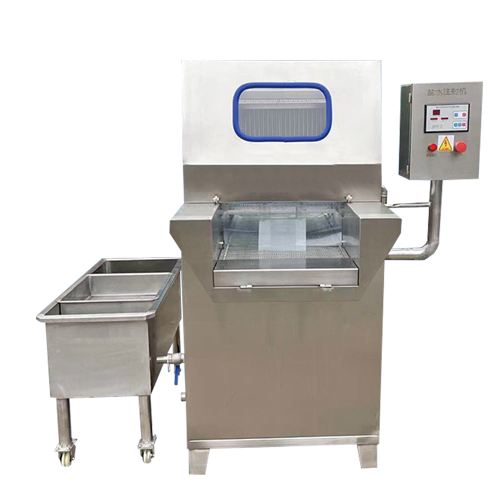
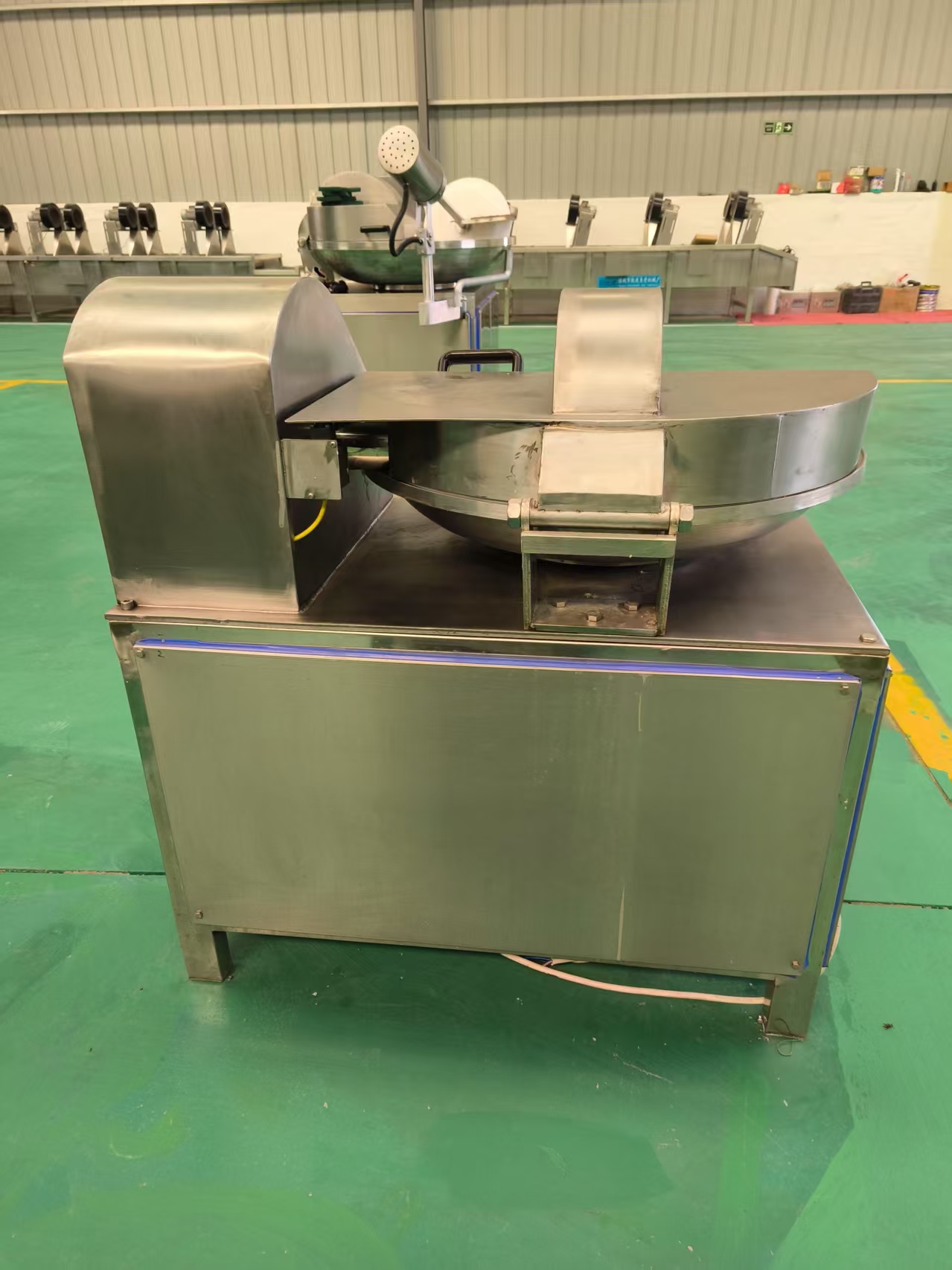
1. The Frozen Meat Shredder (The “Block Eater”)
From 25kg Ice Block to 2cm Chunks in Seconds
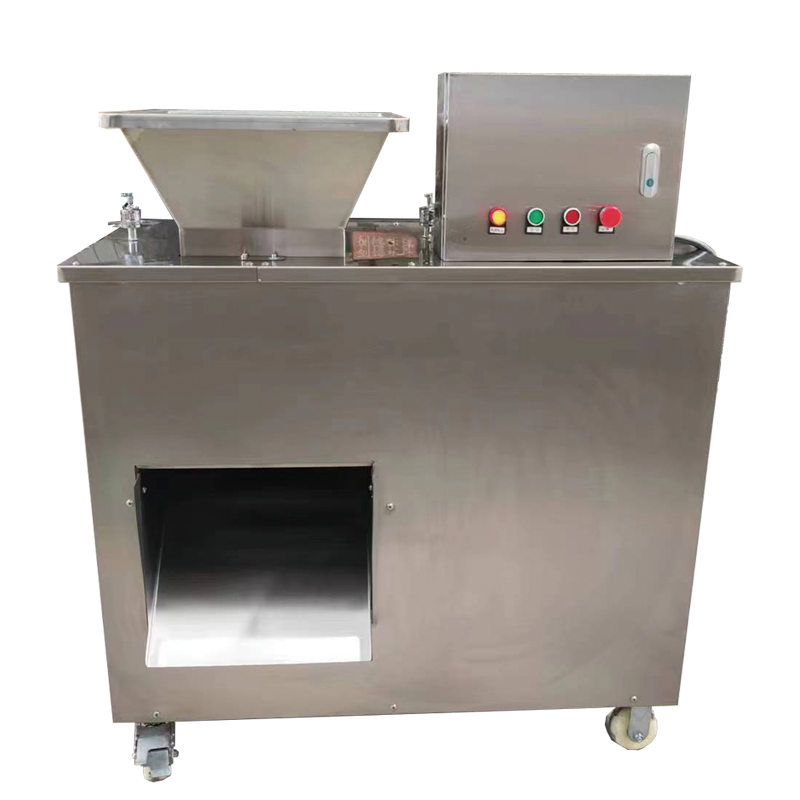
Standard grinders rely on an auger (screw) to push meat. Frozen blocks don’t push; they resist. The Industrial Shredder uses low-speed, high-torque shear force. It tears the meat apart rather than squeezing it.
- The “Dual-Drive” Advantage (Model 600):Notice the spec sheet says “Dual 15kW reducers.” This is not overkill. It’s insurance.
- The Mechanism:Two independent shafts rotate inward. The “Claw” blades hook into the frozen block and rip it.
- The Result:It handles whole frozen carcasses (pig, sheep) or standard 25kg boxes of frozen beef without jamming.
- Why You Need It:If you feed a grinder with pre-shredded meat (6-30mm chunks), your grinder’s output increases by 40%. You save electricity, and your grinder blades last 3 times longer.
Best Applications:
- Pet Food (BARF Diet):Shredding whole frozen chicken/duck frames.
- Sausage Production:Pre-breaking frozen pork fat.
- Rendering:Disposal of dead livestock.
⚠️ Maintenance: How to Keep It Alive
These machines eat bones. They vibrate. Things get loose.
- The Blade Gap (Crusher):The distance between the rotary blade and the fixed blade determines your efficiency. Check this every Sunday. If the gap gets too wide (>2mm), the machine stops “cutting” and starts “chewing.” This generates heat and ruins the bone quality.
- The Gearbox Oil (Shredder):The dual reducers on the Model 600 take a beating. In the tropical heat of Southeast Asia, standard oil gets too thin. Use High-Viscosity Gear Oil (ISO VG 320). If you hear a whining noise, your gears are grinding dry.
- The “Uncrushables”:Even though these are beasts, a stainless steel meat hook will destroy the blades. Install a magnetic trap on the in-feed conveyor. It costs $50 and saves a $2,000 blade set.
❓ FAQ: Straight Answers
Q: Can the Bone Crusher handle fresh cow skin (Cowhide)?A: Yes, but it is tricky. Fresh skin is elastic; it wraps around the shaft. You need to sharpen the blades to a “Knife Edge” (sharper angle) rather than a “Crushing Edge.” Tell us if you are processing skin so we can adjust the blade profile at the factory.
Q: Is the Shredder loud?A: The Shredder (low speed) is actually quiet—just a low rumble. The Bone Crusher, however, is loud (90dB+). It sounds like rocks in a blender. You must put this machine in a separate room or build a soundproof enclosure if you have workers nearby.