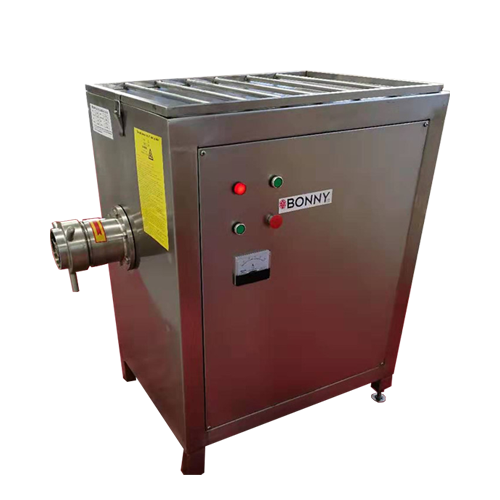
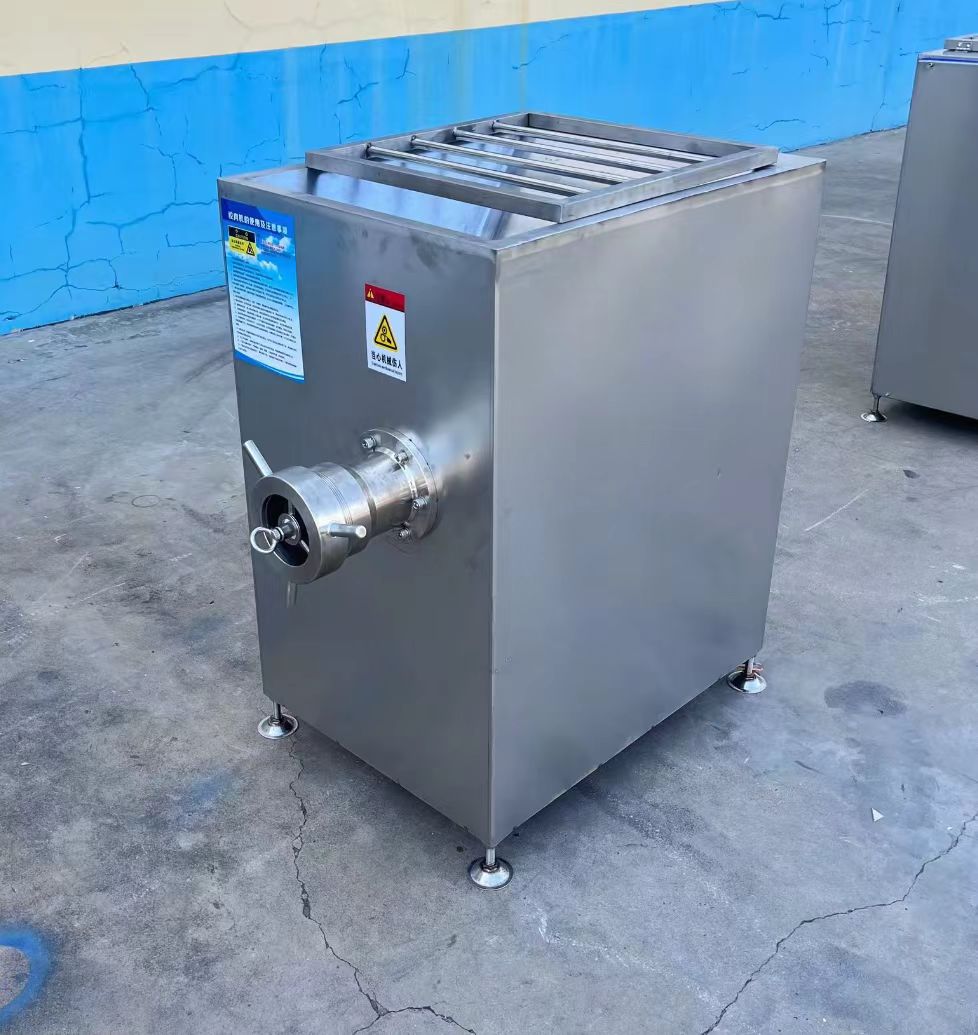
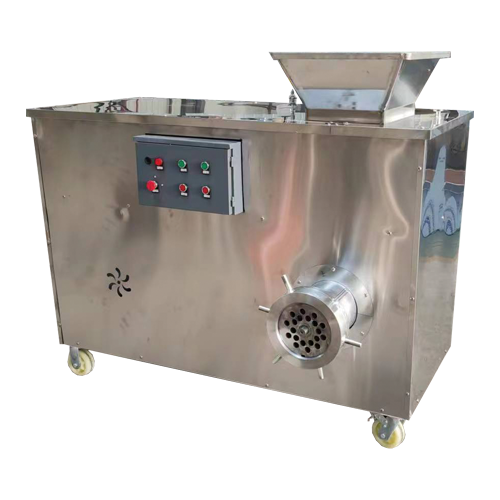
The Heavy-Duty Meat Grinder (Model 100/130/200)
Don’t Let Friction Ruin Your Emulsion
The biggest enemy of Bakso (meatballs) or Nem Chua is heat.
If your grinder struggles, it generates friction. Friction melts the fat. If the fat melts before the emulsifier hits it, your product will separate, and you will get a layer of jelly in your packaging.
Our Grinder solves this with Torque.
- The Gearbox:We don’t use belt drives that slip. We use a direct-drive, oil-bath gearbox. It powers through semi-frozen meat (-4°C) without hesitating.
- The Cut:The orifice plates (hole plates) are precision-ground steel. We aren’t extruding the meat; we are shearing
- The Result:Distinct particle definition. When you look at the mince, you see red meat and white fat clearly separated. This is critical for texture.
The “Capacity Trap” (Read This)
Competitors list “Max Capacity.” That is a lie based on soft, fresh beef.
Here is the Real World Capacity when processing semi-frozen pork or sticky chicken meat:
| Model |
Motor Power |
“Paper” Capacity |
Real Factory Output |
Best For… |
| JR-100 |
(Check Spec) |
500 kg/h |
350 kg/h |
Small Batch / Restaurant Central Kitchen |
| JR-130 |
7.5 kW |
1000 kg/h |
750 kg/h |
Standard Sausage Production |
| JR-200 |
23 kW |
2500 kg/h |
1800 kg/h |
Industrial Lines (24/7 Operation) |
Engineer’s Note: The JR-200 draws 23kW. You must have a dedicated 3-phase breaker. Do not try to share this circuit with your freezer room, or you will trip the main board every time you start the grinder.
Maintenance: The “Dirty Truth”
I’m going to be blunt. 90% of machine failures I see are due to laziness during cleaning.
- The Grinder Plate:You must sharpen the knife blade and the hole plate face-to-face. If they aren’t perfectly flat, the meat smears. Do not just buy a new blade and put it on an old plate. They wear together. Change them as a set.
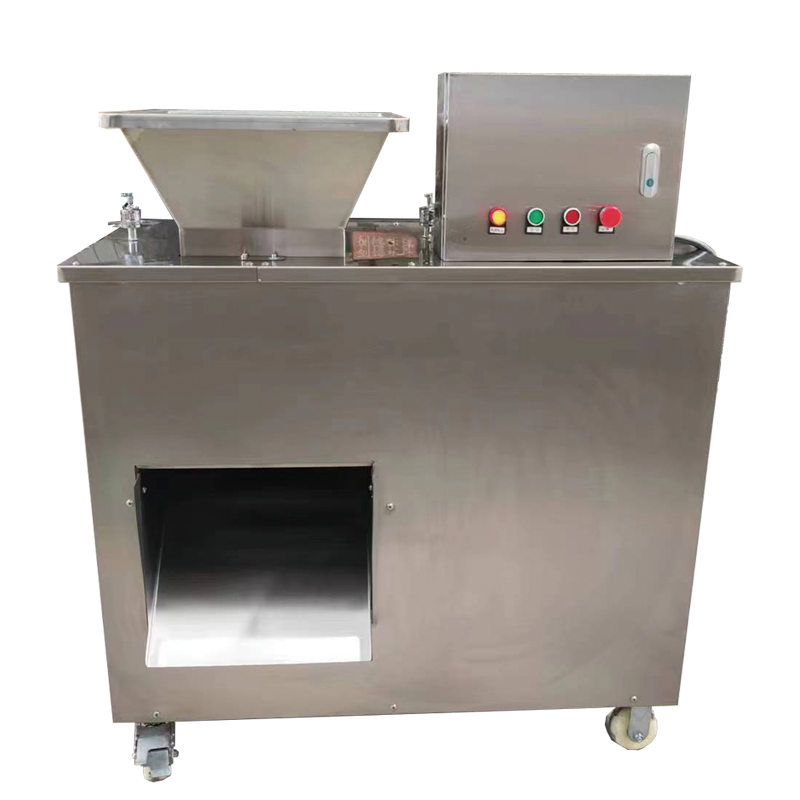
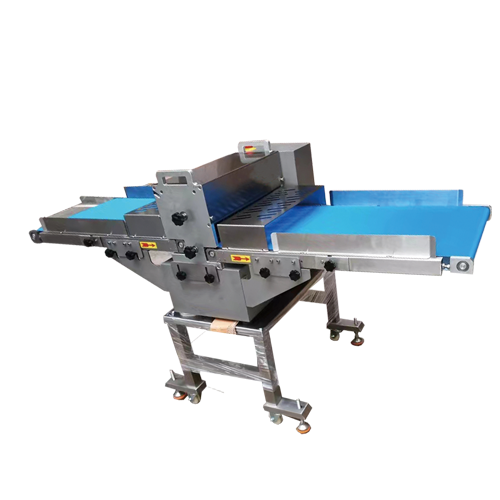
- The Cutter Belt:If you are cutting sticky sugar-marinated meat, you must wash the belt with hot water immediately after the shift. If the sugar dries, it turns into glue. Next morning, you turn the machine on, the motor pulls, the belt is stuck, and snap—there goes your drive shaft.
- Water Damage:These machines are “water-resistant,” not submarines. Do not use a high-pressure hose (100 bar) directly on the control buttons or the motor cooling fan. Wipe them down.
❓ FAQ: Questions Factory Owners Ask Me
Q: Can the JR-130 grinder handle frozen blocks?A: It can handle flaked frozen meat or fist-sized frozen chunks (-4°C). It cannot handle a solid 20kg block of ice-hard meat (-18°C). You need a Flaker for that. If you force a solid block in, you will crack the auger housing.
Q: I make spicy beef jerky. Will the chili seeds dull the cutter blade?A: Eventually, yes. But the Model 180 blades are hardened alloy steel. You will need to sharpen them maybe once a month depending on volume. It’s a 10-minute job with a whetstone.
Q: Why is your 23kW motor so big? Others use 18kW for the same capacity.A: Because we know about “Start-Up Load.” When the auger is full of cold meat and you hit the “Start” button, the motor needs a massive surge of torque to get moving. An 18kW motor might stall or burn out. Our 23kW motor powers through that initial resistance.
Q: Voltage?A: 380V / 50Hz / 3-Phase. This is the industrial standard. If you are in a rural area with voltage drops (e.g., dipping to 360V), install a stabilizer. Undervoltage kills motors faster than overuse.