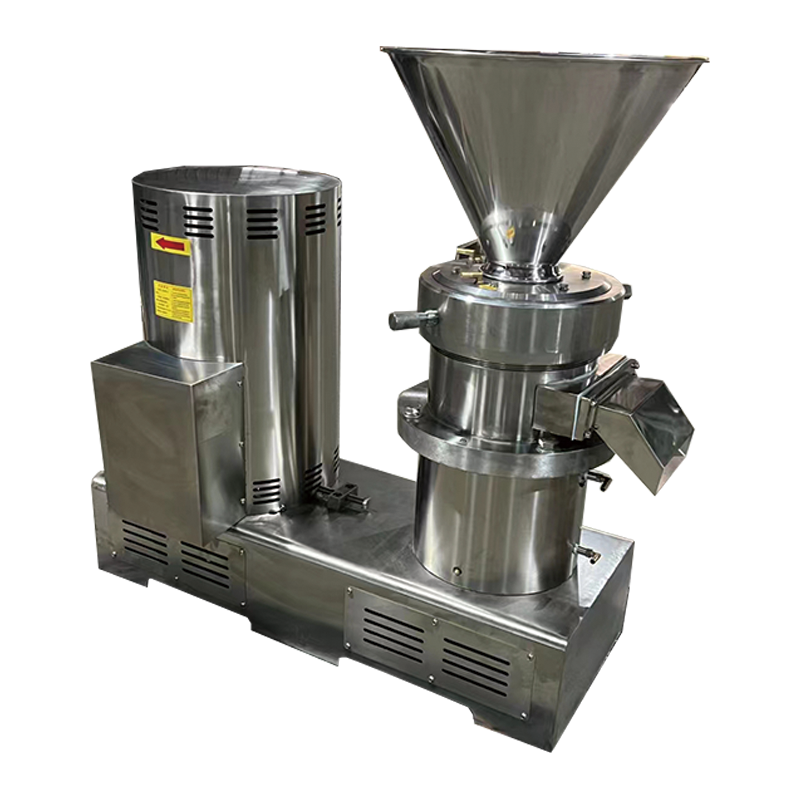
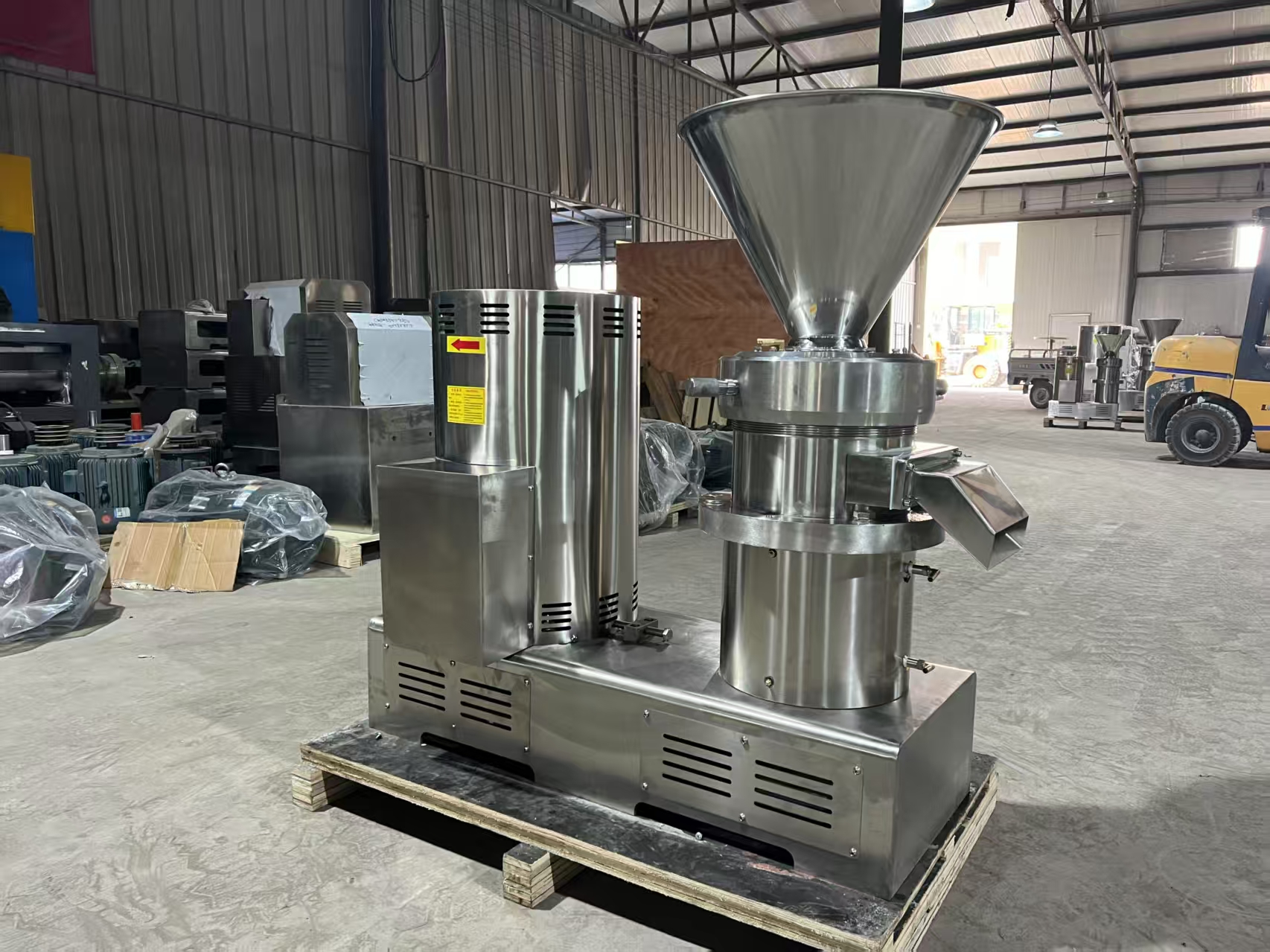
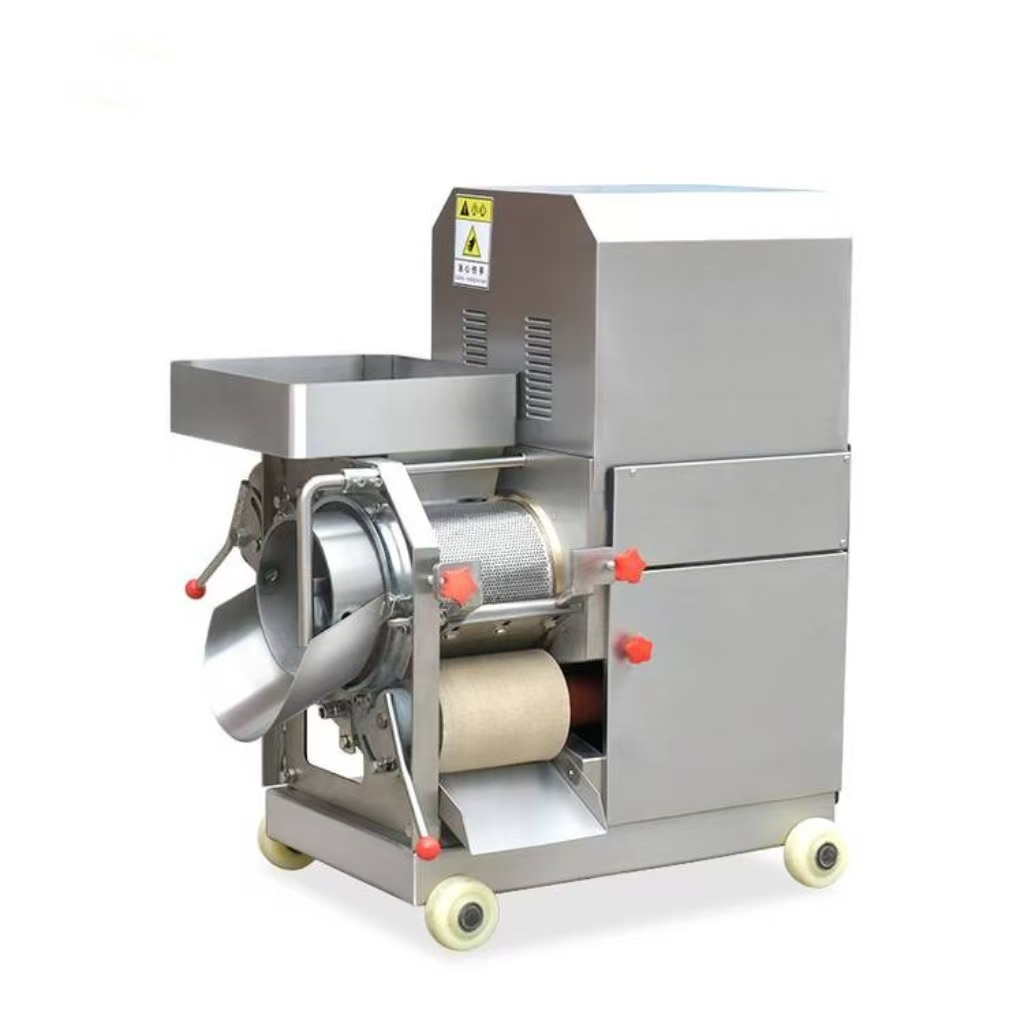
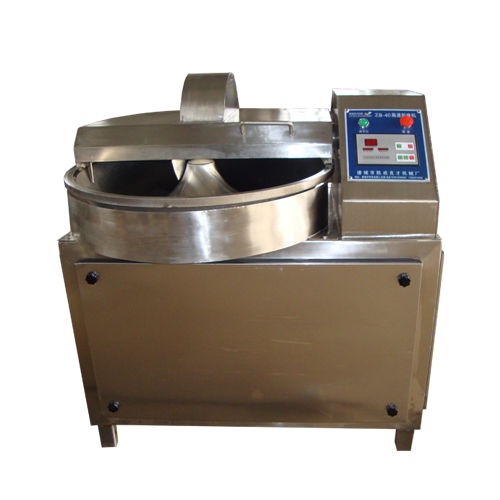
The Bone Mud Grinder (Colloid Mill)
For Ultra-Fine Pastes (80-100 Microns) | Pet Food & Soup Bases
Once you have separated the meat, what do you do with the remaining bone residue? Or maybe you want to grind the whole chicken frame into a calcium-rich paste for wet pet food?
You use the Liangcai Colloid Mill.
This isn’t a blender. It uses a high-speed rotor (2900 RPM) and a static stator with a microscopic gap. It shears the material until it is essentially a liquid.
Why this matters for your product:
- Texture:It achieves 80-100 mesh No gritty sand texture in your mouth.
- Emulsification:Perfect for making bone broth concentrates (like for Pho or Ramen soup bases). It releases the collagen instantly—saving you 12 hours of boiling time.
- Durability:The grinding head is treated for hardness. Standard steel wears out in 2 months of bone grinding; ours holds tolerance significantly longer.
Technical Specifications (Colloid Mill)
| Model |
Capacity (kg/h) |
Power (kW) |
Fineness (µm) |
Weight (kg) |
| Model 110 |
100-200 |
11 |
80-100 |
210 |
| Model 130 |
100-200 |
22 |
80-100 |
330 |
| Model 180 |
500 |
30 |
80-100 |
420 |
| Model 220 |
1000 |
30 |
80-100 |
800 |
3. Why Vietnamese & Thai Factories Switch to Us
It comes down to the Filter Screen.
The filter screen on a separator is the most expensive consumable. European screens cost $2,000. Cheap Chinese screens burst after 100 hours.
- We use a reinforced alloy screendesigned to handle the stress of continuous production.
- Voltage Ready:All motors are industrial 380V/50Hz, optimized for the fluctuating grids often found in industrial zones outside Bangkok or Ho Chi Minh City.
❓ FAQ: The Questions You Are Afraid to Ask
Q: Can I put frozen chicken frames directly into the Separator?A: No. Stop. If the bone is frozen hard (-18°C), it acts like a rock. It will tear the filter screen. You must semi-defrost the material to roughly -2°C to 0°C. This is the “sweet spot” where the meat is firm but the bone is flexible.
Q: How do I clean the Colloid Mill? It looks like a nightmare.A: It’s actually CIP (Clean-In-Place) ready. You flush it with hot water and caustic soda while it runs.
- The Secret:After washing, do not tighten the gap adjustment while the machine is cooling down. Metal contracts. If you tighten it hot, it will seize when cold, and you’ll burn the motor the next morning.
Q: Is the MDM meat suitable for human consumption?A: Yes, absolutely. It is widely used in Frankfurters, Luncheon Meat, and Bakso. However, because the cell structure is broken, it oxidizes fast. You must use it or freeze it within 4 hours of separation.
Q: What is the maintenance cost?A: On the separator, your main cost is the filter screen and the auger tip. Expect to replace the auger tip every 3-4 months if you run double shifts. This is normal wear and tear—anyone telling you otherwise has never run a factory.