- Shandong Zhucheng Kaicheng Liangcai Machinery Factory
- support@yourdomain.tld
- +86 18053662153
Last week, a Sambal (Chili Paste) manufacturer in Surabaya called me in a panic. Their export batch to Singapore was rejected.
The reason? Sand.Micro-grains of sand were stuck in the wrinkles of their Curly Chilies (Cabe Keriting). Their workers were hand-washing 2 tons a day, and by 2 PM, the fatigue set in. The washing became dipping.
If you are processing Bird’s Eye Chili, Kaffir Lime, Lemongrass, or Pickled Mustard Greens in Southeast Asia, you know the struggle. The dirt hides in the crevices. A simple soak tank does nothing. A high-pressure blaster bruises the skin.
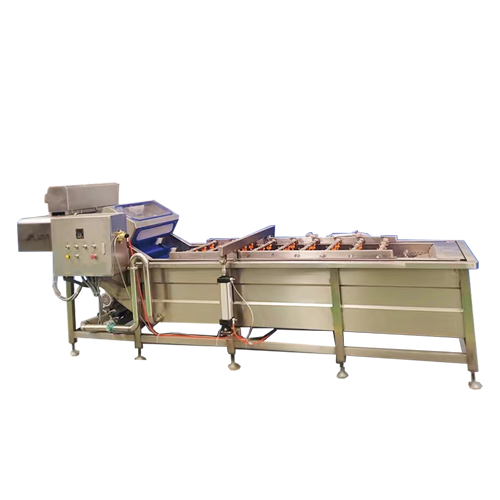
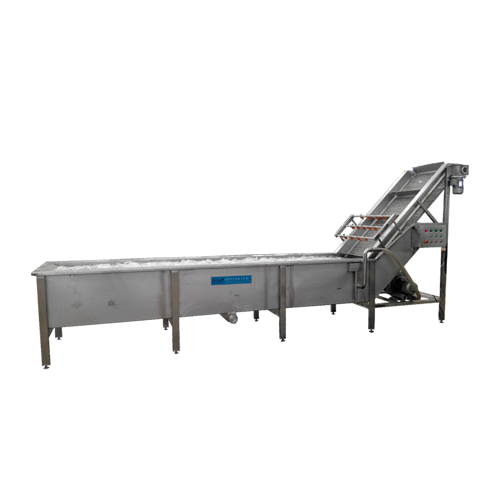
This Multifunctional Bubble Cleaning Machine is the middle ground. It uses Aerated Turbulence (Bubbles) to scrub the product without touching it.
Here is the engineering reality of how this machine saves your export license.
Bubble Agitation + Rotary Brushing + High-Pressure Spray
Most cheap machines are just a jacuzzi for vegetables. They float the dirt, but they don’t remove it.
This system uses a 3-Stage Attack:
Dual-Stage Filtration | Real-Time TDS Monitoring
In Vietnam and Thailand, industrial water costs are climbing.
A standard “flow-through” washer wastes 5 tons of water per hour. It’s financial suicide.
The Recycling Logic:This machine recirculates the water, but it doesn’t just pump dirty water back in.
Full SUS304 | IP65 Electronics
In a humid factory in Penang, “Stainless Steel” is a loose term. Many workshops use 201 Steel. It looks shiny in the showroom. Six months later, it rusts.
| Feature | Specification | Engineer’s Note |
| Capacity | 500 – 2000 kg/h | This depends on density. 2000kg for Potatoes; maybe 800kg for Leafy Greens. |
| Power | 7.5 – 15 kW | Requires 380V / 3-Phase. Do not try to run this on single phase. |
| Conveyor Speed | 0.1 – 5 m/min | Adjustable via VFD. Slow it down for dirty Root Veg; speed it up for Apples. |
| Filtration | 100 Micron | Self-cleaning filter option available. |
| Bubble Density | 80 – 120 m³/h | Adjustable. Turn it down for delicate Strawberries. |
| Dimensions | 3000×800×1200 mm | Modular. We can extend it to 10 meters if you need a longer soak time. |
I will tell you what breaks so you can prevent it.
Q: Can I wash cut vegetables (like shredded cabbage) in this?A: Yes, but you need the “Floating Debris Remover” add-on. Cut vegetables release small bits that float. We add a rotating drum skimmer to catch these so they don’t clog the pump.
Q: Will it bruise my ripe Mangoes?A: No, if you adjust the settings. The VFD (Variable Frequency Drive) allows you to lower the bubble intensity and slow down the conveyor. For ripe fruit, we treat it like a spa, not a car wash.
Q: Can I add Chlorine or Ozone?A: Yes. The SUS304 tank is resistant to standard Chlorine concentrations (100-200ppm). However, Ozone is better for export because it leaves no chemical residue. We can integrate an Ozone Generator directly into the air pump line.
Q: How do I drain the mud?A: The tank bottom is sloped (V-shape). There is a large 2-inch ball valve at the bottom. Open it at the end of the shift, and the mud slides out. Don’t let mud sit overnight; it turns into concrete.——This is the sanitation standard required for 2026.