- Shandong Zhucheng Kaicheng Liangcai Machinery Factory
- support@yourdomain.tld
- +86 18053662153
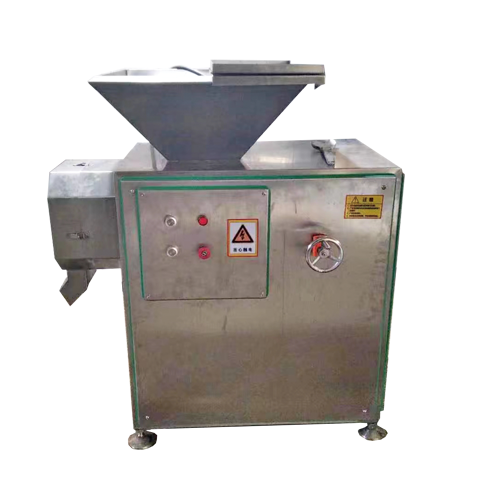
Stop treating animal bones like garbage.
Last month, I walked into a fish ball processing plant in Semarang, and I saw them tossing 200kg of fish frames into the bin every shift. That isn’t waste; that is pure calcium, protein, and flavor that you are paying to throw away.
In the competitive food markets of Vietnam, Thailand, and Indonesia, the margin is in the yield. If you are still using old-school colloid mills to grind bones, you are burning money—literally. Friction heat kills protein.
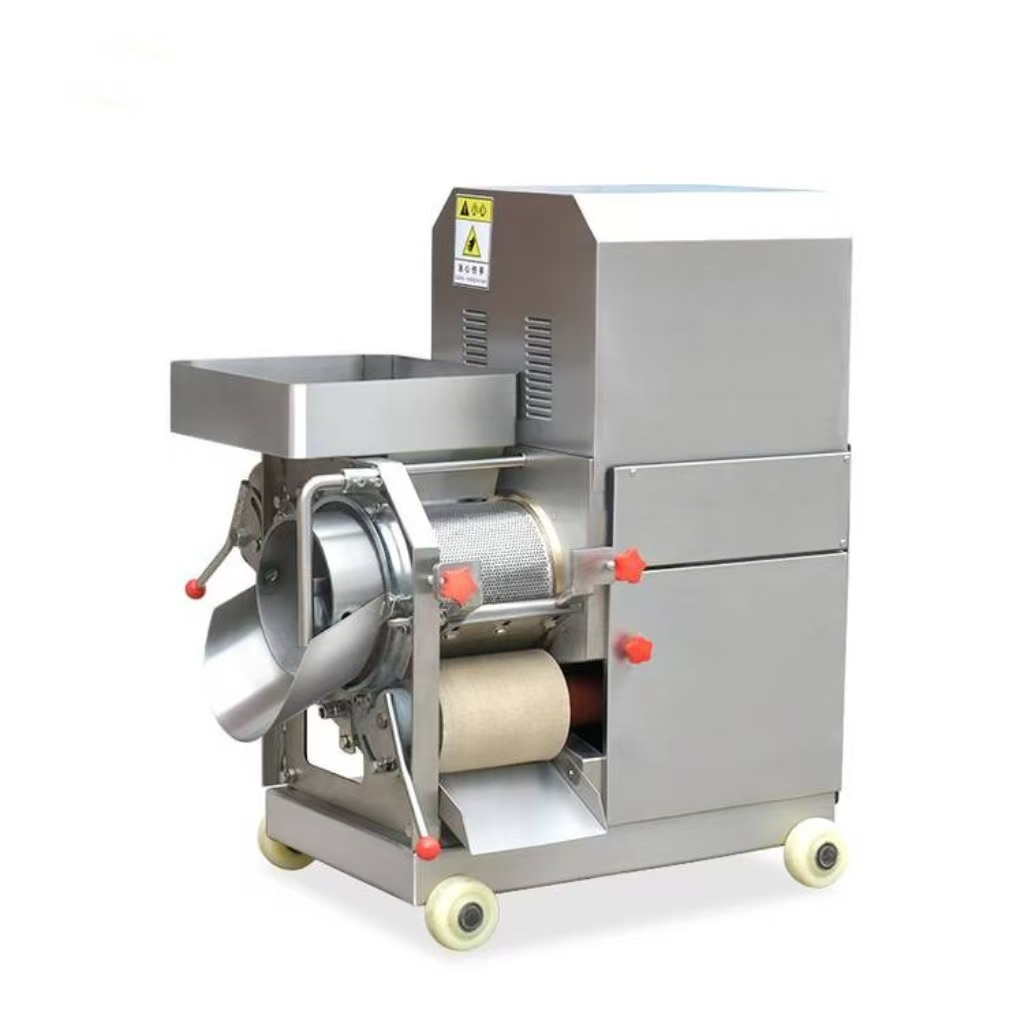
The GN Series Bone Mud Machine is not a standard grinder. It is a cold-milling system engineered with German Tungsten Carbide technology that turns chicken skeletons, fish frames, and beef bones into a smooth, 300-mesh paste (mud) without cooking the meat during the process.
Here is the problem with 90% of the machines sold in Southeast Asia: Heat.
When you grind hard bone against steel in a humid, 35°C factory, friction raises the paste temperature instantly. If your bone mud hits 45°C, the protein denatures. Your Bakso loses its “bounce” (kekenyalan), and your Chả Lụa goes sour faster.
The GN Series is different.
I’ve spent 15 years fixing machines that rusted out in Jakarta’s humidity. We built this one to last.
A common complaint with cheap bone grinders is the “gritty” mouthfeel. It ruins the product. Our GN series achieves a particle size of 50-180 microns.
Bones vary in density. A thick beef femur is harder than a chicken neck.
In our climate, bacteria multiply in minutes. The GN machine features a mirror-polished (Ra 0.4μm) interior.
Don’t trust the “Max Capacity” on the sticker. That’s for water. Here is the real-world throughput when processing raw chicken carcasses or fish frames.
| Model | Real Capacity (kg/h) | Power (kW) | Dimensions (mm) | Best Used For |
| GN-200 | 100-200 | 5.5 | 780×500×1250 | Small Batches / R&D Labs |
| GN-300 | 600-1200 | 15 | 1020×560×1380 | SME Factories (Most Popular) |
| GN-300T | 1000-2000 | 18.5 | 1500×700×1480 | Continuous Sausage Lines |
| GN-500 | 2500-3500 | 37 | 2010×980×2300 | Large Scale Industrial Plants |
The Efficiency Trap: Competitors will promise you 5 tons/hour. But in reality, when processing frozen chicken frames (-4°C), their efficiency drops by half. The GN-500 is geared with high-torque motors that maintain 85% efficiency even with semi-frozen loads. In a double-shift plant, that’s an extra 5 tons of output per month compared to standard mills.
Q: Can this machine grind beef bones?A: Yes, but with a condition. Fresh beef bones must be crushed to <50mm (using a bone crusher) before entering the GN machine. If you throw in a whole cow femur, you will break the machine. For chicken and fish, you can feed whole frames.
Q: How often do I need to change the grinding head?A: This depends on your material. If you run chicken skeletons 8 hours a day, the German carbide head lasts about 1.5years. If you run harder pork bones, expect 0.5 years. Compare that to standard steel heads that lose sharpness in 3 months—that’s the difference in TCO (Total Cost of Ownership).
Q: Will the bone paste taste “metallic”?A: Absolutely not. The grinding head is Tungsten Carbide, and the chamber is SUS304. There is no iron oxidation. The paste tastes exactly like the raw material.
Q: Do you support 220V single phase?A: For the GN-200, yes. But for the GN-300 and above, you must use 380V 3-phase. You cannot get the torque required to crush bone with single-phase power. Don’t let anyone tell you otherwise.